Every week, at least two buyers ask me the same question: “What coating process do you use?” When I explain that we do both knife coating and lamination, the next question is almost always “Which one is better?”
Here’s my honest answer after 20 years running LONATARP: it depends entirely on what you’re building. Neither process is universally superior. They’re different tools for different jobs.
This guide breaks down both manufacturing methods so you can make an informed decision for your specific application. Whether you’re researching how PVC tarpaulins are made or comparing knife coating vs lamination PVC, you’ll find practical answers here.
I. Why Manufacturing Process Matters for B2B Buyers
If you’re sourcing PVC tarpaulins for industrial use, you’ve probably noticed that prices vary significantly between suppliers. Understanding the PVC tarpaulin production process is key to making smart sourcing decisions. One reason for price variation is the coating process. Different methods produce materials with different performance characteristics—and your choice affects:
- Durability: How well the tarp holds up under stress
- Flexibility: How it behaves in cold weather or when folding
- Cost efficiency: Whether you’re paying for performance you need or don’t
- Thickness range: What GSM options are available
I started this factory in 2013. In those early years, we invested in both knife coating and lamination lines because I saw buyers struggling to find suppliers who could match their specific requirements. Today, both processes run daily in our facility.
Let me walk you through each method.
II. Knife Coating: Precision Through Pressure
How Knife Coating Works
Here’s a complete
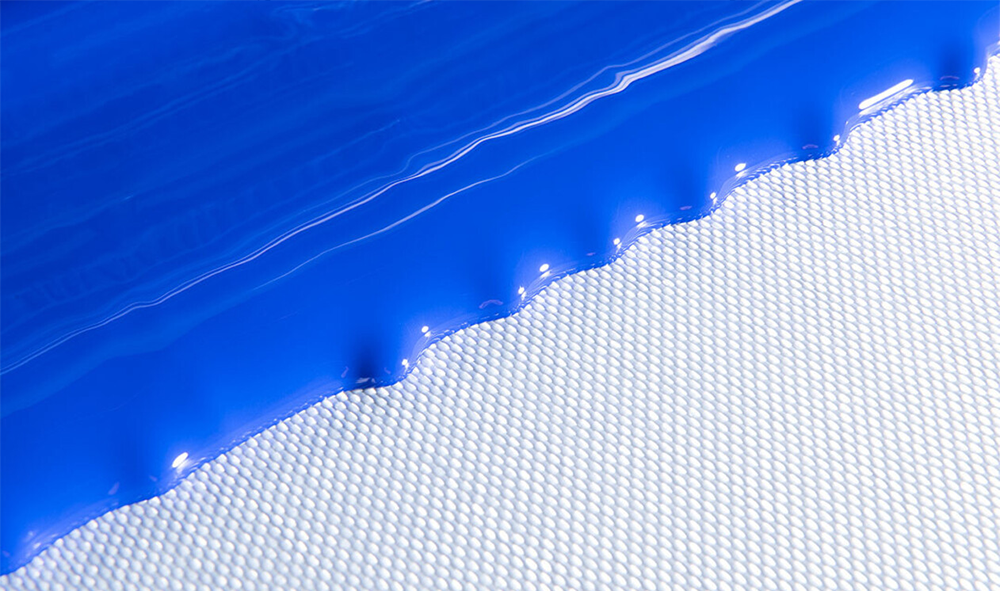
knife coating process explained step by step. Imagine spreading butter on bread with a palette knife—that’s essentially what knife coating does, but with industrial precision.
The process:
- Base fabric (usually polyester or nylon) feeds through the coating machine
- A steel blade (the “knife”) sits at a precise height above the fabric
- PVC paste is forced through the gap, creating an even coating layer
- The coated fabric passes through a curing oven where the PVC solidifies
- This cycle can repeat for multi-layer coating
The key variable is knife gap—the distance between blade and fabric. Smaller gap = thinner coating. Operators adjust this based on target thickness. This is what makes knife coating process explained as a precision manufacturing method — the blade gap control delivers consistent results.
What Knife Coating Delivers
In my experience, knife coating produces materials with several distinct characteristics:
Advantages:
- Consistent thickness: The blade creates uniform coating across the entire width. I’ve measured variation as low as ±10 GSM in our production.
- Thin coatings possible: We regularly produce 300-1500 GSM coatings that would be difficult with other methods.
- Better low-temperature flexibility: The PVC penetrates the fabric more deeply, which translates to better performance in cold climates. A German client told me their knife-coated tarps remained flexible at -30°C during a Nordic winter test.
- Smooth surface finish: Ideal for printing or where aesthetics matter.
Limitations:
- Higher equipment cost: Industrial knife coating lines require significant capital investment. Not every factory has them.
- Slightly higher per-unit cost: The process is more technically demanding.
- Width constraints: Standard widths typically max out around 3.2 meters.
Typical Applications
Knife-coated PVC tarpaulins work well for:
- Truck tarps requiring folding durability
- Agricultural covers in cold climates
- Advertising banners (smooth printing surface)
- Lightweight shelter applications
- Any application where flexibility matters
III. Lamination: Strength Through Bonding
How Lamination Works
Here’s how the
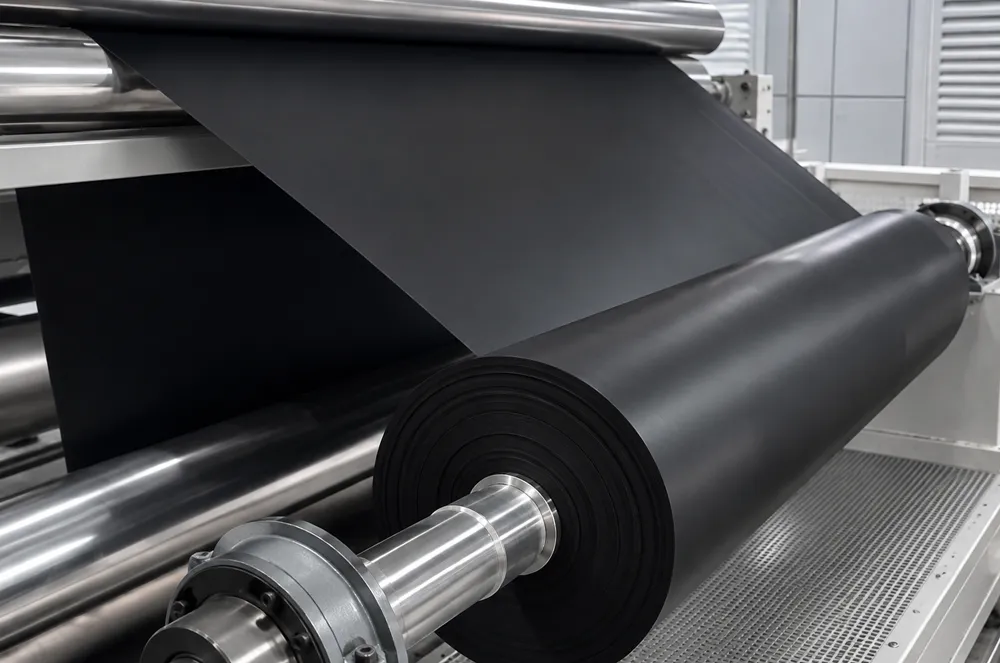
lamination process for tarpaulin works. Lamination is like making a sandwich—two layers pressed together with heat and pressure.
The process:
- Pre-made PVC film (produced separately on a calender machine) serves as one layer
- Base fabric is the other layer
- Both pass through heated rollers that bond them together under pressure
- The result is a laminated structure with distinct fabric and coating layers
Think of it like applying contact paper to a shelf—except on an industrial scale with precise temperature and pressure controls. Both industrial tarpaulin manufacturing processes require sophisticated equipment and expertise.
What Lamination Delivers
After running lamination lines for over a decade, here’s what I’ve observed:
Advantages:
- Thicker coating layers available: We can produce laminated tarps with PVC layers up to 1.5mm thick. That’s difficult to achieve with knife coating.
- Higher tear strength: The distinct layer structure often provides better resistance to tearing when the fabric is stressed.
- Lower production cost: The equipment is less expensive to operate, which translates to more competitive pricing.
- Wider fabric compatibility: Works well with heavier base fabrics for industrial-grade applications.
Limitations:
- Less flexible in cold weather: The bond between layers can become more rigid at low temperatures.
- Potential delamination risk: Under extreme stress or if manufacturing quality is poor, the layers can separate. We’ve invested heavily in adhesion quality control to minimize this.
- Thickness consistency: Slight variations can occur across the width, though modern equipment has largely addressed this.
Typical Applications
Laminated PVC tarpaulins work well for:
- Heavy-duty truck covers (flatbed, dump)
- Industrial storage covers
- Pond liners and containment
- Mining equipment covers
- Applications prioritizing tear strength over flexibility
IV. Knife Coating vs Lamination: The Direct Comparison
Here’s a complete
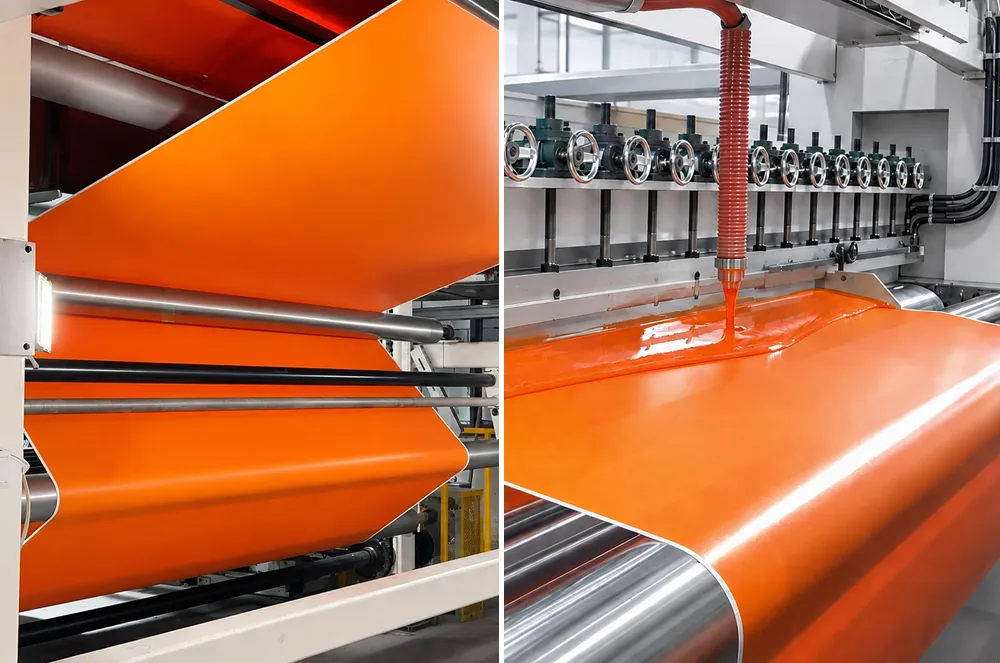
PVC coating method comparison. Here’s how the two processes stack up against each other. I’ve tried to be objective—this isn’t about promoting one method over the other.
| Factor | Knife Coating | Lamination |
|---|---|---|
| Thickness Range | 300-1500 GSM | 300-1700 GSM |
| Tear Strength | Good | Excellent |
| Cold Flexibility | Superior (-30°C tested) | Moderate |
| Surface Finish | Smooth, print-ready | Matte, textured |
| Equipment Cost | High | Moderate |
| Per-Unit Cost | Slightly higher | More competitive |
| Max Width | ~3.2 meters | ~5.1 meters |
| Production Speed | Moderate | Faster |
My Recommendation Framework
Rather than declaring one “better,” here’s how I help buyers choose. The answer to which coating process is better depends on your specific application:
Choose Knife Coating if:
- Your application involves frequent folding or compression
- Cold-weather performance matters
- You need smooth surfaces for printing
- Thin, lightweight tarps are your target
- Specifications require precise thickness control
Choose Lamination if:
- Tear strength is the primary concern
- You need very thick, heavy-duty material
- Budget constraints are significant
- The application involves heavy mechanical stress
- You’re covering large fixed areas
I should be honest: about 60% of our orders are for laminated products and 40% for knife-coated. This reflects the market demand in transportation and industrial sectors, not a quality judgment.
V. Products Available in Both Processes
Here’s something useful: many standard PVC tarpaulin products can be manufactured using either process, depending on the desired specifications. Understanding the
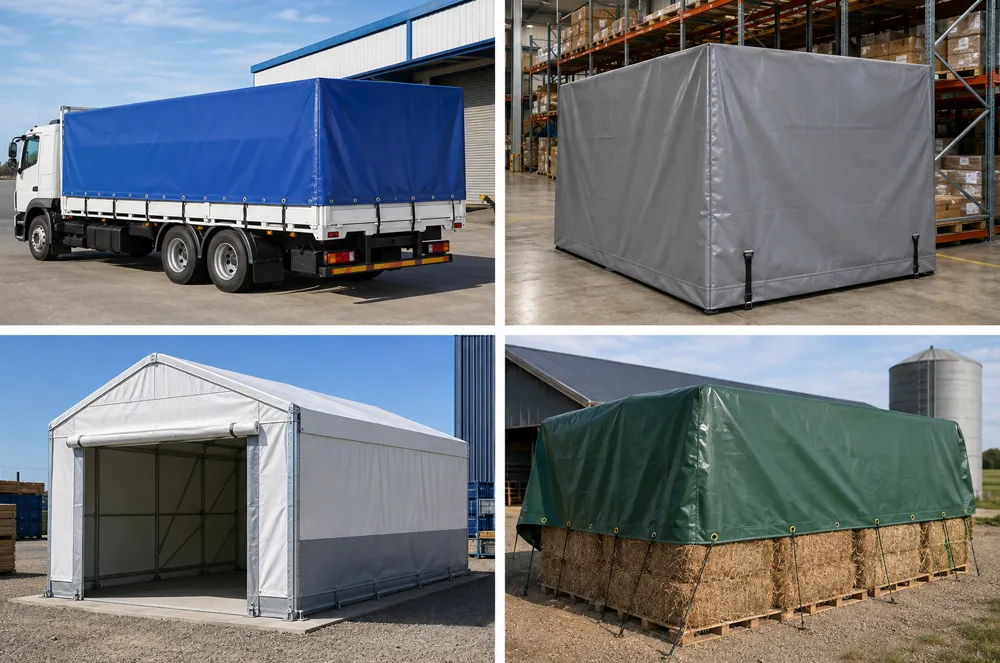
PVC tarpaulin factory process helps you specify requirements more effectively.
Common Crossover Products
- Standard truck tarps: Available in both versions; lamination for heavy-duty, knife coating for standard duty
- Warehouse covers: Typically laminated for cost efficiency
- Temporary structures: Often knife-coated for flexibility
- Agricultural covers: Knife coating preferred in cold climates
These represent heavy duty tarpaulin manufacturing and commercial tarpaulin production capabilities.
How to Specify Your Requirements
When you send an inquiry, include:
- Target GSM/thickness: Do you have a specification?
- Primary application: What will the tarp be used for?
- Climate conditions: Will it face extreme cold?
- Performance priorities: Flexibility vs. tear strength?
- Budget range: This helps us recommend appropriately
We frequently advise buyers who come with fixed specifications that they don’t actually need. A Middle Eastern client insisted on knife-coated material for a warehouse cover until I explained that lamination would save them 15% cost with equal performance in their climate.
VI. Frequently Asked Questions
Q: Which process do you recommend for truck tarps?
A: It depends on the truck type. For flatbed trailers carrying steel or machinery, I recommend laminated material for its superior tear strength. For moving company tarps that fold frequently, knife-coated offers better durability. Tell me your application, and I’ll give you a specific recommendation.
Q: Can I request a specific manufacturing process?
A: Yes. We have both capabilities in-house. When you place an order, you can specify knife coating or lamination. If you’re unsure, describe your application requirements and we’ll recommend the appropriate process.
Q: Is there a quality difference between the two methods?
A: Both can produce high-quality material. The PVC tarpaulin quality difference isn’t inherent to the process—it’s about whether the factory has optimized their equipment and quality control for that process. We’ve been running both lines for over a decade and maintain the same quality standards for each.
Q: What’s your minimum order quantity?
A: 5,000 square meters for standard orders. We can accommodate smaller sample orders (50-200 sqm) for quality verification before committing to full production.
Q: How do you prevent delamination in laminated products?
A: This is a fair concern. We use multiple approaches: pre-treatment of base fabric, optimized adhesive formulations, precise temperature control during lamination, and quality testing on every batch. Our delamination rate is under 0.3% across millions of square meters produced.
Q: Do you provide technical specifications for both processes?
A: Yes. We share detailed specifications including tensile strength, tear strength, cold crack resistance, UV stability, and adhesion testing results. For OEM buyers, we can also provide third-party test reports (SGS, CE certified).
Conclusion: The Right Process Depends on Your Application
After 12 years in this business, I’ve learned that the “best” manufacturing process is always application-dependent. Both knife coating and lamination have earned their place in the industry.
The real question isn’t “which is better” but “which is right for your specific use case.”
If you’re still uncertain after reading this guide, send me a message with your application requirements. I’ll give you a direct recommendation based on what we’ve learned from serving buyers across 40+ countries.
Remember: a factory that only offers one process might push that process regardless of fit. A factory with both capabilities can recommend what’s genuinely optimal for your needs.
That’s why we invested in both. It’s not about selling you the more expensive option—it’s about having the right tool for every job.