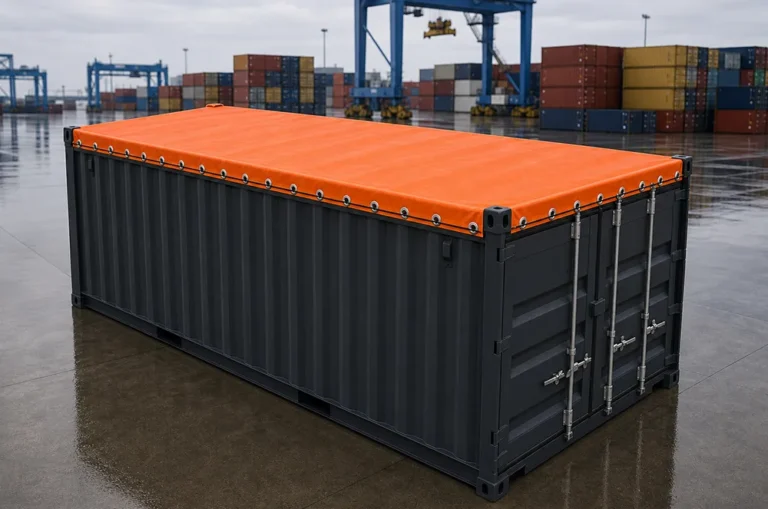
One of the most important aspects of cargo transportation is properly securing a load. In addition to allowing water to harm the cargo, a loose, incorrectly fastened tarpaulin, also known as a tarp, can fly off during transit, putting other cars in risk or resulting in expensive roadside fines. For every fleet operator or logistics professional, knowing how to correctly fasten a tarpaulin to a cargo trailer is crucial, regardless of whether you are transporting building materials, agricultural items, industrial equipment, or general freight.
This thorough book walks you through every aspect of trailer tarp security, from material selection to reinforced systems that improve cargo safety, using industry best practices and technological insights. We will also discuss how selecting the appropriate heavy-duty PVC-coated material from a reputable PVC tarpaulin manufacturer like Haining Lona Coated Material Co., Ltd. can mean the difference between a hassle-free haul and an expensive claim for fleet managers and independent owner-operators searching for professional-grade solutions.
I. Choosing the Right Tarp Material for Cargo Trailers
The success of any tarping job begins long before the first strap is fastened. It starts with selecting the right PVC tarpaulin material for your specific cargo and transport conditions. Not all tarpaulins are created equal, and using the correct grade of material is foundational to safety and durability.
Why PVC-Coated Polyester Is the Industry Standard
Among the various tarpaulin materials on the market—including polyethylene (PE), canvas, and mesh—PVC-coated polyester has become the preferred choice for professional cargo applications, particularly when used as truck cover material. This is due to its exceptional resistance to tearing, abrasion, and weather exposure, combined with the flexibility required for secure load covering.
A quality PVC tarpaulin intended for truck or trailer use typically consists of a high-strength polyester base fabric coated on one or both sides with polyvinyl chloride. This construction delivers three critical performance features:
Waterproof integrity: The PVC coating provides a complete moisture barrier that protects goods during rain, snow, or road spray transport, unlike porous fabrics this coating prevents water seepage, ensuring that goods remain dry throughout the journey.
UV resistance and weather durability: PVC materials treated with UV stabilizers withstand months or even years of direct sunlight exposure without rapid degradation and have been demonstrated to maintain more than 70% of their mechanical performance after three to five years of outdoor use. For loads that may be exposed to hot climates or high-altitude UV radiation, this resistance is nonnegotiable.
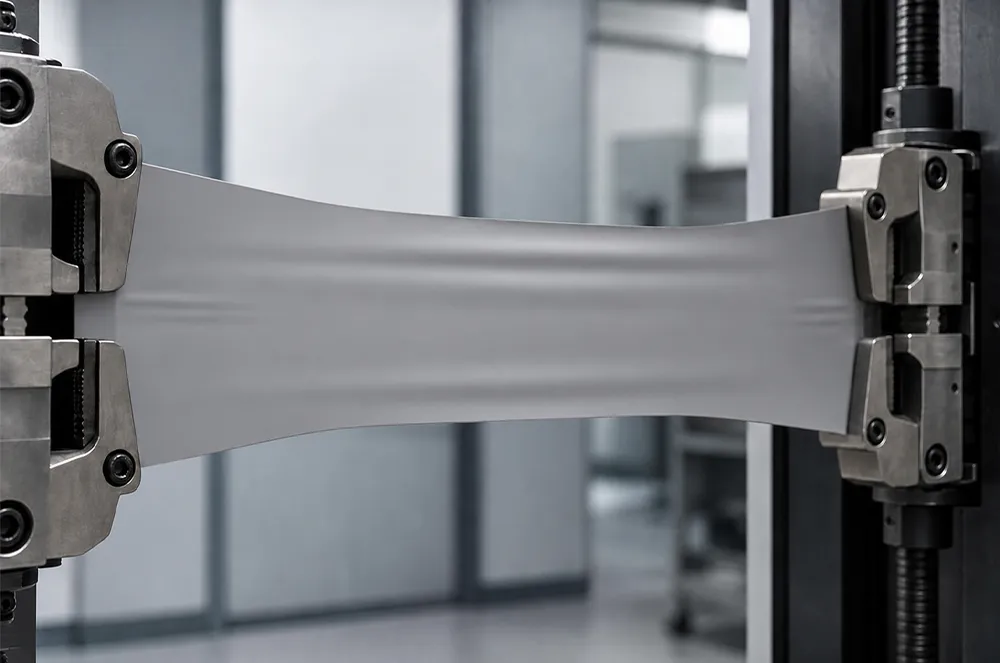
Tensile and tear strength at the correct weight: Trailer tarpaulins need to withstand the dynamic forces of highway speeds, crosswinds, and the stresses of repeated tensioning. A gsm rating of 600–750gsm is often cited as the optimal balance for most fleet operations as it offers sufficient strength without becoming excessively heavy to handle. Higher-weight PVC materials (850gsm or above) provide even greater mechanical margins for heavy-duty or oversized loads.
In addition to these core properties, many professional-grade PVC tarpaulin fabrics can be further enhanced with specialized functional finishes. Fire-retardant treatments that comply with EN 13501-1 or NFPA 701 standards are available, with third-party test reports from accredited labs like SGS or TÜV confirming performance. Anti-static, anti-mildew, and abrasion-resistant formulations can be incorporated into the PVC mixture during the coating process. PVDF surface treatments provide self-cleaning properties and significantly improve resistance to dirt accumulation and chemical exposure.
When selecting material for long-term use or repeated applications, also pay attention to certifications. Many reputable PVC tarpaulin and coated fabric suppliers such as United States-based manufacturers operate under ISO 9001 quality management systems, and their products carry CE, REACH, and RoHS certifications, verifying that they meet international safety and environmental standards.
II. Step‑by‑Step Guide to Securing a Tarp Properly
Once you have chosen the correct PVC tarpaulin for your load, the next step is to attach it to the cargo trailer securely and efficiently. The following procedure synthesizes best practices from experienced flatbed operators and load securement experts.
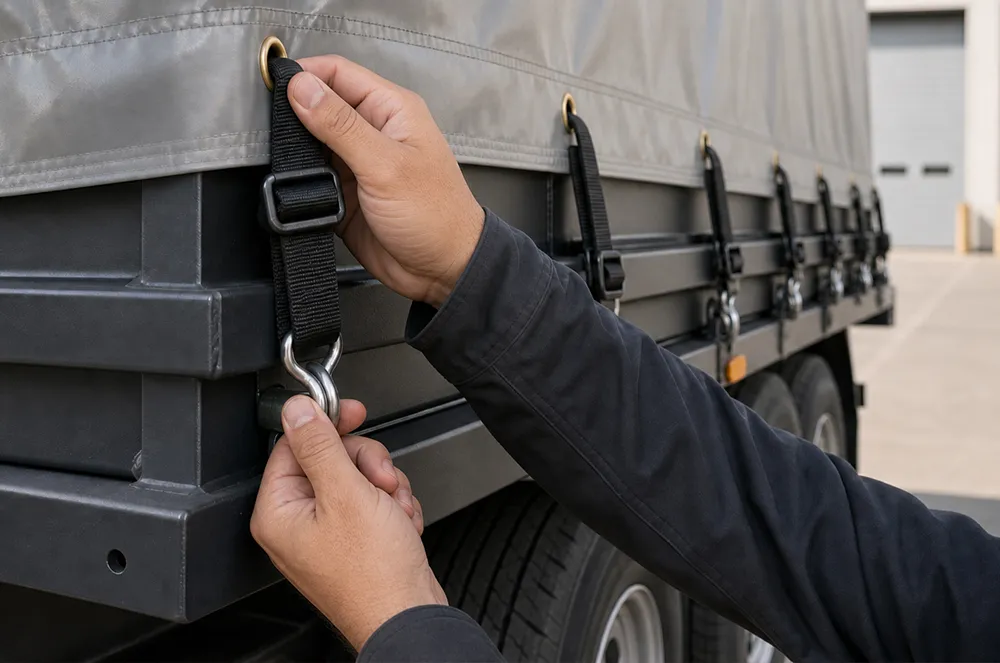
Step 1: Inspect the Tarpaulin and Prepare Your Tools
Examine the tarpaulin well before handling it. Examine the grommets (also called eyelets) for any existing tears, holes, thinning regions, or wear. Grommets must be well fastened and free of corrosion or looseness. If a problem is found, replace the tarp completely or use a repair patch to fix it. A broken tarp will not offer dependable protection.
Put together the required tie-down gear. For anchoring points without grommets, you’ll need heavy-duty bungee cords, ratchet straps, and potentially tarp clips. For heavy-duty loads and high-tension applications, ratchet straps provide the strongest, most secure grasp. Steer clear of cheap bungee cords or flimsy rope that can snap under pressure.
Step 2: Position and Distribute Cargo Evenly
A well-organized load is the first step in proper tarping. To distribute weight uniformly across the deck and within axle constraints, arrange the cargo on the trailer. Before covering the tarp, fasten the items to the trailer using straps or chains. This increases the tarp’s tension and keeps the cargo from moving while being transported. Before using the tarp, cover any sharp edges or corners of the cargo with furniture covers or padded corner protectors to avoid rips and punctures.
Step 3: Lay the Tarpaulin Flat Over the Cargo With Proper Overhang
Select a tarp size that is suitable for your trailer; an extremely large tarp will be challenging to securely fasten, while a tarp that is too tiny will not cover the entire load. Spread the PVC tarpaulin evenly over the cargo after unfolding it. Make sure the tarp reaches at least 12 inches beyond the load on both sides. This overhang provides enough material for attachment and prevents rain and debris from seeping in under the edges. To prevent creases and bunching, which can cause the cover to move or flap in the wind, flatten the tarp for objects with irregular shapes, such pipes or machines.
If using more than one tarp to cover a long or wide load, overlap adjacent tarps by at least 12 inches to prevent water ingress through the seam.
Step 4: Secure the Tarp Starting from the Front and Working Backward
Start at the front. First, attach the leading edge of the tarp to the frontmost anchor points on the trailer, typically metal rings or hooks built into the frame. Then proceed toward the rear, securing the tarp at regular intervals.
Use grommets to your advantage. Most PVC tarpaulin panels are manufactured with grommets spaced every 12 to 18 inches along the perimeter. Thread bungee cords, ropes, or ratchet straps through the grommets and attach them to the corresponding anchor points on your trailer bed or side rails. For best results, work systematically from one side to the other, alternating sides to distribute tension evenly.
Attach both front and rear. Secure the tarpaulin to the trailer’s anchor points at the front, ensuring it is pulled taut. Repeat the process at the back, applying equal tension so that the tarp does not droop or billow in the center. For extra security, use a tarp strap or bungee cord at every available grommet, particularly along the sides and corners.
Tighten ratchet straps correctly. Once each strap is attached to its eyelet and anchor point, crank the ratchet until the PVC tarpaulin is taut—meaning there is no visible slack and the tarp feels snug around the cargo. Do not overtighten to the point of deformation or tearing of the grommets.
Step 5: Reinforce Edges, Corners, and the Center
A tarp’s corners and edges are easily lifted by wind, producing a parachute effect that destroys the tarp, lowers fuel economy, and increases the chance of the load being revealed. The weakest areas of the tarpaulin are its corners. To add extra stability and stop lifting, fasten two straps or bungees in an X pattern to each corner. To prevent them from blowing in the wind, any slack flaps or edges that extend past the trailer should be rolled up and fastened with extra bungees or tucked beneath the tarp.
To avoid center sagging or bulging, add a strap that runs side to side across the middle of the tarp for large trailers or lengthy loads. Making an X-pattern or cross-cording arrangement across the surface of extra-large tarps evenly distributes strain and lessens the possibility of the cover moving in crosswinds.
Step 6: Perform a Short-Drive Check and Final Adjustments
After the PVC tarpaulin has been secured, a quick road test is the last step. After driving the loaded trailer gently for about 50 to 100 feet, stop and take another look at the tarp. Straps that appeared snug at first may get looser due to the early bumps and vibrations. Check for indications of tarp movement or excessive flapping, and tighten any loose fasteners.
Look for any openings where water or road spray might get in. To ensure complete coverage, take a walk around the entire trailer. Before proceeding on your trip, make any required modifications.
It is wise to periodically inspect the PVC tarpaulin at planned rest periods when traveling long distances. Re-tighten straps as necessary, particularly after traveling through regions with strong winds or a lot of rain.
III. Common Mistakes When Attaching Trailer Tarps
Even experienced operators can fall into recurring traps that compromise cargo protection and increase operating costs. Avoiding these errors is just as important as following best practices.
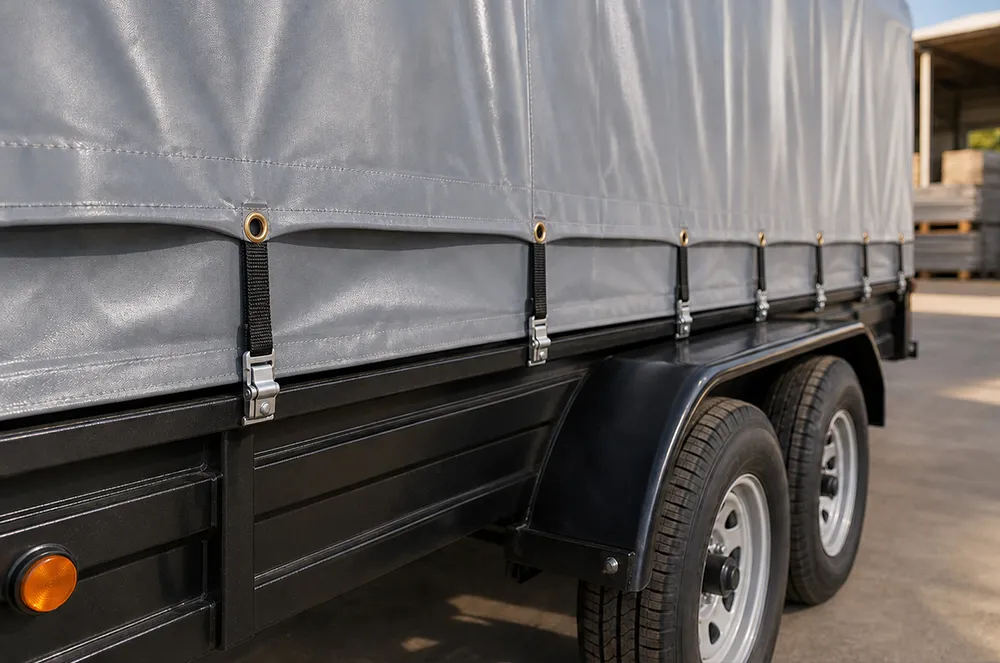
Using the wrong size tarp. A tarp that is too small will not fully cover the cargo, leaving gaps for water ingress and potential shifting. A tarp that is too large creates excess material that is difficult to tension correctly, inviting wind flutter and eventual tearing.
Not using enough tie-downs. Many drivers underestimate the number of straps or bungees needed for a given load. Even when using a premium PVC tarpaulin, insufficient fasteners will allow the tarp to billow, increasing the risk of damage and potential roadside violations. When in doubt, add more tie-down points, and space them at intervals no greater than two feet for heavy-duty loads.
Omitting edge protection for sharp cargo. Hard edges such as steel beams, machinery corners, or lumber ends can puncture even the toughest PVC tarpaulin material during transport. Tearing from sharp objects is a leading cause of premature tarp failure. Always use corner protectors or padding between the cargo and the tarp to prevent costly damage.
Tying the tarp in a way that does not secure it adequately. If the PVC tarpaulin is not tensioned properly, it can flap in the wind and may even fly off entirely as the truck cruises down the road. The constant flapping also accelerates wear at grommet points, leading to tearing around eyelets.
Ignoring damage or loose stitching. Small rips or loose seams can allow water, dirt, and road debris to reach cargo. Over time, UV exposure degrades the material, causing brittleness and cracking. A severely degraded tarp will lose its waterproofing and tear resistance and must be replaced immediately.
Over-tensioning the tarp. Although tightness is essential, overtightening a PVC tarpaulin can tear the grommets out of the fabric or permanently stretch the material, reducing its strength over the long term. The ideal tension feels firm without distortion.
Skipping the short‑drive recheck. Straps often loosen after the first few minutes of travel due to load settlement. Operators who neglect to pull over and tighten after a short drive often arrive at their destination with a loose tarp, water-damaged goods, and avoidable fines.
IV. How Reinforced Tarp Systems Improve Cargo Safety
Beyond simple tarping methods, companies might think about specialized tie-down solutions and reinforced tarp systems to optimize cargo protection, minimize repetitive labor, and improve driver safety. These solutions provide a better level of security by utilizing the inherent strength of premium PVC tarpaulin materials in conjunction with sturdy attachment hardware.
The Role of High-Tensile-Strength Base Fabrics
The PVC tarpaulin itself serves as the mechanical basis of any reinforced system. High-density polyester base fabrics with dense weaves, such 24×22 or 20×20, are used in professional-grade vinyl-coated polyester fabrics. These materials typically have a breaking strength of 2500–3500 N per 5 cm, providing outstanding abrasion and tear resistance that can endure wind pressure and the constant friction of tie-down straps. With a tensile rating of over 8000 N, tarpaulins with cross-laminated construction can lift and secure incredibly huge loads without failing. When utilized in reinforced systems, these fabrics significantly outlast conventional polyethylene substitutes when combined with double-layer PVDF coatings for increased abrasion and chemical resistance.
Ratchet Strap and Cross-Cording Configurations
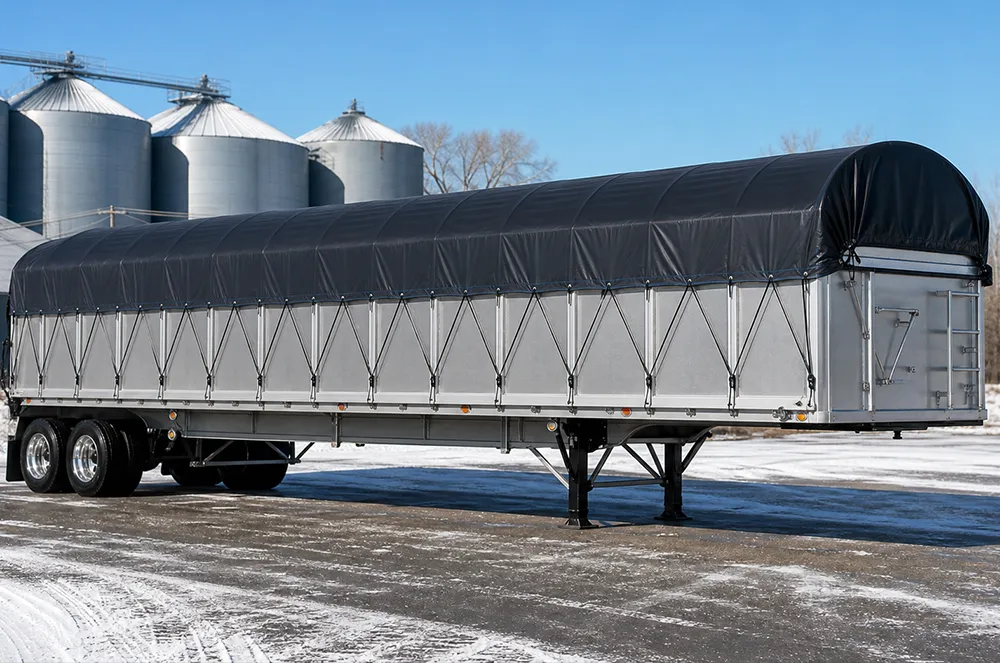
When high tension or long-haul stability is needed, reinforced trailering applications require ratchet straps as the principal form of load securement, even though bungee cords and elastic ties have their role for quick-light duty or temporary attachment. The operator can apply a consistent, measured tension that stays locked while in motion by using a ratchet strap. An additional layer of stability is added by cross-cording the straps in an X pattern over the top of the PVC tarpaulin. This arrangement bridges the straps across the load, distributing tension more uniformly across the whole tarp surface and preventing the cover from moving laterally.
Fully Integrated Lashing Systems
An designed lashing method can drastically cut setup time for fleets that frequently tarp the same model trailer or comparable loads. Usually, these systems are made up of several hook-shaped cable placement parts that are supported in an adjustable manner along the trailer’s perimeter side rail. The parts work in tandem with a specially fitting PVC tarpaulin’s grommeted perimeter to enable quick attachment and disengagement while preserving uniform tension across the cover. In order to increase the clamping force and tear resistance at the most susceptible locations, some sophisticated systems feature triangulated corner members that are made to couple around each corner of an open enclosure, like a dump bed.
Economic and Safety Benefits
Investing in a reinforced PVC tarpaulin system and high-quality tie-down hardware pays dividends in multiple areas:
- Reduced material replacement frequency. While a cheap tarp with simple tie-downs might need to be replaced after a few excursions, a high-durability PVC tarpaulin correctly fastened with a well-designed system might last several seasons in frequent usage.
- Lower risk of cargo claims. Two of the most frequent reasons for cargo claims in over-the-road transportation are water damage and wind-related freight loss. These threats are greatly decreased by a reinforced PVC tarpaulin that remains tightly sealed even in crosswinds.
- Improved driver safety. By reducing the amount of time a driver must spend wandering about the trailer, climbing on loads, or manually altering tarps in inclement weather, a well-designed system lowers the risk of trips, slips, and strains during this dangerous task.
- Compliance with regulatory expectations. In order to ensure overall load securement compliance, roadside inspectors examine tarp condition and attachment techniques. A spotless, properly tensioned PVC tarpaulin secured with sufficient straps conveys professionalism and speeds up inspection procedures.
V.Conclusion
It is not a matter of guesswork to attach a PVC tarpaulin to a cargo trailer. It requires meticulous preparation, appropriate material selection, methodical, step-by-step execution, and an understanding of typical failure points. Fleet operators and independent transporters can safeguard precious products, improve road safety, and lower the total cost of ownership of cargo-covering equipment by beginning with heavy-duty, UV-stabilized, high-tensile-strength PVC tarpaulin and combining it with the proper tie-down regimen.
Haining Lona Coated Material Co., Ltd. is the perfect partner if you are a buyer, a logistics manager, or a maintenance shop looking for a dependable PVC tarpaulin supplier. We create PVC tarpaulin materials with exceptional tear strength, waterproof integrity, UV stability, and weather resilience over the whole temperature range of –30°C to +70°C. We have over 13 years of experience producing high-performance coated fabrics for the international transportation industry. Our factory has state-of-the-art coating and laminating equipment, and we are certified by ISO, CE, REACH, and RoHS, which attest to the high caliber and environmental safety of our products. Additionally, we offer full customisation options for printed graphics, colors, gsm weights, and surface treatments.
For more information on how our PVC tarpaulin products can support your cargo‑covering needs, please visit our website at https:/lonatarp.com/ or browse our offerings on our Alibaba store. Our team is ready to assist you with technical data sheets, sample requests, and volume quotations for your fleet or distribution network. Protect your cargo with the strength and reliability of a PVC tarpaulin engineered to perform.