Maintaining product quality during transit in the flatbed transportation sector requires shielding goods from weather, moisture, dirt, and road debris. The timber tarp is one of the most significant protection measures utilized in the shipping industry. However, the question “What Is a Lumber Tarp?” continues to be asked by a lot of individuals outside the logistics and freight sector.
For the purpose of securing and safeguarding timber, wood products, and other large goods transported on flatbed trailers, a lumber tarp is a heavy-duty protective cover. In contrast to normal tarps, timber tarps are designed to completely cover massive and oddly shaped cargo using strengthened fabrics, weather-resistant coatings, and unique flap designs.
Because they offer dependable protection from rain, snow, UV exposure, and road pollution, modern flatbed timber tarps are extensively employed in North America and other international freight markets. These tarps are frequently used for machinery, steel items, building materials, and industrial equipment that need safe transportation conditions in addition to safeguarding wood products.
Heavy-duty PVC-coated polyester fabric, which offers exceptional durability, waterproof performance, and tear resistance under challenging transportation conditions, is commonly used in the production of today’s truck timber tarps.
The purpose of timber tarps, the materials used to make them, key product characteristics, the distinctions between lumber tarps and regular flatbed coverings, and the best ways to secure them during transportation are all covered in this article.
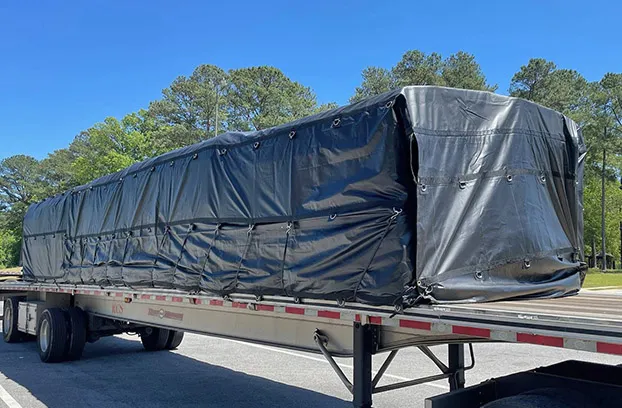
I. How Flatbed Lumber Tarps Protect Wood Products During Transport
Protecting timber and wood goods from environmental exposure during transportation is one of the main goals of flatbed lumber tarps. Appropriate cargo shielding is crucial since wood components are highly vulnerable to rain, extended sunshine, and road contaminants.
Protection Against Rain, Moisture, and Snow
One of the main risks to transported timber goods is moisture. Wood may distort, split, expand, or grow mold and mildew if it gets damp while in transit. This may result in lower-quality products and expensive losses for both suppliers and consumers.
Superior flatbed timber tarps are made of waterproof PVC-coated textiles that keep water out even during heavy rain or snow. During long-distance transportation, the tarps help keep wood products dry by completely covering the cargo load.
Snow and ice buildup may also harm exposed wood goods in colder climates. Heavy-duty wooden tarps provide a barrier of defense that reduces weather-related risks and ensures cargo arrives undamaged.
Reducing UV Exposure and Surface Damage
Certain wood materials, particularly treated or finished goods, might be adversely affected by prolonged exposure to sunlight. Over time, UV exposure may result in surface deterioration, fading, or discoloration.
Transportation businesses may minimize direct sunlight exposure and maintain the quality and appearance of wood items while in transit by utilizing sturdy truck lumber tarps. This is particularly crucial for specialist building materials, finished panels, and high-quality timber.
Lumber tarps protect goods from dirt, dust, insects, and road debris produced during highway transit in addition to providing UV protection. This keeps goods cleaner and reduces the need for repairs or cleaning after delivery.
Improving Freight Security and Delivery Reliability
Improved cargo stability and transit dependability are two other significant advantages of flatbed lumber tarps. When freight is being transported at a rapid speed and the weather is changing, properly fastened tarps help keep it securely shielded.
Reliable truck timber tarps help trucking businesses avoid cargo damage claims, shipment rejections, and customer complaints about contaminated or weather-damaged goods.
In addition to increasing operational effectiveness, this strengthens long-term business ties and consumer confidence in the freight sector.
II. Common Materials Used in Heavy-Duty Lumber Tarps
The materials employed in the production process have a significant impact on the longevity and functionality of a wooden tarp. Fabrics used in heavy-duty transportation settings must be resistant to UV rays, abrasion, wetness, and continuous wind pressure.
PVC-Coated Polyester Fabric 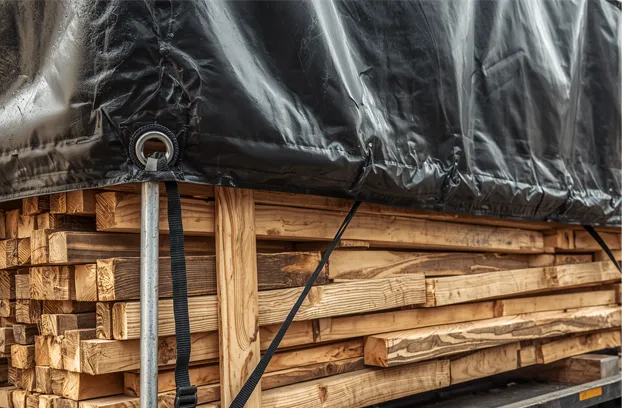
PVC-coated polyester cloth is the most often used material for flatbed timber tarps. This material creates a fabric that is weather-resistant and long-lasting by combining a robust polyester scrim basis with a flexible PVC outer layer.
Tarps with a PVC coating offer superior waterproofing, great tensile strength, and robust tear resistance. They are perfect for frequent commercial usage in the transportation sector because of these qualities.
Furthermore, PVC materials maintain their flexibility in a range of temperatures, making it easier for drivers to fold, handle, and fasten the tarp during regular operations.
Heavy-Duty Vinyl Construction
Heavy-duty vinyl-coated materials weighing between 18 and 22 ounces are used in the production of several high-end truck timber tarps. Under harsh transportation circumstances, thicker materials provide better abrasion resistance and a longer service life.
For large loads, items with sharp edges, and long-distance transportation routes where the tarp is constantly stressed by wind and movement, heavy-duty vinyl tarps are especially appropriate.
Professional flatbed truck drivers frequently use large vinyl timber tarps due to their exceptional strength and longevity.
UV-Resistant and Weatherproof Coatings
Additional protective coatings that increase UV resistance and environmental longevity are frequently seen on contemporary flatbed wooden tarps. These coatings aid in preventing material deterioration, fading, and cracking brought on by extended outside exposure.
Additionally, some premium tarps have anti-dirt and mildew treatments that make washing easier and increase the tarp’s longevity.
For trucking fleets that operate year-round in various temperature zones, these cutting-edge defensive measures are extremely beneficial.
III.Key Features to Look for in Truck Lumber Tarps
Transportation businesses and drivers should take into account a number of crucial factors that directly impact cargo protection performance, durability, and use when choosing a timber tarp.
Reinforced Corners and Double-Stitched Seams
Reinforced structure is one of the most important characteristics of premium truck lumber tarps. During transportation, a tarp’s edges and corners are most stressed, particularly when there is a lot of wind.
Premium timber tarps usually include heavy-duty hems, double-lock stitching, and reinforced corners to increase durability, which lower the chance of tearing or seam failure.
The tarp’s service life is greatly increased by these reinforcements, which also enhance performance under frequent commercial usage.
Multiple D-Rings and Securement Points
For flatbed timber tarps to remain stable throughout transit, a dependable anchoring mechanism is necessary. Rows of reinforced D-rings are often seen around the sides and flaps of heavy-duty tarps.
Drivers may use bungee cords, rubber ropes, or straps to firmly fasten the tarp thanks to these D-rings. Tarp movement is minimized, wind flapping is decreased, and overall road safety is increased with proper fastening.
Additionally, more securement points offer more flexibility when handling freight loads that are large or unusually shaped.
Protective Flaps and Cargo Coverage Design
Truck lumber tarps, in contrast to regular flatbed coverings, are made especially with long side flaps that completely shield the sides of towering cargo loads and timber stacks.
These flap extensions increase covering effectiveness and offer extra weather protection. To lessen abrasion damage during loading and unloading, certain timber tarps additionally have reinforced wear pads in high-contact locations.
While being manageable for drivers during installation, a well-designed tarp guarantees total cargo protection.
IV.Differences Between Lumber Tarps and Standard Flatbed Covers
There are significant distinctions between ordinary flatbed coverings and timber tarps, despite the fact that many people use the phrases interchangeably. Transportation businesses may select the best tarp for particular freight applications by being aware of these variations.
Size and Coverage Differences
Overall size and covering capabilities are the main differences. Larger flatbed timber tarps are made especially to cover massive cargo or towering lumber piles.
Typically, standard flatbed coverings are smaller and designed for freight loads that are lighter or have a lower profile. Long side drops and bigger dimensions are features of lumber tarps that completely shield exposed cargo surfaces.
Material Strength and Durability
Compared to regular flatbed coverings, timber tarps are often made of thicker, more durable fabrics since they are used for larger freight and longer transit routes.
Strong winds, a lot of rain, and frequent handling are just a few of the harsh transportation circumstances that heavy-duty truck timber tarps are designed to endure.
They are more suited for professional freight operations involving industrial or construction products because of their increased durability.
Specialized Cargo Applications
While flatbed lumber tarps are designed especially for timber, building materials, and big cargo, standard flatbed tarps are frequently utilized for general freight protection.
Their design prioritizes long-distance transit dependability, waterproofing, and optimum side protection. Because of this, timber tarps are frequently seen as necessary equipment for fleets of flatbed trucks that transport construction and wood materials.
V. Best Practices for Securing Lumber Tarps on Flatbed Trucks
If a tarp is not securely fastened, even the best tarp cannot function as intended. Transportation efficiency, driver safety, and cargo safety all depend on proper tarp placement.
Ensure Proper Load Preparation
Drivers should thoroughly examine the cargo load before to putting truck lumber tarps. During transportation, the tarp may sustain damage from sharp edges, projecting corners, or shaky cargo placement.
To reduce friction and puncture hazards, protective corner guards or edge protectors should be installed as needed.
In addition to making the tarp surface smoother, proper load preparation lowers wind resistance when driving.
Use Secure Tie-Down Systems
Reliable tie-down methods like rubber straps, bungee cords, or winch straps should always be used to attach heavy-duty flatbed timber tarps.
To avoid loose spots or excessive stress concentration, drivers should equally distribute tension across all securement points. When traveling on a roadway, uneven fastening may result in tarp flapping, early wear, or safety risks.
Frequent inspections during transportation are also crucial, particularly on long-distance routes where weather and wind conditions might fluctuate.
Maintain Proper Tarp Storage and Maintenance
Truck timber tarps should be cleaned and maintained correctly after use to extend their useful life. If tarp materials are not treated, dirt, moisture, and chemical residue can progressively degrade them.
Tarps should be fully dried after transit before being folded and stored in a hygienic, secure location. Regular checks for rips, broken seams, or worn D-rings can also assist avoid unplanned malfunctions on subsequent travels.
Over time, regular maintenance lowers replacement costs and guarantees long-term performance.
VI. Custom Lumber Tarp Solutions for Different Transportation Needs
Standard tarp requirements might not always be the best option because different customers have different transportation circumstances and cargo kinds. As a skilled producer of truck and flatbed timber tarps, our business provides adaptable customizing services based on real-world transportation applications. Customers can alter the materials, fabric weight, thickness, colors, sizes, and structural elements to suit their working conditions and cargo protection needs. We can offer specialized solutions for various freight transit requirements, whether the application calls for lightweight waterproof tarps, extra-heavy-duty PVC materials, reinforced corner designs, longer side drops, or bespoke colors and brand printing. Customers may benefit from increased durability, simpler operation, greater cargo protection, and a more polished transportation look as a result.
VII.Conclusion
What Exactly Is a Lumber Tarp? It is a heavy-duty protective cover made especially to safeguard big freight and timber from environmental damage, weather, and road debris while in transit.
By enhancing freight safety, cargo protection, and transport dependability, contemporary flatbed and truck timber tarps are essential to the flatbed trucking sector.
Lumber tarps are now a necessary tool for professional freight carriers carrying industrial commodities and wood products because of their increased waterproof performance, strengthened structure, and long-lasting PVC-coated materials.
Purchasing premium lumber tarps is still one of the best methods to safeguard cargo, lower operational risks, and increase overall logistics efficiency as transportation requirements continue to change.