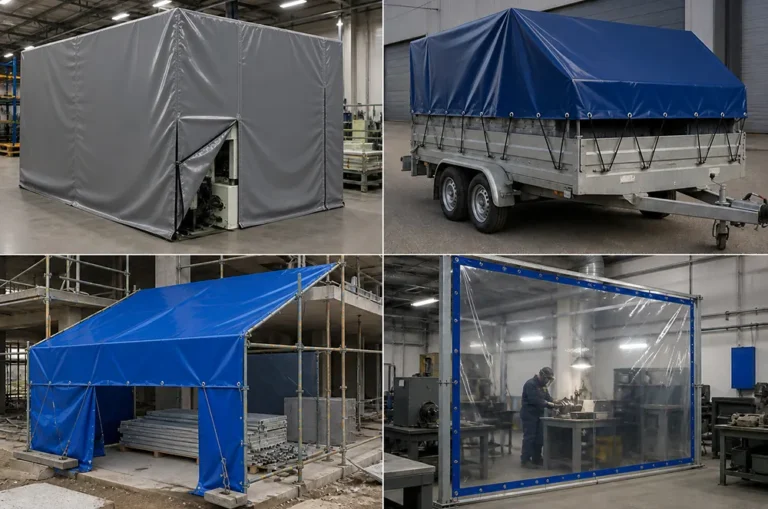
Construction tarps for jobsite protection are temporary covers used to control weather exposure, dust, debris, material damage, and work-area separation on commercial building sites. A contractor may use them over pallets, steel, lumber, scaffolding zones, unfinished openings, equipment, or ground-level staging areas.
The mistake I see most often is treating a construction tarp as a simple sheet. On a real jobsite, the cover is pulled, folded, tied, dragged, exposed to rough edges, and sometimes installed in wind or rain. If the specification is too light, the failure usually starts at the corner, hem, grommet, or a repeated abrasion point.
This guide focuses on B2B buying decisions for contractors, distributors, project managers, and procurement teams. The goal is to help buyers define the jobsite risk first, then choose material, reinforcement, size, fastening, packing, and sample confirmation before custom production.
I. What Construction Tarps Protect on a Jobsite
Construction tarps protect more than one type of asset. They can shield building materials from rain, reduce dust movement, separate clean and dirty work zones, cover unfinished surfaces, and keep temporary storage areas more manageable. On some sites, the same project may need different tarp specifications for material piles, scaffolding, floor protection, and equipment cover.
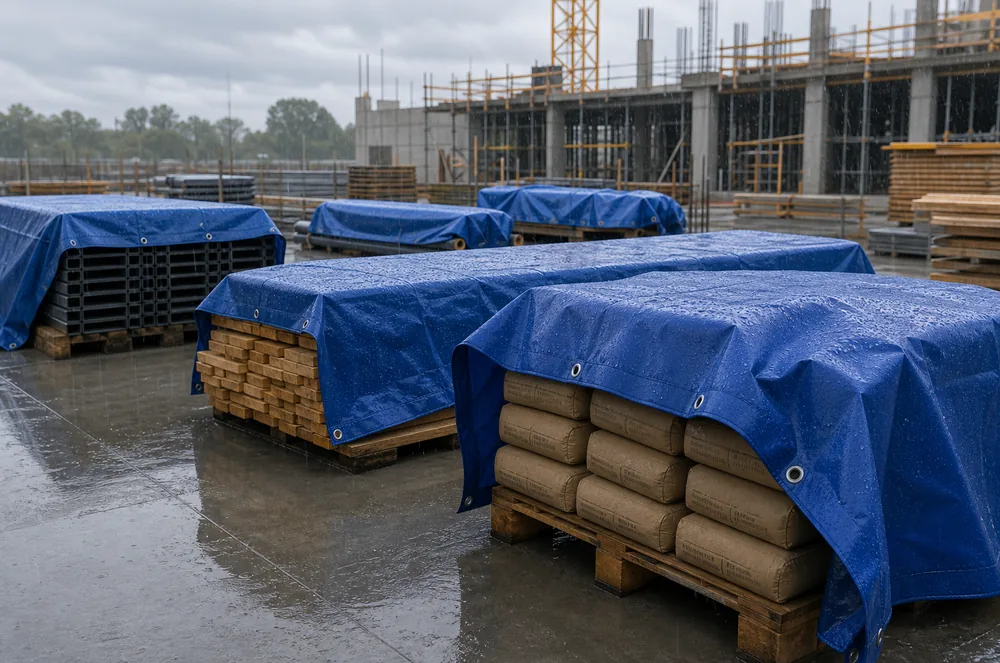
For a buyer, the first question should be: what damage are we trying to prevent? Wet cement bags, corroded metal parts, dusty equipment, wind-blown debris, and contaminated floor areas do not require exactly the same cover. When that risk is clear, the tarp can be specified as a working tool rather than a generic emergency cover.
A dedicated construction tarps solution is usually more useful than a one-size sheet because it can be built around the actual site condition. Finished size, edge layout, fabric weight, color, and attachment method all change how the cover performs after workers start using it every day.
Another point is accountability. When a tarp is used on a commercial site, many teams may touch it: material suppliers, subcontractors, site workers, and loading crews. If the cover is too small, too slippery, or too hard to secure, the problem may not appear during purchasing but will appear during daily coordination. A practical specification reduces arguments on site because everyone can see how the tarp is meant to be used.
II. Match the Tarp to Weather, Dust, and Surface Risk
Weather protection is often the first reason buyers ask for construction tarps, but rain is only one part of the problem. UV exposure, wind pressure, jobsite dust, dirty runoff, and contact with rough surfaces can all shorten service life. If the tarp is fixed vertically, wind load may matter more than water resistance. If it lies over sharp material, abrasion may be the main risk.
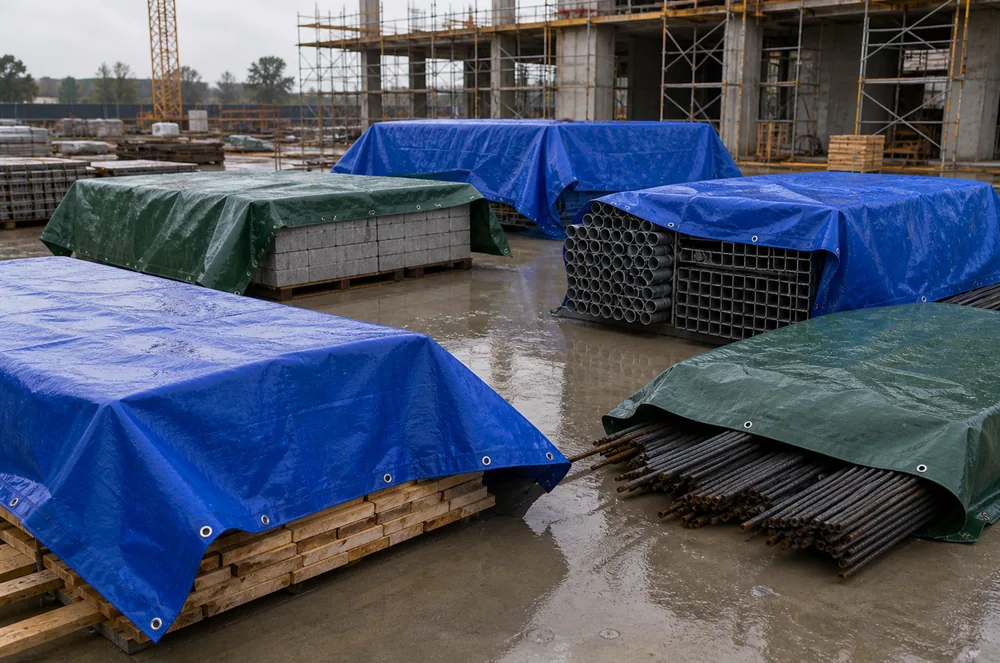
For outdoor material storage, a waterproof PVC-coated fabric is normally a strong direction because it can resist rain, clean more easily, and support welded seams. For temporary barriers or partial enclosures, the buyer should also think about airflow, fixing points, and whether fire-retardant performance is required by the project.
Some projects are part of a larger industrial and construction tarpaulin plan. In that case, I prefer to separate the tarp functions before quoting: material cover, scaffold sheeting, equipment cover, welding area, debris control, or temporary weather screen. Clear separation prevents one specification from being forced into every task.
Where water exposure is the priority, buyers may compare the requirement with a broader waterproof cover specification. The difference is that construction tarps often need more attention to handling damage, repeated tying, rough edges, and mixed-use jobsite movement.
Dust and debris control need a different way of thinking. A tarp used inside a renovation area may not need the same UV resistance as an outdoor cover, but it may need flexible handling, easy cleaning, and enough puncture resistance to survive contact with scrap material. If the tarp will be used near public walkways or finished surfaces, color and cleanliness may also matter because the cover becomes part of the visible site management system.
III. Fabric Strength, Reinforcement, and Edge Design
Fabric strength is not only about choosing the highest GSM. A heavier tarp can improve durability, but it also increases roll weight, manual handling effort, storage volume, and shipping cost. A project team that moves covers every day may prefer a balanced construction rather than the heaviest possible fabric.
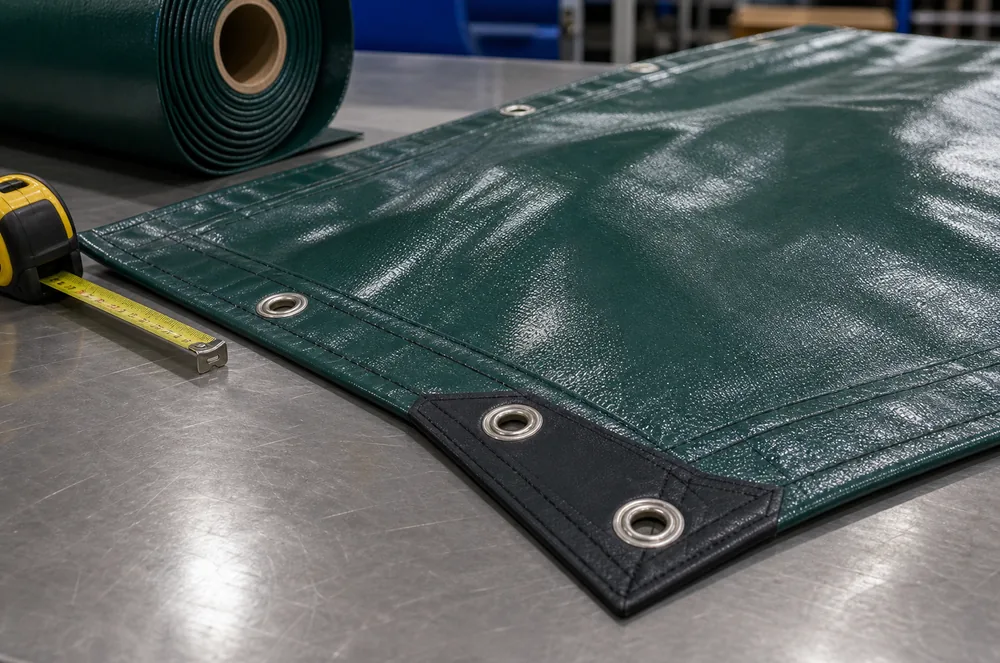
Edge design deserves serious attention. The flat middle area of a tarp may stay intact while the corners fail because workers pull from the same points again and again. Reinforced corners, welded hems, correct grommet spacing, and suitable strap or rope positions can be more important than buyers expect.
For demanding work zones, heavy duty tarps may be the right direction, especially when covers must resist abrasion, repeated folding, and outdoor exposure. For scaffold zones, buyers should review wind load, visibility, fixing distance, and local safety requirements before choosing scaffold tarps or related sheeting.
If heat, sparks, welding, or flame-risk areas are involved, do not assume a normal waterproof tarp is enough. A fire retardant tarps direction should be discussed early, including the performance requirement, certificate expectation, and whether the tarp will be used near hot work or only near general construction activity.
In factory review, I also look at how the tarp will be packed and transported. A large finished panel may be strong, but if it is folded too tightly or packed without a clear handling plan, the site team may damage it before installation. For large projects, consistent folding, clear bundle size, and practical labeling outside the final packaging can make warehouse and jobsite handling smoother.
IV. Jobsite Handling Details That Change the Specification
The same tarp can behave very differently depending on how workers handle it. A tarp that stays over one material pile for two weeks has a different stress pattern from a tarp opened and closed twice a day. Covers used as temporary side screens may need more fixing points than covers used over flat pallets.
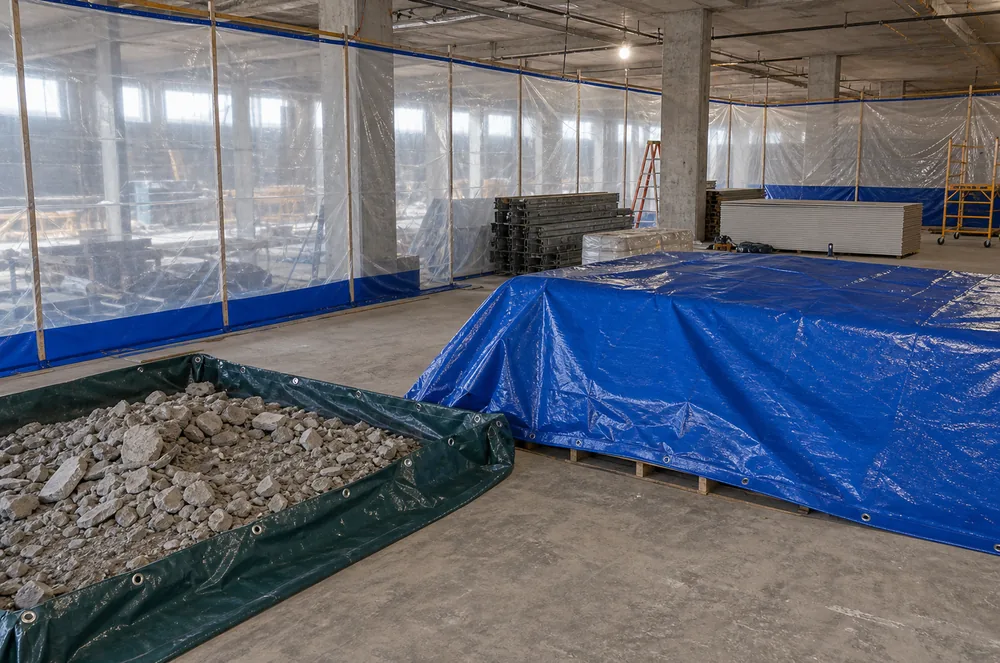
Before finalizing size, I like to know whether the tarp will be tied to scaffolding, wrapped around material, laid flat, suspended, or dragged between zones. That information changes the allowance, hem width, hardware choice, and packing method. A tight measurement may look efficient on paper but become difficult to install after welding and edge reinforcement.
Drainage is another detail that should not be ignored. If a tarp creates water pockets, the added weight can pull against grommets and seams. If dirty runoff flows under stored materials, the buyer may need a different layout, slope, or panel size. Good jobsite protection is partly material selection and partly installation logic.
For repeat construction projects, I suggest testing the first tarp in the most difficult position rather than the easiest one. If the first approved sample only covers a clean pallet in a warehouse, it may not reveal abrasion, wind, or fastening problems. A short site trial can show whether the edge reinforcement, grommet interval, and fabric weight are realistic before the buyer repeats the same specification across many covers.
| Jobsite condition | Specification focus | Buyer note |
|---|---|---|
| Outdoor material storage | Waterproof PVC fabric and welded seams | Check drainage and tie-down stress |
| Rough debris or sharp edges | Higher abrasion resistance and reinforced corners | Do not choose only by finished size |
| Scaffold or vertical screen | Wind load, fixing points, and panel size | Confirm local site requirements first |
| Hot work nearby | Fire-retardant direction and certificate review | Do not substitute normal waterproof fabric |
V. What Contractors Should Confirm Before Custom Production
Before a construction tarp order moves forward, the buyer should confirm the working size, installation method, expected exposure period, fabric weight direction, color, edge reinforcement, grommet spacing, packing, and whether the cover will be reused across multiple sites. Photos from the jobsite are often more useful than a short product name.
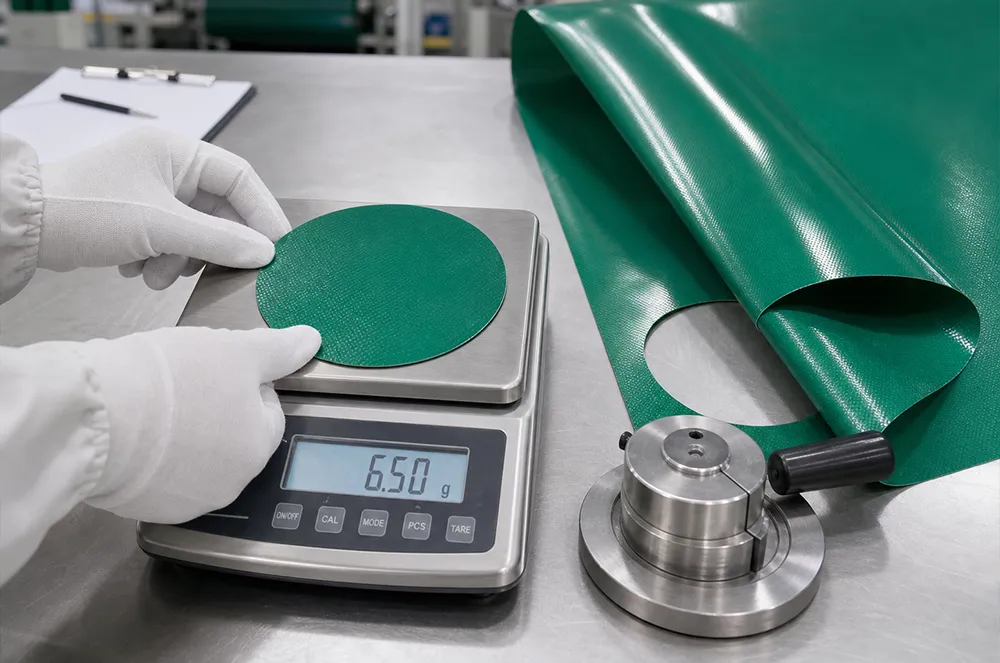
LonaTarp works with custom B2B production, so the normal MOQ is 5,000 square meters. For a contractor or distributor, I prefer to review the sample, edge details, and packing plan before bulk manufacturing. A small approved sample can prevent confusion about hand feel, coating, welding quality, grommet spacing, and color when the order becomes larger.
If the buyer needs repeated panels, a written production sheet is important. Record the final size, fabric, color, GSM, edge structure, hardware spacing, packing quantity, and any site photos. That record helps the next order stay consistent and makes it easier to compare supplier quality across batches.
Quality inspection should also match the way the cover will be used. For construction tarps, I would not check only color and length. I would check welding continuity, eyelet strength, corner reinforcement, fabric surface, roll or fold condition, and whether the finished pieces match the approved sample. This is especially important when one order contains several sizes for different jobsite zones. The inspection record should stay with the order for future repeat production.
Construction tarps work best when they are specified around the real jobsite, not only the product name. A clear project description gives the factory enough information to recommend the right material direction, avoid weak stress points, and deliver covers that contractors can actually use on site.