Curtain side trucks are transport vehicles or trailers that use sliding side curtains instead of fixed side walls. For logistics teams, the main value is flexible side access: cargo can be loaded or unloaded by forklift from the side while still being protected by a PVC curtain system during transport.
This is why I do not look at a curtain side truck only as a truck body style. I see it as a working cargo system. The curtain fabric, top rail, buckles, straps, bottom tensioning, reinforcement, and repair plan all affect whether the truck remains efficient after daily loading cycles.
This article is written for fleet operators, trailer builders, distributors, replacement curtain buyers, and procurement teams who need repeatable side curtain specifications rather than a one-time fabric sheet.
I. How Curtain Side Trucks Improve Cargo Access
A curtain side truck allows workers to open the side curtain and reach cargo along the trailer length. Compared with a closed box body, this can make loading easier when pallets, long items, mixed cargo, or multiple delivery stops are involved. Compared with an open flatbed, the curtain provides better weather and road-spray protection.
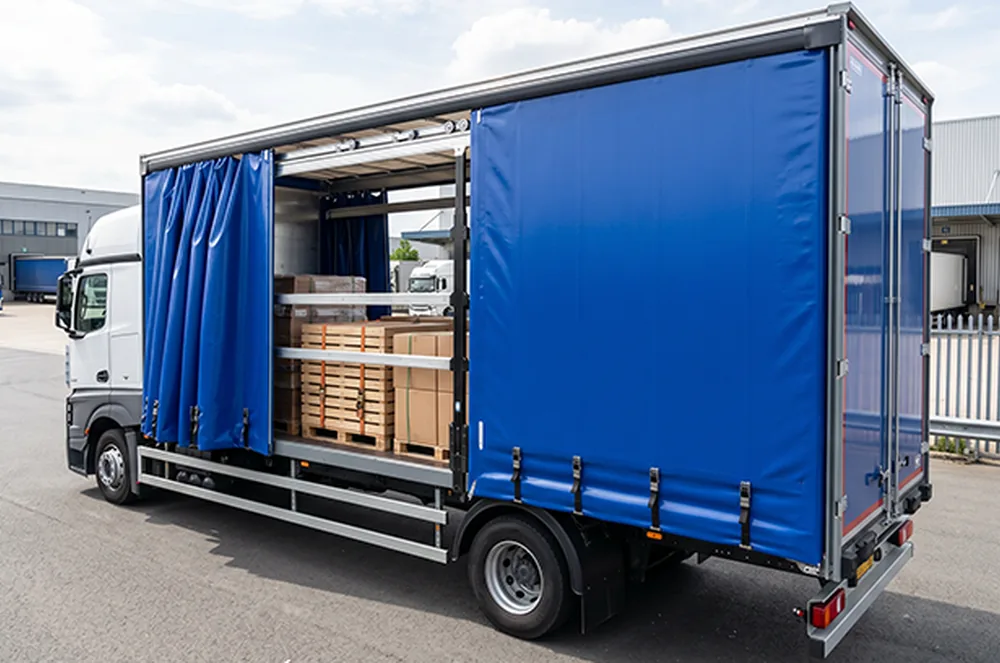
The key advantage is not only speed. Side access can reduce unnecessary cargo movement because workers do not always need to unload from the rear first. For route delivery, warehouse transfer, retail distribution, and industrial supply chains, that flexibility can reduce handling time and improve loading order.
For buyers comparing transport cover systems, a dedicated truck side curtains and tautliner solution is different from a loose tarp. The curtain must slide, tension, fasten, and withstand road vibration as part of the vehicle structure.
II. Where Curtain Side Trucks Fit in B2B Logistics
Curtain side trucks are useful when cargo needs both protection and frequent access. They are common in pallet delivery, building material transport, retail supply, event equipment movement, industrial parts distribution, and regional logistics routes where loading conditions vary from one stop to another.
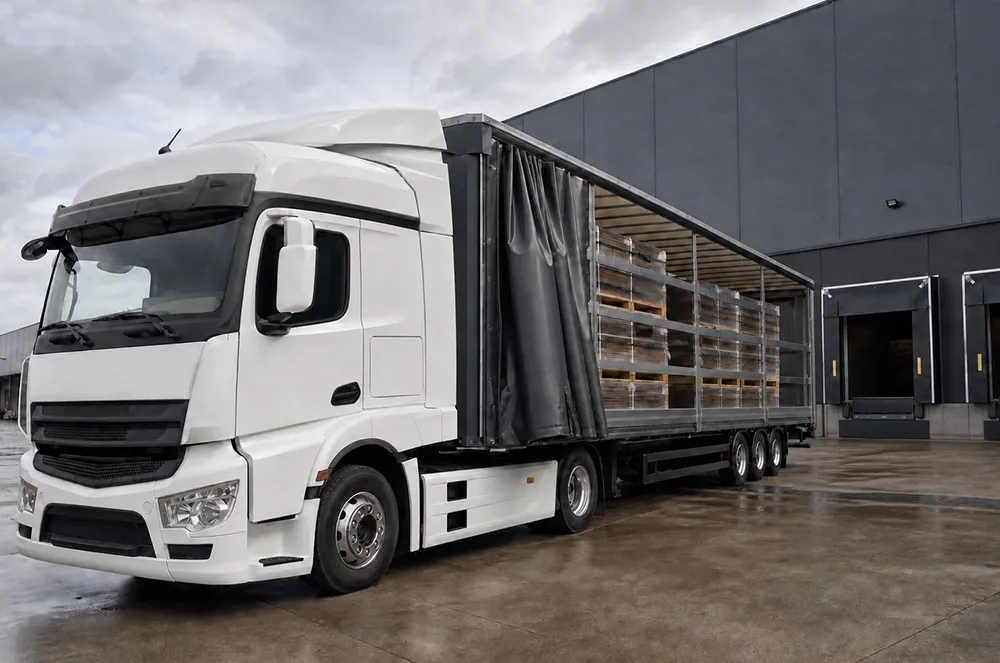
In a transport and logistics tarpaulin plan, I would separate curtain side trucks from flatbed covers, dump truck covers, and container covers. Each system has a different stress pattern. A flatbed tarp is pulled over cargo. A curtain side truck curtain moves along a rail and depends on strap tension, buckles, and lower fixing points.
That movement changes the buying decision. A curtain that looks strong in a fabric sample may still fail if the strap layout, reinforcement, or sliding hardware does not match the vehicle. Buyers should review the complete operating routine: how often the curtain opens, what kind of cargo touches it, where the truck parks, and whether the vehicle works in rain, sun, snow, or dusty yards.
For mixed fleets, consistency matters. If a buyer manages several trailer models, the factory needs clear size records, hardware positions, and replacement rules. Without that information, a replacement curtain may look close but fail at the rail, buckle, or rear closure.
There is also a planning advantage. When curtain specifications are standardized across similar vehicles, the buyer can control spare parts, repair fabric, replacement panels, and driver training more easily. If every vehicle uses a slightly different curtain layout, the fleet may spend more time solving small installation problems than the buyer expected.
III. PVC Curtain Fabric and Reinforcement Requirements
The curtain fabric must balance flexibility and strength. It needs to bend and slide, but it also needs enough tear resistance for straps, buckles, wind load, road vibration, and repeated opening. PVC-coated fabric is commonly used because it supports waterproofing, welding, printing, cleaning, and outdoor durability.
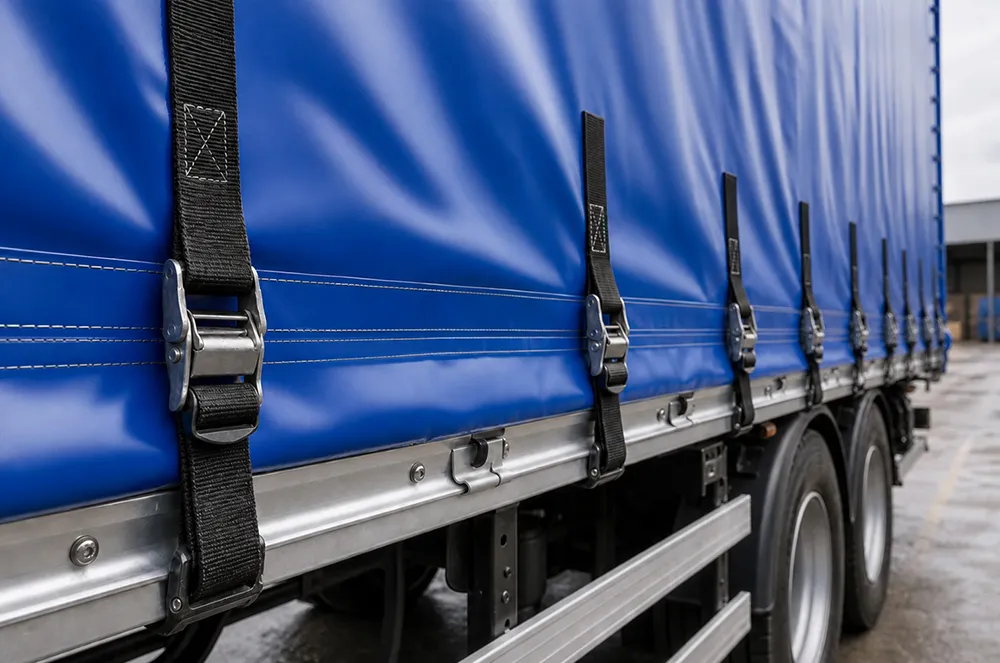
A buyer may start by asking for vinyl tarps, but curtain side fabric should be reviewed more specifically than a general waterproof cover. The curtain is a moving panel, not only a cover. It may need reinforced vertical strap zones, welded seams, bottom wear protection, corner reinforcement, and stable color for fleet appearance.
When the buyer needs local fabrication or replacement programs, tarpaulin rolls can be part of the supply plan. Roll supply may suit manufacturers and repair shops that finish panels locally, while finished curtain panels are better when the buyer wants factory-controlled dimensions, straps, buckles, and edge details.
Printing is another common requirement. Fleet buyers may want logos or safety marks on the curtain, but printing should not be discussed before the material and reinforcement are confirmed. A beautiful printed curtain that stretches, tears, or cannot tension correctly will create more trouble than a plain curtain with the right structure.
Repair behavior is another point worth confirming. A side curtain may be scratched by pallets, dock equipment, or cargo corners. If the fabric and coating are suitable, small damaged areas may be repaired more easily by a local service team. If the material is too weak or the coating quality is unstable, repair patches may not bond well and the buyer may need full replacement sooner.
IV. Hardware, Fit, and Daily Handling Details
The curtain fabric is only one part of the system. Top rails, rollers, straps, buckles, tensioners, rear closure, bottom fixing points, and side posts all affect performance. If one hardware position is wrong, workers may struggle to tension the curtain or close the side evenly.
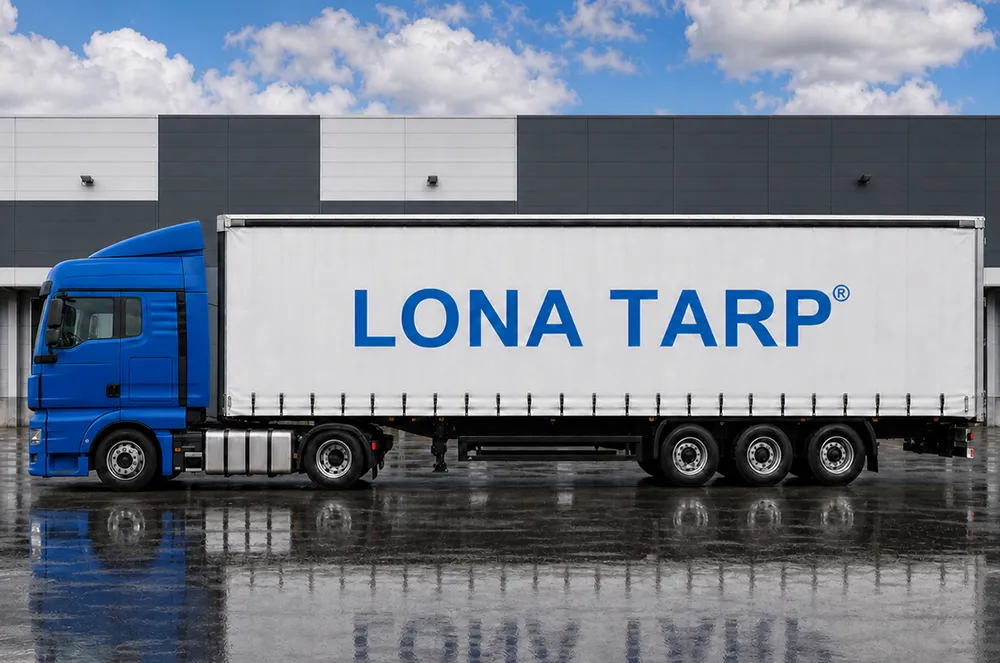
Fit should be checked from the vehicle body, not from fabric size alone. Trailer length, curtain height, rail position, buckle spacing, rear opening, bottom channel, and overlap allowance all need to be measured. If an old curtain is available, I prefer to review photos, drawings, or a sample because it shows how the previous system actually worked.
Daily handling also changes the specification. A curtain that opens many times per day needs smoother operation and stronger repeated-stress areas than a curtain opened only at a warehouse. If cargo has sharp corners or often pushes against the side, reinforcement and repair planning should be discussed before bulk production.
Driver behavior should be considered as part of the design. If the curtain is difficult to close, workers may leave tension uneven or skip some fastening points. That creates wind flap, water entry, and faster wear. A practical curtain system should be strong, but it should also be simple enough for daily use in a busy loading yard.
For replacement work, I also suggest checking the old curtain failure pattern. If damage always appears near the same buckle, rear corner, or lower edge, copying the old design may repeat the same problem. The replacement order is a chance to adjust reinforcement, strap spacing, or wear protection while keeping the vehicle fit correct.
| Fleet condition | Specification focus | Procurement note |
|---|---|---|
| Frequent side loading | Sliding performance and strap reinforcement | Check repeated opening stress |
| Outdoor parking and highway routes | Waterproofing, UV resistance, and wind tension | Confirm climate and route exposure |
| Replacement curtain orders | Old curtain sample, drawing, and hardware map | Do not rely on trailer model name only |
| Fleet branding | Printable PVC surface and color consistency | Approve material before artwork production |
V. What Buyers Should Confirm Before Ordering
Before ordering curtain side truck curtains, buyers should prepare vehicle photos, finished size, curtain height and length, rail and buckle positions, fabric color, printing needs, strap spacing, closure design, quantity, packing method, and expected use condition. If the project is a replacement order, the old curtain is often the best reference.
LonaTarp works with custom B2B production, and the normal MOQ is 5,000 square meters. I recommend confirming a sample or first article before larger production, especially when hardware placement, color, printing, or reinforcement layout must match a fleet standard.
The sample should not be judged by fabric color alone. For curtain side trucks, I would check sliding behavior, strap position, buckle alignment, welding quality, edge reinforcement, and whether the lower tension points match the vehicle body. These details decide whether the curtain is easy for drivers and warehouse teams to operate after installation.
Packaging should be confirmed before shipment too. Finished curtain panels are large and can crease or collect dirt if packed casually. For fleet buyers or trailer builders, clear packing quantity, folding direction, label position, and protection during transport can reduce handling mistakes when the goods arrive at the workshop or warehouse.
For buyers who want non-standard panels, custom made tarps experience is useful because the same logic applies: the factory needs real dimensions, application details, edge design, fastening method, and quality expectations. A curtain side truck system simply requires a more vehicle-specific version of that process.
It may also help to compare the curtain system with flatbed truck tarps. A flatbed tarp protects exposed cargo from the top and sides, while a curtain side system is integrated with the trailer body and designed for faster side access. Understanding that difference helps buyers avoid ordering the wrong type of transport cover.
For repeat orders, keep one approved production record. It should include fabric type, color, finished dimensions, strap layout, buckle type, welding method, printing file if used, packing method, and inspection notes. This record helps the factory reproduce the same curtain instead of reinterpreting the order from the beginning each time.
A curtain side truck becomes efficient when the curtain, hardware, and vehicle routine work together. If those details are confirmed before production, the finished curtain is easier to install, easier to operate, and easier to repeat for future fleet orders.