A tensile structure system works by stretching a flexible membrane fabric between support points so the fabric carries load through tension instead of behaving like a rigid roof panel. The membrane, steel frame, cables, edge plates, anchors, and installation geometry must work together. If one part is wrong, the whole system can lose shape or create stress concentration.
From a fabric supplier’s point of view, I do not treat a tensile structure as only an architectural form. I look at how the fabric is loaded, how seams are welded, how edges are reinforced, how water drains, and how the finished panels will be packed and installed. These details decide whether the membrane performs consistently after the structure is tensioned.
The following sections break the system into practical buying points: how tension works, which components carry load, what fabric performance matters, and what information a buyer should prepare before ordering membrane fabric or custom panels.
I. The Basic Working Principle of a Tensile Structure
The main principle is controlled tension. The membrane is not simply laid over a frame. It is cut, shaped, welded, and installed so the fabric surface becomes stable when it is pulled between fixed support points. The curved shape helps transfer load to masts, beams, cables, and anchors.
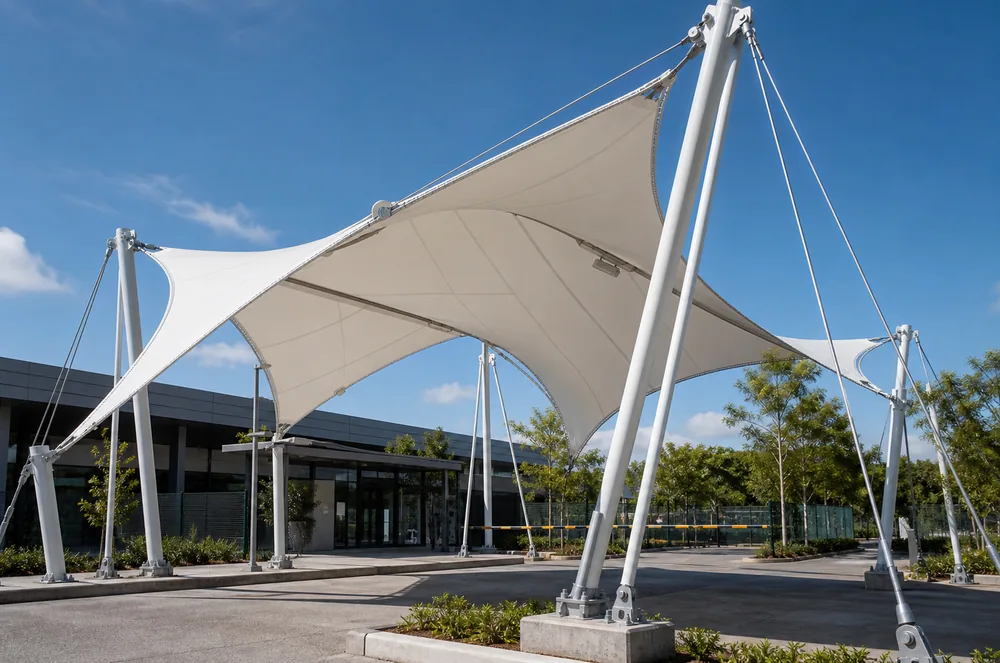
Because the fabric depends on tension, shape accuracy is important. Too little tension can cause sagging, water pockets, flutter, and poor appearance. Too much tension can overload seams, corners, and hardware. A good system balances fabric strength, cutting pattern, steel support design, and installation method.
Many tensile structures are used in entrances, walkways, sports areas, industrial yards, parking areas, and outdoor public spaces. For LonaTarp content planning, this topic sits close to industrial and construction tarpaulin applications because the system must handle outdoor exposure and project-level installation requirements.
The curved surface is not only a design choice. It helps the structure manage wind, rain, and gravity in a controlled way. If the surface is too flat, water can collect. If the curvature is not coordinated with the support points, the membrane may wrinkle or flutter. This is why the fabric panel, steel frame, and installation geometry should be reviewed together.
II. Main Components: Membrane, Frame, Cables, and Anchors
A tensile system usually includes membrane fabric, steel masts or frames, cables, clamps, plates, anchors, edge reinforcement, and drainage details. The membrane provides the surface. The frame creates the main geometry. Cables and anchors transfer tension and keep the fabric stable.
The fabric panel is often produced from rolls, then cut and welded into the required shape. This means the roll width, coating consistency, fabric direction, seam layout, and panel marking all affect the final result. If the fabric supplier and structure designer do not coordinate, the finished membrane may be difficult to install even if the material itself is acceptable.
For buyers who source material and fabricate locally, tarpaulin rolls may be part of the supply route. For buyers who need finished panels, the production team must receive drawings, seam locations, edge pocket requirements, hardware positions, and packing instructions before manufacturing.
Hardware compatibility also matters. Cable pockets, edge plates, grommets, webbing, and corner reinforcements must match the load path. A membrane can look clean in a photo but fail at the edge if the tension hardware pulls through a weak detail.
Drainage components should also be included in the early review. Water should move away from the membrane in a planned direction. If the design creates low pockets, the extra weight can stretch the membrane and overload seams. For outdoor projects, drainage is part of structural performance, not only a maintenance issue.
III. Fabric Performance Requirements
The fabric must resist weather exposure, tension, UV, rain, dirt, and repeated temperature changes. PVC-coated fabric is common for many outdoor membrane applications because it can be welded, produced in large rolls, and customized in color and weight. TPU materials may be considered for projects where flexibility, surface performance, or special technical requirements are important.
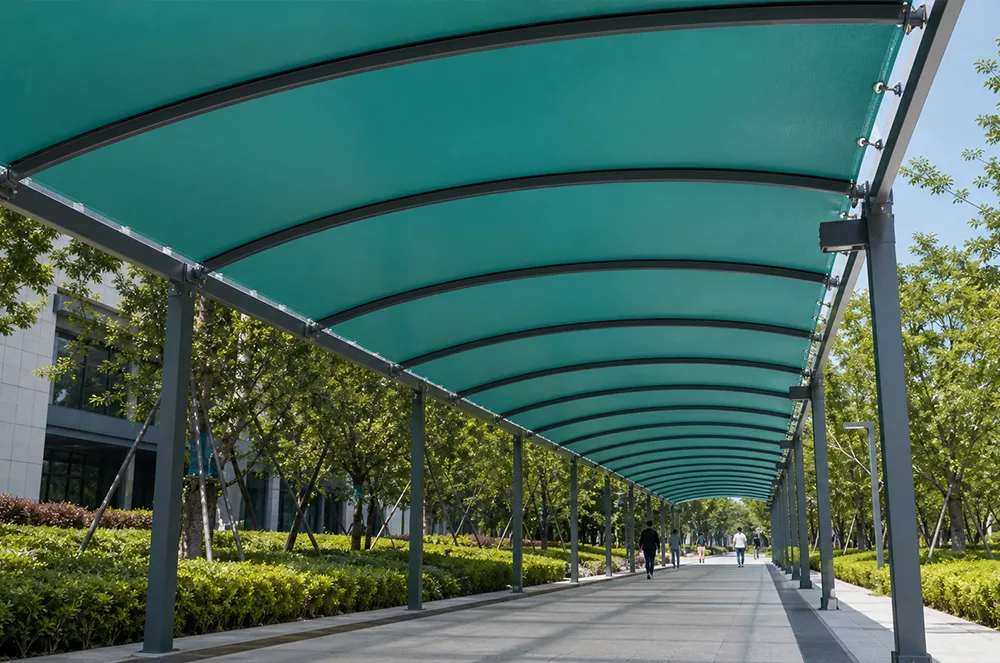
Material selection should be linked to the project environment. A shaded walkway, sports canopy, industrial yard cover, and entrance canopy may have different requirements for tensile strength, coating thickness, color stability, cleaning, and fire performance. The buyer should not choose fabric only by appearance.
Cleaning and maintenance expectations also affect material choice. A bright white membrane may support the architectural look, but it needs a realistic cleaning plan if the site has dust, trees, industrial emissions, or road pollution. For some projects, a slightly different color or surface direction may reduce visible dirt and make long-term maintenance easier.
When special flexibility or coated technical fabric is needed, TPU fabrics may be worth reviewing. For many standard outdoor covers, vinyl tarps and PVC-coated material references can help buyers understand waterproof coating behavior, welding, and outdoor durability, but tensile structures need stricter shape and load review.
Buyers should also confirm certificate expectations before sampling. Some projects may require flame-retardant performance, UV aging data, tensile strength data, or third-party inspection documents. The requirement should be known before production because it can change the material direction and testing plan.
IV. How Fabrication Affects System Performance
Fabrication turns flat fabric into a working membrane panel. Roll consistency, cutting accuracy, welding quality, seam direction, edge reinforcement, cable pockets, and panel marking can all affect installation. A small dimensional error may become a visible wrinkle or a difficult corner when the panel is tensioned on site.
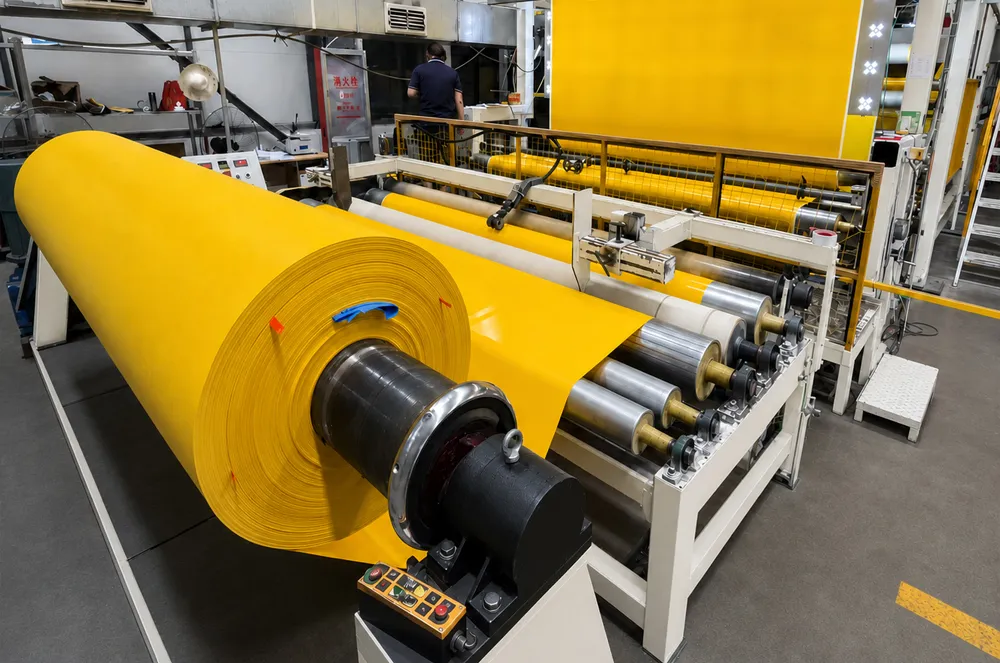
In our review process, I pay close attention to edge details. Most serious tension problems do not start in the middle of the fabric. They start where the membrane meets cables, plates, clamps, corners, or seams. Reinforcement should follow the load path, not simply decorate the edge.
For custom shapes, the production team should confirm drawing version, seam allowance, welding method, panel orientation, marking system, folding direction, and packing sequence. These details make installation smoother because the site team can identify each panel and tension point correctly.
The same logic used for custom made tarps applies here, but the tolerance is stricter. A normal cover can sometimes accept small fit variation. A tensile membrane structure may turn that variation into visible wrinkles, poor drainage, or uneven stress.
Panel marking is especially important when a project uses multiple membrane pieces. If the installer cannot identify the correct edge or orientation quickly, the site may lose time or damage the fabric during trial fitting. Clear marking and packing sequence help the installation team handle large panels with fewer mistakes.
V. What Buyers Should Confirm Before Ordering
Before ordering, buyers should prepare drawings, dimensions, application environment, expected tension direction, fabric color, coating requirement, fire or certificate requirement, seam layout, edge detail, hardware interface, packing method, and inspection criteria. If the buyer only provides a general canopy idea, the factory cannot judge the fabric and fabrication risk accurately.
For LonaTarp tensile membrane fabric and panel work, the normal minimum order quantity is 5,000 square meters. Before bulk production, the buyer should review a material sample or trial detail for coating, weld strength, edge construction, color, and packing method. This sample does not replace engineering verification, but it helps confirm manufacturing quality before larger orders.
Buyers should also confirm who is responsible for structural calculation and installation. A fabric supplier can support membrane material and fabrication details, but the final structure must be reviewed by qualified project engineers. This boundary is important because membrane fabric, steel structure, and site installation share responsibility for final performance.
For export projects, I also recommend confirming how the finished membrane will be folded, protected, and lifted at the jobsite. A large membrane panel can be damaged before installation if it is dragged, stored on rough ground, or opened without a plan. Packing is not a small detail when the product is large, flexible, and difficult to repair after contamination.
Inspection should include more than surface appearance. For membrane panels, I would check roll direction, weld uniformity, edge reinforcement, corner hardware interface, panel marking, and whether the packing sequence matches the installation plan. These checks reduce the chance of discovering a production issue only after the structure is already prepared on site.
If the structure must protect people, goods, or equipment from rain, it may help to compare the membrane requirement with a waterproof cover direction. The fabric may need waterproof coating, but a tensile structure also needs drainage geometry, correct slope, seam placement, and tension control.
A tensile structure system works well when geometry, membrane fabric, reinforcement, hardware, and installation plan are designed as one system. If those details are confirmed before production, the finished membrane is easier to fabricate, easier to install, and more reliable for long-term outdoor use. Clear production records also make later replacement panels and maintenance reviews more consistent.
| System part | What to confirm | Why it matters |
|---|---|---|
| Membrane fabric | Tensile strength, coating, color, roll direction | Controls durability and fabrication stability |
| Edges and corners | Cable pocket, plates, reinforcement, seam layout | Carries the highest tension stress |
| Installation plan | Panel marking, folding, packing, site sequence | Reduces site mistakes and rework |