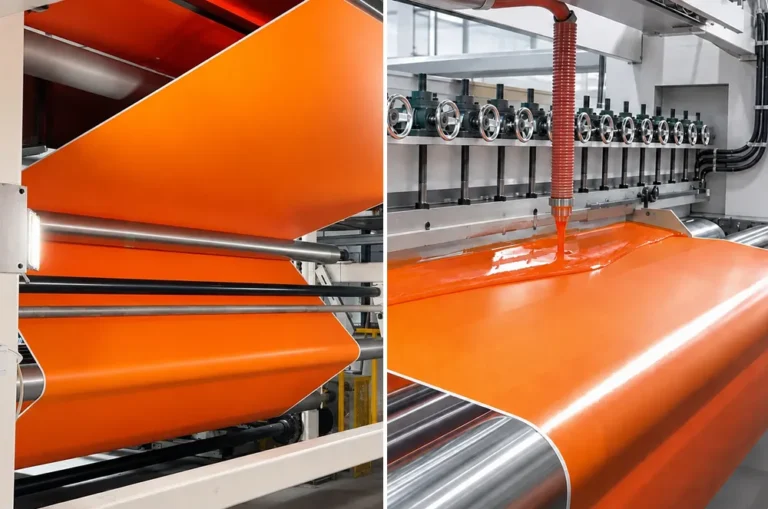
Tarpaulin is a flexible protective material used to cover, shield or separate people, goods, equipment and outdoor areas from weather, dust, dirt and damage. It is often made from coated fabric, plastic sheet or woven material, depending on the level of waterproofing, strength, flexibility and durability required.
In everyday language, many people also call it a tarp. In B2B purchasing, however, the word tarpaulin can refer to several different product forms, including tarpaulin sheets, tarpaulin rolls, finished tarpaulin covers and custom-made protective products.
For buyers, the important question is not only “what is tarpaulin?” but also “which tarpaulin material, format and specification fits my project?”
I. Is Tarpaulin the Same as Tarp?
Tarpaulin and tarp usually refer to the same general product category. Tarp is a shorter, more common word, especially in everyday English. Tarpaulin is often used in product descriptions, technical specifications, B2B purchasing and international trade.
For example:
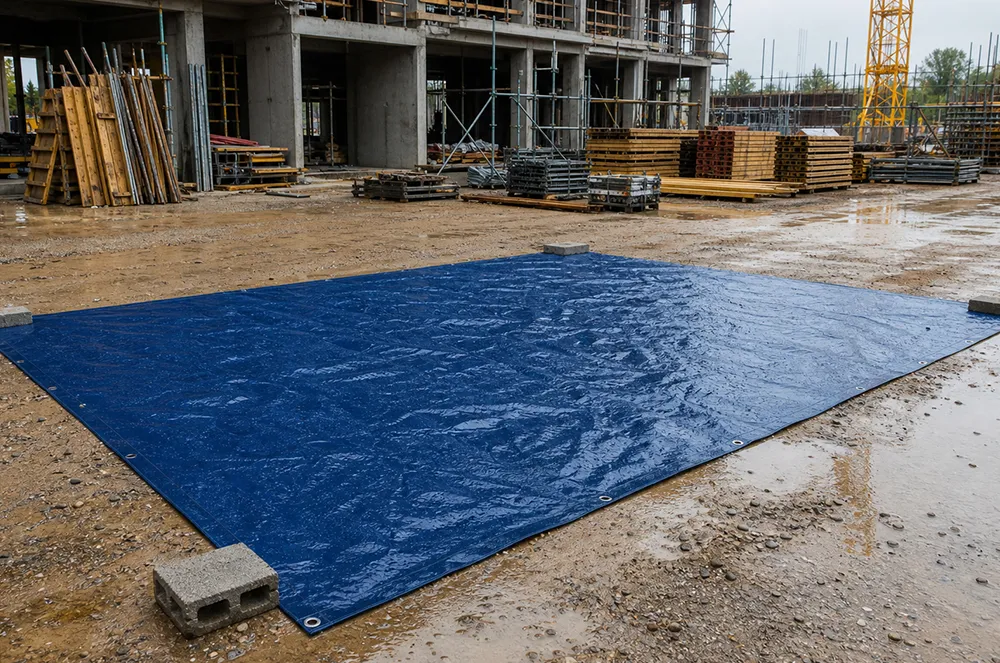
- A contractor may say they need a tarp for a jobsite.
- A factory buyer may request PVC tarpaulin sheets by size and GSM.
- A distributor may compare tarpaulin rolls, covers and finished products for different customers.
The terms are related, but the actual product still needs to be defined by material, size, weight, finishing and application.
II. What Is Tarpaulin Made Of?
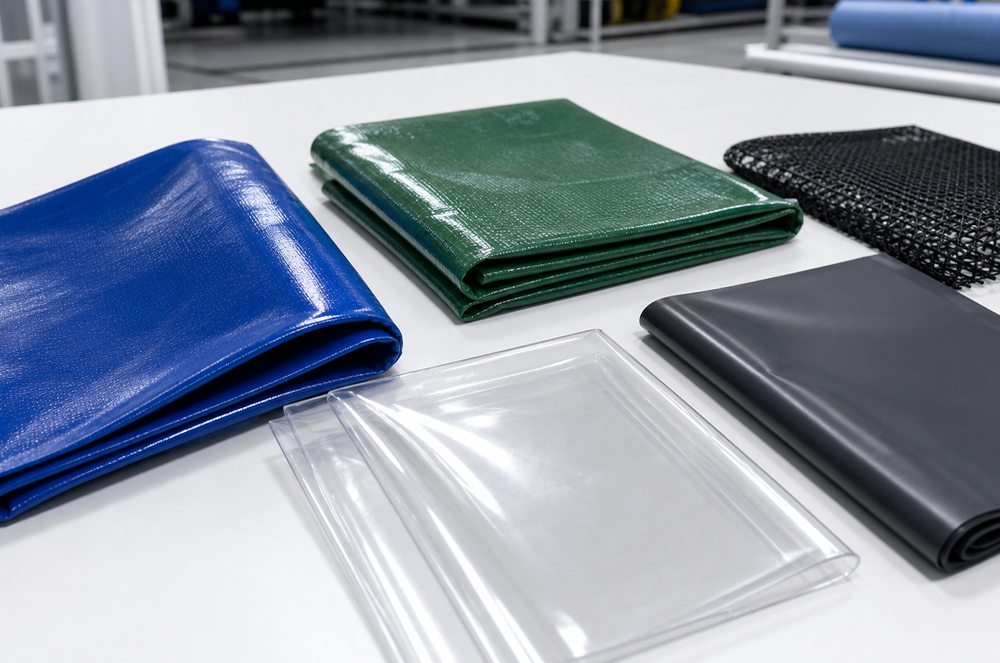
Tarpaulin can be made from different materials. The right material depends on whether the buyer needs waterproofing, UV resistance, flexibility, printable surface, airflow, transparency or low-cost temporary protection.
PVC Tarpaulin
PVC tarpaulin is commonly made from polyester fabric coated with PVC. It is widely used for industrial covers, truck covers, outdoor protection, warehouse curtains, tarpaulin sheets and custom-made products. PVC coated tarpaulin is often chosen when buyers need waterproofing, durability, weldability and repeatable B2B production.
PE Tarpaulin
PE tarpaulin is usually lighter and often used for temporary or budget covering needs. It can be useful for short-term protection, but it should not be confused with heavy-duty PVC coated tarpaulin when long service life, welding, printing or industrial performance is required.
Mesh Tarpaulin
Mesh tarpaulin allows airflow and partial visibility. It is often used for shade, fencing, wind reduction, scaffolding, agriculture and outdoor barriers. Mesh tarpaulin is not fully waterproof, so buyers should choose it for ventilation and screening rather than complete rain protection.
Clear Tarpaulin
Clear tarpaulin is used when visibility matters. It may be used for outdoor curtains, temporary partitions, enclosure panels, greenhouse-related protection or areas where light transmission is needed. Buyers should confirm clarity, thickness, flexibility and edge finishing before ordering.
III. Common Forms of Tarpaulin
Tarpaulin is not always sold in the same form. Understanding the format helps buyers avoid ordering the wrong product.
Tarpaulin Sheets
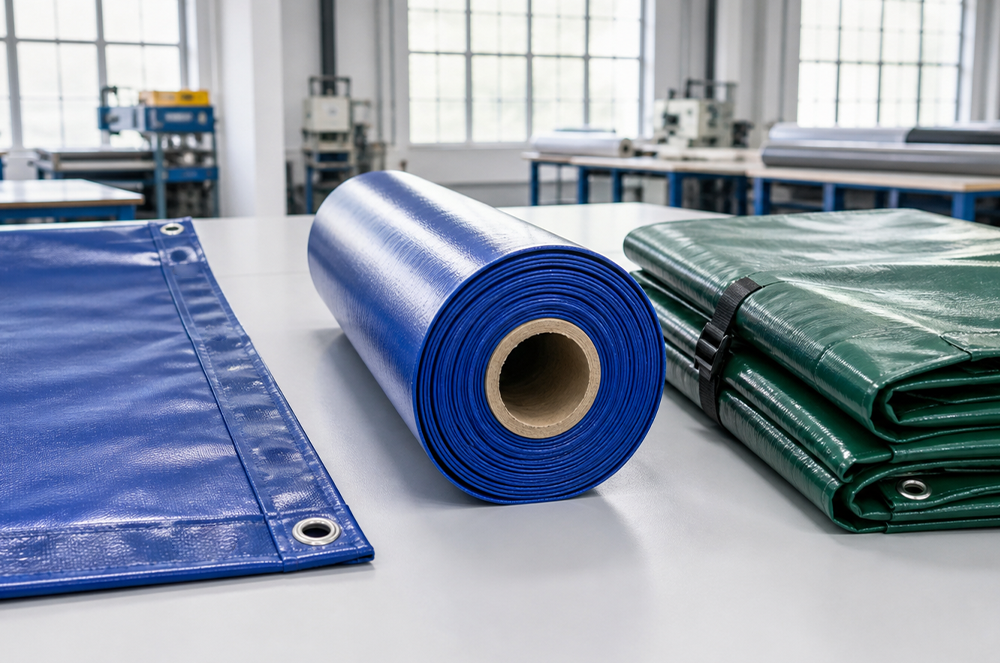
Tarpaulin sheets are cut-size or semi-finished panels used for covering, lining, wrapping or temporary protection. Buyers usually specify length, width, GSM, color, edge finishing, eyelets, quantity and packing.
Tarpaulin Rolls
Tarpaulin rolls are bulk roll materials for factories, fabricators and converters. They are suitable when the buyer will cut, weld, sew or process the material later.
Tarpaulin Covers
Tarpaulin covers are finished products made for a specific covering purpose. They may include reinforced edges, eyelets, straps, D-rings, printing, shaped corners or other hardware.
IV. What Is Tarpaulin Used For?
Tarpaulin is used in many industries because it is flexible, protective and customizable. Common applications include:
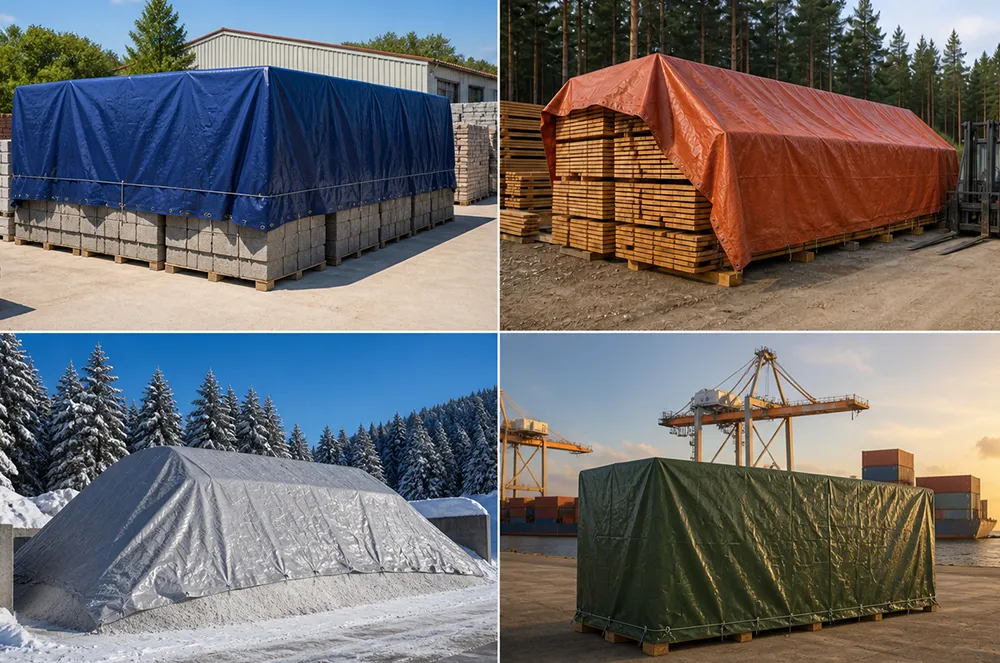
- Construction material covering and temporary roof protection
- Truck, cargo and logistics protection
- Agriculture, hay, grain and machinery covering
- Warehouse curtains and industrial partitions
- Outdoor storage and equipment protection
- Pool liners, ground covers and temporary barriers
- Printed covers for branded or project-specific use
Different applications need different specifications. A temporary dust cover does not need the same GSM, edge finishing or reinforcement as a truck cover exposed to road vibration and outdoor weather.
V. How to Choose the Right Tarpaulin
Choosing tarpaulin starts with the use case. Before asking for a price, buyers should define the following details:
| Buying Factor | What to Confirm |
|---|---|
| Application | What will the tarpaulin protect or cover? |
| Material | PVC, PE, mesh, clear PVC or another option |
| Size | Length, width, drawing or custom shape |
| Weight / GSM | Light, medium or heavy-duty requirement |
| Finishing | Cut edge, hem, welded edge or sewn edge |
| Eyelets / fittings | Spacing, material and edge distance |
| Quantity | Square meters, pieces or roll length |
| Packing | Folding, labels, cartons, pallets or OEM packaging |
For B2B projects, these details are more useful than a general product name. A supplier can give a more accurate recommendation when the application, size, material and quantity are clear.
VI. Is Tarpaulin Waterproof?
Some tarpaulins are waterproof, but not every tarpaulin performs the same way. PVC coated tarpaulin is commonly used for waterproof outdoor and industrial applications. PE tarpaulin can also provide temporary waterproof protection, depending on quality and construction. Mesh tarpaulin, on the other hand, is not designed for full waterproofing because it allows airflow.
Buyers should confirm whether they need full waterproofing, water resistance, UV resistance, abrasion resistance, flame retardancy or other performance requirements before ordering.
VII. Tarpaulin for B2B Custom Projects
For B2B buyers, tarpaulin is often not a single ready-made product. It can be a custom material or finished product produced according to project requirements.
LonaTarp is a PVC coated fabric source factory focused on B2B custom production. We support PVC tarpaulin sheets, rolls and finished cover projects with custom size, GSM, color, coating, edge finishing, eyelets, reinforcement, printing, labels and packaging.
LonaTarp does not focus on retail single-piece sales. Standard B2B orders require project specifications, quantity and production planning. Samples can be confirmed before bulk production, and CE/SGS/ISO documents can be supported when applicable.
VIII. FAQ About Tarpaulin
What does tarpaulin mean?
Tarpaulin means a flexible protective covering material used to cover, shield or protect goods, equipment, outdoor areas or workspaces. It may be made from PVC coated fabric, PE, mesh, clear PVC or other materials.
Is tarpaulin waterproof?
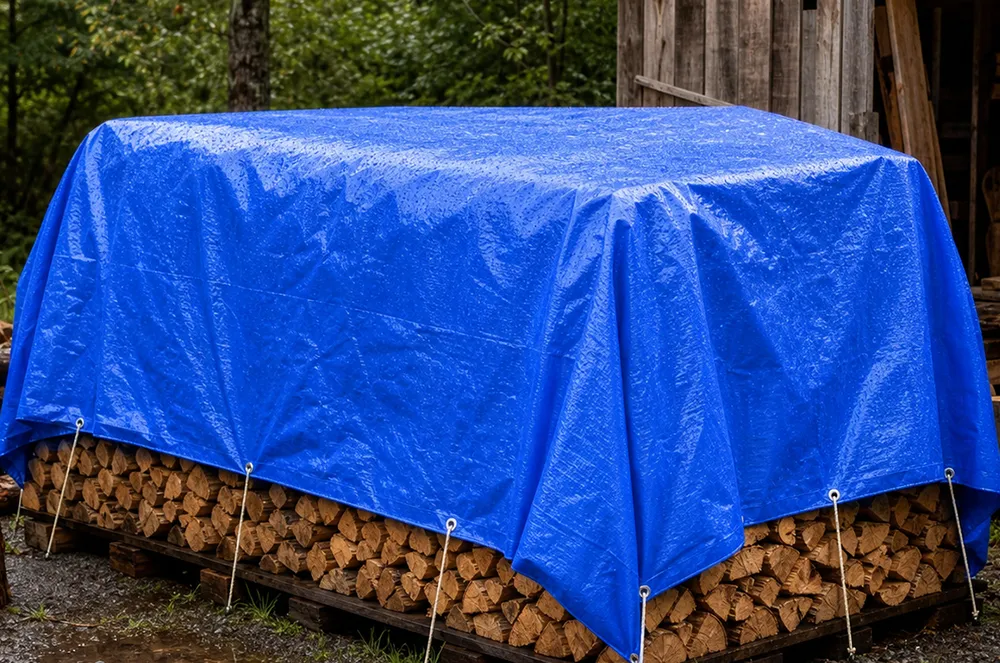
Many tarpaulins are waterproof, especially PVC coated tarpaulin used for outdoor and industrial protection. However, waterproof performance depends on material, coating, seams, finishing and application.
What is the difference between tarpaulin and tarp?
They usually refer to the same general category. Tarp is the shorter common term, while tarpaulin is often used in product descriptions, specifications and B2B purchasing.
What is the best tarpaulin material?
There is no single best material for every project. PVC tarpaulin is often chosen for durable waterproof B2B applications, PE tarpaulin for temporary budget use, mesh for airflow, and clear PVC for visibility.
Can tarpaulin be customized?
Yes. B2B tarpaulin can be customized by size, GSM, color, material, edge finishing, eyelets, reinforcement, printing, labels and packaging.