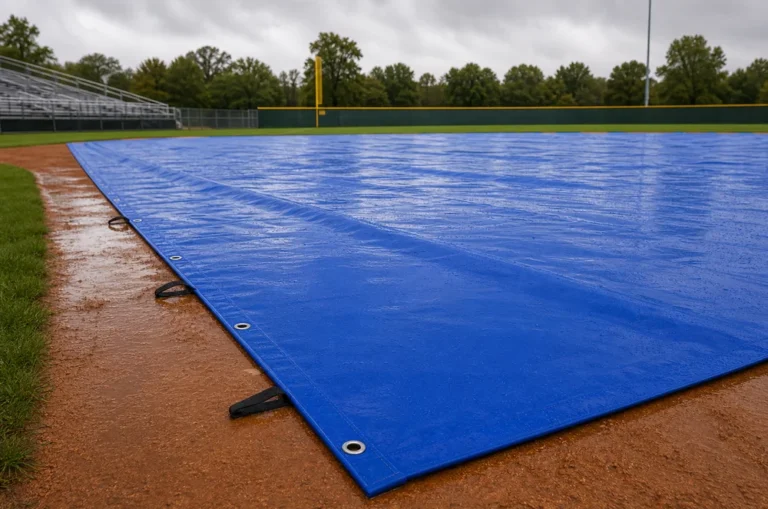
An emergency roof tarp is a temporary waterproof barrier used after storm damage to slow or stop rainwater entering through exposed roofing. It should cover more than the visible hole, sit above the leak path, shed water down the roof slope, and stay tight enough that wind cannot lift the edges. If the tarp is too small, placed below the real entry point, or fastened only at a few corners, water can still travel under it and damage ceilings, insulation, equipment, and stored goods.
For contractors, property managers, restoration teams, and distributors, the real question is not simply “Which blue tarp should we buy?” The more useful question is how the tarp will be used during the first hours after a storm. A reliable waterproof cover for roof emergencies needs the right size, edge strength, handling weight, fastening points, and inspection plan. The following process keeps the article focused on field use rather than a generic tarp selection checklist.
I. Check Safety And Document Damage Before Covering The Roof
The first step after a storm is not tarp installation. It is safety control. High wind, hail, falling branches, and broken roofing materials can leave a roof unstable or slippery. Your repair team should confirm ladder position, electrical hazards, roof pitch, weather conditions, and whether the structure can be accessed safely. If the roof is unsafe, the tarp work should wait for qualified roofers or emergency restoration personnel.
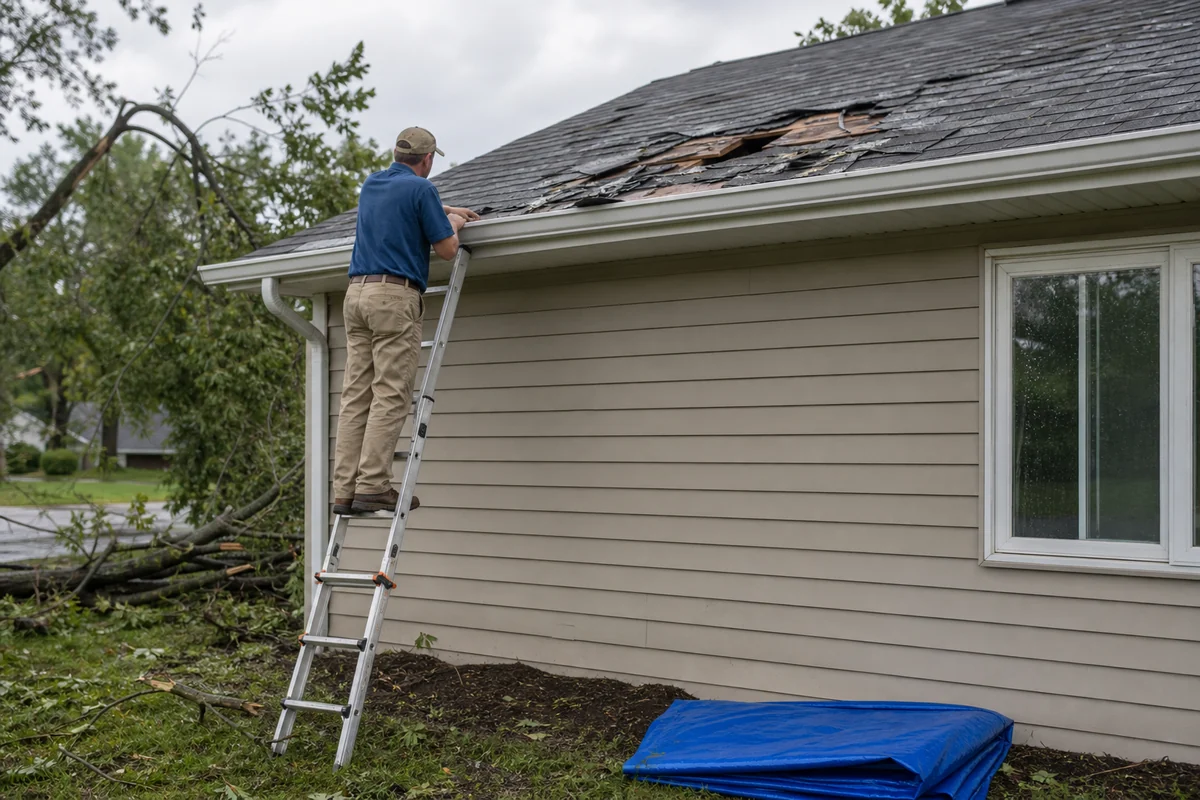
Storm damage is often larger than it looks from the ground. Missing shingles, raised flashing, cracked ridge areas, punctures from branches, and exposed underlayment can let water move sideways before it appears indoors. A ceiling stain may sit several feet away from the actual roof entry point. That is why the repair team should look for the full water path, not only the most obvious hole.
Before the tarp is installed, take clear photos of the roof damage, indoor leaks, wet insulation, affected inventory, and any damaged equipment. These records support insurance discussion and repair planning. They also help your procurement team improve future emergency tarp stock, because repeated storm response usually reveals the same weak points: undersized sheets, poor edge strength, missing tie-down points, or material that becomes difficult to handle in bad weather.
II. Choose A Tarp Size That Reaches Beyond The Damaged Area
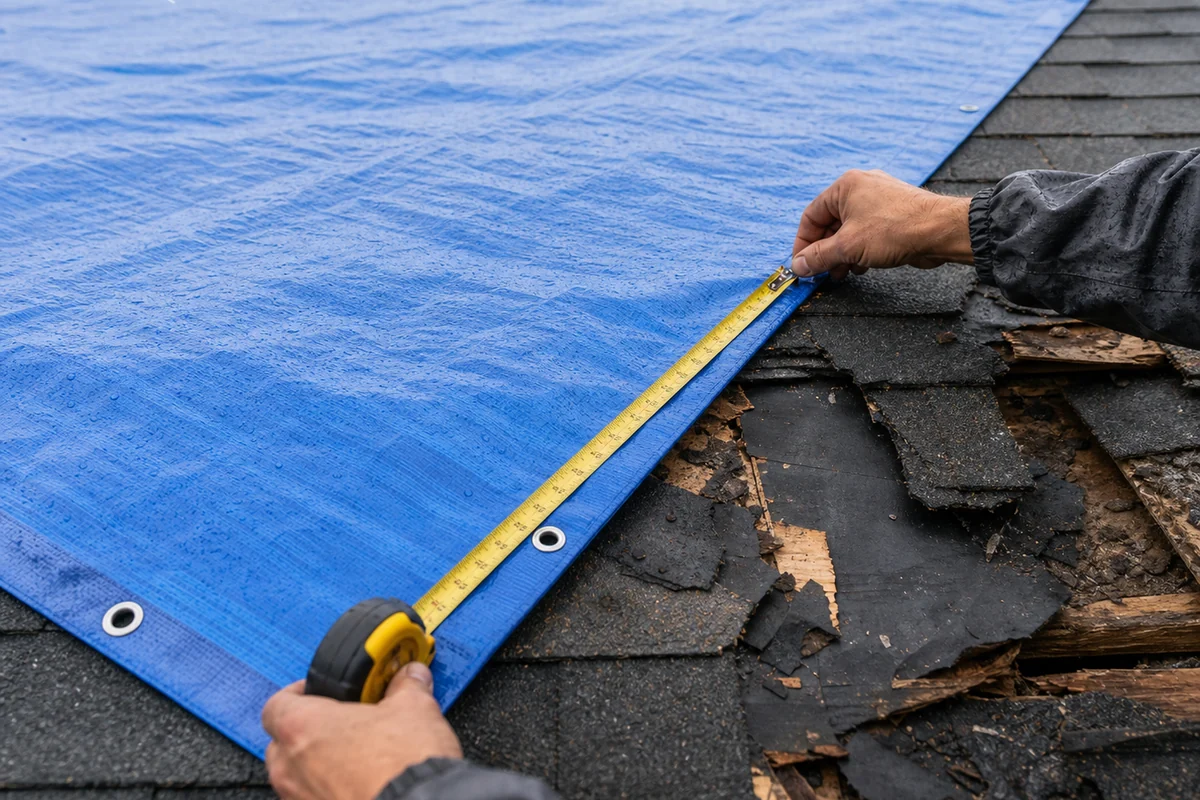
A roof tarp should extend well beyond the damaged area on all sides. The upper side is especially important because water flows downward. When possible, the tarp should reach over a ridge, valley edge, or other safe high point so rain cannot easily run behind it. If the tarp only covers the visible broken section, wind-driven rain may still enter under the upper edge.
Material strength matters, but it should be judged together with handling. A very light sheet may be easy to carry onto the roof, yet it can flap, tear, or fail around the edge when the next storm arrives. A very heavy sheet may resist tearing better, but it can be harder to deploy quickly. For repeated emergency use, many teams prefer a balanced tarp construction with waterproof fabric, reinforced hems, and dependable tie-down points rather than relying only on fabric weight.
For more exposed roofs, a stronger heavy-duty tarps direction may be needed, especially where the tarp must stay in place while repair materials, contractor schedules, or insurance approvals are still pending. The final specification should consider roof size, expected exposure time, wind risk, team size, and whether the tarp is for one repair job or a prepared emergency program.
Color and finish can also affect practical response. Blue is common because it is easy to recognize on a damaged roof, but some projects may request other colors for facility rules or stocked kits. More important than color is whether the surface sheds water cleanly, folds without cracking during storage, and can be unfolded quickly when the crew is working under time pressure.
III. Lay The Tarp From The High Side So Water Runs Over It
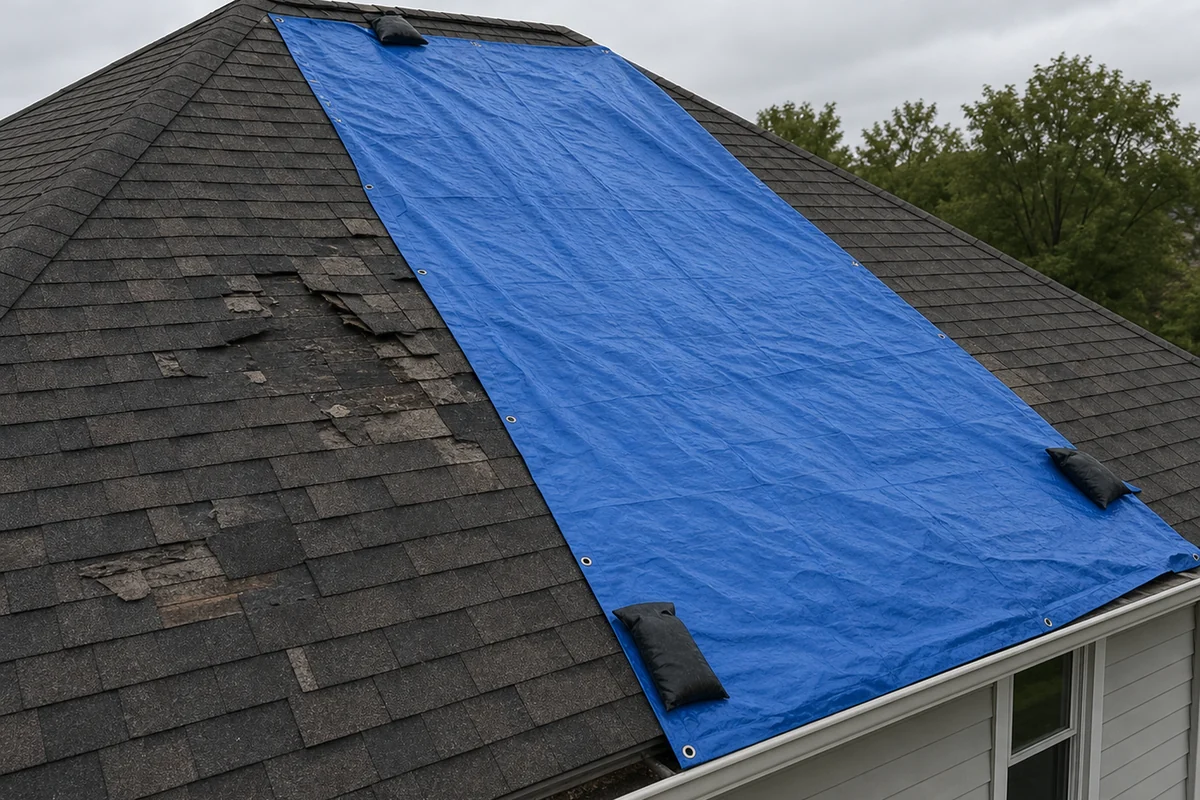
Correct placement follows the water path. The tarp should be laid from the higher side of the roof downward, with the upper edge protected so water runs over the tarp surface instead of behind it. Low spots, wrinkles, and pockets should be reduced because standing water adds weight and can pull against fasteners. On a sloped roof, a clean water path is often more important than making the tarp look perfectly centered over the visible damage.
Roof details can change the tarp layout. Chimneys, vents, valleys, skylights, and broken flashing may require wider coverage than a simple rectangular patch. If the leak begins near one of these details, water can travel under shingles or along seams before dripping indoors. A small tarp placed only over the wet interior area may give false confidence and still fail during the next rain.
On active repair sites, exterior roof protection may also need to work with temporary interior protection. Leak diverter tarps, drain hoses, and collection points can protect machines, stored goods, and work zones while the exterior cover is being secured. For larger roof repair and restoration work, the same thinking applies to construction tarps: the product should support the site workflow, not just cover a surface.
IV. Secure The Edges Without Creating New Leak Points
Fastening is where many emergency roof tarp jobs fail. Loose edges catch wind. Sharp or poorly placed fasteners can tear the sheet. Over-tightened corners concentrate stress. Boards placed in the wrong direction can trap water instead of helping it drain. The target is a tarp that is tight enough to resist lift, but not so stressed that it tears at the first strong gust.
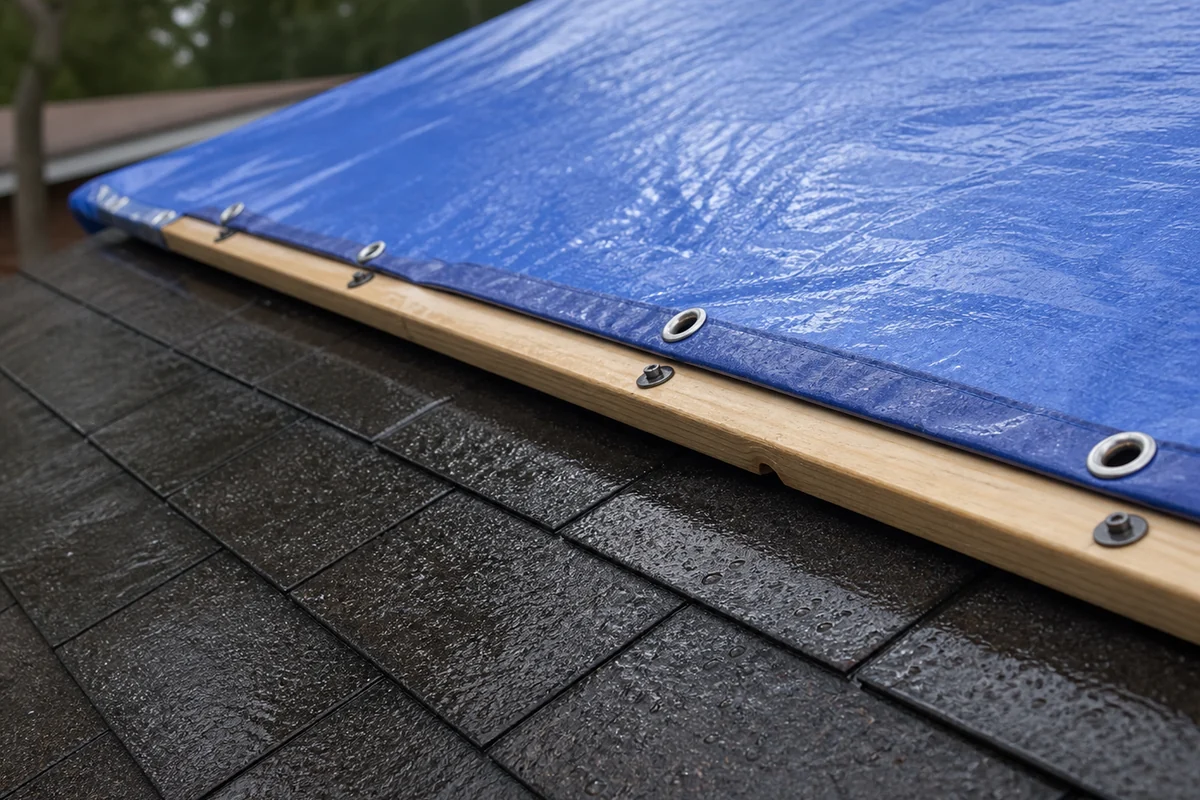
Different roof teams use battens, ropes, sandbags, straps, grommets, or other site-approved methods depending on roof type and local practice. A tarp manufacturer does not replace the roofing contractor’s installation judgment. What we can control is the finished tarp structure: reinforced hems, welded or sewn edges, suitable fabric construction, stable coating, controlled finished size, and hardware spacing when the project requires it.
When a tarp order is prepared for emergency roof work, fastening should be discussed early. If ropes or straps will be used, eyelet spacing matters. If battens are common, edge tear resistance becomes more important. If several roof sizes are expected, multiple standard sizes may deploy faster than one oversized sheet that is difficult to lift and position in poor weather.
| Storm condition | Tarp direction | Project note |
|---|---|---|
| Small exposed roof section | Waterproof tarp with enough upper overlap | Do not size only from the visible hole |
| Wind-exposed roof slope | Reinforced hems and stronger tie-down points | Check edge stress after the next storm |
| Contractor emergency stock | Several standard sizes with clear packing | Faster deployment when many roofs are damaged |
V. Recheck The Temporary Cover After Wind And Rain
An emergency roof tarp is temporary protection, not a finished roof system. After installation, it should be checked after wind, rain, or major temperature changes. Look for lifted edges, loose tie-downs, trapped water, torn corners, new ceiling stains, or water moving under the sheet. If the tarp shifted, the problem may be overlap, fastening, roof shape, or material stiffness.
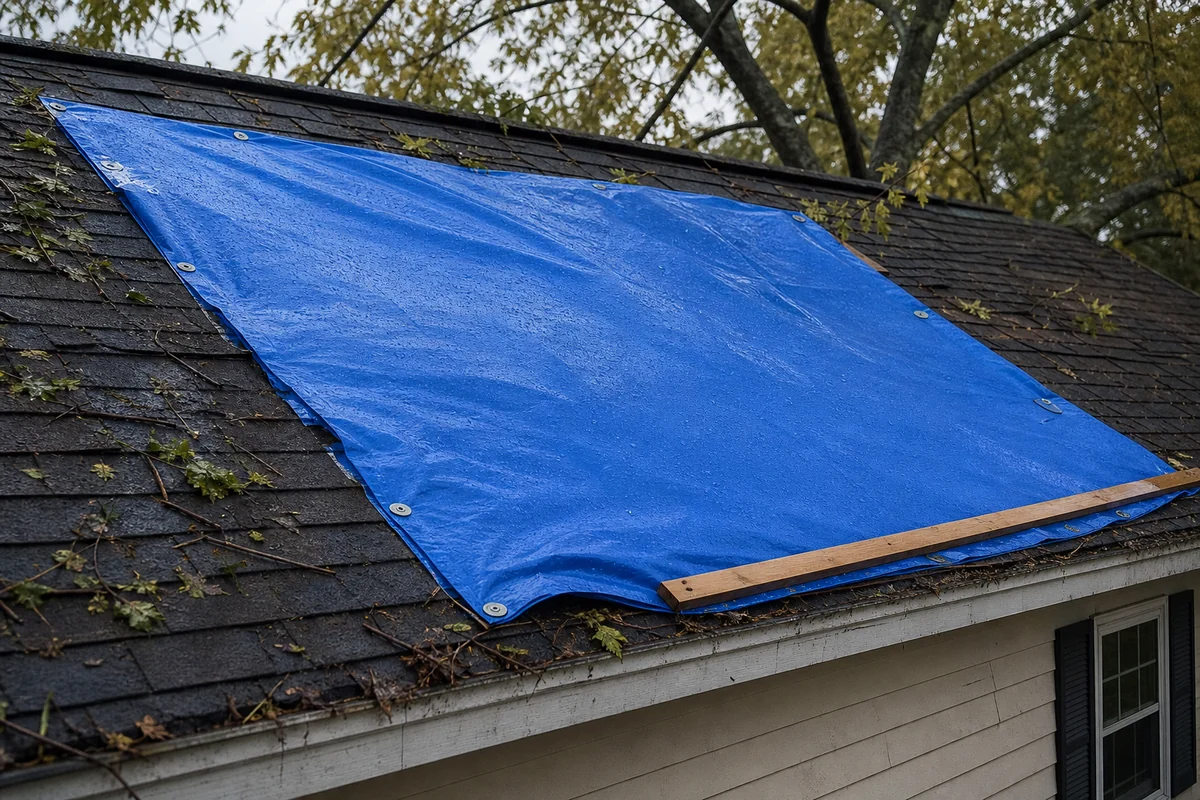
Inspection notes are useful. They help roofers understand how the damaged area behaved after the first emergency response. They also help your team improve the next tarp order. If corners tear repeatedly, the edge design may need reinforcement. If water pools in the same area, the size or placement may need to change. If the tarp becomes hard to unfold in cold weather, the material direction should be reviewed.
Interior water management should be monitored at the same time. Leak diverter tarps, drain hoses, buckets, and collection points can overflow if nobody checks them. In warehouses, factories, schools, and commercial buildings, the exterior roof tarp may be doing its job while the interior water diversion plan still fails. A practical storm response includes both outside coverage and inside protection until permanent repair begins.
VI. Prepare Better Emergency Roof Tarps Before The Next Storm
Emergency purchasing is always more stressful than planned purchasing. Contractors, distributors, restoration companies, and facility groups can reduce that pressure by preparing standard roof tarp sizes, material direction, edge design, packing method, and sample approval before storm season. This is where custom production becomes useful, because emergency roof tarps are easier to deploy when the size, orientation, and fastening method are already planned.
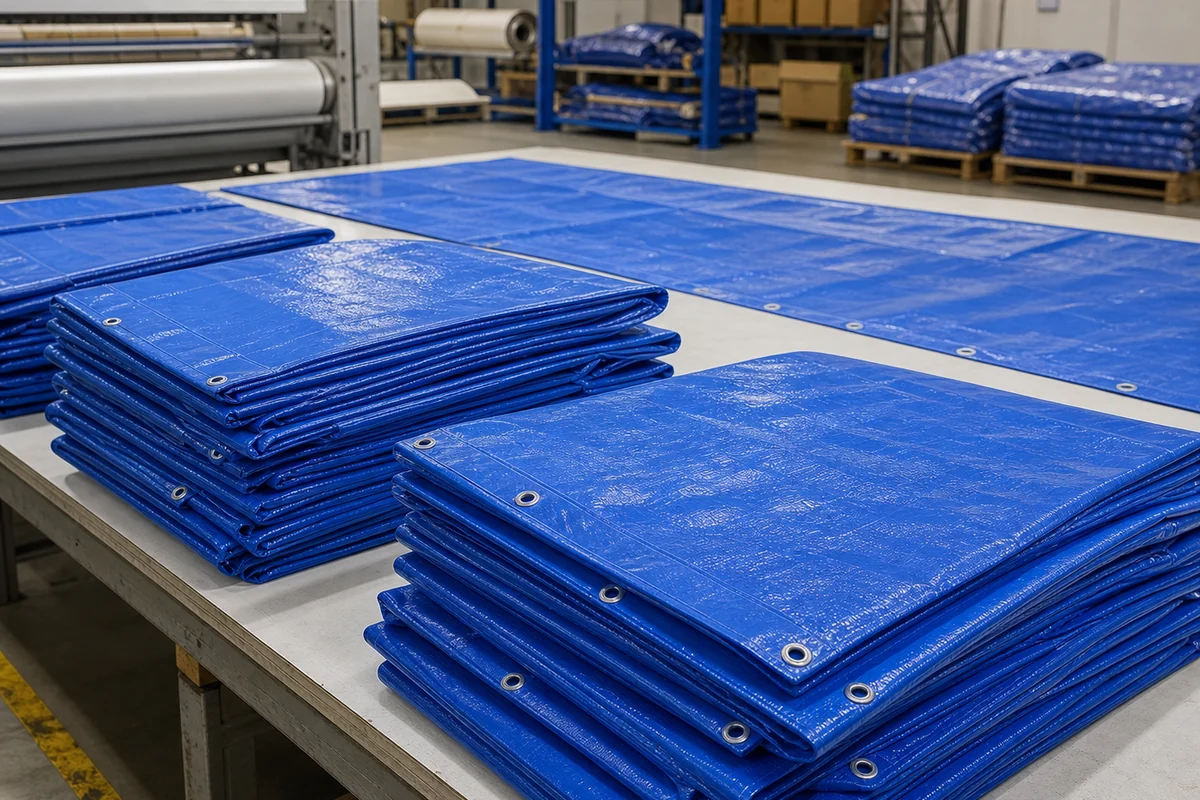
A useful specification should include target tarp sizes, expected exposure time, roof type, color, fabric weight or thickness direction, reinforcement method, eyelet spacing, packing style, label requirement, and whether the tarp will be stored for emergency response. LonaTarp can support custom-made tarps through material selection, cutting, welding, sewing, grommets, reinforced hems, and export packing for bulk orders.
For repeated emergency roof tarp programs, sample checking is worth doing before large orders. Our quality control work can focus on finished size, fabric appearance, waterproof performance direction, edge strength, grommet placement, packing condition, and consistency against the approved sample. The goal is not to promise that a temporary tarp replaces a roof. The goal is to make the tarp a repeatable emergency tool that protects buildings and gives repair teams time to work properly.