Roof tarp covers are often installed quickly, but long-term protection needs more planning than a short emergency patch. When a cover may stay outside for weeks or months, the buyer has to think about water runoff, UV exposure, wind lift, roof edges, fastening points, inspection access, and how the tarp will be repaired or replaced if one area wears first.
I treat this topic differently from a simple waterproof cover question. Waterproofing matters, but a roof tarp cover can fail even when the sheet itself is waterproof. The common problems are edge tearing, loose tie-downs, ponding water, abrasion at roof corners, and material aging under sunlight and temperature changes.
I. Define the Protection Period Before Choosing a Roof Tarp Cover
The first question is how long the roof needs protection. A tarp used for a few days after storm damage can be lighter and faster to install. A roof cover used during renovation, warehouse maintenance, agricultural storage, or seasonal protection needs a stronger specification because outdoor exposure keeps adding stress.
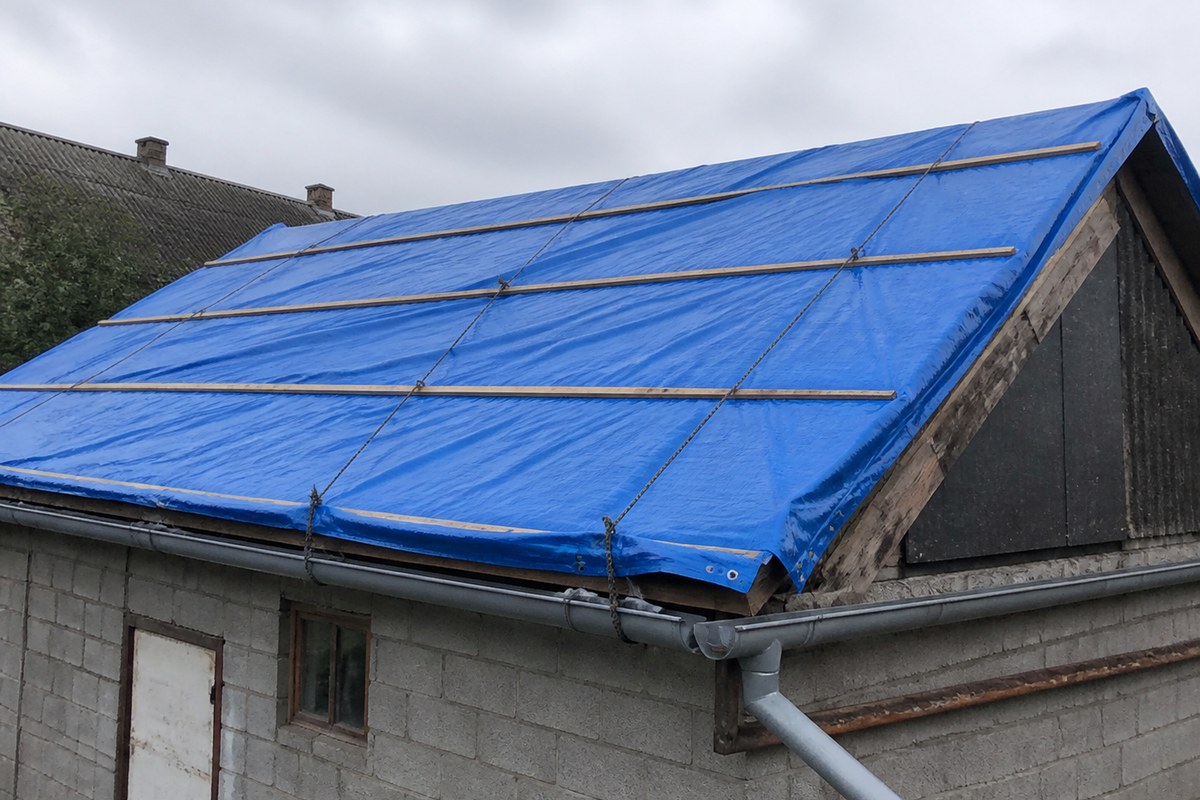
For B2B projects, I usually separate roof tarp covers into three categories: emergency leak control, construction or renovation protection, and planned extended-use protection. The same roof size can lead to different material choices because the risk changes. A short patch is mainly about speed. A longer cover is about controlled fastening, UV stability, tear resistance, and safe inspection.
This protection period should be written into the inquiry before the buyer asks for a price. A cover expected to stay on a roof for one week, one month, or one season should not be treated as the same job. Longer exposure usually means more attention to reinforced edges, overlap beyond the roof problem area, seam position, and how the cover will be tightened again after wind or rain.
The roof condition also matters. A smooth low-slope warehouse roof, a pitched agricultural building, and an unfinished construction roof do not load the tarp in the same way. Before quoting, the buyer should confirm roof shape, damaged area, slope, edge condition, tie-down options, drainage path, and whether workers can access the roof for routine checks.
II. Match Fabric Strength to Weather and Roof Stress
For longer roof protection, fabric strength should be discussed together with exposure conditions. Rain can create weight if water collects. Wind pulls hard at corners and grommet rows. Sunlight ages the surface. Rough roof edges can abrade the coating. These risks are why I do not choose a roof tarp cover by GSM alone.
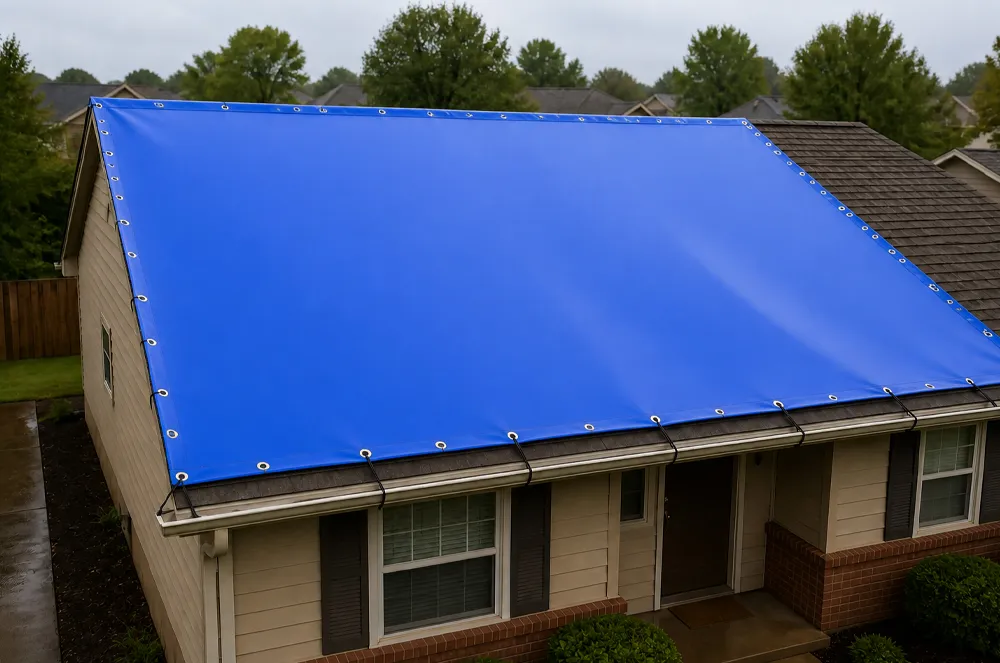
PVC-coated polyester fabric is often selected for demanding roof cover projects because it can combine waterproof performance, weldability, tear resistance, flexible handling, and custom finishing. For harsher conditions, buyers may compare the requirement with heavy duty tarps, but the roof application still needs its own fastening and runoff plan.
Material claims should stay realistic. UV resistance, weather durability, low-temperature flexibility, and anti-mildew performance depend on coating formula, base fabric, color, surface treatment, exposure angle, and local climate. Artificial aging hours can help compare materials, but they should not be turned into a fixed outdoor service-life promise without project conditions.
When I review a long-term roof cover order, I look beyond the fabric weight. The base yarn construction affects tear behavior, while the PVC coating and surface finish affect waterproofing, flexibility, color stability, dirt resistance, and welding. If the tarp will be folded, dragged over roof edges, or installed in colder weather, those handling conditions should be discussed before the material is finalized.
| Roof condition | Specification focus | Buyer check |
|---|---|---|
| Short leak-control period | Fast waterproof coverage | Confirm size, slope, runoff, and safe access |
| Weeks or months outdoors | UV resistance, welded seams, reinforced hems | Define expected exposure and inspection schedule |
| Wind or rough roof edges | Stronger base fabric and controlled fastening layout | Check grommet spacing, edge padding, and abrasion points |
| Bulk custom roof-cover order | Sample panel, drawing, packing, and QC agreement | Confirm final size, color, hardware, and inspection standard |
III. Plan Size, Runoff, and Fastening Before Production
Many roof tarp failures begin at the edge. A cover can be large enough on paper but still fail if the fastening points are weak or placed in the wrong direction. The tarp should extend beyond the exposed area, but it also needs a safe path for runoff and a fastening layout that does not create new stress points.
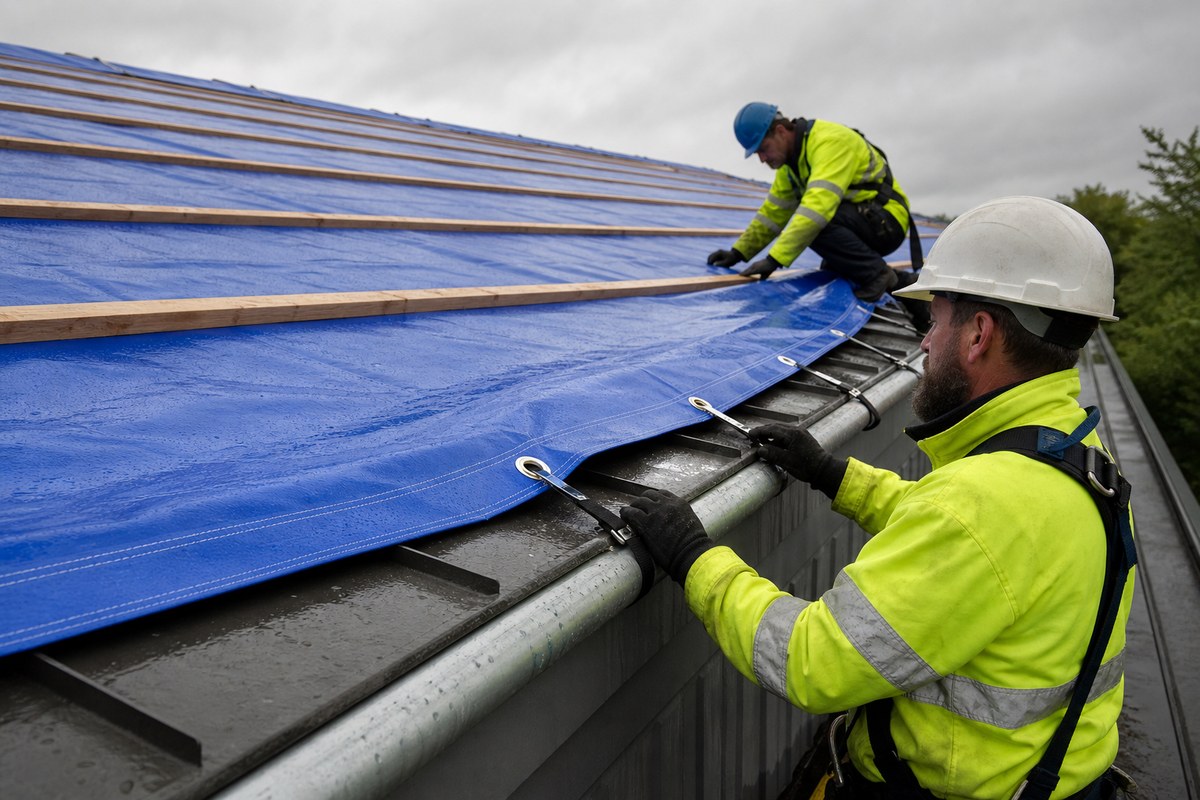
Before production, buyers should confirm finished length, finished width, overlap beyond the damaged area, grommet or D-ring spacing, hem reinforcement, strap direction, and whether the roof has sharp edges that need padding. If the roof is low-slope, the design should reduce ponding water. If the roof is exposed to wind, corners and edge rows need special attention.
A simple roof sketch can prevent expensive mistakes. I prefer to see the ridge direction, gutters, parapets, roof projections, skylights, damaged zones, and fixing points. These details help decide whether one large panel is practical or whether several welded panels with a planned seam layout will be easier to install and pack.
Installation method should be realistic for the site. Some roofs allow straps, battens, or perimeter fixing. Others require temporary ballast or attachment to nearby structural points. I avoid recommending a fastening method without knowing roof material, access route, safety limits, and whether the buyer can inspect the cover after storms.
IV. Inspect Long-Term Roof Covers During Use
A roof tarp cover used for longer protection should be inspected, not forgotten. After wind, heavy rain, or temperature changes, the buyer should check tie-down tension, edge abrasion, ponding water, seam condition, grommet rows, and areas where the tarp touches sharp roof details.
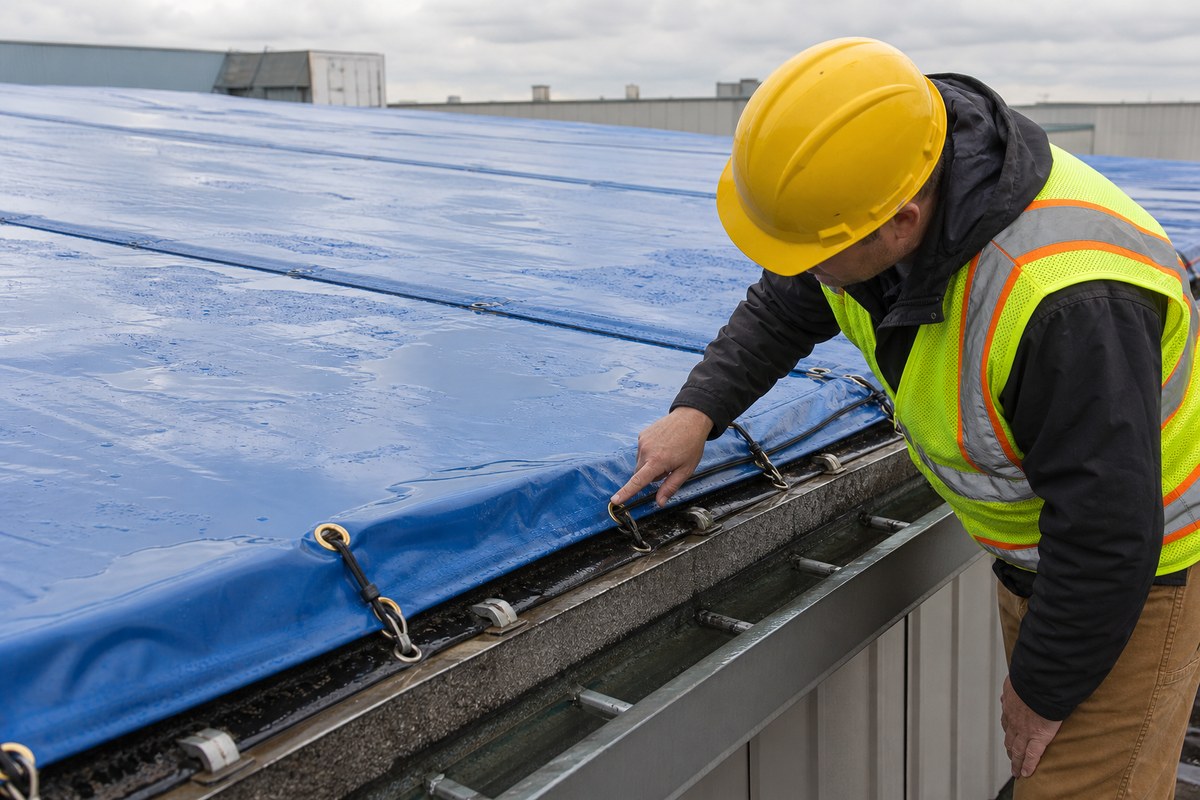
For distributors, contractors, or facility teams ordering several sizes, inspection planning should be part of the specification. If a cover is difficult to access, buyers may need stronger reinforcement from the beginning. If one edge is likely to rub, that edge should be protected instead of relying only on thicker fabric.
Inspection does not need to be complicated, but it should be scheduled. For longer projects, the site team can check the cover after the first installation day, after strong wind, after heavy rain, and then at agreed intervals. Small movement at an edge is easier to correct early than after a grommet row has started to tear.
For custom fabrication from tarpaulin rolls, the buyer should discuss roll width, seam layout, welding direction, finished panel size, and packing before production. A poor seam layout can make installation harder or place a joint in a high-stress roof area.
V. Confirm Samples and Bulk Specifications Before Ordering
For B2B roof tarp cover orders, a small swatch is not always enough. A sample panel or detailed drawing can show edge reinforcement, grommet spacing, welding quality, color, surface finish, and packing marks. This is especially useful when multiple roof zones or repeated project sizes are involved.
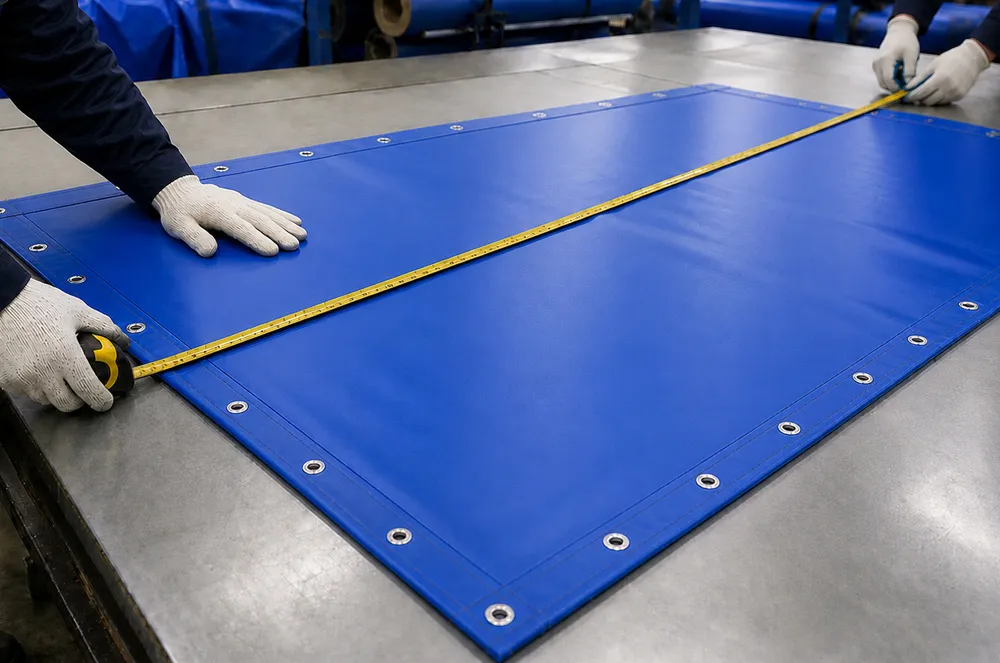
LonaTarp supports custom production through PVC coated fabric selection, cutting, welding, sewing, reinforced hems, grommets, D-rings, straps, printing, accessories, and packing. For B2B custom production, our normal MOQ is 5,000 square meters, so I prefer to confirm the roof condition and sample details before bulk work starts.
The sample review should not stop at color and hand feel. For a roof cover, the buyer should check welded seam appearance, grommet position, reinforced hem width, corner finishing, folding behavior, and whether the packed panel can be handled by the installation team. These small details often decide whether the bulk order installs smoothly on site.
A practical inquiry should include the roof size, damaged or exposed area, expected exposure time, weather condition, roof slope, fastening method, color, edge reinforcement, required hardware, packing preference, and order quantity. If the buyer needs documentation for a project or distributor file, reviewing our certificates page can help clarify what should be requested before production.
The final specification should also say what the roof tarp cover is not expected to do. It can reduce weather exposure and protect the building temporarily or for an extended project period, but it is not a permanent roof system. Clear limits help buyers choose the right material, plan inspection, and avoid treating a temporary cover as a structural repair.