Waterproof tarps for outdoor protection work best when the site has a plan for water, wind, access, and repeated handling. The tarp is only one part of that system. A waterproof center panel can still leave goods exposed if rain runs toward an opening, wind gets under a loose edge, or workers have to drag the cover over the same sharp corner every day.
This guide is for storage-yard, jobsite, and operations teams planning a finished cover around a real asset or stack. It starts with layout and daily use, then turns those field conditions into a repeatable order. If your main question is which tarp material or construction to select, use our separate waterproof tarp selection guide. Here, the task is making an outdoor protection plan work on site.
I. Map The Asset, Storage Footprint, And Access Route
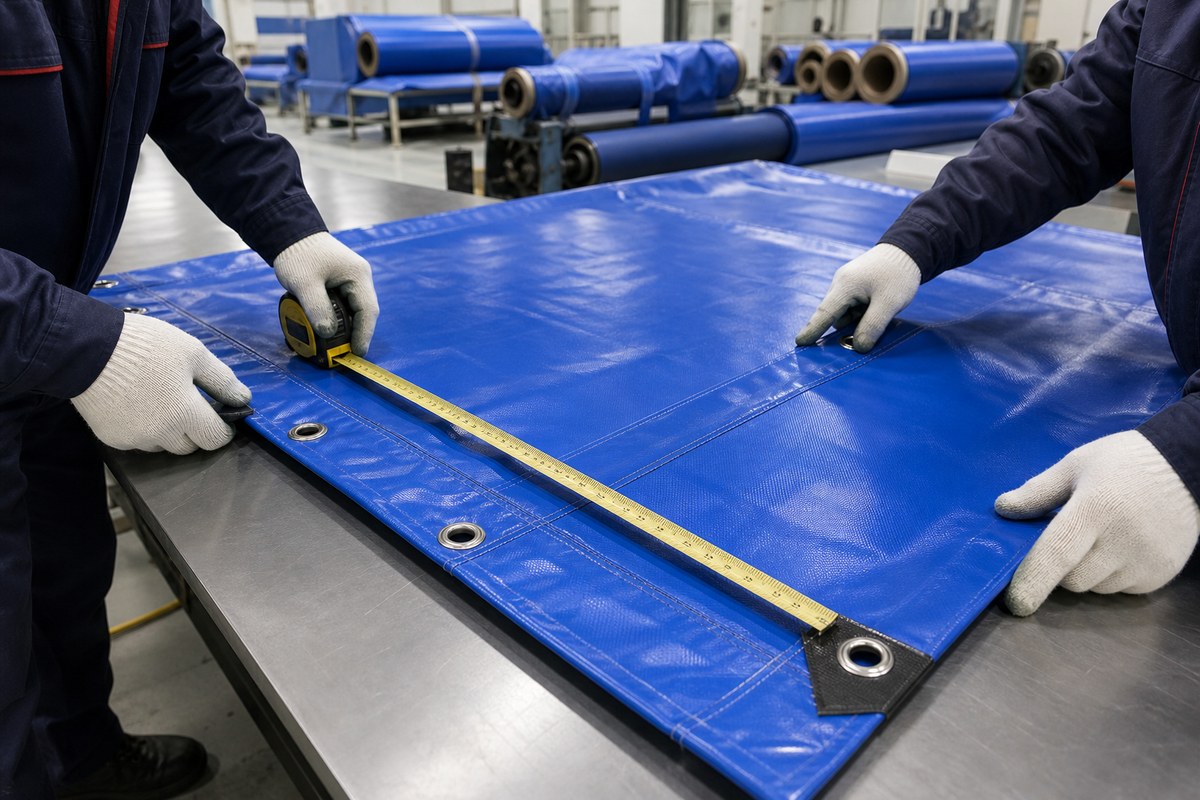
Measure the protected footprint as the site team actually stores it, not as the goods appear on a packing list. A row of pallets may have uneven heights. Bundled steel may extend beyond its dunnage. A machine may have handles, guards, hoses, or service points outside the main body. Those details change the finished cover size and where the tarp can safely touch the load.
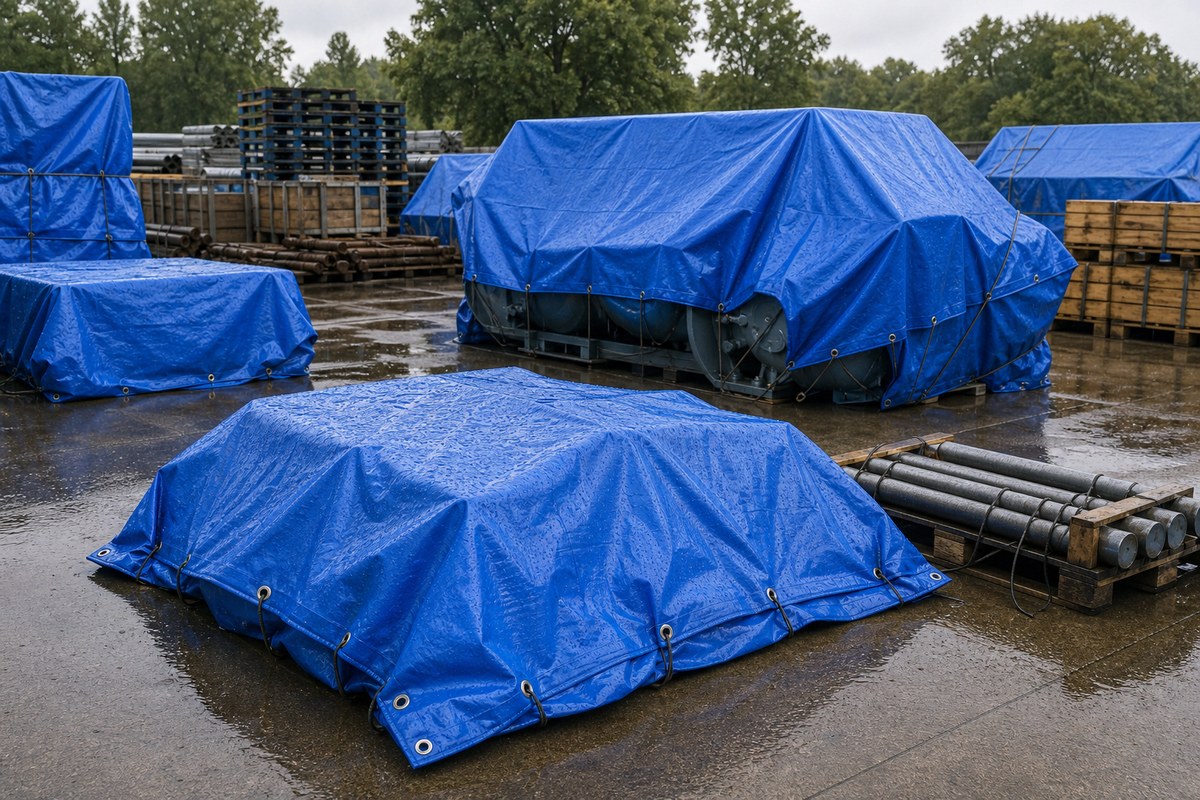
Record the top length and width, the drop on each side, and the lowest point where water should leave the cover. Then mark every place where workers need access. If a forklift approaches from one side, a fully wrapped cover may slow each movement and be left open after the first busy shift. A split access flap, labeled orientation, or different fastening pattern may be more practical than a symmetrical design.
For standardized loads, finished pallet covers can be planned around pallet size, loaded height, identification, and opening frequency. Irregular machinery usually needs a different route. A shaped heavy equipment cover may need extra clearance around protrusions and access points rather than one large rectangular sheet.
Do not combine unrelated assets simply because they occupy the same yard. Timber stacks, bagged powder, metal parts, and machinery have different shapes, contact risks, and access cycles. A useful site survey divides them into repeatable cover groups so procurement can order a controlled set of finished sizes instead of asking workers to improvise with whichever tarp is available.
| Field input | Question to answer | What it changes |
|---|---|---|
| Stored shape | Is the top flat, sloped, stepped, or irregular? | Panel layout, drop, and drainage |
| Access cycle | Which side opens, and how often? | Flaps, fasteners, and handling weight |
| Fixed structure | Where can the cover be secured without obstructing work? | Tie-down position and pull direction |
| Contact points | Where will the tarp rub, fold, or be pulled? | Patches, hems, and replaceable protection |
II. Build The Drainage Path Into The Cover Shape
Before deciding the final tarp dimensions, decide where rainfall should go. The cover needs a continuous path that moves water away from the protected goods, access side, electrical points, traffic lanes, and areas where workers stand. If the layout creates a low pocket, water adds weight and pulls on seams, hems, and tie-down points. Tightening the same flat sheet harder does not always remove that pocket.
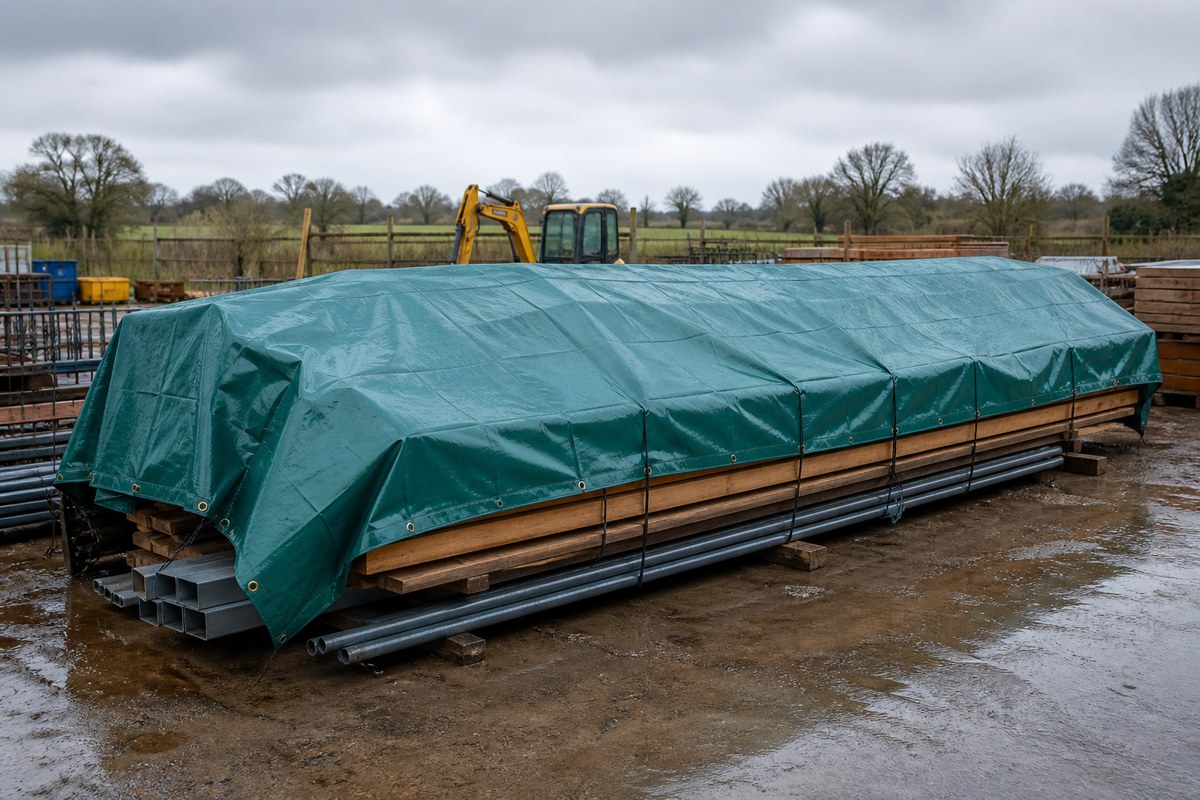
Use the stored shape to create the slope. A peaked support, raised centerline, stepped stack, or purpose-made frame may help, but the responsible site team must confirm that the support is stable and appropriate for the location. The tarp should not be expected to correct unsafe stacking or replace a structure designed for snow, wind, or other loads.
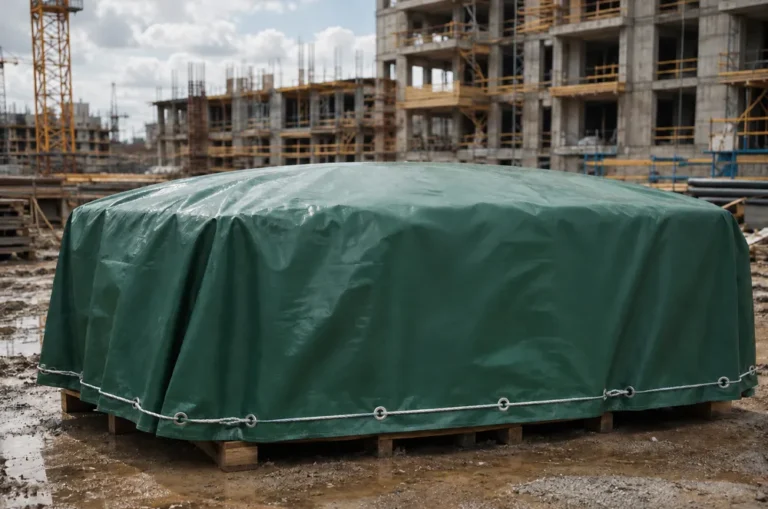
Overhang also needs a destination. A long drop can shed water past the lower goods, but it may catch wind or interfere with forklifts. A short drop is easier to handle but may let splashback reach the load. On a busy construction tarp application, the best layout often balances drainage with fast material access rather than maximizing coverage on every side.
Mark seam positions after the water path is clear. For a large finished cover, avoid placing a seam at the lowest collection line or across a corner that workers pull every day when another layout is practical. The final drawing should show the high points, low points, seam route, overlaps, and open sides. That drawing gives production and site teams the same reference.
III. Match Tie-Down Layout To Wind And Daily Handling
A fastening plan starts with available anchor points and the direction of pull. Grommets are useful only when they align with how ropes, straps, hooks, battens, or elastic cords will be used. If a worker pulls diagonally from a grommet designed for a straight load, the edge can twist and the hole may carry more stress than the surrounding positions.
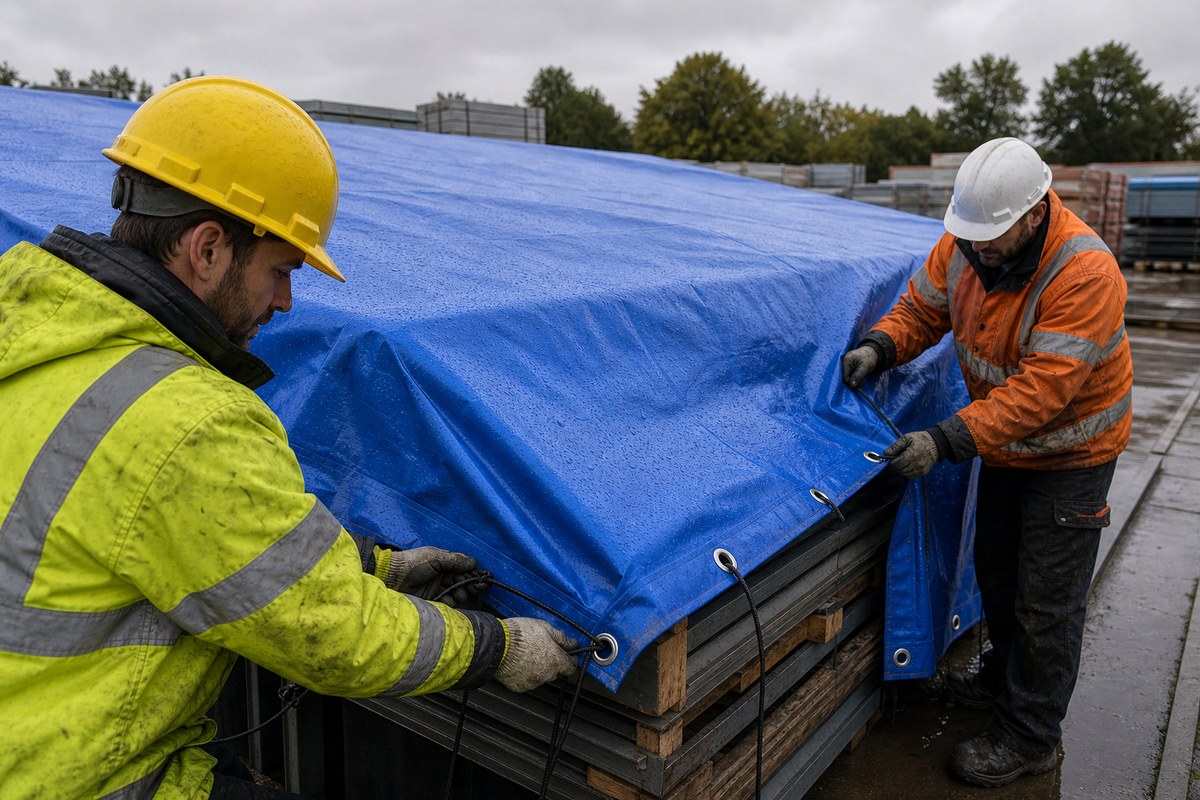
Walk the perimeter and note which anchors are permanent, which are temporary, and which disappear when equipment or pallets move. Then identify the windward sides and any lower edge where air can enter. Site-specific wind and structural safety must be assessed by the responsible project team; the tarp supplier should not invent a wind rating from fabric weight or grommet count alone.
Daily handling changes the design. A cover opened once a season can use a more involved tie-down sequence. A cover opened several times per shift needs a fastening pattern that workers can release and close consistently. Color-coded straps, labeled corners, grouped fasteners, or a dedicated access flap can reduce the chance that the tarp is left partly secured after use.
For a custom waterproof cover, send the supplier a simple perimeter sketch showing anchor positions and pull directions. This is more useful than asking for “more grommets.” It allows the finished edge, reinforcement, hardware, and spacing to be reviewed as one system.
IV. Protect Corners, Hems, And Repeated Contact Zones
Outdoor covers often wear first where they touch the asset, not in the open center panel. Sharp corners, timber edges, metal brackets, stacked-pallet corners, and repeated fold lines concentrate movement in a small area. Before increasing the weight of the entire tarp, mark these zones on the drawing and decide whether the asset can be padded, the edge can be rounded, or the cover needs a localized reinforcement.
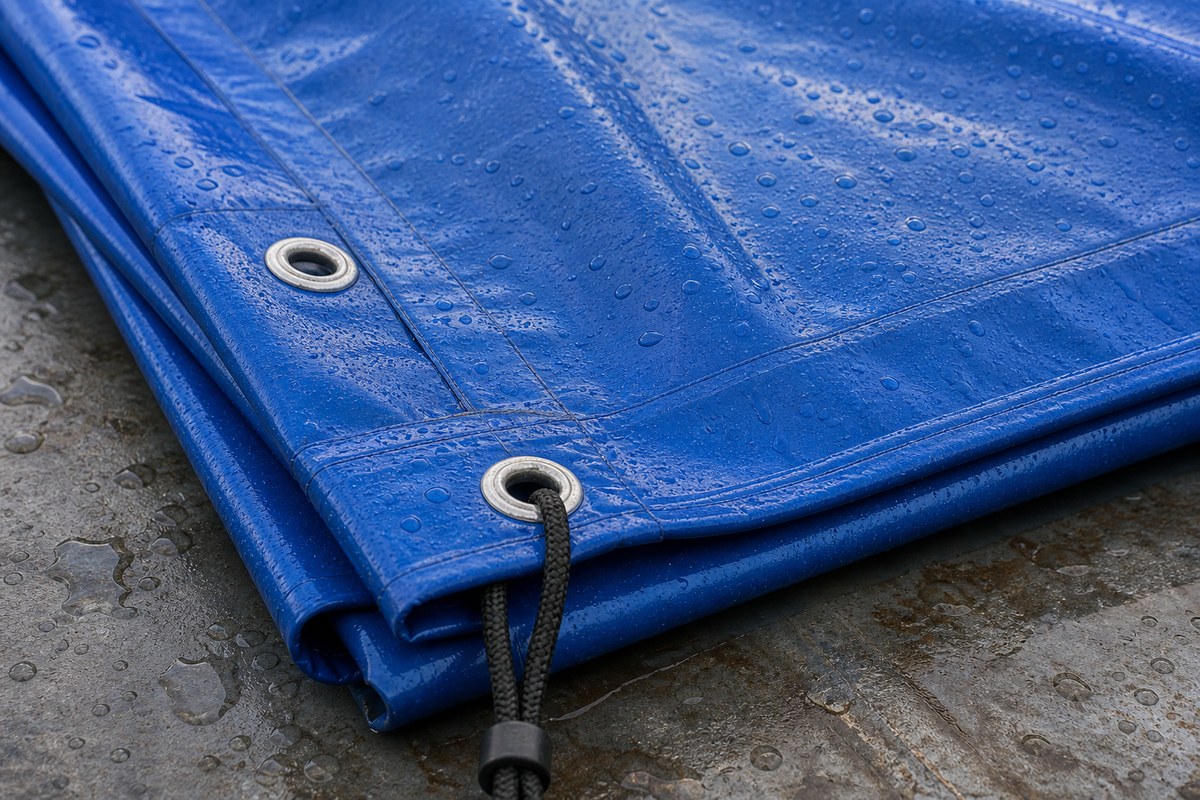
The right answer depends on the contact. A corner patch spreads stress around a known point. Reinforced webbing can support a line of hardware. A sacrificial pad between the load and tarp may prevent abrasion without changing the whole cover. If the team drags the tarp across the load, changing the handling route may provide more benefit than adding material thickness.
Hems should be checked where they bend around corners and where the cover rests on the ground. Mud, standing water, vehicle traffic, and repeated pulling can damage a lower edge even when the upper panel remains sound. Keep the finished edge away from traffic where possible, and define how workers should lift rather than drag it during removal.
When a contact point cannot be removed, include it in sample approval. A small finished sample can show the planned hem, grommet, webbing, patch, seam, or strap construction. Approval should be based on the actual finished detail, not only a flat fabric swatch or a color photo.
V. Plan Inspection, Cleaning, And Repeat Ordering
An outdoor protection plan needs a check cycle. After the first rain and wind event, inspect the cover while the original layout is still easy to adjust. Look for water pockets, lifted edges, loose anchors, new abrasion marks, stretched hardware positions, open access points, and contact zones that were missed during measurement. These observations should be added to the site drawing before the next order.
Set an inspection frequency that fits the exposure and handling cycle. A cover that is moved daily needs attention at access flaps, fold lines, and fastening points. A seasonal cover needs checks after severe weather and before long storage. Site safety rules and any product-specific instructions take priority; this article does not replace an engineering or safety assessment.
Before packing a used tarp, remove debris according to the agreed care instructions and let the cover dry. Record damaged areas instead of folding them out of sight. A simple ID label tied to the approved drawing helps the team return each cover to the correct asset and helps procurement reorder the same finished configuration.
For repeat custom orders, the purchasing file should contain the finished drawing, approved material and color, seam layout, edge construction, hardware or strap positions, label orientation, packing method, approved sample reference, and agreed inspection points. LonaTarp’s quality control process can be used to align finished dimensions, appearance, seams, hems, hardware, reinforcement, packing, and consistency with the approved specification.
LonaTarp can produce custom finished waterproof tarps with cutting, welding, sewing, reinforced edges, grommets, D-rings, straps, printing, and export packing when the confirmed design requires them. Finished Products: MOQ 30 units. For a project review, send the protected asset or stack shape, finished dimensions, quantity, access frequency, drainage direction, available anchors, exposure conditions, contact points, required accessories, packing, and acceptance requirements. That information lets us review a repeatable finished cover instead of quoting an undefined waterproof sheet.