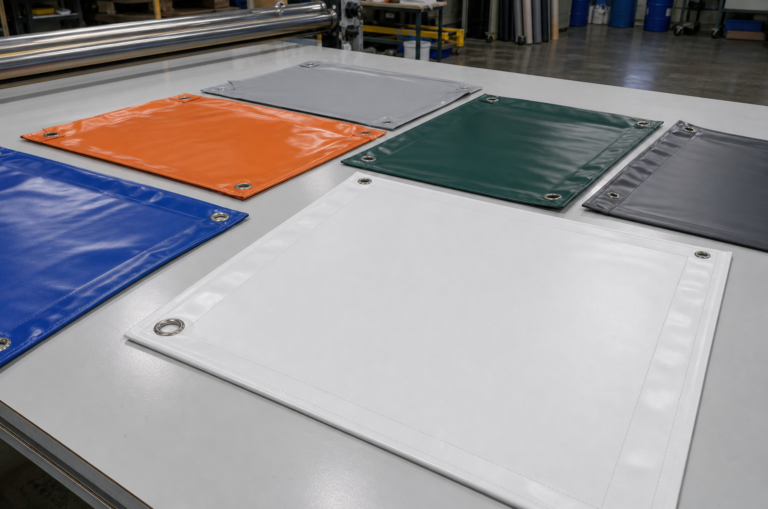
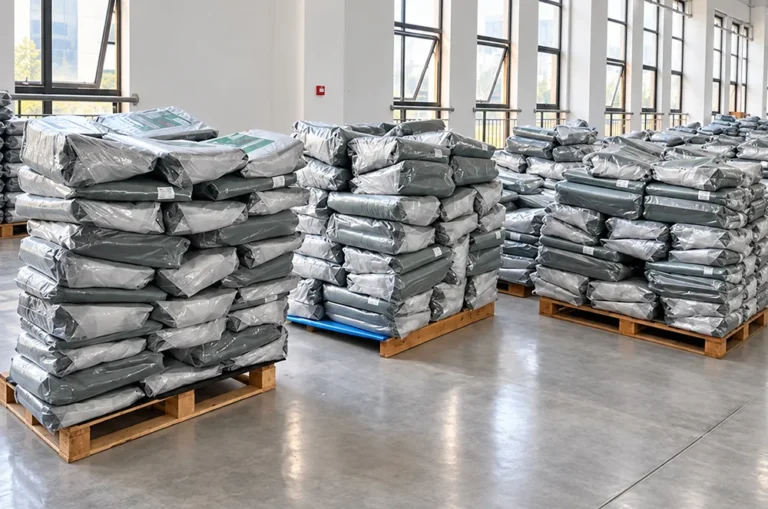
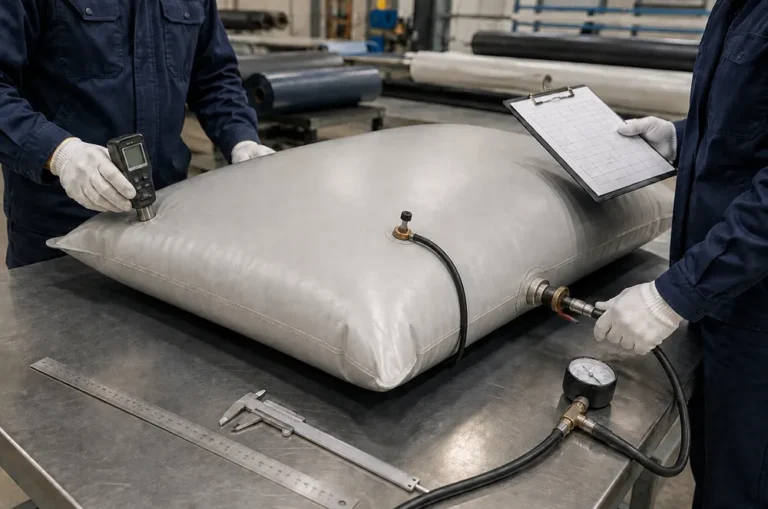
Some construction tarpaulins last longer because the material, coating, edge design, installation method, and maintenance routine are better matched to the jobsite. Two tarps can look similar from a distance, but one may use a stronger base fabric, better PVC formulation, cleaner welding, reinforced hems, and more suitable grommet spacing. The other may fail early because it was chosen only by color, thickness, or a low unit price.
For contractors and procurement teams, this matters because construction tarps are not used in gentle conditions. They cover timber, steel, concrete, scaffolding materials, machinery, and outdoor supplies while facing rain, sun, wind, dust, rough ground, sharp corners, and repeated handling. Longer service life usually comes from controlling several small failure points before production, not from one single “best” material.
I. Early Failure Usually Starts From Several Small Stresses
A construction tarp rarely fails for only one reason. Sunlight weakens the coating over time. Wind makes the fabric flutter. Rough timber or rebar abrades the surface. Workers drag the tarp across corners. Water collects in low areas. A grommet row is pulled too tightly. Each stress may be small, but together they decide whether the tarp remains useful or becomes difficult to secure after a short period.
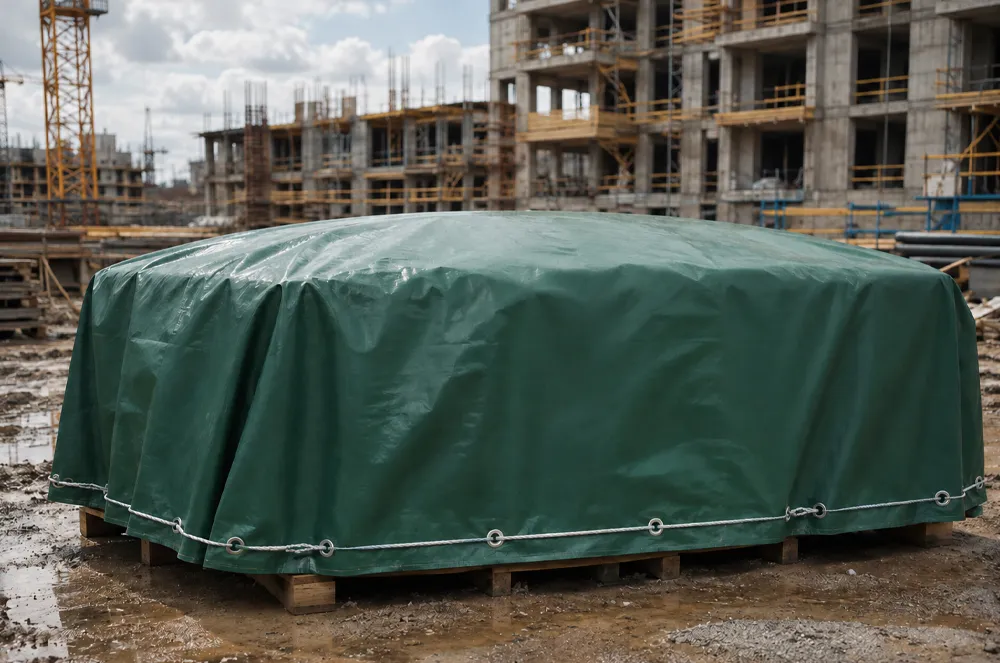
The first useful question is where the tarp will touch the site. A cover over smooth pallets has different stress from a tarp wrapped around scaffolding tubes, steel beams, concrete forms, or timber with sharp edges. Contact points should be reviewed before choosing fabric weight, because many field failures start at corners, edges, and tie-down points rather than in the middle of the panel.
Handling frequency is also important. A tarp that stays in place for one month can be specified differently from a tarp opened and closed every day. Repeated folding, dragging, and refastening can damage seams and grommets faster than weather exposure alone. A durable construction tarp should match the way the site team will actually use it.
Project duration should be discussed with the same honesty. A short material cover for a two-week job does not need the same structure as a tarp expected to survive several projects, repeated relocation, and long outdoor storage. If the procurement team only asks for “heavy tarp” without explaining the site cycle, the final cover may be overbuilt in the wrong area and weak where the jobsite actually creates stress.
II. Base Fabric And Reinforcement Decide Tear Resistance
The base fabric is the structure inside the tarp. It controls much of the tensile strength, tear resistance, dimensional stability, and handling feel. A heavier tarp is not automatically stronger if the extra weight comes mainly from coating or filler. The yarn type, fabric density, reinforcement pattern, coating adhesion, and finished construction all affect how the tarp behaves under tension.
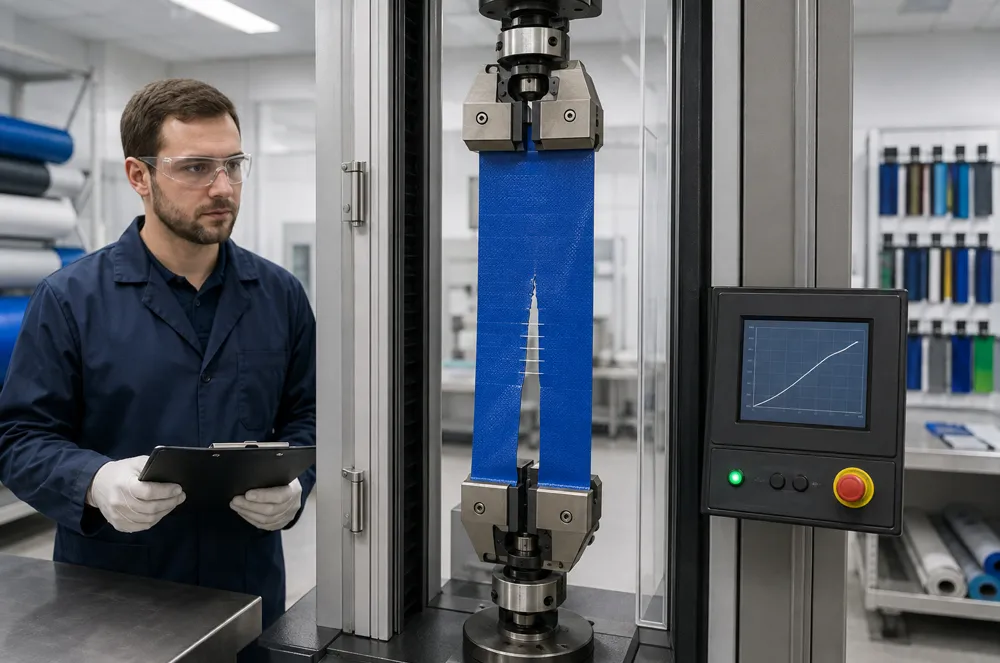
For demanding jobsites, a stronger heavy-duty tarps direction may be needed, but the specification still has to be practical. A very stiff tarp may resist some damage but become hard to fold, install, or secure. A lighter tarp may be easier to handle but may tear faster around rough contact points. The better choice depends on load, handling method, expected exposure, and available installation team.
Rip-stop or reinforced fabric structures can help limit tear growth after a puncture or cut. This does not mean the tarp cannot be damaged. It means the material is designed to reduce how quickly small damage spreads. For construction use, that difference can decide whether a cover can stay in service until the end of the project or must be replaced immediately.
Coating adhesion is another detail that is easy to miss. If the PVC layer and base fabric do not bond well, the surface may peel, blister, or separate around folds and welded seams. This is why a sample should be checked not only for color and hand feel, but also for folding behavior, edge strength, and whether the finished panel still feels stable after being handled.
III. PVC Coating Quality Controls Waterproofing And Weather Aging
The PVC coating gives the tarp its waterproof surface, color, flexibility, weldability, and much of its weather resistance. A good
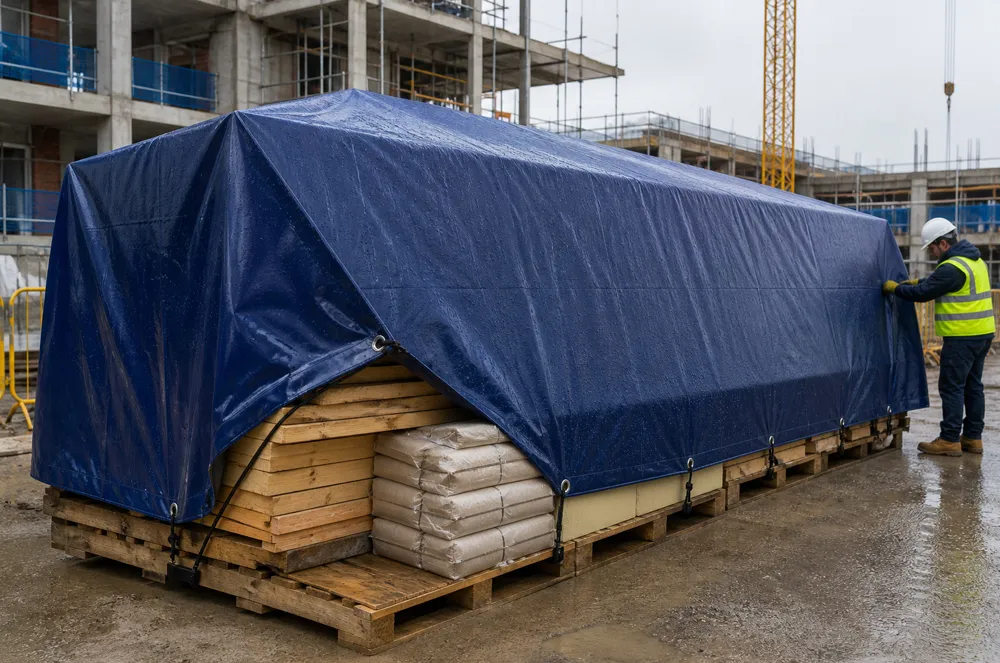
waterproof cover for construction use needs more than a shiny surface. The coating formula should match UV exposure, temperature changes, rain, humidity, folding, and surface abrasion.
UV resistance and weather resistance are related, but they are not exactly the same. UV mainly refers to sunlight-driven aging. Weather resistance also includes heat, rain, moisture, pollution, color stability, and mechanical stress. A test result can help compare materials, but it should not be converted into a simple fixed number of outdoor years. Region, color, installation angle, cleaning, and handling all change real service performance.
Waterproofing also depends on fabrication. If seams are weak, needle holes are exposed, or weld areas are contaminated, water can enter even when the base fabric is waterproof. For larger custom panels, seam layout should be reviewed with the expected water path and stress direction, not treated as a purely production-side detail.
Color can influence real use as well. Dark colors may absorb more heat in strong sun, while bright colors can face higher colorfastness expectations. In public-facing or long outdoor projects, color should be discussed together with UV direction, cleaning needs, and whether the tarp will be visible as part of the site image. The correct answer is not always the thickest fabric; it is the combination that fits the climate and handling plan.
IV. Edges, Grommets, And Installation Often Decide Field Life
Many construction tarps fail at the edge before the main fabric wears out. Grommets pull through, hems tear, corners stretch, or ropes cut into the tarp when the panel is over-tightened. A longer-lasting tarp spreads stress across reinforced hems, corner patches, suitable grommet spacing, and a fastening method that matches the site.
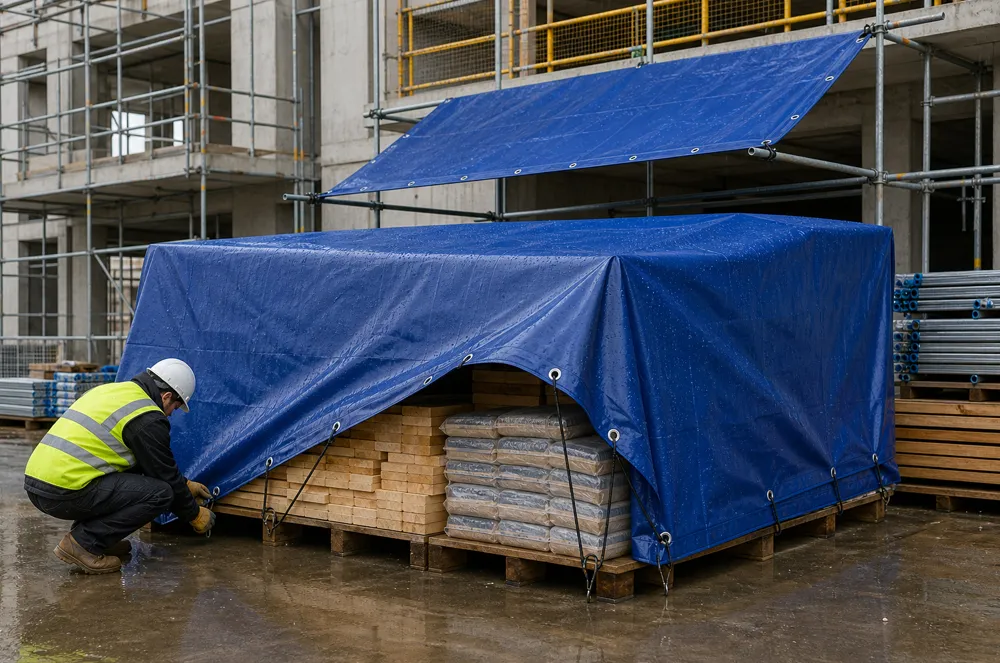
Installation should not fight the fabric. If tie points are too far apart, wind can lift the tarp. If ropes pull in the wrong direction, grommets take concentrated stress. If the tarp is pulled over sharp corners without protection, abrasion starts quickly. These are not only user mistakes; they can be prevented by discussing panel size, tie-down direction, overlap, and contact points before production.
Some construction sites also require special safety performance. If the project has hot work, public exposure, or stricter site rules, flame-retardant requirements should be confirmed by the exact standard and application. A broad claim is not enough; related fire retardant tarps should be selected only after the required test method and finished-product use are clear.
Installation training is a practical part of durability. The same tarp may last longer when the team avoids sharp corners, spreads tension evenly, checks loose ropes after wind, and prevents water from pooling. For repeat construction teams, a simple installation note or size label on the packing can reduce mistakes when different crews use the same tarp stock.
| Failure sign | Likely cause | Specification response |
|---|---|---|
| Grommet pulls out | High edge stress or weak reinforcement | Reinforced hems, better spacing, corner patches |
| Cracking or stiffness | UV/weather aging or low-temperature mismatch | Confirm formulation, color, exposure, and test method |
| Water leaks at seam | Weak weld, poor seam layout, or contamination | Review welding method and water path |
| Fast surface wear | Dragging over rough corners or dirty ground | Add abrasion planning and contact protection |
V. Storage, Cleaning, And QC Make Durability Repeatable
A construction tarpaulin can be built well and still fail early if it is stored wet, folded with sharp debris inside, dragged through mud, or packed before it is dry enough. Moisture, dirt, cement dust, and metal fragments can damage the surface and make the next installation harder. Maintenance does not need to be complicated, but the site team should remove sharp debris, reduce standing water, and store the tarp in a way that protects the edges.
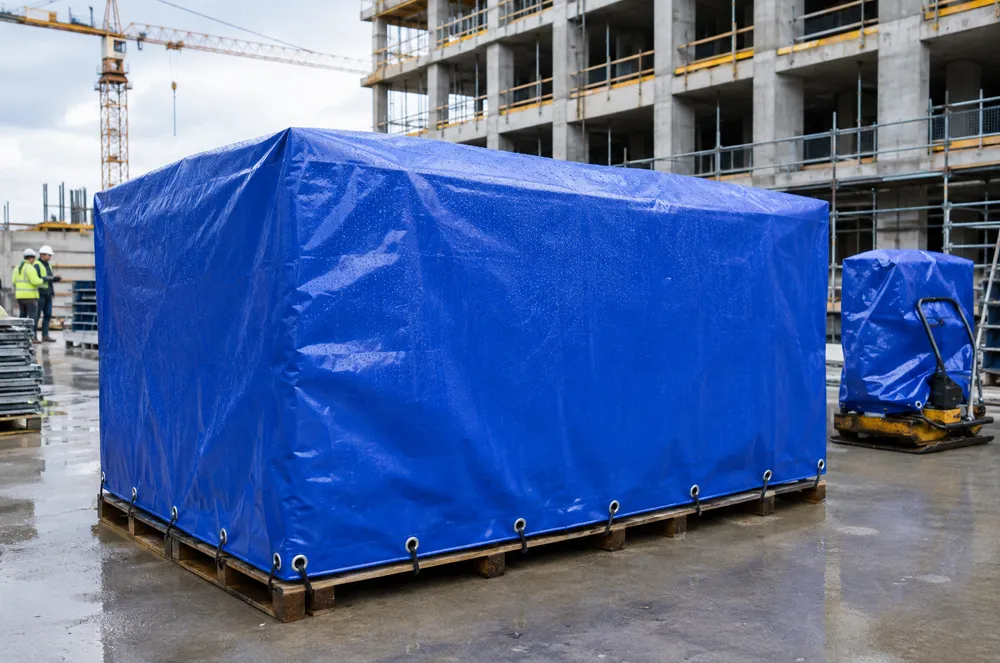
For repeat orders, sample approval and inspection records make durability easier to reproduce. A useful sample should show fabric feel, coating appearance, welded seam, hem width, grommet setting, corner reinforcement, folding behavior, packing, and any printing or label requirement. Reviewing the quality control process helps define which details should be checked before shipment.
A practical custom order should include the construction use, finished size, expected exposure time, contact surfaces, wind condition, fastening method, fabric weight direction, color, reinforcement layout, grommet spacing, packing method, and quantity. LonaTarp can support PVC coated fabric selection, cutting, welding, sewing, reinforced hems, eyelets, printing, and packing for custom B2B construction tarp projects. Our normal custom production MOQ is 5,000 square meters, so clear specifications and sample confirmation help avoid costly changes after production starts.
For distributors and contractors placing repeat orders, keeping one approved sample and one drawing for each tarp type is useful. It gives the next order a clear reference for fabric, seam layout, grommet spacing, color, packing, and inspection level. That consistency is often the difference between buying a tarp that only looks similar and buying one that performs the same way on the next jobsite. It also makes future complaints easier to trace because both sides can compare the delivered tarp against the same approved reference.