Baseball field covers protect playing surfaces by keeping rain, dew, wind-blown debris, and direct sun from damaging the clay and turf areas that decide whether a field can reopen quickly. A wet infield is not only inconvenient. It can turn smooth clay into soft mud, move topdressing away from base paths, weaken the pitcher’s mound, and leave home plate areas unsafe for players.
When I review a sports cover project, I first look at how the field is used: daily school training, weekend tournaments, professional games, or community events with a small maintenance team. A cover for a youth field should be easy to move. A cover for a larger venue may need stronger material, reinforced edges, pull handles, and a storage method that the grounds crew can repeat without damaging the tarp. That is why baseball field protection belongs in the broader Sports & Outdoors application category, not just in a general tarp discussion.
I. Rain Protection Starts With The Clay Infield
The clay infield is usually the first area to lose playability after a storm. Water can soften the surface, wash fine material away, create low spots, and make base paths slippery. Even a short rain shower can become a long delay if the field crew must rake, dry, compact, and re-level the same areas before every game.
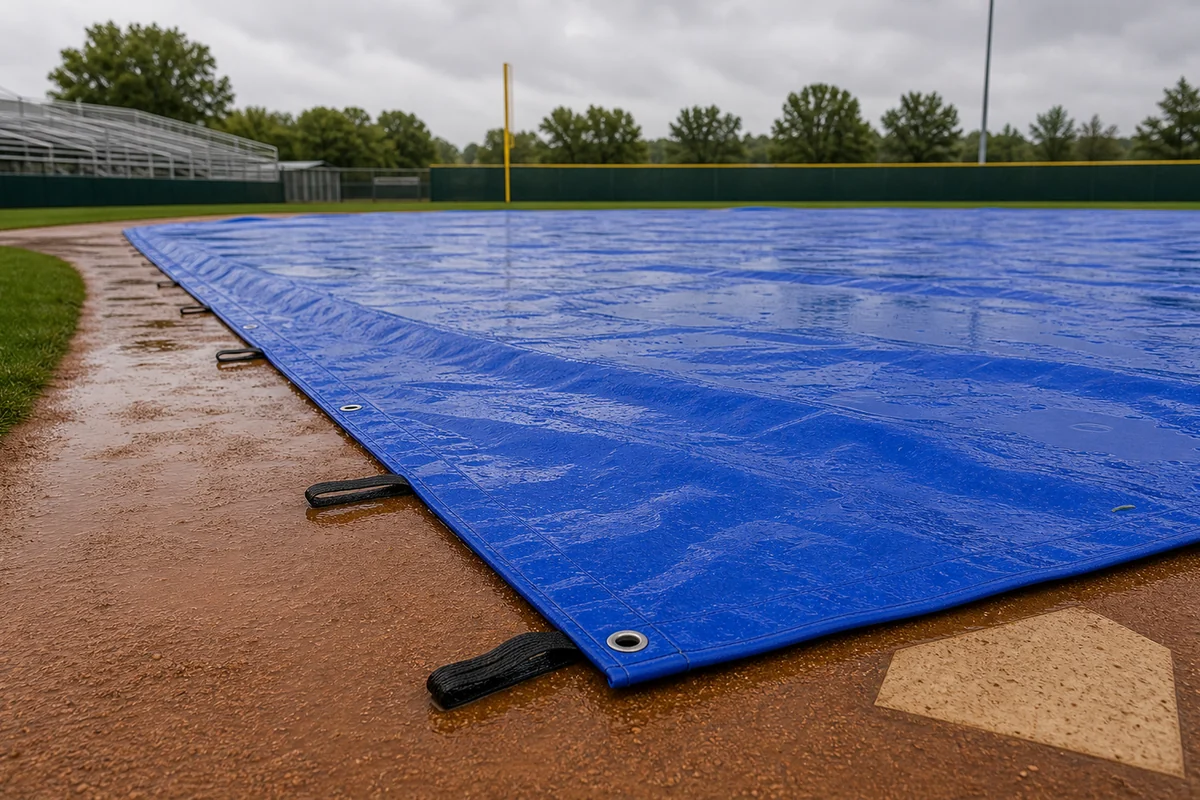
A baseball field cover helps by separating the clay from rain and overnight dew. The goal is not to make the field immune to weather. The practical goal is to keep the most sensitive surface dry enough that the crew can reopen the diamond with less repair work. On many fields, the most valuable coverage areas are the mound, home plate, base paths, and the transition between infield clay and grass.
Full infield covers and smaller spot covers solve different problems. A full cover protects the diamond during longer rain events or overnight weather risk. Smaller mound and home plate covers are faster to deploy when the forecast is uncertain or the crew is short on people. For a facility that hosts frequent games, both formats can be useful because the weather response changes by event schedule, staff size, and available storage space.
The cover also needs enough overhang to move water away from the exact play zone. If the tarp ends too close to the clay edge, runoff can collect where players need stable footing. I prefer to confirm drainage direction before production because a cover that looks large enough on paper may still send water toward the wrong side of the infield.
II. Material Choice Affects Handling, Waterproofing, And Field Life
A sports field tarp has to balance waterproofing, weight, folding behavior, tear resistance, and crew handling. A very light sheet is easy to move but may flutter, stretch, or tear around pull points. A very heavy cover can protect well, but it may require more workers, a roller system, or a planned storage route. The right answer depends on the venue, not only on the highest weight number.
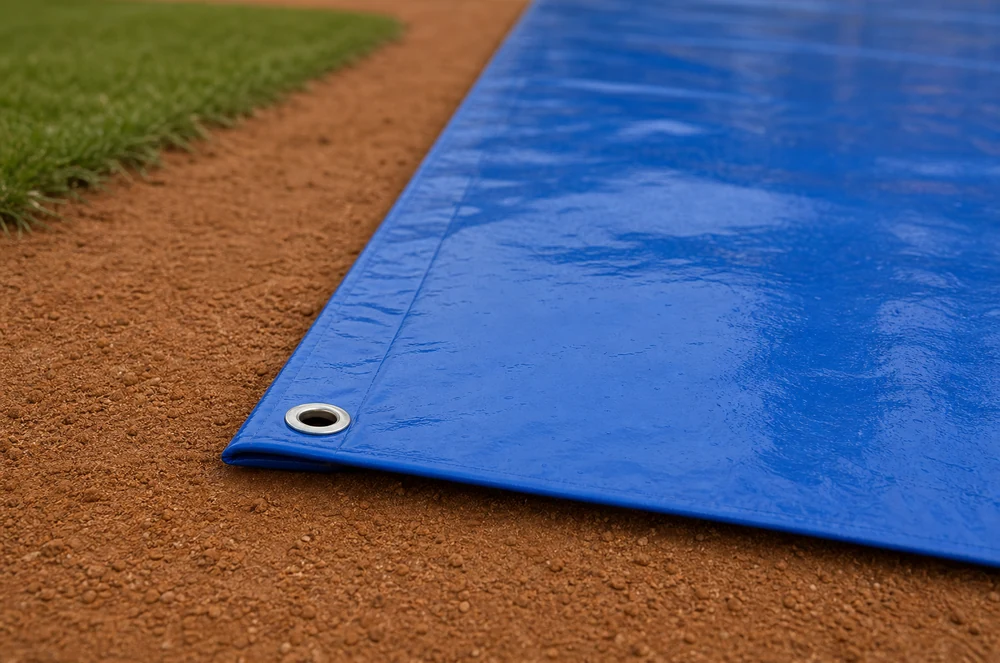
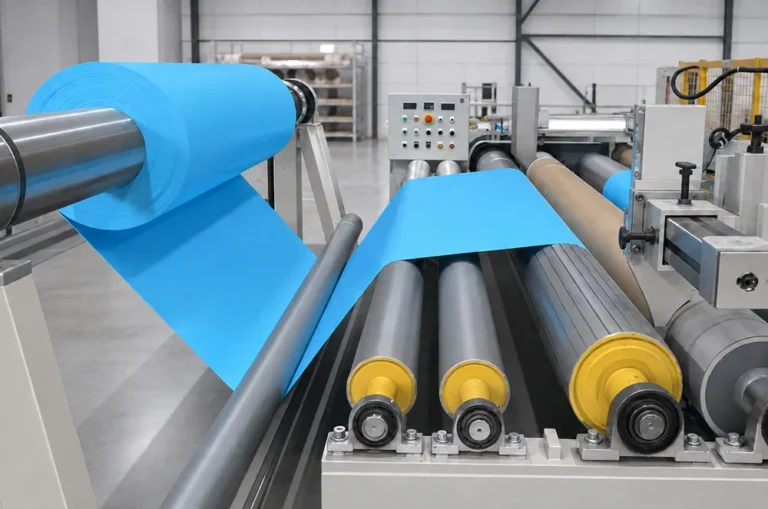
For long outdoor exposure, PVC tarpaulin is often considered when buyers need waterproofing, weldable seams, cleanable surfaces, and stronger tear resistance than a temporary plastic sheet. The base fabric carries much of the tension, while the PVC coating provides the weather barrier, color, flexibility, and surface protection. This is why two covers with similar weight can behave differently if the base fabric, coating formula, or bonding quality is different.
PE tarpaulin can also work for some lighter or short-term field needs, especially where cost and handling speed matter more than repeated season use. Canvas may be useful in some breathable cover applications, but for clay protection against rain, a fabric that absorbs moisture can create problems. A buyer should define the main job first: quick rain protection, long-term field coverage, daily drag resistance, or a custom set for different field zones.
The material should also match the climate. Strong sunlight, wet storage, temperature cycling, and dust can all affect how a cover ages. UV resistance and anti-mildew options should be discussed when the tarp will stay outdoors for long periods. These are specification decisions, not decoration choices, because a sports facility usually needs predictable use across a full season.
III. Fast Deployment Can Save The Playing Schedule
A field cover is only useful if the crew can deploy it before the weather causes damage. Many facilities lose time not because the tarp material is wrong, but because the cover is too hard to move, the storage location is poorly planned, or the staff cannot spread it quickly around the infield.
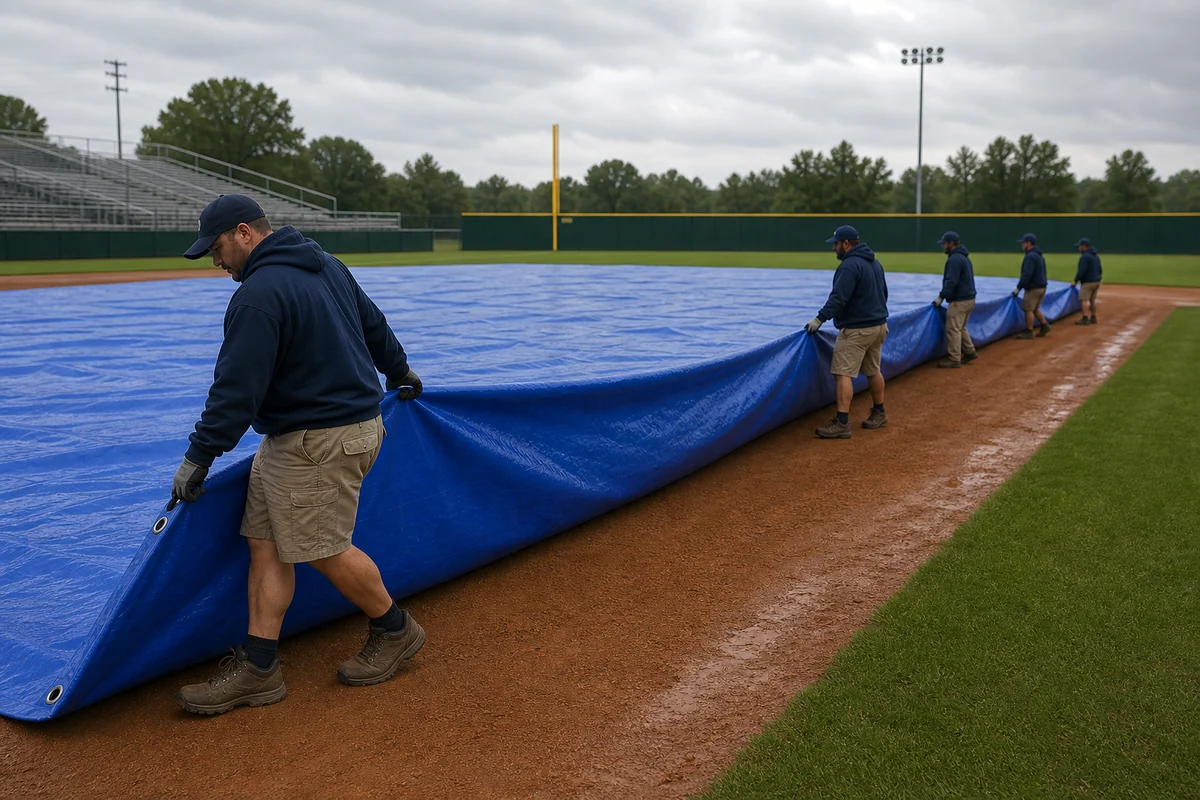
Before quoting a custom cover, the useful questions are practical: How many people will move it? Will the team use a roller? Where will the cover be stored between games? Does it need pull handles, reinforced drag zones, or segmented panels? A full infield sheet may look efficient, but segmented covers can be easier for smaller crews and unusual field layouts.
Wind is another part of deployment. A tarp that is not secured correctly can lift, shift, or rub against the surface it is supposed to protect. Reinforced hems, stable grommet spacing, sandbag zones, or weighted edges can help the crew keep the cover in position. The best layout depends on local wind exposure and whether the field is open, fenced, surrounded by stands, or located near buildings.
There is also a safety reason to plan deployment. A wet tarp can become heavy and slippery. Handles, folding marks, storage carts, and a clear crew route reduce dragging damage and make the cover easier to use during sudden weather. Good material matters; good daily operation keeps that material useful.
IV. Custom Size And Reinforcement Prevent Common Failures
Baseball fields are not all the same. Youth fields, high school diamonds, training centers, and professional venues can have different mound layouts, turf edges, infield shapes, storage limits, and drainage slopes. A standard tarp that is too small leaves exposed edges. A tarp that is too large can create loose folds where water collects or wind starts to pull.
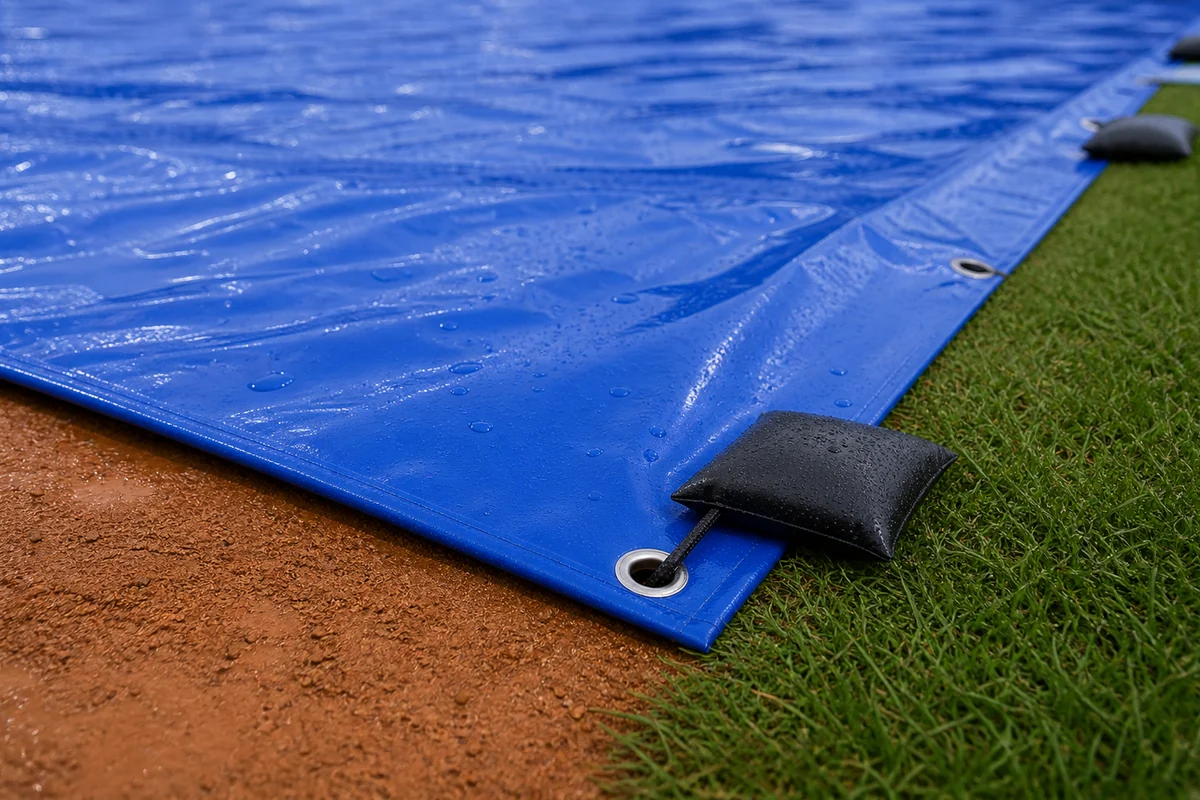
For this reason, custom-made tarps are often a better route when the cover must match an exact diamond, specific mound area, or segmented protection plan. Dimensions should be checked from field drawings or direct measurements, including overhang, folding allowance, drainage direction, and where the crew will grip or anchor the cover.
Reinforcement should follow real stress points. Corners, drag edges, pull handles, grommet rows, and seams usually take more abuse than the center panel. If the cover will be moved daily, reinforcement around handles and folding lines may matter more than simply adding weight everywhere. If the field is exposed to wind, edge strength and anchoring layout become more important.
| Field condition | Cover direction | Why it matters |
|---|---|---|
| Small crew, frequent short showers | Segmented infield and mound covers | Faster handling with fewer workers |
| Large tournament venue | Full infield cover with pull handles | Protects the main play zone before rain delays grow |
| Open windy field | Reinforced hems, anchor points, sandbag zones | Reduces edge lift and rubbing damage |
| Custom diamond or unusual drainage | Measured cover layout from field drawing | Keeps runoff away from sensitive clay areas |
Some buyers ask whether they can order general tarpaulin sheets and cut them on site. For simple temporary use, that may be workable. For regular field operations, finished covers with planned seams, hems, handles, and grommets are usually safer because the stress points are designed before fabrication instead of improvised after delivery.
Color and surface finish also deserve a short discussion. Darker covers can absorb more heat in strong sun, while lighter colors may show clay stains faster. For facilities that store the cover outdoors, surface cleanability and color stability can matter almost as much as the first-day appearance.
V. Cleaning, Storage, And QC Decide Repeat Use
A baseball field cover collects clay dust, grass moisture, rainwater, and sometimes fertilizer or cleaning residue from the field environment. If it is folded wet and stored without airflow, mildew odor, surface staining, and coating stress can develop. If it is dragged across gravel or metal edges, small cuts can become larger tears during the next deployment.
Field crews should shake off loose dirt, allow the cover to dry when possible, and avoid storing it under sharp or heavy objects. A simple folding routine helps the same crew deploy the tarp faster next time. For larger facilities, a roller or storage cart can protect both the tarp and the workers who move it.
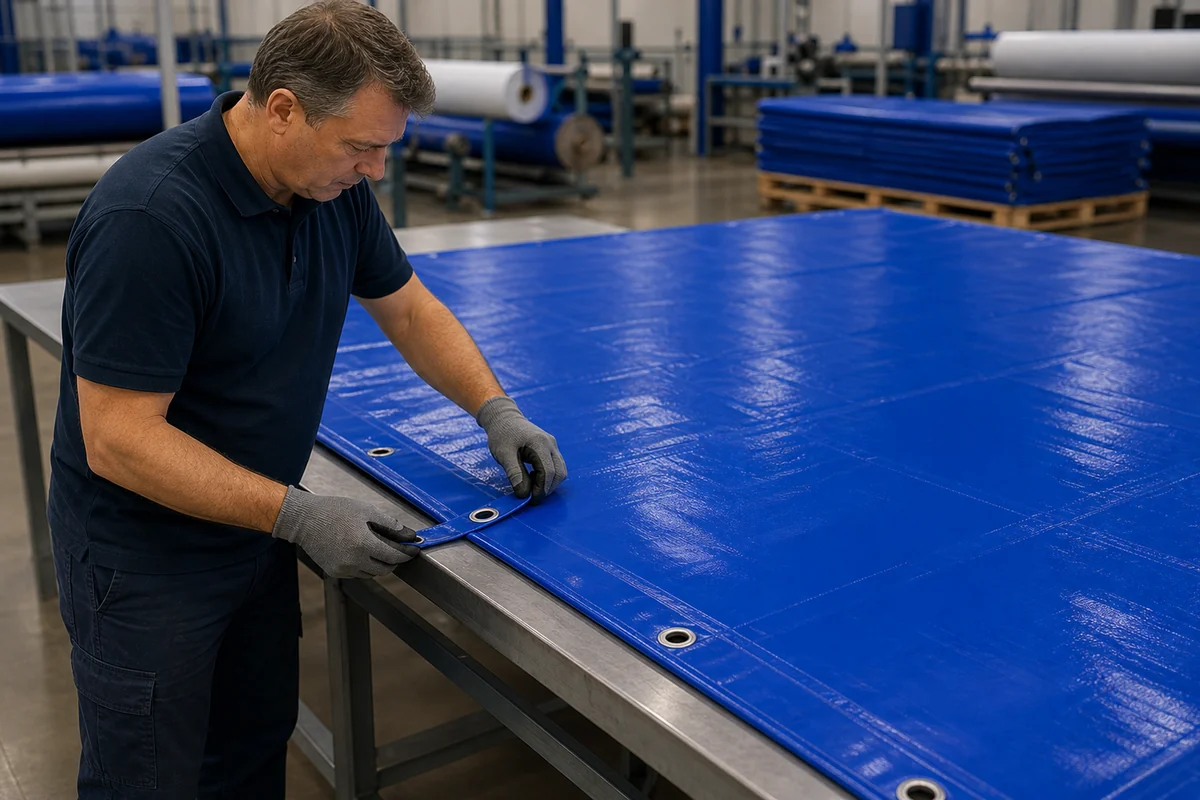
Factory quality control also matters before the cover reaches the field. We check whether seams are properly welded or sewn, whether edge reinforcement is placed where the cover will be pulled, whether grommet spacing follows the agreed drawing, and whether the finished size matches the order. These checks cannot remove every risk from field use, but they reduce avoidable production mistakes.
The most useful baseball field cover is not simply the thickest sheet. It is the cover that fits the field, moves at the speed of the crew, keeps water away from the play zone, and survives repeated folding, pulling, cleaning, and storage. When those details are confirmed before production, the field manager gets a more practical tool for protecting the playing surface through a long season.