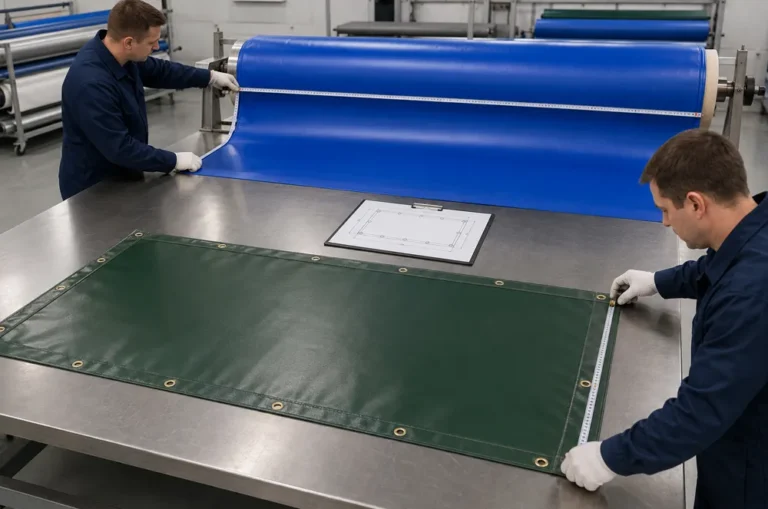
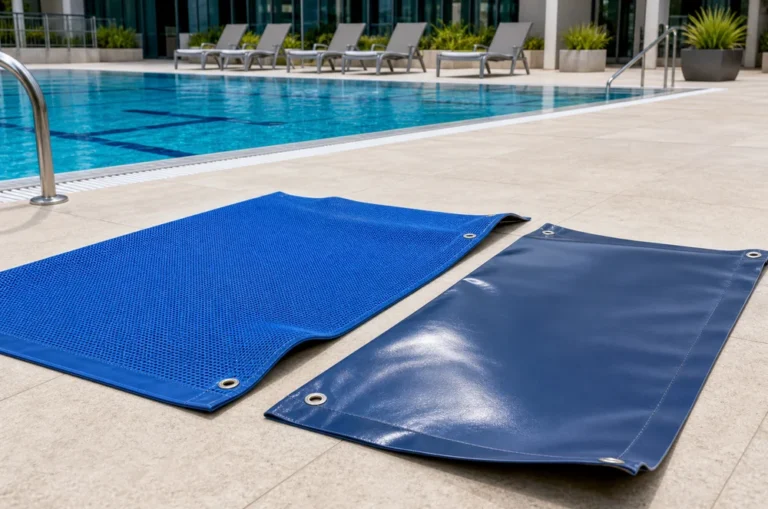
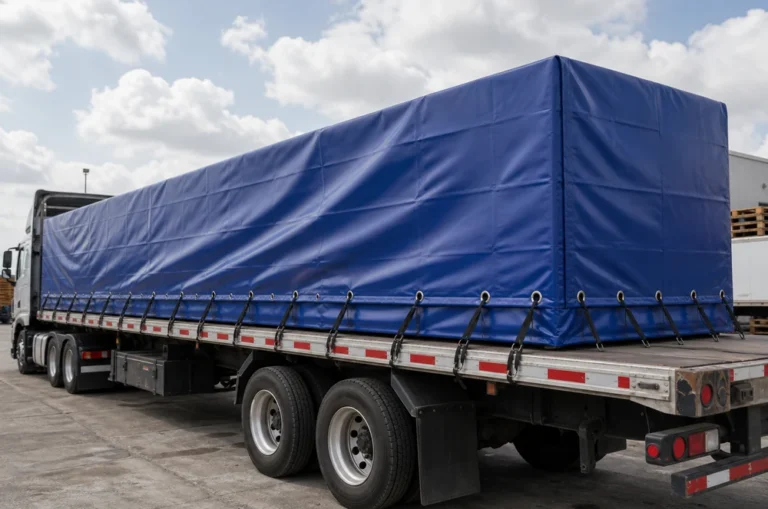
Choosing stronger flatbed tarps is not only a question of buying a heavier fabric. In our factory reviews, edge tearing usually starts where movement, wind, hardware, welding, and cargo contact meet. The center panel may still look strong, while the hem, grommet row, D-ring patch, or corner begins to fail first.
For B2B buyers, this matters because one torn edge can turn into repeated claims across a fleet or distributor order. Before approving a bulk order, I would check how the tarp is pulled, where the straps load the fabric, what touches the edge, and how the sample behaves after folding, tension, and handling.
Quick edge-tear diagnosis: a tear around a grommet usually points to concentrated pulling or weak reinforcement; a split along a welded hem suggests seam layout, heat setting, overlap, or surface cleanliness; abrasion on one side often means the tarp is rubbing against cargo, trailer edges, chains, or machinery corners; a corner tear usually needs a better patch shape and load direction review.
If a buyer can send photos of the first damaged area, the factory can usually review the edge design more accurately than when the problem is described only as “the tarp tore.”
I. Edge Failure Usually Starts With Load Movement and Wind
For fleets ordering flatbed truck tarps, the edge design should match the way the tarp is pulled, folded, strapped, and exposed to wind. A tarp on a flatbed trailer does not sit still. It moves with road vibration, air pressure, strap tension, sharp cargo edges, and repeated handling by drivers.
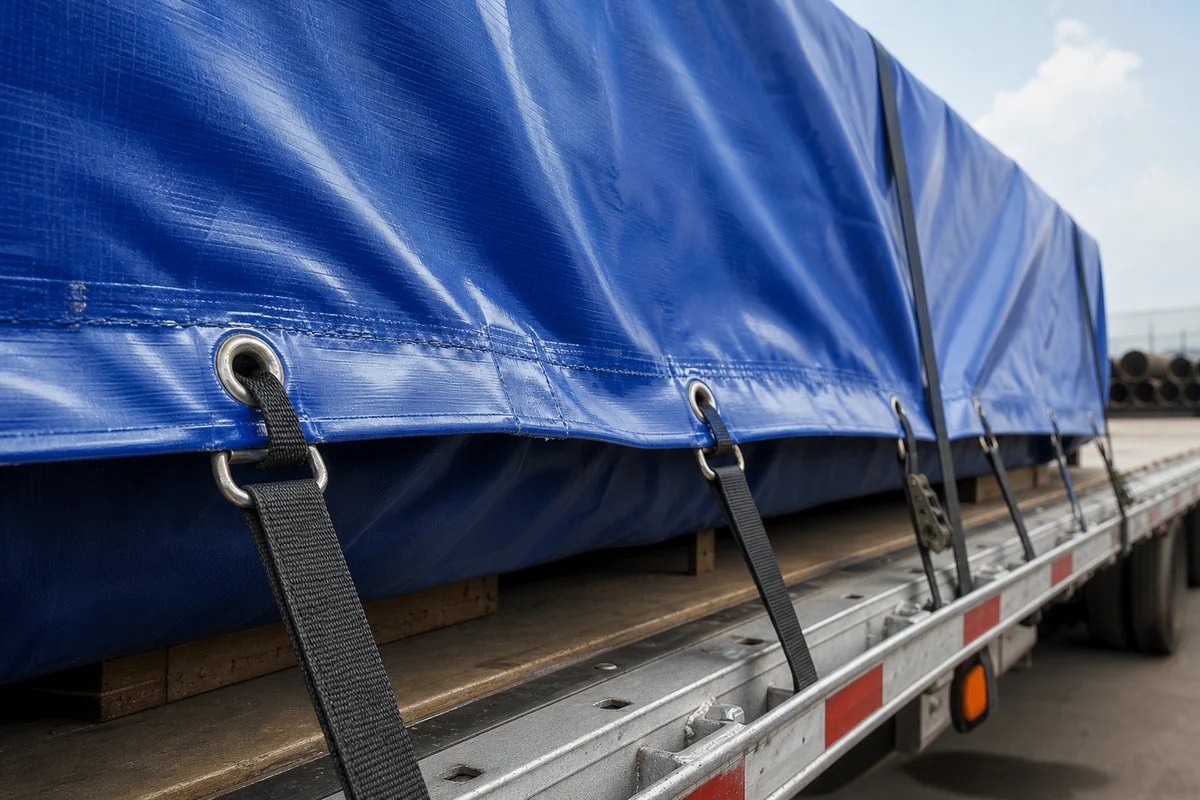
When the edge is loose, wind can lift the tarp and create flutter. When the edge is over-tightened, the same line may carry concentrated stress around a few grommets or D-rings. Both situations can damage the fabric faster than a buyer expects, especially when the tarp is used daily.
I usually look at the first tear location before blaming the whole material. A tear that begins at a grommet hole suggests load concentration or poor reinforcement. A tear that follows a welded hem may point to seam layout, heat setting, contamination, or a weak overlap. Abrasion along one side may mean the tarp is rubbing against cargo, trailer edges, or chain points.
The useful question is not simply “Is the tarp strong?” The better question is: where will the tarp actually carry load during transport, and has that load path been designed into the edge?
II. Material Structure Matters More Than Weight Alone
A heavy-duty tarp should be specified around the load, handling cycle, and failure point, not only around a heavier feel. Many buyers ask for a higher GSM because it sounds safer. GSM matters, but it does not tell the whole story.
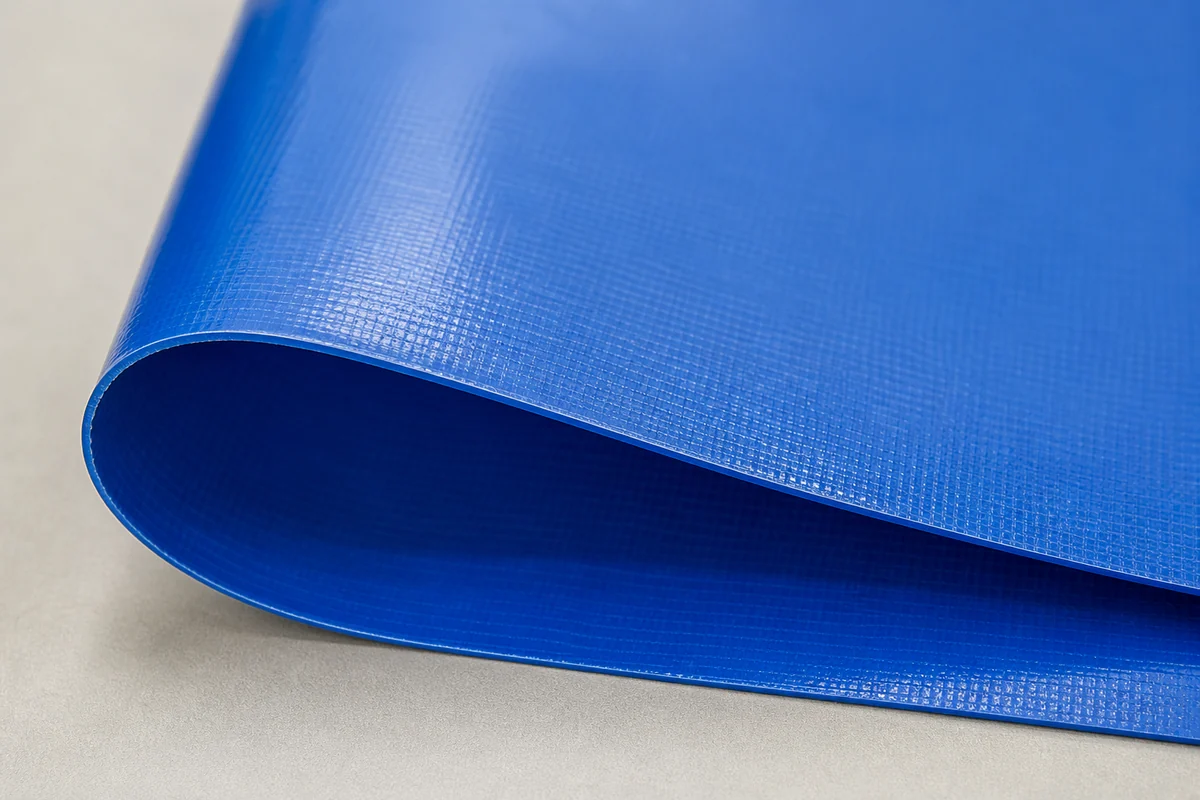
Many heavy-duty vinyl tarps use PVC coated polyester fabric because the coating can be welded and the base fabric carries the main load. The base fabric, yarn density, coating thickness, filler level, flexibility, and adhesion all affect whether a small cut can spread into a longer tear.
This is why I do not judge heavy duty tarps by weight alone. A stiff material may feel strong on a table but crack or whiten when folded repeatedly. A material with too much filler may gain weight without gaining useful tear toughness. A coating that does not bond well to the base fabric may separate near the edge after stress or weather exposure.
For flatbed use, I would confirm tear strength, tensile strength, flexibility, abrasion resistance, coating adhesion, and weldability together. If the tarp will face winter handling, long sunlight exposure, rough steel, lumber, machinery, or frequent folding, those conditions should be stated before sampling.
III. Hems, Grommets, and D-Rings Need a Load Path
The edge is not one detail. It is a small system made from hem width, folded layers, welding or sewing, webbing, corner patches, D-rings, grommets, rope, and strap positions. If those parts do not share load properly, the strongest-looking hardware can still tear out.
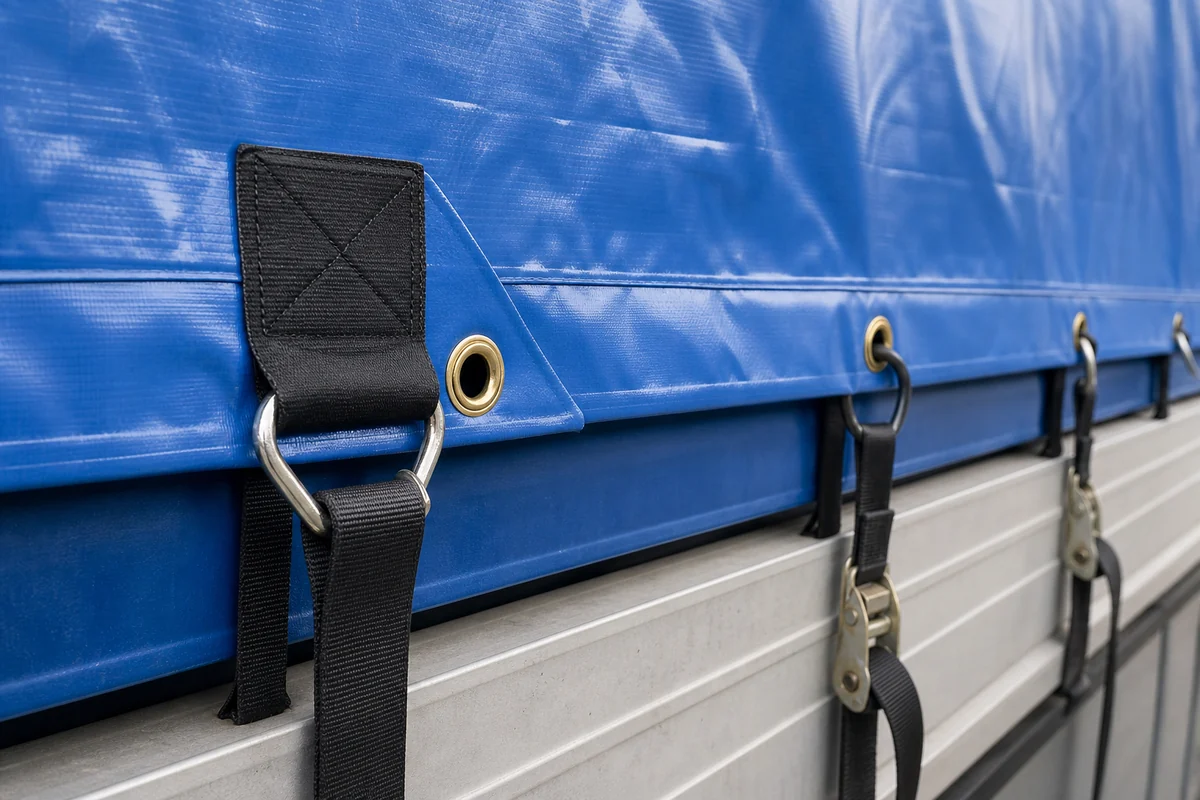
If a buyer sources tarpaulin rolls for local fabrication, the roll width and fabric direction also affect where seams and hardware lines can be placed. A finished cover producer must think about panel layout before cutting, because seam placement can put extra stress near a corner or across a tiedown line.
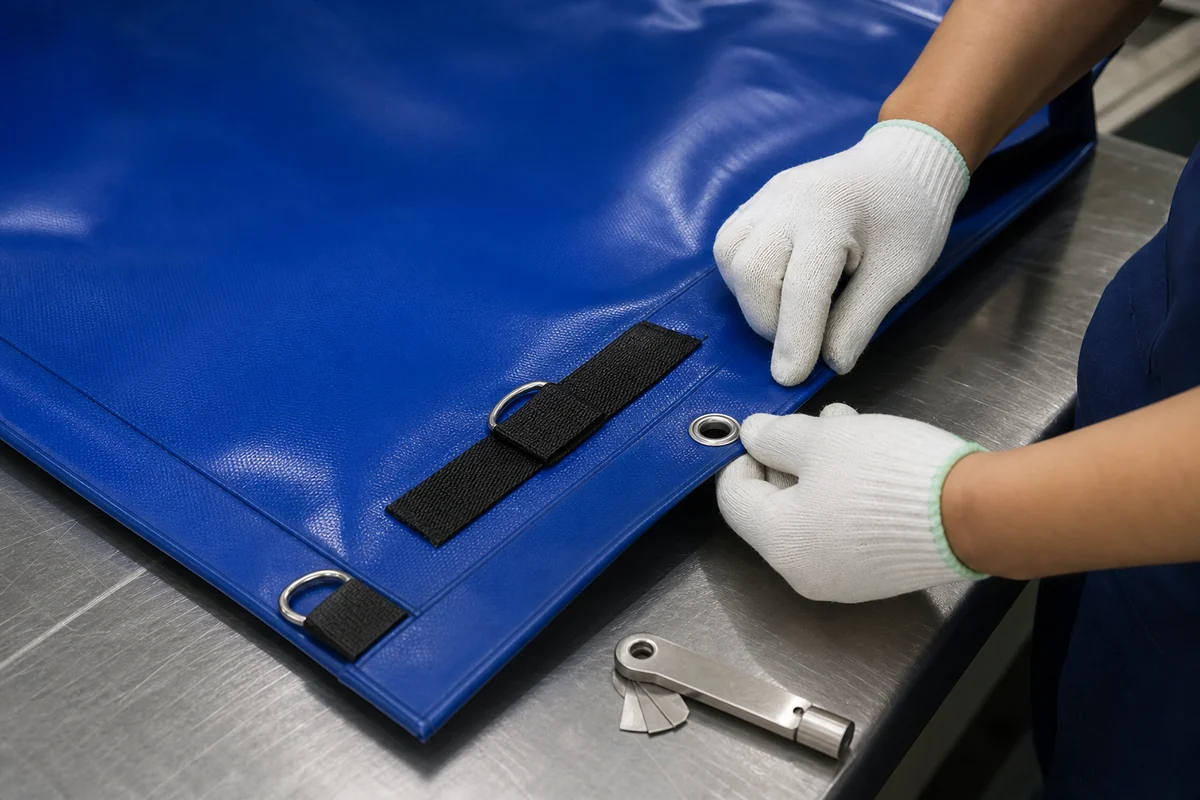
Grommet spacing should follow how the cover will be secured. Wide spacing may leave the edge loose and allow wind flutter. Very close spacing may add holes without solving the real loading problem if the hem is too narrow or the reinforcement layer is weak. For heavy flatbed use, D-rings and webbing patches may be more suitable than relying only on metal eyelets.
Corners deserve special attention. A square corner without enough reinforcement can become the first tear point because several tension directions meet there. I prefer seeing a clear corner design in the sample: patch size, weld area, hardware position, and how the strap pulls across the reinforced zone.
IV. Welding and Seam Layout Can Protect or Weaken the Edge
Welding is one reason PVC coated tarpaulin is useful for transport covers, but welding quality is not automatic. Heat, pressure, speed, overlap width, material cleanliness, coating formula, and surface treatment all affect joint strength. A clean-looking seam can still fail if the weld window is wrong.
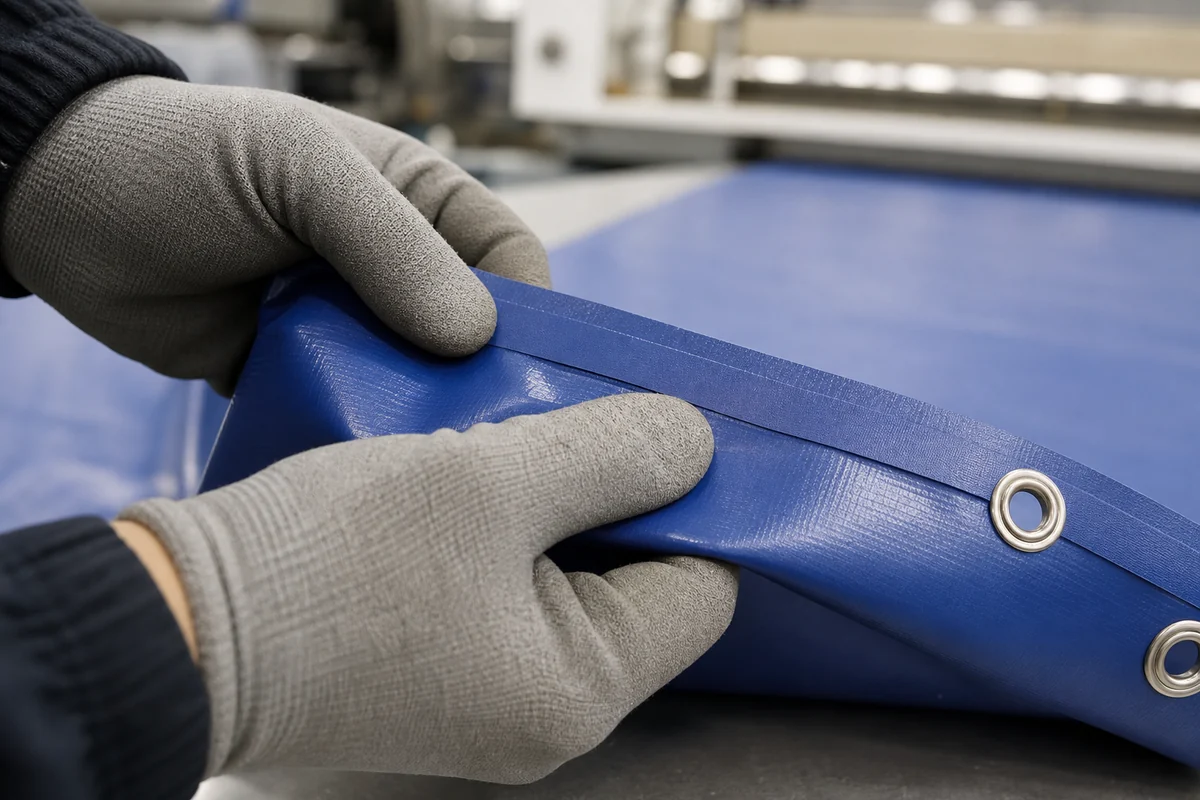
For flatbed tarps, the seam should not be placed only for easy production. It should also consider water flow, folding direction, strap tension, cargo shape, and panel stress. If a seam sits exactly where a strap repeatedly pulls, or where cargo corners rub, the buyer should ask whether the layout can be adjusted.
I also check whether the welded hem is too stiff. A very stiff edge can move differently from the center panel, causing stress at the boundary between flexible and reinforced areas. A stronger cover often needs a balanced edge: enough layers to carry load, but not so rigid that the fabric cannot flex during transport.
Sample review should include more than color and size. Bend the hem, pull near the hardware, inspect the weld line, and check whether the edge shows whitening, delamination, open welds, or distorted eyelets. These small signs are easier to fix before bulk production than after a container has shipped.
V. Bulk Orders Should Include Samples, QC Checks, and Repeatable Specs
A useful quality control plan should check the edge before the full order is packed. For a first order, I would ask the supplier to keep the approved sample, material code, seam layout, hem width, hardware spacing, reinforcement drawing, packing method, and inspection notes together.
For LonaTarp custom production, the usual MOQ is 5,000 square meters, so the sample and edge specification should be detailed enough to support a real purchasing decision, not only a small trial piece.
| Failure point to check | Specification focus | Buyer should confirm |
|---|---|---|
| Grommet row | Hem width, reinforcement layer, hole position, and spacing | How the tarp will be tied, strapped, or tensioned during transport. |
| D-ring or webbing patch | Patch size, weld area, stitch or weld method, and pull direction | Whether straps pull straight, sideways, or around cargo corners. |
| Welded hem | Overlap width, heat setting, surface cleanliness, and edge flexibility | Sample bend, pull check, weld appearance, and peel or joint test if required. |
| Corners | Corner patch shape, layer transition, hardware position, and stress direction | Cargo shape, strap route, and whether the corner touches sharp or abrasive surfaces. |
| Repeat order records | Material code, cutting file, hardware layout, QC criteria, and packing label | Whether the same specification can be produced again without changing edge details. |
For a useful sample file, I would keep the edge drawing, finished panel size, hem width, hardware spacing, reinforcement patch size, material code, welding method, packing method, and inspection photos together. If the buyer later reorders the same tarp, these records make it easier to check whether the second batch follows the approved edge design.
When field photos are available, include where the tear started, which side of the trailer it happened on, how the tarp was tensioned, and what cargo edge touched the cover. Those details often explain more than the damaged fabric alone.
For custom-made tarps, repeatable records are as important as the first sample. If a supplier cannot explain how the edge specification will be controlled in the second and third orders, the buyer may receive covers that look similar but behave differently in the field.
Before approving a bulk flatbed tarp order, send the load type, trailer size, cargo height, desired drop, material target, securing method, strap or bungee layout, hardware preference, packing requirement, and any failure photos from previous tarps. Those details help the factory design the edge for the real job, not just for a drawing.
Stronger flatbed tarps come from matching material, fabrication, and use conditions. When the edge is treated as a load-bearing part of the product, not a finishing detail, the cover has a much better chance of surviving repeated transport work.