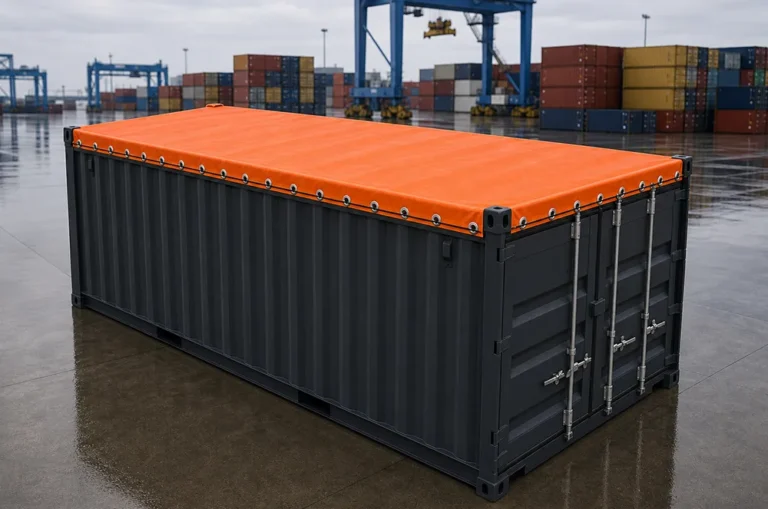
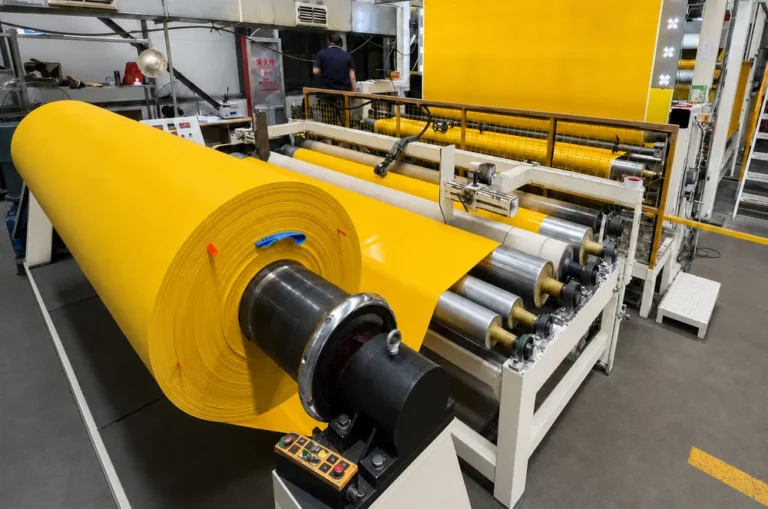
If you want to know how to stop tarp flapping, start with the air path, not only the tarp weight. Most tarp flapping in wind begins when wind can enter under a loose edge, lift excess fabric, and shake the cover against grommets, seams, straps, or cargo corners. A heavier cover may reduce movement, but it will not solve the problem if the cover is too large, the edge drop is wrong, the tie-down line is uneven, or the hardware spacing does not match the load.
In our factory, I treat flapping as both an installation issue and a specification issue. To keep a tarp from flapping on trucks, equipment, construction materials, or outdoor storage, buyers should confirm the tarp fit, edge reinforcement, grommet spacing, fabric flexibility, and the actual fixing method before production. That is also where a custom manufacturer can help more than an off-the-shelf cover.
I. Why Tarps Flap in Wind
Tarp flapping in wind happens when moving air finds a loose pocket and turns the cover into a flexible sail. The first warning sign is usually not a dramatic tear. It is a small ripple near an edge, a strap that keeps loosening, or a corner that lifts whenever the vehicle moves or the wind changes direction.

For transport covers, truck tarp flapping often starts along the side rail or at the front edge where wind pressure is highest. On open trailers, I pay close attention to the gap between the cargo profile and the lower tarp edge. If the gap lets air travel under the cover, the fabric will pulse even if the center panel is made from a strong material.
The same logic applies to equipment covers and construction tarps. A cover can have good tensile strength and still move too much if the load has sharp height changes, the tie-down points are too far apart, or the cover has large unsupported panels. For flatbed tarp wind flap problems, the fabric is only one part of the answer; the air path and fixing geometry matter just as much.
II. Start With the Right Tarp Fit
The quickest way to reduce movement is to remove unnecessary loose fabric. A custom truck tarp fit should follow the cargo size, edge drop, and fixing position closely enough that the cover can be tensioned without creating deep hanging folds. If the tarp is too short, the buyer cannot secure it properly. If it is too large, extra fabric becomes a wind pocket.
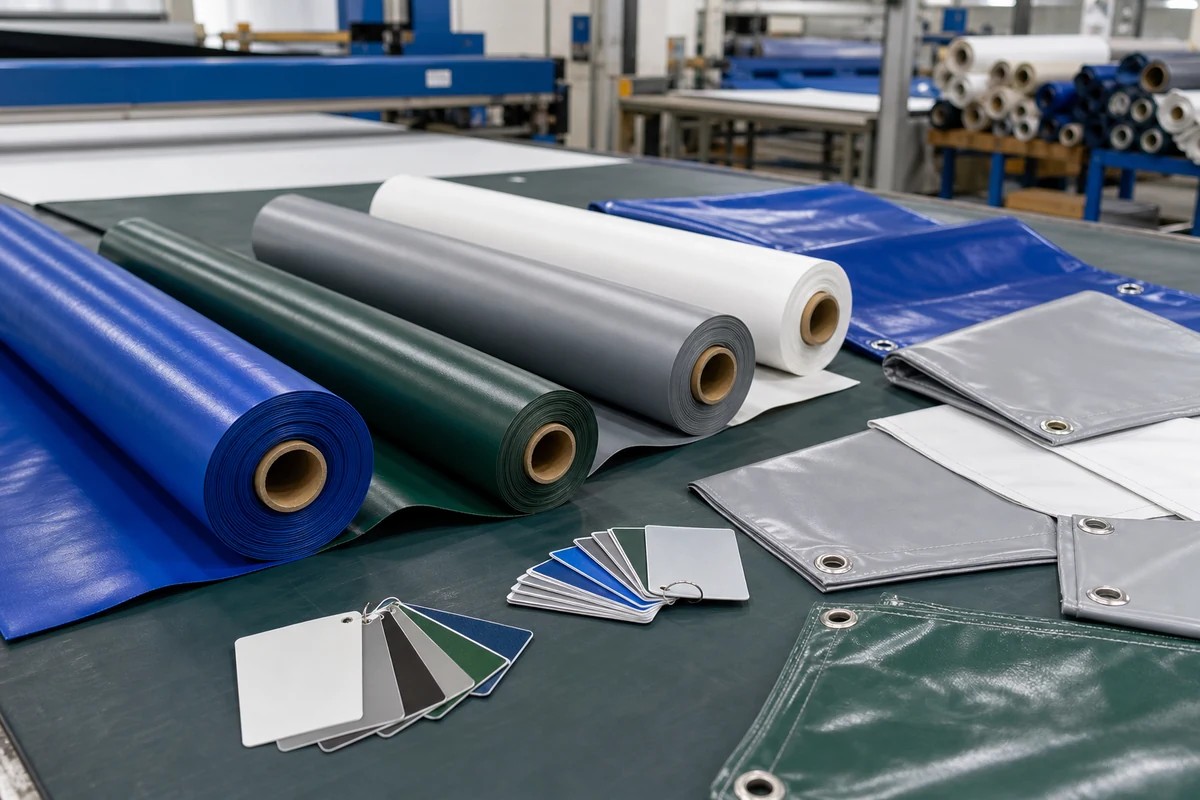
Before we quote a cover for a recurring load, we ask for the finished size, cargo shape, fixing points, expected overlap, and whether the tarp will be opened daily or installed for long periods. These details tell us whether the buyer needs a straight rectangular panel, shaped corners, extra side drop, or additional fastening positions. This is the practical start of learning how to stop tarp flapping, because the drawing controls what the installer can actually tension.
For fleets and repeat projects, one sample cover is useful. The team can mount it on the actual trailer or equipment, check the side drop, then mark where air still gets under the cover. That sample confirmation is often cheaper than ordering a full batch and discovering that every cover needs a different edge design.
III. Reinforce Edges and Tie-Down Points
When wind pulls on a tarp, the load concentrates at the edge first. That is why reinforced tarp edges are not only a durability feature; they also help hold the tarp shape under tension. A welded hem, reinforcement band, or double-layer edge can spread force across more fabric instead of leaving every pull on a single grommet row.

Tarp grommet spacing and tarp tie down spacing should match the wind exposure and the load shape. If spacing is too wide, the fabric between two fixing points can belly out and start to beat against the cargo or rail. If spacing is too close without enough reinforcement, the edge may become stiff and harder to handle. The right answer depends on the panel size, GSM, edge construction, and how the cover is fixed in use.
I also look at strap direction. A good tarp tensioning method pulls the edge down and slightly inward, not only straight sideways. Balanced strap angles reduce flutter and protect the eyelets. On a moving vehicle, this detail can decide whether truck tarp flapping stays minor or turns into torn hardware and repeated replacement orders.
| Flapping sign | Specification focus | What to confirm before production |
|---|---|---|
| Loose lower edge | Finished size, edge drop and tarp tie down spacing | Cargo height, rail position and usable anchor points |
| Eyelets pulling out | Tarp grommet spacing and tarp edge reinforcement | Grommet type, reinforcement band width and strap angle |
| Center panel beating | Fabric GSM, panel size and tarp tensioning method | Unsupported span, load shape and daily handling method |
| Repeated wind exposure | PVC tarp for windy conditions and reinforced tarp edges | Outdoor duration, route speed, inspection routine and sample test |
IV. Choose PVC Fabric for Wind and Repeated Movement
A PVC tarp for windy conditions should balance strength, flexibility, coating quality, and weldability. More GSM can help in some applications, but GSM alone does not prove performance. The base fabric, coating formula, tear strength, coating adhesion, and edge construction all affect whether the tarp can handle repeated movement without early failure.
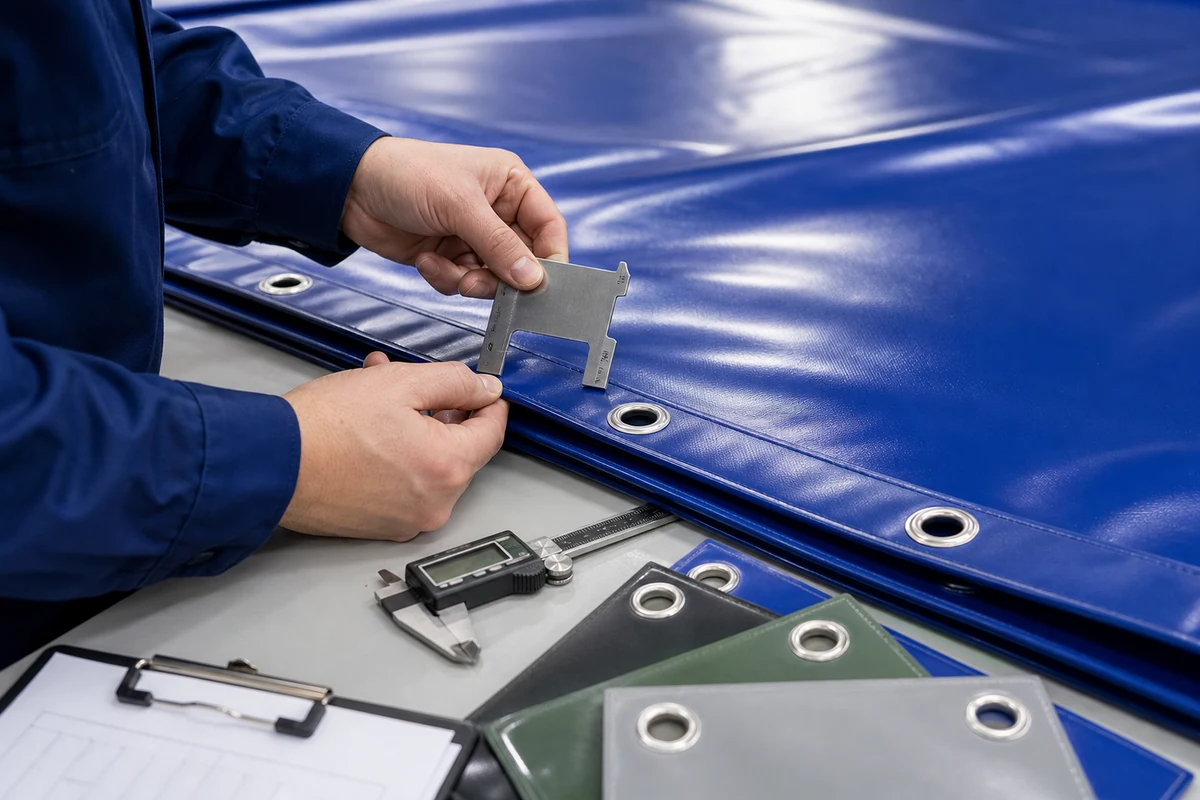
For transport and outdoor covers, we often discuss vinyl tarps because PVC coated polyester can be welded, reinforced, and customized for demanding conditions. A smooth waterproof vinyl coating helps keep the surface clean and reduces water entry, while the polyester base fabric carries much of the tensile and tear load. If the cover will be folded daily, flexibility matters as much as thickness.
This is where heavy duty tarp wind protection should be specified carefully. A buyer may need higher tear strength, tighter grommet spacing, a softer low-temperature formulation, or added UV resistance, depending on where the cover will be used. If the product is for long outdoor exposure, UV and weather testing should be confirmed by agreed methods rather than guessed from a general material claim.
For a large order, I would not describe the requirement only as a windproof tarp specification. That phrase is useful for search, but it is too broad for production. The order sheet should say what wind problem the buyer is trying to control: edge flutter during road transport, loose cover movement on outdoor equipment, or repeated lifting around exposed corners. Once that use condition is clear, the factory can match fabric weight, coating softness, tarp edge reinforcement, hardware type, and packing method to the real job instead of overselling a single heavy material.
V. Check Installation Before Bulk Orders
The best time to stop tarp from flapping in wind is before the first production batch is approved. For repeat B2B orders, I prefer to test one sample on the real load, then check whether the installer can keep the fabric smooth without overstretching the eyelets. If the sample cannot be fitted cleanly, a larger order will only repeat the same problem.
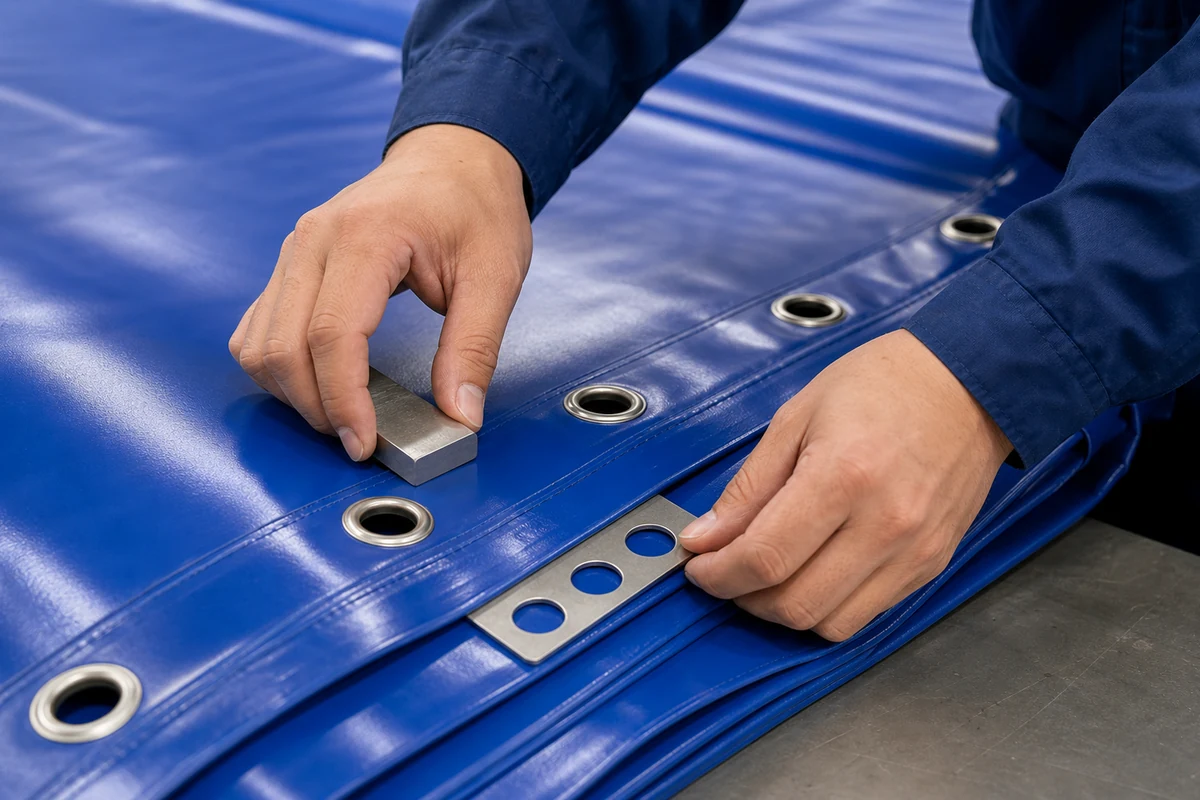
During this check, review the custom truck tarp fit, the final edge drop, strap angle, tarp grommet spacing, and any points where the cover rubs against metal edges. If the cover is meant for flatbed truck tarps, the front edge and side rail usually deserve extra attention because they see direct airflow. For general heavy duty tarps, the buyer should check whether the same fixing logic works on each equipment shape or storage layout.
We also recommend writing the installation findings into the final specification. That may include finished dimensions, edge reinforcement width, tarp tie down spacing, strap type, packing method, sample approval notes, and the inspection items agreed with the factory. If the buyer needs roll material for local fabrication, tarpaulin rolls may be a better purchase format; if the buyer wants finished covers, the production drawing should show the hardware layout clearly.
For fleet buyers, the same check should be repeated on more than one load shape. A cover that works on a square pallet stack may still move on irregular machinery or mixed cargo. That is why heavy duty tarp wind protection should be treated as a system: the fabric, finished size, fixing points, straps, and inspection routine all work together. If the installer has to pull one corner much harder than the others, the pattern should be revised before the order is copied across many vehicles.
For a manufacturer, the goal is not to claim that one windproof tarp specification can solve every site. A roof cover, an equipment cover, a truck tarp, and a construction material cover all face different air pressure, abrasion, and handling patterns. The practical way to keep a tarp from flapping is to match the cover to the real fixing points, then verify the design through sample confirmation and quality control before the bulk order.
Before production, prepare these details
A short production note helps the factory review the wind problem faster and keeps the discussion practical. For repeat orders, collect these details before the sample is made:
- Load or equipment size: finished cover size, cargo height, edge drop, and any high corners that may catch wind.
- Fixing points: photos of side rails, anchor points, machinery corners, or the frame where straps will pull.
- Wind exposure: road speed, outdoor duration, prevailing wind direction, and whether the cover is opened daily or left in place.
- Hardware layout: usable anchor spacing, preferred grommet layout, strap direction, and areas where the edge needs extra support.
- Edge reinforcement: front edge, lower side edge, corners, rub points, and any place that has failed on previous covers.
- Sample check: where the first cover will be mounted, what flapping signs should be recorded, and which changes can be confirmed before bulk production.
If your team is comparing options, send the load size, use environment, fixing method, expected outdoor duration, and photos of the anchor points. We can review the drawing, suggest reinforced tarp edges where needed, and help decide whether the project needs a PVC tarp for windy conditions, a different hardware layout, or a revised tarp tensioning method. That is usually the most reliable path for reducing truck tarp flapping without overbuilding the whole cover.