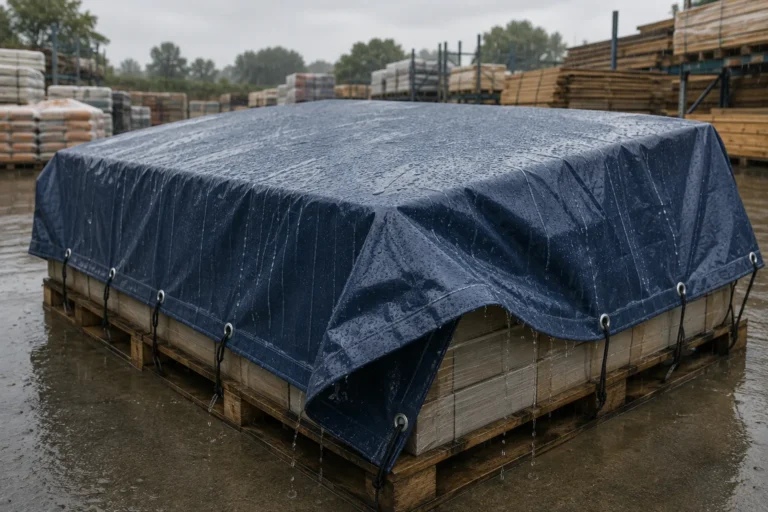
Custom tarp packaging should be planned before production finishes, not after the last piece comes off the table. In export orders, the packing format decides how the buyer unloads the goods, how mixed sizes are identified, whether hardware damages the surface in transit, and how easily the same order can be repeated later. A good tarp can still create claims if the folding method, carton marks, pallet height, or loading sequence are wrong.
A custom tarp export packaging plan should connect the finished tarp size, fold size, bundle weight, label format, carton or pallet packing, and container loading sequence before shipment. When these details are left until the end, the tarp may pass production inspection but still arrive in a way that slows receiving, sorting, or installation.
For that reason, I treat packaging as part of the order specification. Before a bulk shipment leaves the factory, the buyer should confirm the receiving method, packing unit, protection level, label content, and container-loading logic in the same way they confirm material, size, and hardware.
I. Define How the Tarp Will Be Received Before You Choose the Packing Format
The first packaging question is not “carton or pallet?” It is “how will the buyer receive and sort this order?” A distributor with forklift unloading needs a different setup from a contractor receiving mixed tarps at a jobsite or a branch warehouse that opens cartons one specification at a time. The right answer depends on the receiving flow, not just the factory’s packing convenience.

That is why the buyer should confirm folding size, pieces per bundle, target bundle weight, and whether the shipment will be sorted by size, color, destination, or customer label. If the receiving team unloads manually, a very large compressed bundle may save one pallet but create handling problems at destination. If the goods will move through a distribution network, mixed cartons can create picking errors even when the total quantity is correct. That is why fold size for tarps should be treated as a receiving decision, not only a factory folding decision.
Buyers who reorder the same cover program should also decide whether one receiving unit should equal one sales unit, one installation unit, or one warehouse count unit. That small packaging rule affects relabeling cost, arrival speed, and whether the same order can be repeated without confusion six months later.
When the order belongs to a broader custom-made tarps program, packaging also becomes a repeat-order control point. The same tarp packed in a different fold or count can confuse warehouse records and make the next order harder to match. Good export packaging keeps the physical load and the receiving workflow aligned.
II. Choose Bale, Carton, Pallet, or Bulk Tarp Packing by the Real Delivery Job
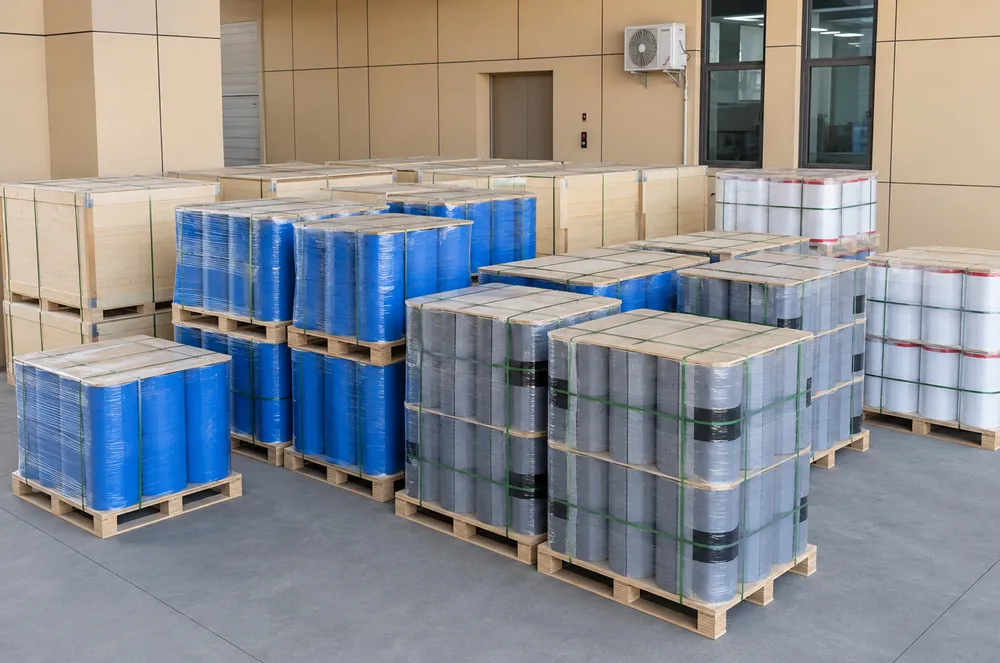
No single packing format is best for every custom tarp order. Bales may reduce cost, cartons may improve SKU separation, pallets may speed unloading, and mixed container loading may be necessary when one program contains several sizes and accessory sets. Bulk tarp packing should follow the buyer’s unloading method, storage system, and downstream distribution needs, not only the factory’s shortest packing route.
| Packing Format | Best Fit for the Order | What to Confirm Before Shipment |
|---|---|---|
| Bales or compressed bundles | Good when the buyer wants low packing cost and can sort tarps in a warehouse after arrival. | Confirm bundle weight, finished fold size, moisture barrier, and whether metal hardware can rub between pieces. |
| Cartons | Useful for distributors, branch warehouses, and orders that need clear SKU separation. | Confirm pieces per carton, carton size limit, label format, and whether mixed sizes in one carton are allowed. |
| Palletized loads | Best for forklift handling, cleaner unloading, and export orders that need stable stacking. | Confirm pallet footprint, stack height, pallet wrap, top-sheet protection, and carton overhang tolerance. |
| Mixed container loading | Suitable when one order contains several tarp sizes, accessories, or private-label packs. | Confirm load sequence, destination marks, count method, and how the receiver will identify each specification on arrival. |
In practice, many problems start when the supplier chooses the lowest-cost packing logic without checking what happens after arrival. A carton that is efficient in the factory may be too large for the buyer’s shelving. A pallet that looks stable in the warehouse may exceed the receiving dock height. A mixed bundle may save labor at origin but create counting disputes at destination. Good tarp export packaging checks these issues before the tarps are wrapped and marked. In many cases, a carton or pallet packing decision should be written into the quote approval, because changing it after production often changes labor, materials, and container utilization.
III. Protect the Surface, Edge, and Hardware During Transit
Packaging has to protect the tarp where transit damage is most likely. That usually means the folded edge, the hardware line, the clear or printed face, and the areas where straps or grommets can rub against adjacent pieces. Even when the tarp material is durable, poor fold protection can leave scuffing, hardware pressure marks, or deformed clear panels by the time the shipment arrives.

This is especially important for orders made from PVC tarpaulin, clear PVC panels, printed covers, or tarps with metal hardware concentrated along one side. The packing plan should answer practical questions: Do the grommets need separator layers? Should the clear face fold inward or outward? Is a simple PE bag enough, or does the buyer need stronger moisture protection and pallet top covering? Are corner protectors needed to stop straps from cutting into the bundle?
Export packaging also needs to consider transit duration and climate. If the goods will see long sea transit, high humidity, multiple restacks, or mixed container loads, the protective layers should be chosen with that route in mind. Tarp shipping packaging is not there to look tidy in the factory photo. It is there to deliver the tarp in the same commercial condition the buyer approved. For some orders, that means building a pre shipment packing check around moisture barrier integrity, separator placement, and whether hardware protection during shipment still holds after stacking pressure is applied.
IV. Make Custom Tarp Packing Labels and Loading Records Repeat-Order Ready
Strong packaging is only half the job. The other half is traceability. A buyer should be able to identify each specification quickly from the outer mark, carton label, or pallet tag without reopening every unit. Custom tarp packing labels should make it clear which tarp size, color, order number, packing unit, and destination the load belongs to. For complex programs, it is even better to lock the label fields early: buyer SKU, internal material code, quantity per pack, carton sequence, pallet sequence, and any mark the receiving team uses to separate urgent items from standard stock.
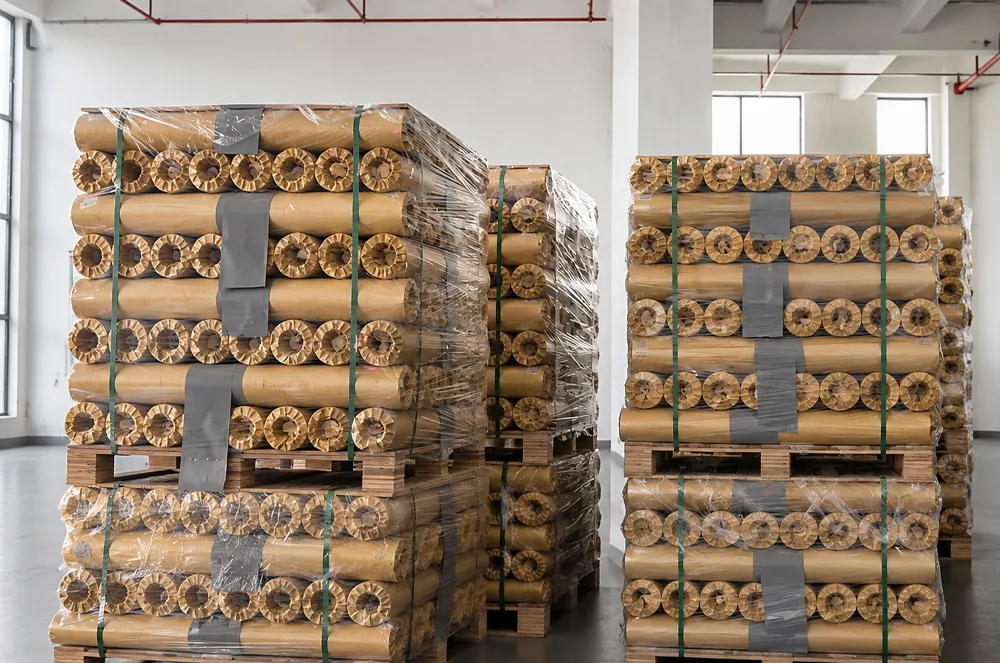
That detail matters because many arrival disputes are not true product defects. They start when the receiver cannot tell whether carton 14 belongs with size A or size B, or when two tarp specifications share similar folded dimensions but different hardware layouts. Packaging marks should reduce that ambiguity before the box is opened.
For repeat programs, I recommend tying the packaging record back to the approved sample, drawing revision, and shipment count. That way the buyer can reorder the same tarp without rediscovering the folding logic, the pieces-per-carton rule, or the pallet stacking limit. Before the container is sealed, the supplier should also confirm that the packing format still matches the shipment list, the destination mark, and the buyer’s unloading method. This is one place where the factory’s broader quality control discipline supports the order even though the tarp itself is already finished.
A simple final check saves many disputes: verify labels, verify quantities by packing unit, verify pallet count, verify loading photos, and verify which bundle or carton should be opened first on arrival. Once the buyer confirms a repeat order packaging standard, those label and loading rules should be copied into the next order instead of rebuilt from memory.
V. Confirm Tarp Shipping Packaging, Container Loading, and Arrival Checks
Container loading is part of the packaging decision because it determines how the packed tarps will actually travel. The buyer should confirm pallet orientation, loading sequence, stack height, aisle or unload priority, and whether any specification must be accessible first after arrival. If mixed sizes are buried in the wrong sequence, the receiving team may have to break stable loads just to find one urgent SKU.

This is also where export pallet height, pallet overhang, and container loading plan details become practical rather than theoretical. A pallet that barely fits in one warehouse may shift badly in a long container route. A bundle that is easy to stack at origin may be impossible to separate safely at destination if the unloading side is different. Buyers who care about repeatability should ask for final load photos and confirm the same loading logic can be repeated on the next order.
I also recommend defining one simple arrival check for the first pallet or carton opened at destination: confirm label match, confirm outer condition, confirm the fold and hardware are protected as agreed, and confirm the packed quantity matches the label. A short arrival check closes the loop between factory packing and buyer receiving, which is the only way a repeat order packaging standard becomes reliable instead of informal.
If you need the packing plan written into the quote stage, you can contact our team with the fold-size target, label format, destination, unloading method, container limits, and any arrival-first priorities. That turns packaging from an afterthought into a controllable part of the export order.