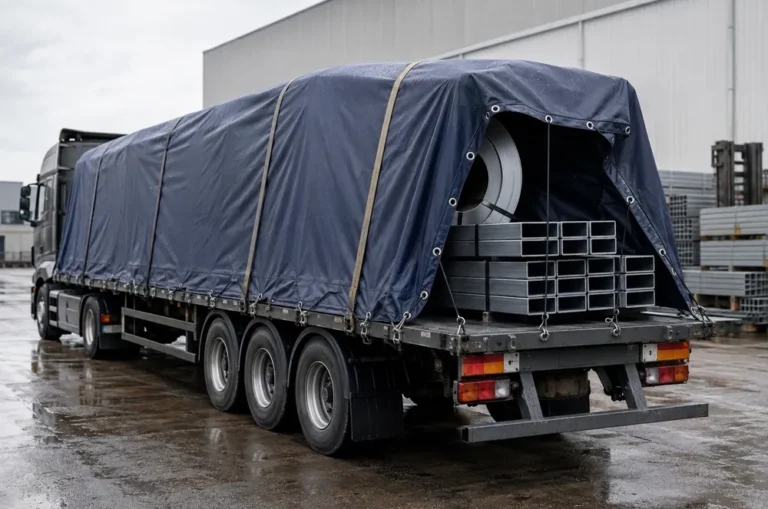
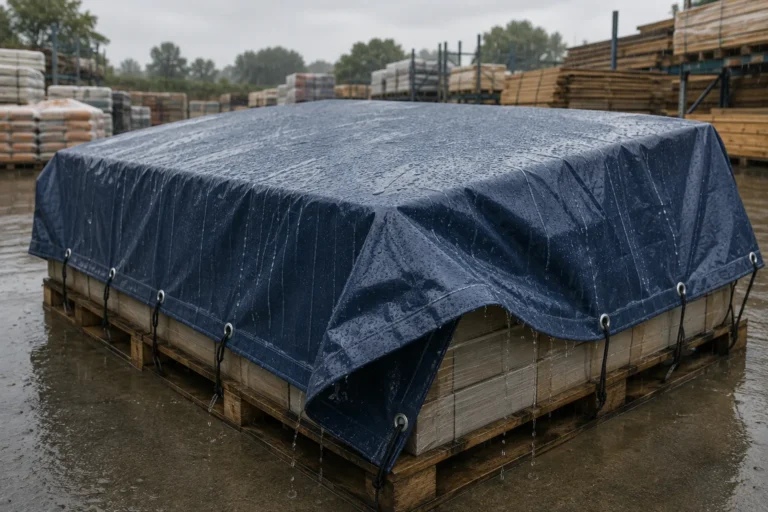
Custom mesh tarps for shade and ventilation are the right choice when a buyer needs airflow, light reduction, or debris control without turning the opening into a sealed waterproof wall. The most common mistake is choosing mesh only by color or by a broad “shade tarp” label. Industrial and agricultural buyers usually need something more specific: the right openness, edge build, hardware spacing, and panel size so the finished cover can survive wind, repeated fastening, and site handling.
When I compare mesh-tarp projects, I do not treat them as lighter versions of solid PVC tarps. A breathable panel solves a different problem. The buyer may want shade over stock, ventilation around equipment, falling-debris retention, or a movable screen that reduces sun and wind load without trapping heat. That is why mesh specification should begin with the target use condition and the load path, not with a generic request for “custom mesh with grommets.”
I. Decide Whether the Job Needs Breathability or Waterproofing First
The first decision is what the panel is supposed to let through and what it must block. A mesh tarp is useful when the enclosure needs air movement, lower sail effect, reduced heat build-up, or filtered shade. It is the wrong route when the buyer actually needs a fully sealed rain barrier. This sounds obvious, but a lot of inquiry confusion starts when a project is described as a tarp cover even though the real performance target is ventilation.
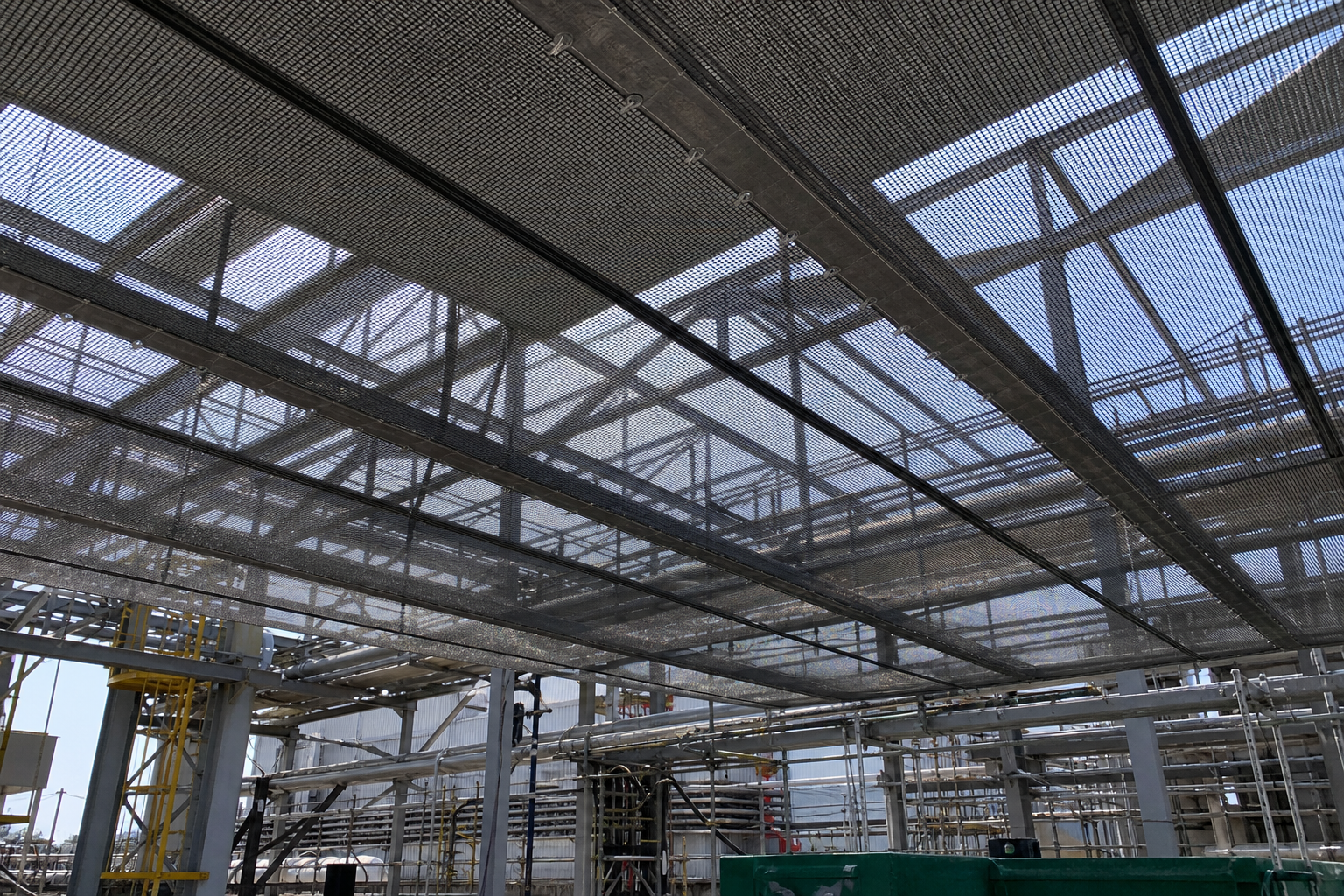
For example, a mesh screen over an outdoor work bay may be intended to reduce glare and crosswind while keeping air exchange open. An agricultural side panel may need to soften sunlight and maintain ventilation. A transport-related mesh cover may need to retain loose material while still allowing pressure relief. Those are all mesh applications, but the required openness, edge reinforcement, and fixing pattern can be very different.
This is why the blog angle cannot simply repeat the general mesh tarp page. The buyer here is choosing a custom finished cover, and that choice starts with one practical question: is the panel supposed to breathe, to shade, to hold debris, or to do some of all three in a specific ratio?
II. Match Mesh Openness to Shade, Visibility, and Airflow
Once the use case is clear, the next job is to define how open the mesh should feel in service. Buyers often describe this as “shade percentage,” but what they really care about is a combination of airflow, visibility through the panel, debris retention, and sun reduction. A more open mesh may lower wind stress and improve ventilation, but it can also reduce privacy and let more dust or debris pass. A tighter structure may give better screening yet behave more like a loaded sail.
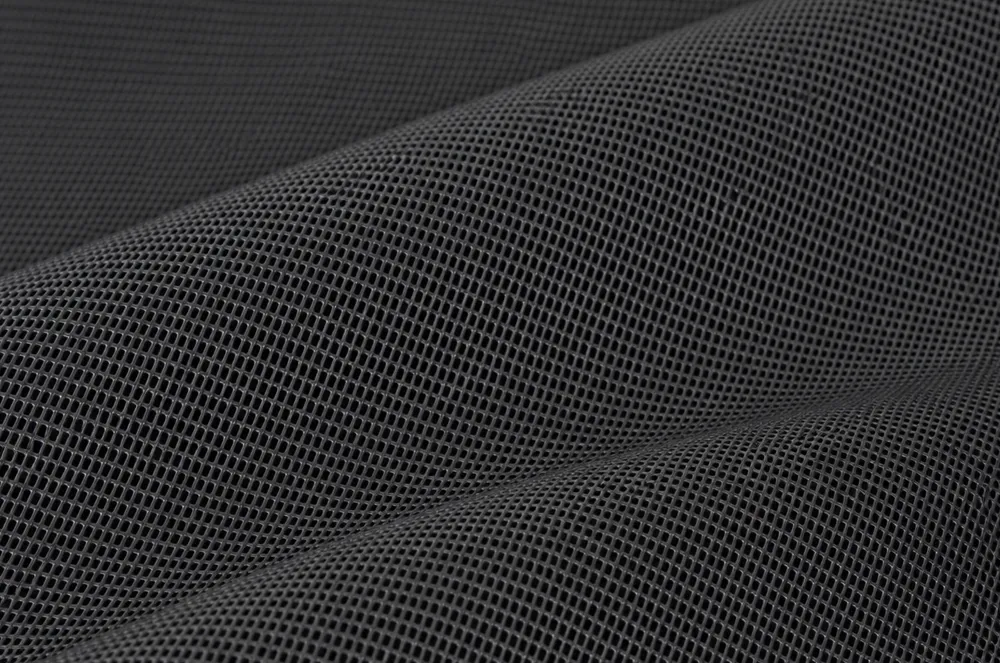
I therefore ask buyers to describe the actual site condition rather than only asking for a “heavy duty mesh.” Is the panel covering pallet stock, equipment, scaffold edge, crop area, or a work zone where people stand behind it? Does the project need more visual screening, or is the main goal to keep air moving while reducing direct sun? Those answers are usually more useful than trying to force the entire decision into one mesh-weight number.
Product knowledge also helps here: coated fabric performance depends on construction, coating, additives, and the real application environment. For mesh, the critical question is not only material weight but how the open structure, coated yarn stability, edge construction, and UV package match the site. A lower-cost mesh that looks acceptable on a sample roll may stretch, fray, or distort faster if the edge build is weak for the actual wind and fastening pattern.
I also look at what sits behind the mesh. If the panel protects people, product, or equipment that can be damaged by repeated flapping, the buyer may need a calmer, more controlled screen rather than simply “more air.” If the panel sits next to forklifts, moving machinery, or stock racks, the panel width and anchor pattern should reduce uncontrolled billowing. Those are site-management decisions, but they should influence the mesh choice before the order is priced.
III. Build the Edge and Hardware Around the Load Path
Most mesh-tarp failures begin at the perimeter, not in the open center. That is why I review the edge and hardware before I review color. If the finished panel is wide, repeatedly tied down, or exposed to gusting wind, the reinforcement strip, hem method, corner patch, and grommet spacing matter far more than a generic request for eyelets every so often. The mesh panel may breathe, but the load still concentrates where the cover is fixed.
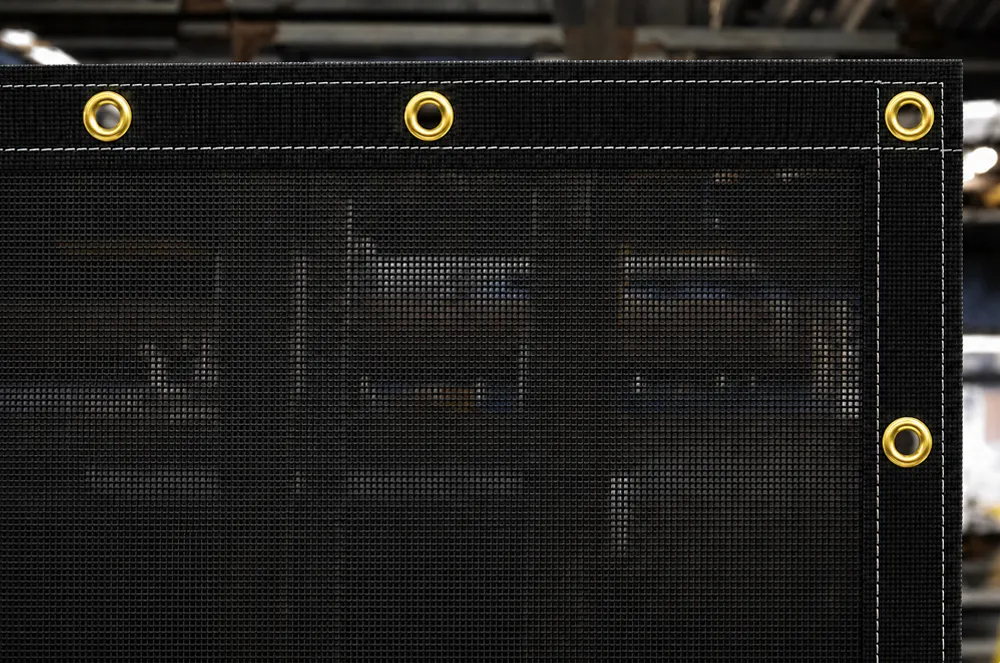
| Buyer checkpoint | Why it matters for mesh tarps | What to send before quotation |
|---|---|---|
| Airflow and shade target | Decides whether the panel should favor openness, screening, or debris control. | Use case, site photo, sun direction, and whether people or goods sit behind the panel. |
| Edge reinforcement | Mesh load enters through hems, webbing, corners, and hardware rather than through a solid sheet body. | Fixing method, pull direction, corner detail, and preferred grommet or webbing route. |
| Panel size and seam logic | Very large mesh covers may need seams, support points, or different tension control to stay stable. | Finished width and length, quantity by size, and any frame or anchor sketch. |
| Outdoor durability and color | UV package, color stability, and heat behavior can differ by environment and color choice. | Exposure condition, project duration, target color, and whether sample approval is required. |
If the project looks simple but the edge logic is unclear, I usually ask for a drawing or at least a marked photo. That is especially true when the panel may behave like a sail in gusting wind or when the mesh is tied to a frame with inconsistent anchor spacing. One clear edge plan can prevent more trouble than a long back-and-forth about “strong mesh” after production starts.
IV. Keep Size, Color, and Use Case Aligned With the Site
Mesh panels are often bought for outdoor projects, so color and environment should be discussed together. Product knowledge warns against treating outdoor appearance as a simple design choice because pigment, UV package, exposure level, and site temperature all influence long-term performance. A buyer who needs a dark shade panel in a hot exposed area should say so early. A buyer who needs better visual brightness under a canopy should not assume the same color logic.
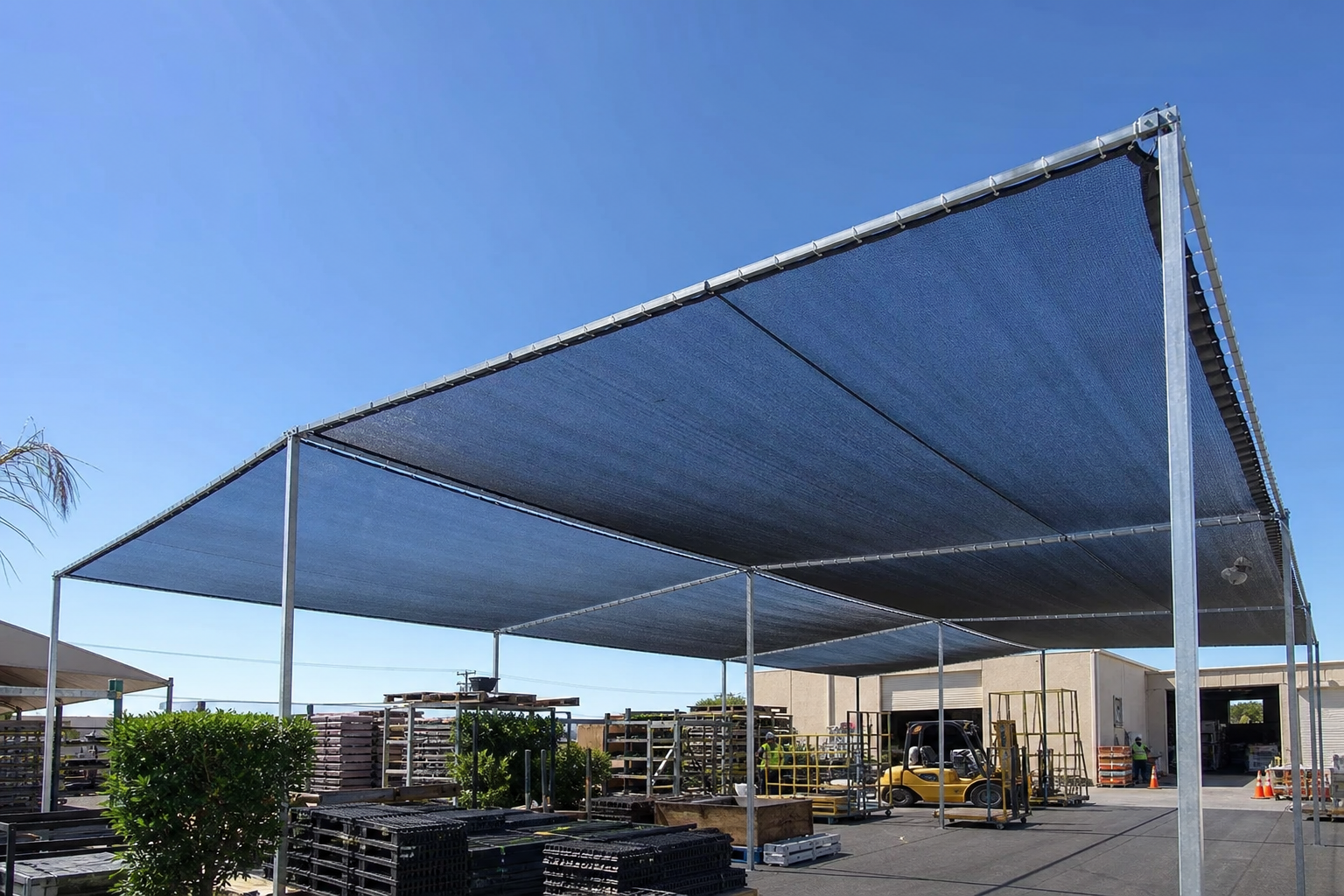
I also separate the use cases carefully. A breathable mesh screen for an outdoor warehouse opening is not the same as a debris-control panel, and neither is the same as a dump truck mesh tarp. They may share some material logic, but the finished construction and stress pattern are different. That is how I avoid keyword cannibalization with the landing pages while still writing something useful for buyers who need custom specification support.
Large-size planning matters as well. A mesh cover that spans a broad opening may need seam planning, center support, or a different attachment rhythm so the panel stays stable and manageable. Buyers who send only the opening size often miss the installation path, but installation is where the project proves whether the specification was practical.
Color and environment can also change how the site experiences the panel. Darker shades may control glare well, but they can change visibility through the screen and the visual brightness of the work area. Brighter colors may keep the area feeling more open but may not deliver the same screening effect. I prefer to review this at the same time as the site photo, because the useful answer is not “which color is best” in general. It is which color and openness combination helps this exact opening perform the way the buyer expects.
V. What to Approve Before Repeat Bulk Production
The final approval package should include the finished size, target use, openness expectation, edge build, hardware spacing, color reference, sample expectation, and packing method. That might sound like a long list, but it is the minimum needed to keep repeat orders consistent. Mesh covers are vulnerable to quiet changes in edge reinforcement, hem width, color batch, or hardware row spacing, and those changes are often noticed only after the panels are installed.
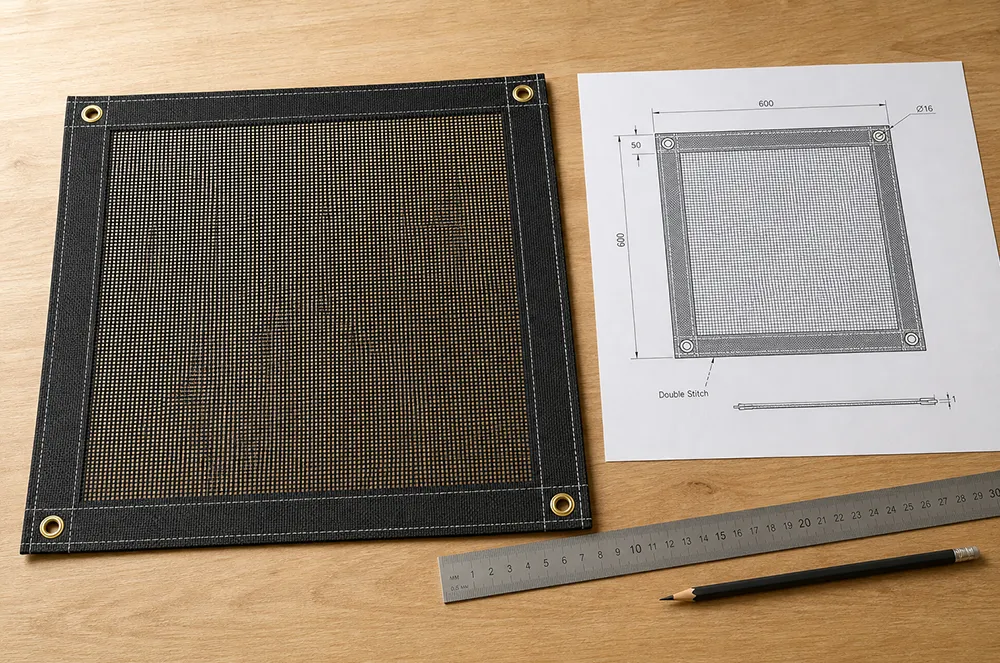
I prefer to lock one approved sample path for repeat work: material reference, edge construction, grommet or webbing pattern, color, and pack-out method. That turns the first order into a controlled record rather than a one-time memory. It also gives the buyer a practical basis for repeat quality checks at quality control instead of relying on broad terms like “same as before.”
Before production, prepare these details: site use, required airflow or shade result, finished size, fixing method, edge and hardware plan, target color, quantity, and the sample or report standard you need. That is the fastest route to a mesh-tarp quotation that actually matches the field job.
If the project is still being defined, send the opening photo, dimensions, target use, and fastening idea through the contact page. A supplier that can connect mesh openness, edge reinforcement, and site handling into one finished-panel plan is usually the better long-term partner for custom shade and ventilation work.