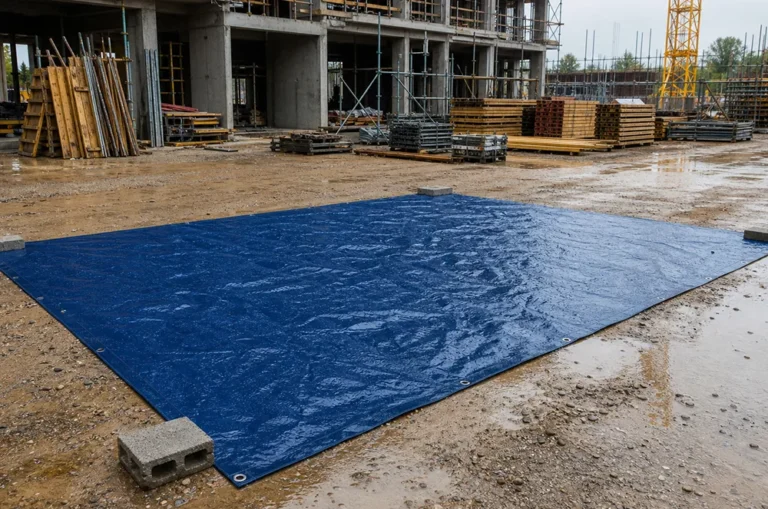
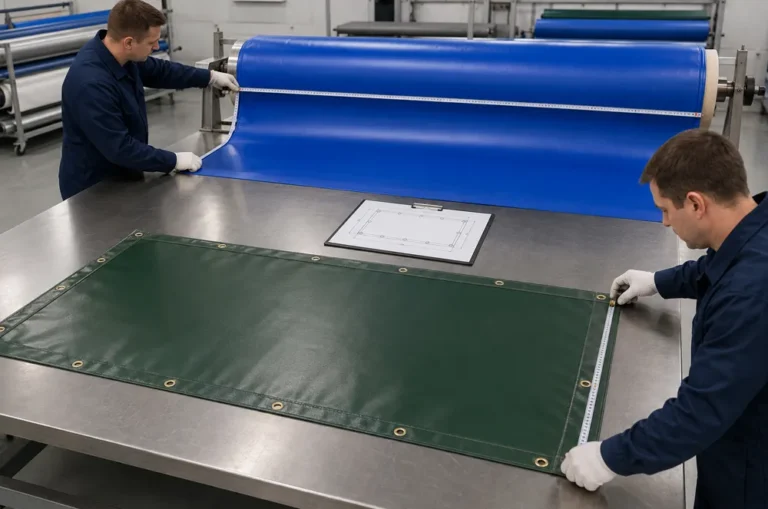
Fire retardant tarpaulin specifications should be confirmed before price and before sample approval, not after. The buyer needs more than the phrase “fire retardant tarp.” A safe order starts by locking the target standard, the test scope, the actual tarp structure, the use environment, and whether the report must apply to fabric only or to the finished tarp with seams, accessories, and surface treatment. If those points stay vague, two suppliers can both say “FR tarpaulin” while delivering products that are not tested to the same requirement.
From a factory side, the most common problem is not the lab result itself. The real problem is that the standard, the sample structure, or the end use was left open too long. PVC coated tarpaulin can be formulated with flame-retardant options, but it is not correct to call every version fireproof, and it is not safe to assume one market standard replaces another. This article shows what a B2B buyer should confirm before ordering a custom fire retardant tarp for construction, industrial partitions, transport covers, or temporary enclosures. If you are still deciding whether the project needs a custom finished cover or a standard product direction, the main custom made tarps page is the best cluster entry.
I. What Fire Retardant Means in a Tarp Order
Fire retardant describes a tested behavior under a named method. It does not mean the tarp will never burn, never deform, or protect every fire scenario. The current product knowledge files are clear on this point: PVC has a certain self-extinguishing tendency because of its chemistry, but the real result depends on plasticizer system, coating thickness, base fabric, additives, test method, and finished structure. A buyer should treat “fire retardant” as a specification package, not as a marketing label.
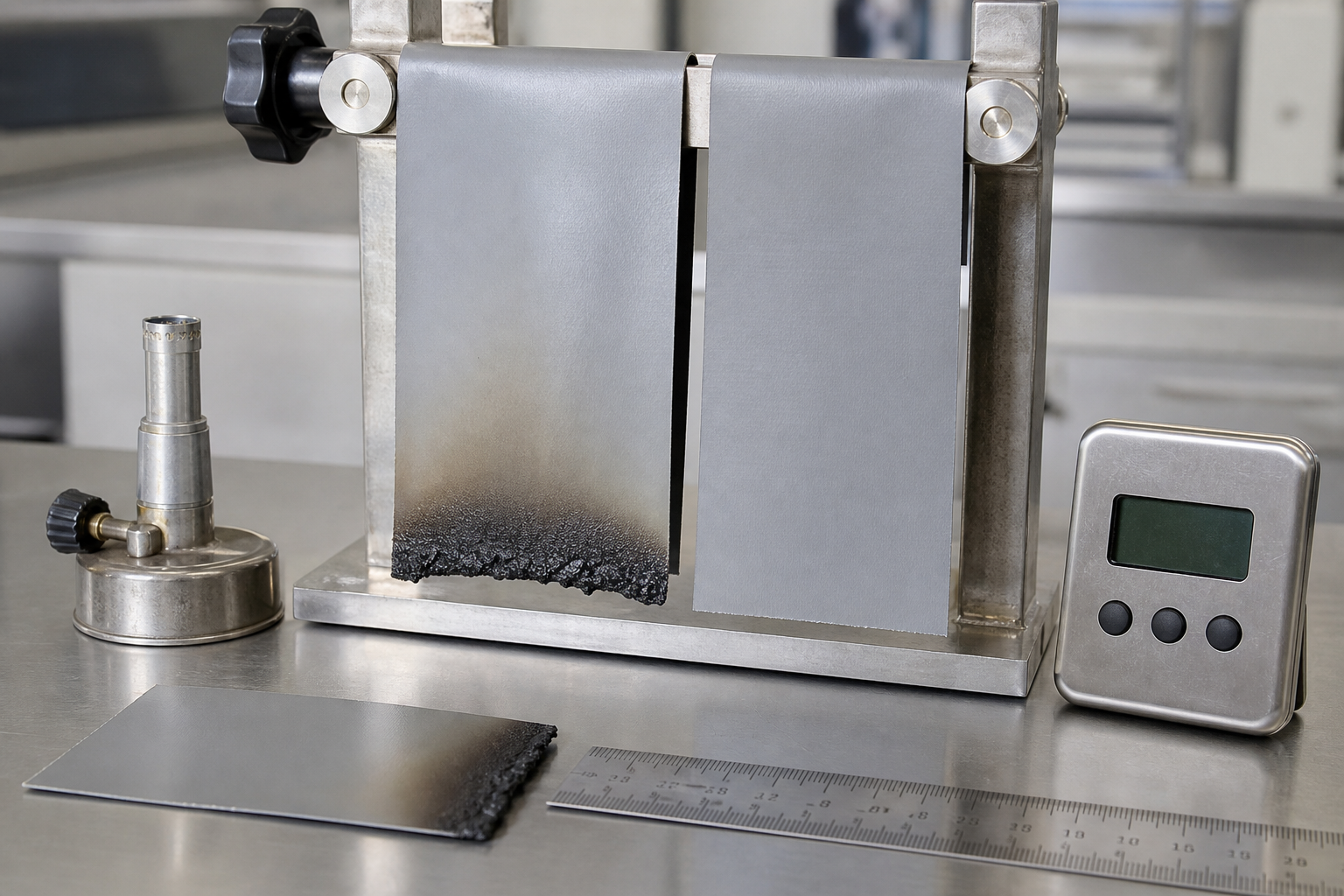
That distinction matters because the same finished tarp may be used in very different environments. A temporary construction enclosure, a welding curtain zone, a warehouse partition, and a truck-side cover do not carry the same fire scenario, the same authority requirement, or the same inspection route. Some projects only need a coated fabric that passes a material test. Others need the finished tarp, seam, edge, and accessory structure to be tested together. Buyers who leave that scope undefined often receive a report that is technically real but commercially unusable.
For the same reason, “fire resistant” and “fire retardant” should not be treated as interchangeable customer language. The safer buying route is to state the application, the target market, the standard number and version, and whether the sample should represent the final mass-production structure. That protects the project from late surprises and helps the supplier quote the right coating formula, surface finish, and fabrication route from the start.
II. Which Standard and Test Scope to Lock First
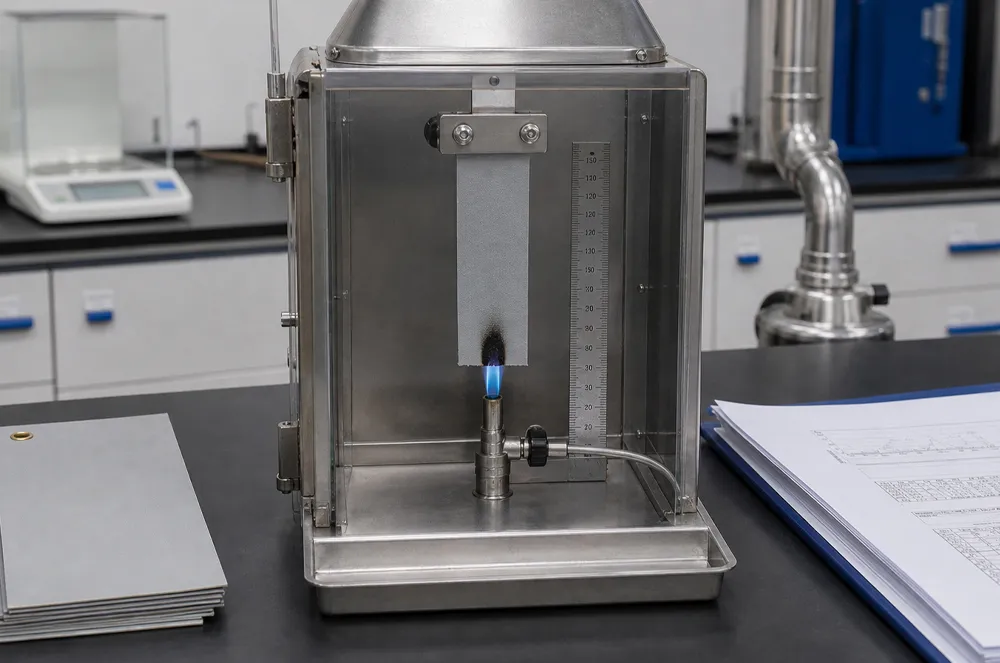
The first buyer decision is not color or GSM. It is which standard the customer, contractor, or local authority will actually accept. The product knowledge base lists common references such as DIN 4102, NFPA 701, NF P92-507, and JIS L 1091, but those are not interchangeable shortcuts. A good RFQ should name the standard, edition when known, the test item to be evaluated, and the accepting market or project authority. When the project only says “EU standard” or “US flame retardant,” the supplier still has to guess too much.
| Buyer confirmation | Why it changes the order | Common mistake |
|---|---|---|
| Standard name and version | Different standards measure different behaviors and acceptance limits | Saying only “FR tarp” and assuming every report means the same thing |
| Fabric only or finished tarp test | Seams, eyelets, webbing, ink, and accessories can change the result | Approving a fabric report when the project needs the full fabricated tarp |
| End-use environment | Indoor partition, construction enclosure, and transport cover do not carry the same exposure or safety review | Using one generic sample for a completely different project condition |
| Accepted report body | Some customers need a named lab or a specific report format for project files | Waiting until shipment to ask whether the report issuer is acceptable |
Once those points are clear, the order becomes easier to control. The supplier can align the coating system, seam route, sample size, and document package with the real requirement instead of sending a generic flame-retardant offer. For buyers working on industrial tents, partitions, or site enclosures, the existing fire retardant tarps page is a helpful next step because it frames the commercial product direction. This blog is narrower: it is about what should be fixed in the specification before bulk production starts.
III. Material Structure and Surface Details That Change Test Results
After the standard is fixed, the next risk is assuming that any PVC tarp at the same weight will behave the same way. The product knowledge files do not support that shortcut. Flame-retardant behavior changes with PVC formulation, additive balance, coating thickness, base fabric construction, and the total finished assembly. UV package, antifungal package, color choice, and print or lacquer layers may also change the processing window. In practice, the sample should match the intended structure as closely as possible.
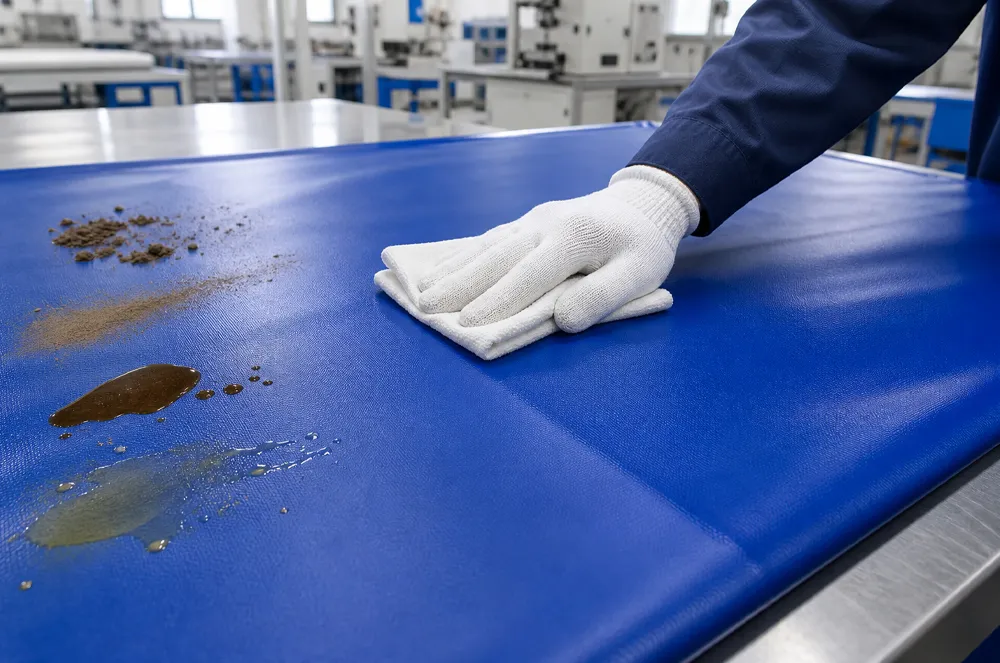
This is where buyers often miss the connection between cleanability, weatherability, and fabrication. Surface treatments such as acrylic or PVDF-style lacquer can improve stain resistance and outdoor durability, but the technical knowledge file warns that surface treatment may reduce hot-air or high-frequency weld fusion if the welding zone is not planned correctly. That does not mean the feature is wrong. It means the order should state whether the tarp will be welded, sewn, printed, or all three, so the sample can be built inside the right processing window.
Color and accessory choices also deserve early attention. Bright outdoor colors can carry higher fading risk, and printed areas, webbing rows, eyelets, or hook-and-loop additions can influence the final test scope if the project requires a finished-product report. A better B2B approach is to approve one representative construction that includes the real body fabric, seam route, reinforcement logic, and accessory mix. That sample becomes the anchor for both technical discussion and commercial approval.
IV. What Buyers Should Approve Before Bulk Production
The final control point is not the sales offer. It is the approved sample package and the production release note. Before the PO moves to bulk, the buyer should lock the report reference, the sample structure, the intended fabrication method, the acceptance criteria, and the documents to be shipped with the order. For a custom industrial tarp, I also recommend checking whether the seam route, edge reinforcement, and accessory positions are the same in the lab sample and the mass-production drawing. A compliant fabric combined with an unreviewed edge design still creates risk.
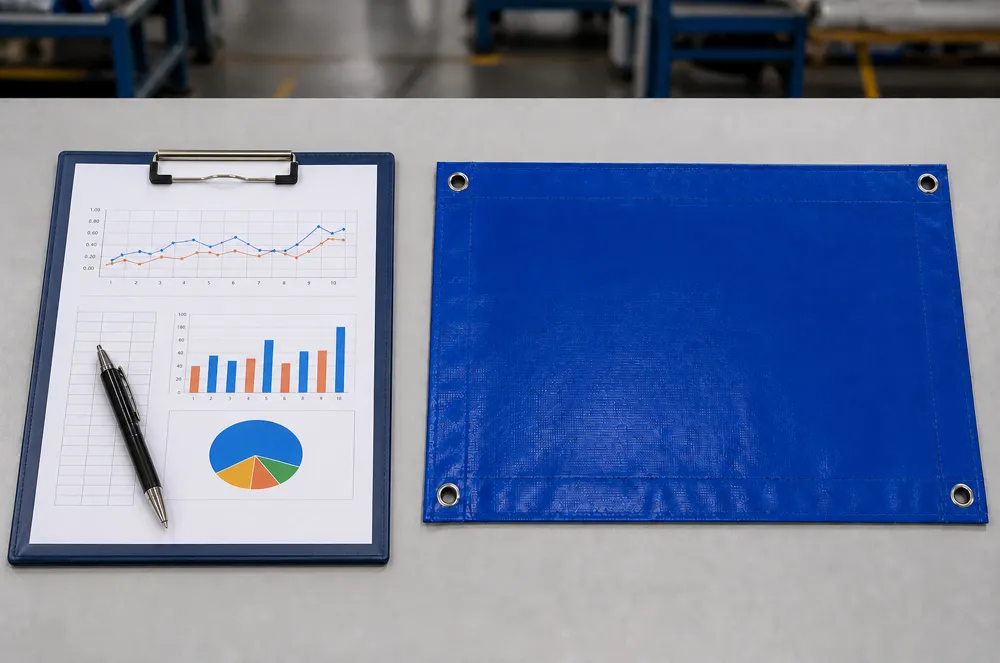
The most useful release package usually includes the approved fabric code, target standard, report reference, finished size drawing, seam and edge notes, hardware list, and any project-specific label or packing requirement. Buyers who also need audit support should connect the order with the factory quality control route and, when required, the available certificates page so the paperwork path is clear before shipment. If the project is already moving toward a real RFQ, the cleanest next step is to send the application, standard requirement, quantity, and sample need through the official contact channel in one file set.
Fire retardant tarpaulin purchasing goes wrong when buyers approve a label before they approve the test scope. The strongest orders are the ones that fix the standard, the sample structure, and the fabrication route early enough to keep report, drawing, and production in the same version. That gives the buyer a defensible specification and gives the factory a realistic target for bulk production.