Bulk custom tarps are not the same as buying a few standard covers from stock. In a B2B order, the buyer is usually confirming material, size mix, edge construction, hardware, sample approval, packing, and repeat-order records before the factory starts production. If those points are unclear, the first price may look attractive but the order can become difficult when the sample, packing, or production batch is reviewed.
At LonaTarp, we treat bulk tarps as made-to-order production, not retail shelf items. The usual MOQ is 5,000 square meters, and the best results come when the buyer confirms the production rules before mass manufacturing begins. This guide explains what to check when ordering tarps in bulk, especially for distributors, contractors, fleet operators, and project buyers who need repeatable quality.
I. Confirm Whether This Is a Bulk Production Order
The first question is whether the order is truly a
custom tarps bulk order or a small standard-cover purchase. A bulk order usually needs a stable specification, a production schedule, a sample approval process, and packing rules. It may include several sizes, but each size still needs a clear material and edge structure.
For custom-made tarps, buyers should confirm whether they need one repeated product, a mixed size set, or a long-term program with later reorders. These are different production situations. A single large size may focus on weld layout and handling. A mixed-size distributor order may need stronger labeling, packing separation, and record control.
This is also where custom tarp MOQ should be discussed honestly. If the buyer’s quantity is below the production threshold, the price may be affected by setup time, material preparation, and packing labor. If the buyer is planning recurring orders, it is better to explain that plan early so the manufacturer can keep material codes and production notes consistent.
II. Lock the Size Mix, Material Route, and Quantity
For
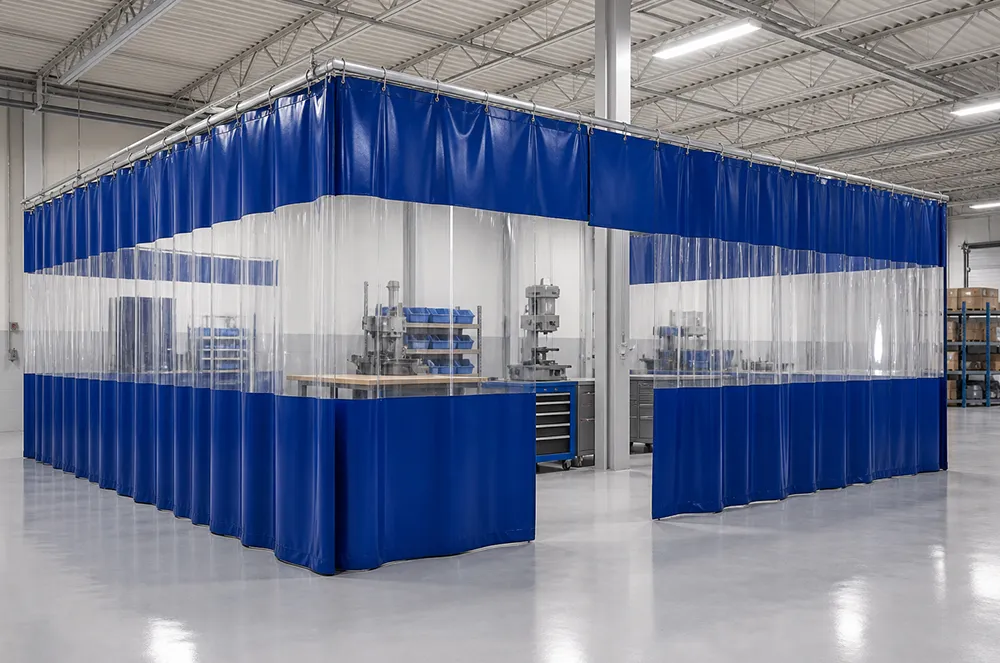
wholesale custom tarps, the size mix can affect cost as much as the total square meters. A group of sizes that fits the available roll width may cut efficiently. A difficult size mix may create more welding, trimming, waste, or handling time. That is why a bulk tarp order should include size-by-size quantity rather than only the final area.
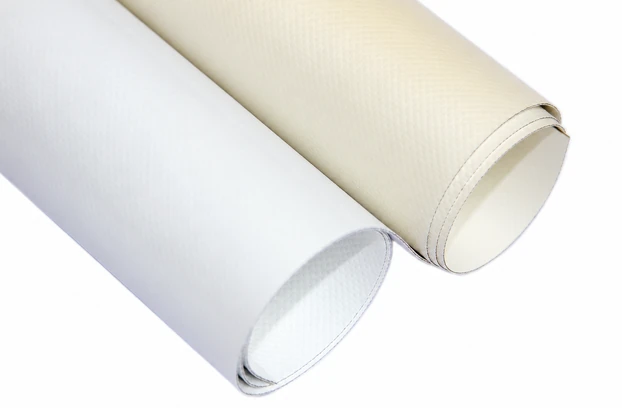
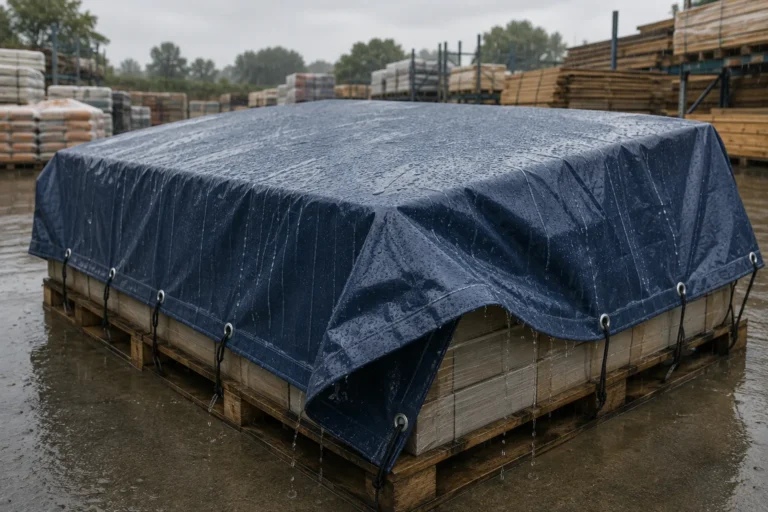
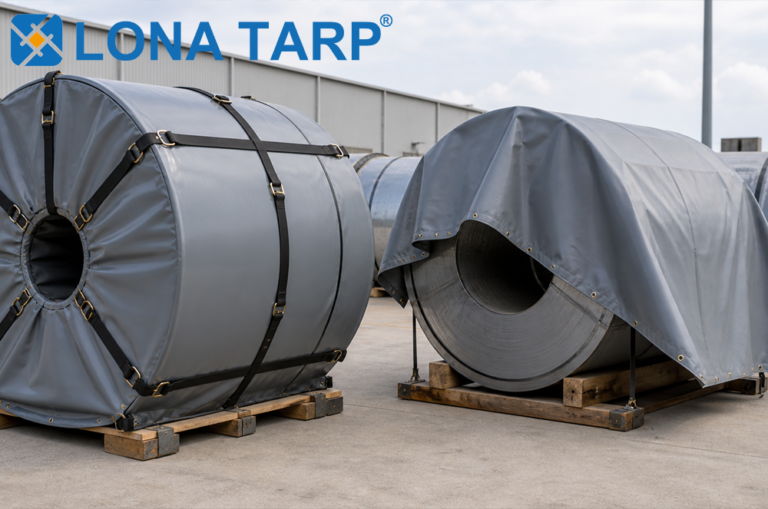
The material route should be locked before price comparison. Bulk PVC tarps can use different base fabrics, coating weights, surface finishes, and optional functions. The right choice depends on the application: outdoor equipment covers, transport covers, warehouse curtains, clear panels, mesh shade covers, or industrial partitions all need different priorities.
If the order uses coated fabric, the buyer should confirm whether the material comes from an agreed specification or from a new sample. Tarpaulin rolls affect cutting efficiency, seam planning, color consistency, and finished cost. A small change in roll width or material construction can change the final production plan.
| Bulk order item | Buyer risk | Confirm before production |
|---|---|---|
| Size mix | Waste, weld position and packing confusion | Finished size, quantity per size and tolerance |
| Material route | Price comparison becomes unclear | Base fabric, coating, GSM range, surface and function target |
| Sample approval | Bulk batch may not match buyer expectation | Material, edge, hardware, color, packing and inspection points |
| Reorder records | Future batches drift in material or details | Approved sample photos, material code, drawing, packing and batch notes |
III. Approve Samples Before Mass Production
Custom tarp sample approval
should happen before mass production, not after the factory has already cut the full batch. A sample can be a material swatch, a finished corner, a hardware panel, or a complete finished tarp. The right sample depends on the order risk. For a simple repeated cover, a corner sample may be enough. For a shaped cover or an equipment-fit product, a full sample may be safer.
The sample should show the real production logic: material feel, color, hem width, welding or sewing method, grommet position, corner reinforcement, straps, pockets, zippers, or clear panels if used. If the buyer is ordering wholesale PVC tarps, the approved sample should also define the inspection reference for the later production batch.
Sample approval is not only about appearance. The buyer should handle the sample, fold it, look at the edge, check the hardware pull direction, and confirm whether the finished cover is practical for workers to install. A tarp that looks strong but becomes too stiff or too heavy for daily use can create problems after delivery.
IV. Set Production Checks for Seams, Edges, and Hardware
In a
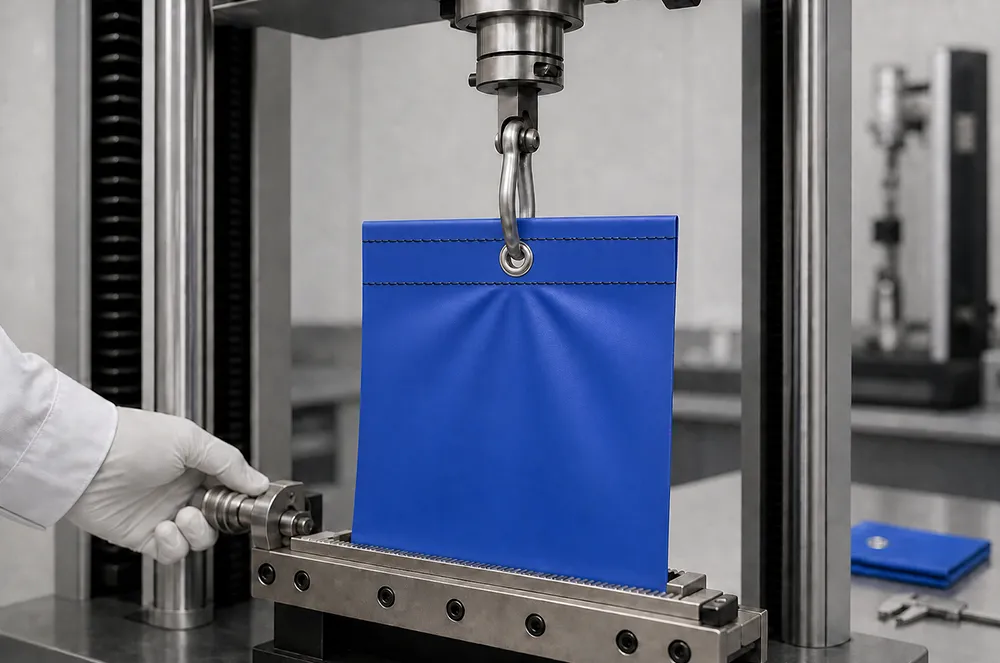
custom tarp manufacturer bulk order, quality control should follow the same details that were approved in the sample. For finished tarps, common risk points are seam strength, welded overlap, stitching consistency, edge reinforcement, grommet spacing, corner patches, and hardware position. These details decide whether the tarp can survive pulling, folding, and repeated installation.
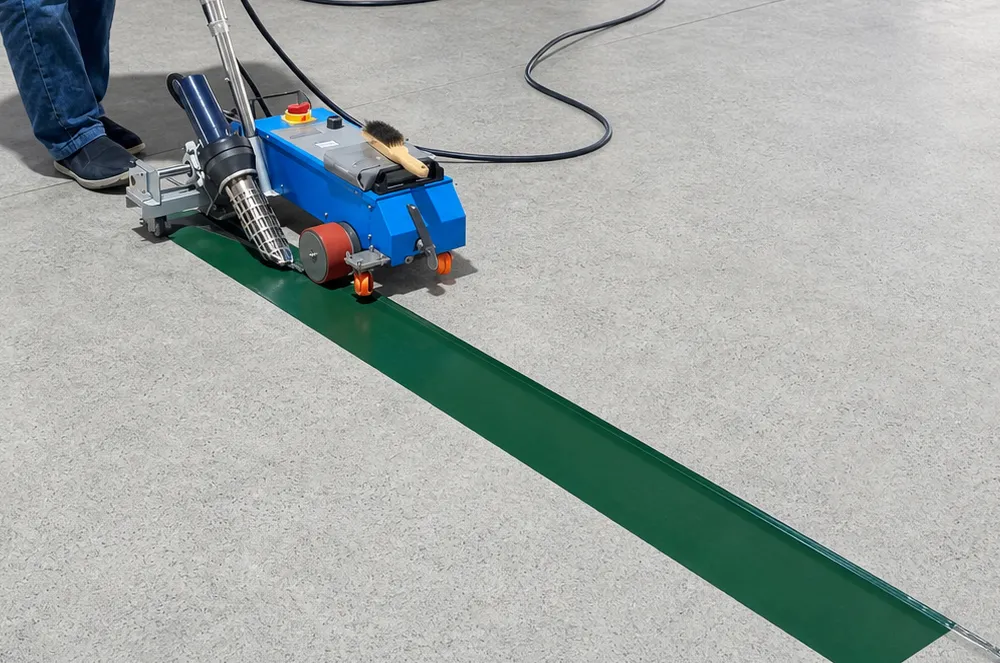
For vinyl tarps and other PVC-coated finished covers, welding temperature, pressure, overlap width, surface cleanliness, and material behavior all affect seam quality. The buyer does not need to manage the factory process, but the specification should tell the supplier what parts are critical: waterproof seam, edge tear resistance, repeated folding, clear panel visibility, or stable size.
Quality control for bulk production should include both material checks and finished-product checks. Material weight or thickness alone is not enough. The finished tarp must match the sample in edge structure, hardware layout, packing, and practical handling. This is where custom tarp quality control protects the buyer from batch-to-batch surprises.
V. Plan Packing, Export Handling, and Reorder Records
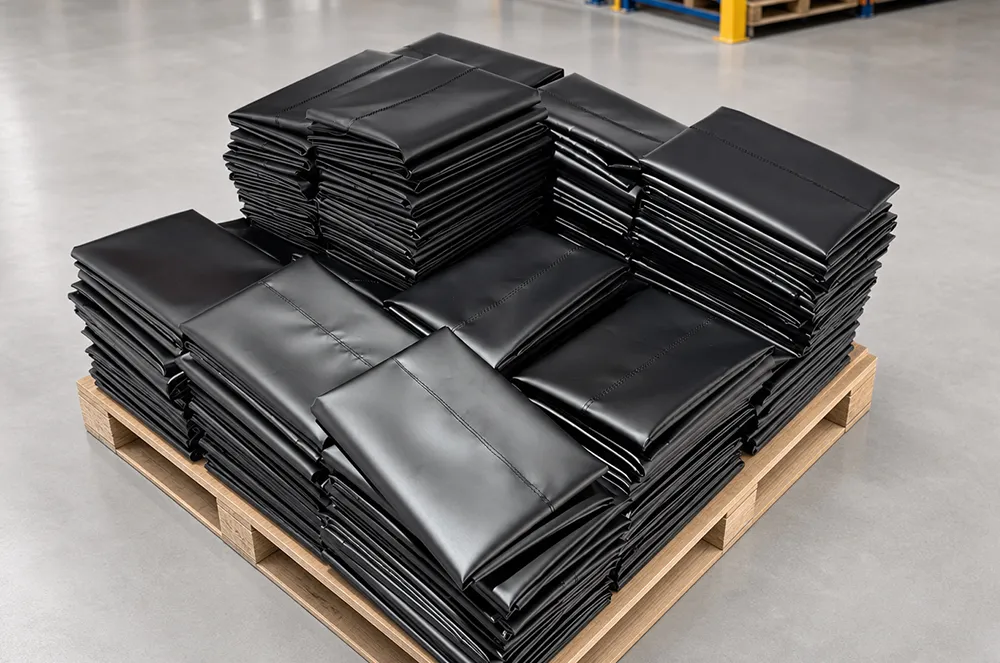
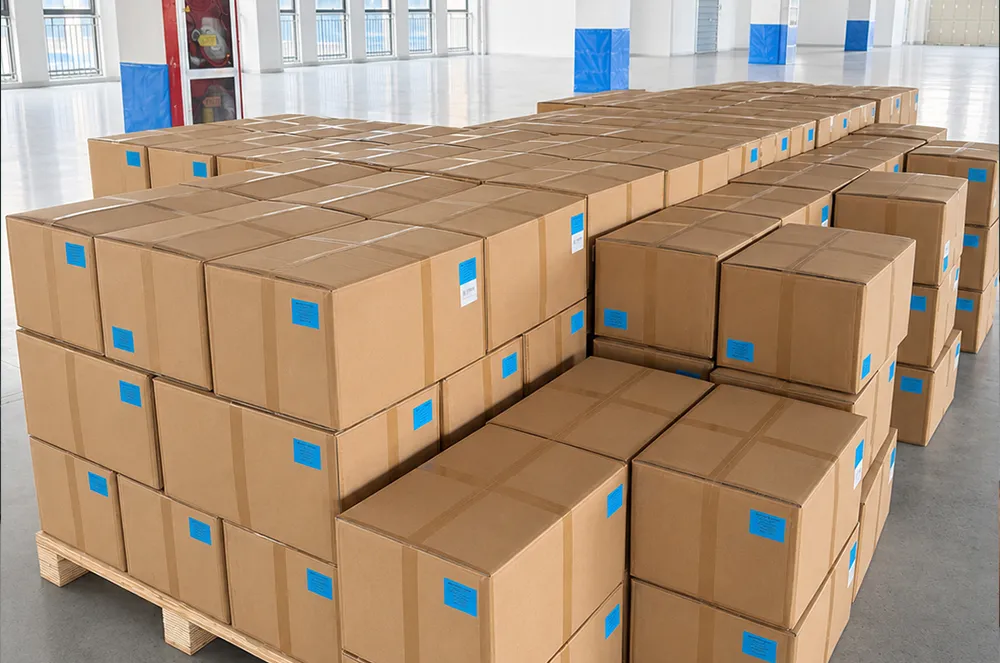
Bulk tarp packing
should be planned before production begins. Folded size, individual bag, carton strength, pallet height, shipping marks, barcode needs, and container loading can affect the final cost and the buyer’s warehouse handling. For distributors, packing separation by size is often as important as the tarp itself.
For a repeat custom tarp order, record control matters. Keep the approved sample photos, material code, color, finished size, drawing, edge construction, grommet spacing, packing method, and any inspection note. This helps the next order match the previous one without starting the discussion again.
The custom tarp production lead time also depends on how clear the order is. When the size mix, material, sample, packing and inspection rules are confirmed early, production can move faster and with fewer changes. For LonaTarp B2B production, we usually work from confirmed specifications rather than stock inventory, so clarity before production is the best way to protect both delivery and quality.
Before production, prepare these details
- Order type: one repeated size, mixed size set or long-term reorder program.
- Size list, quantity per size, tolerance and drawing if required.
- Material route, color, surface, edge construction and hardware layout.
- Sample approval level and the inspection points that must match the sample.
- Packing method, size separation, pallet plan, destination and reorder records.
When those details are clear, made to order tarps in bulk become easier to control. The buyer can compare suppliers by real production value, and the manufacturer can build the order around a stable specification instead of correcting assumptions after the batch has started.