A ground tarp for camping should protect the tent floor, keep damp soil away from gear, and still be easy to fold after use. If your project involves campground rental kits, outdoor retail programs, overland shelter sets, or private-label camping products, the right tarp is not simply the largest or thickest sheet. It has to match the ground surface, tent footprint, handling method, packing style, and expected reuse cycle.
For LonaTarp, the practical starting point is simple: choose the tarp by how it will be used outdoors. A tarp under a small backpacking tent, a reusable panel for campsite operators, and a ground mat sold with a large family shelter all need different material weight, edge finishing, and size control.
I. Match The Ground Tarp To The Camping Use
Start with the real camping setup. If the tarp is used under a tent, it should protect against stones, twigs, damp soil, and abrasion from movement inside the tent. If it is used as a multi-purpose outdoor mat, it may also need tie-down points, easier cleaning, and a surface that feels acceptable when people handle it by hand.
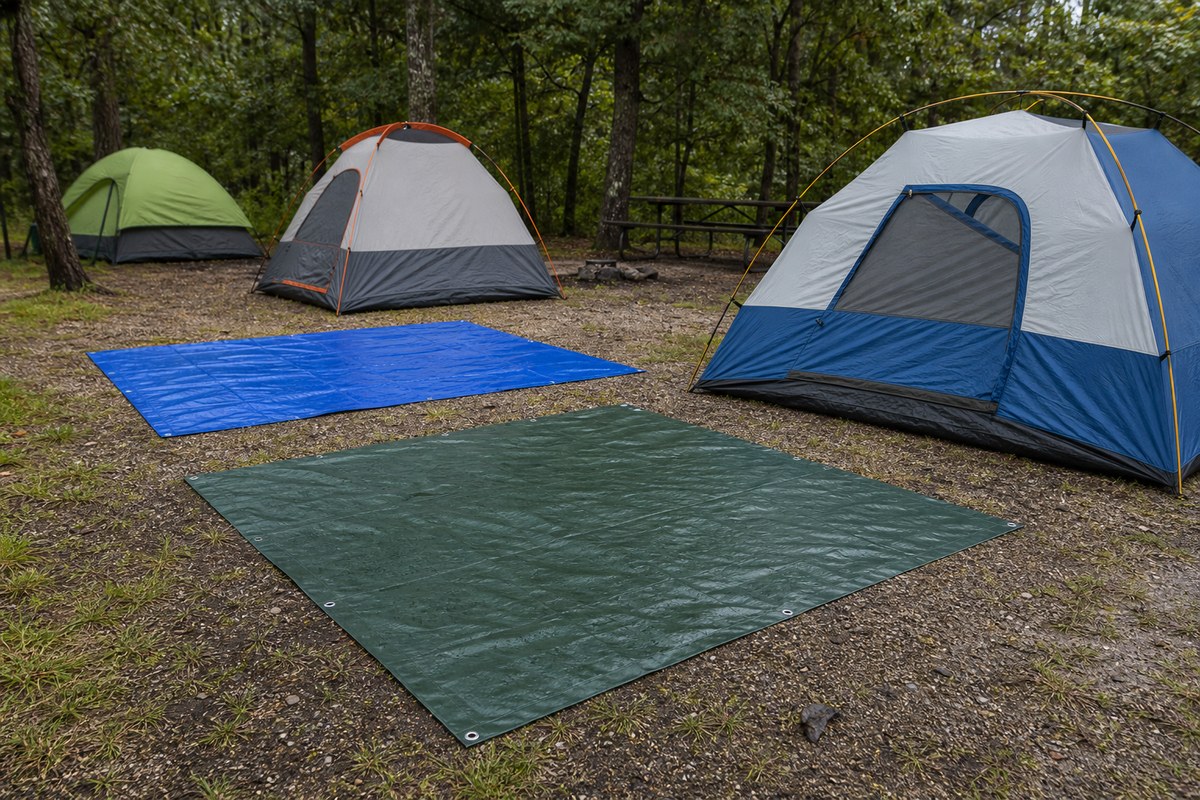
For campground operators, repeat cleaning and storage usually matter more than a very light carry weight. The tarp may be dragged over gravel, hosed down, folded while still slightly damp, and stored with many similar pieces. A distributor or outdoor brand may care more about standard tent sizes, retail packing, color consistency, and how the material feels when the end user opens the product.
This is where camping ground tarps differ from broader ground cover tarps. A general ground cover can focus mainly on coverage, weed control, or surface protection. A camping ground tarp has to protect the tent while also being easy to pack, carry, explain, clean, and reorder in stable sizes.
Before choosing material, define the use model clearly: under-tent footprint, campsite rental panel, outdoor kit accessory, picnic-and-shelter mat, or heavy-duty ground sheet for rough terrain. Once that use is clear, fabric weight, coating, edge design, and packing become much easier to decide.
II. Choose Material By Ground Surface And Handling Weight
For camping ground tarps, material choice should follow the main failure risk. Thin material may be easy to fold, but it can puncture on gravel or wear quickly when dragged across rough ground. A very heavy panel may last longer, but it may feel inconvenient for a compact camping kit.
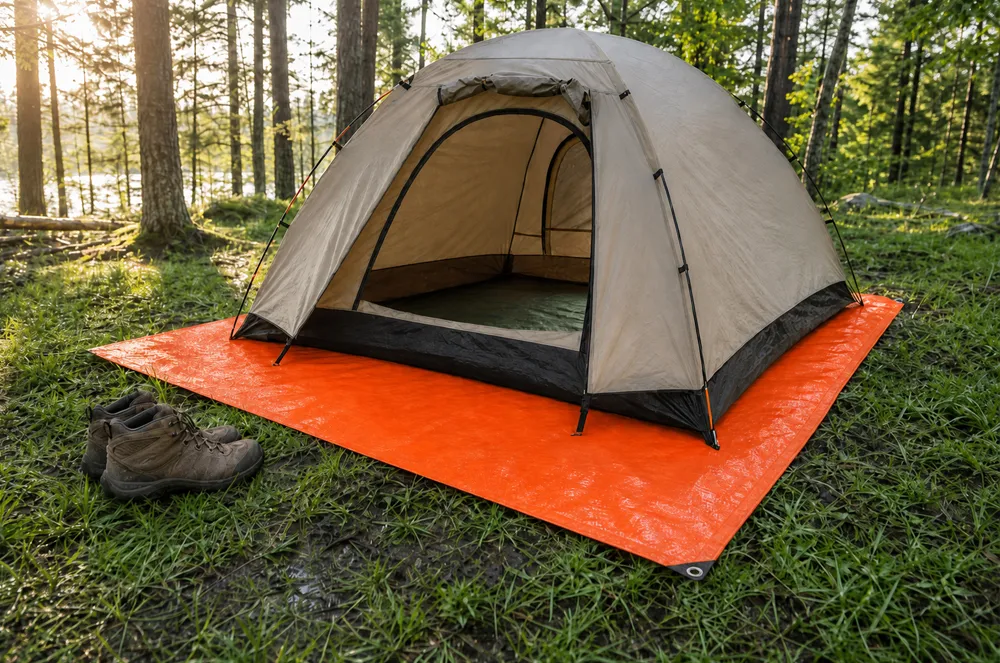
PVC coated polyester or vinyl tarp material is useful when you need stronger waterproofing, better abrasion resistance, and a more repeatable specification for commercial supply. The coated surface helps resist moisture, and the polyester base fabric provides structure. For larger outdoor programs, vinyl tarps can be a better direction than a very thin disposable ground sheet when cleaning and reuse are part of the plan.
PE tarps can still fit entry-level or short-term camping products. They are lighter and cost-sensitive, so they may work for simple seasonal kits or temporary event camping. They should not be presented as the same performance class as reinforced PVC coated fabric when the tarp needs repeated folding, stronger edges, or longer outdoor use.
Canvas has a different appeal. It can feel more traditional and breathable, but it is heavier and needs more drying care after rain. Nylon or Oxford-style fabrics may be useful for lightweight camping products, yet they need coating and seam details to handle moisture well. The right answer depends on the program: rental durability, retail weight, pack size, or custom brand positioning.
Do not judge the material by GSM alone. Two coated fabrics can have similar weight but different base yarn, coating formula, tear strength, peel strength, cold flexibility, and surface feel. If your tarp will be used on gravel, mixed soil, or damp forest ground, those construction details matter more than a simple weight number.
Another useful check is how the tarp sounds and feels when folded. A stiff tarp may look strong on a specification sheet, but it can be noisy, bulky, and difficult to pack in a compact camping kit. A softer material may feel better to handle, but it still needs enough coating strength and edge support for wet ground. The best sample review should include both performance and handling, because the end user judges the tarp every time it is opened, cleaned, and packed again.
| Camping use | Material direction | What to confirm |
|---|---|---|
| Reusable campsite rental panels | PVC coated polyester | Abrasion, cleaning, folding, color marking, and storage |
| Entry-level camping kit | PE or lighter coated fabric | Target price, pack size, and expected service period |
| Private-label outdoor program | Custom coated fabric and finished panels | Approved sample, color, label, packing, and repeat tolerance |
III. Size The Tarp So It Protects Without Collecting Water
A common mistake is making the ground tarp larger than the tent floor and leaving the edges exposed beyond the tent wall. When rain runs down the tent, exposed tarp edges can collect water and direct it under the tent. For under-tent use, the finished footprint is often slightly smaller than the tent base or designed so the exposed edge can be folded safely.
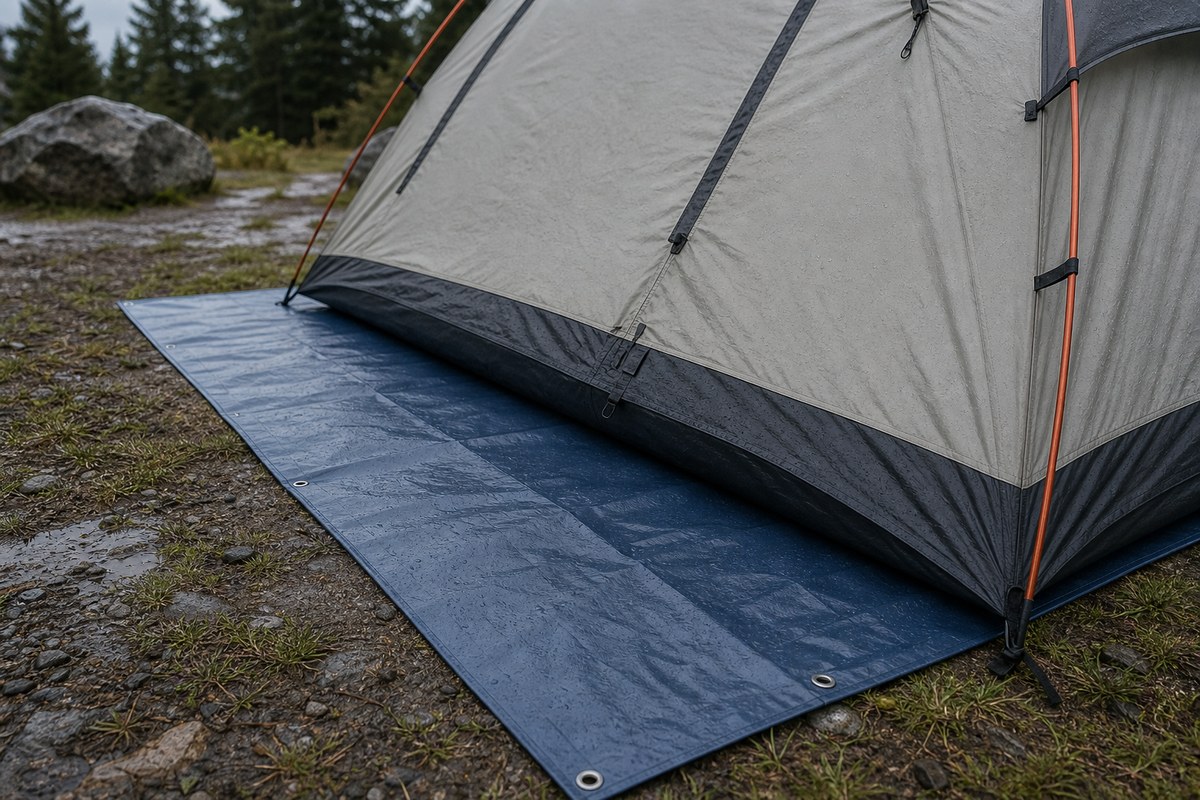
For commercial programs, size planning should start from common tent footprints and how the product will be packed. A ground tarp for a two-person tent has different expectations from a panel used under a large family tent or glamping shelter. If one product is meant to serve multiple tent sizes, the instructions and folding method become more important.
Reinforcement should also match the size. Small footprints may only need clean hemmed edges and reinforced corners. Larger ground tarps may need grommets, webbing loops, or stronger corner patches so the edge does not curl, flap, or tear when used as a temporary mat or shelter ground sheet.
We also suggest deciding whether the tarp should be square, rectangular, tapered, or matched to a specific tent shape. A simple rectangle is easier to produce and fold. A fitted shape can feel more professional when sold with a specific tent model, but it requires tighter drawing control and clearer size tolerance.
IV. Think About Cleaning, Folding, And Local Fabrication
Camping ground tarps often fail in storage, not only during use. If mud, grass, and moisture remain on the surface, odor and mildew complaints can appear even when the coating is waterproof. A good product should be easy to rinse, dry, fold, and identify after repeated outdoor use.
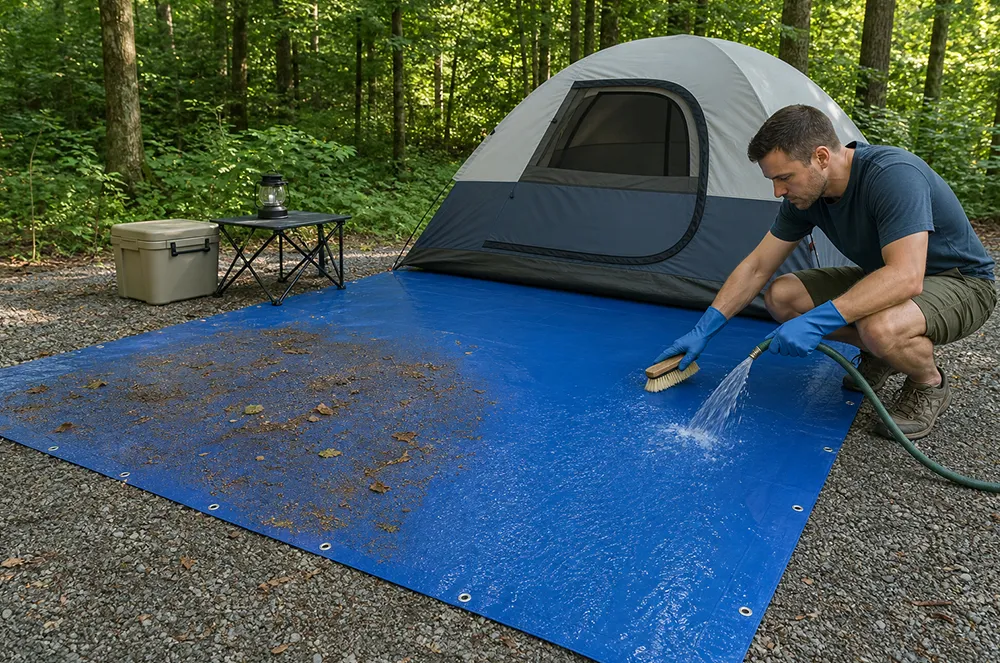
Surface finish affects this experience. A smoother coated surface may clean faster, while a textured surface may feel less slippery but hold more soil. Dark colors can hide dirt for rental use, while brighter or lighter colors may look better in retail packaging. These choices should be tested with a real sample, not decided only from a color card.
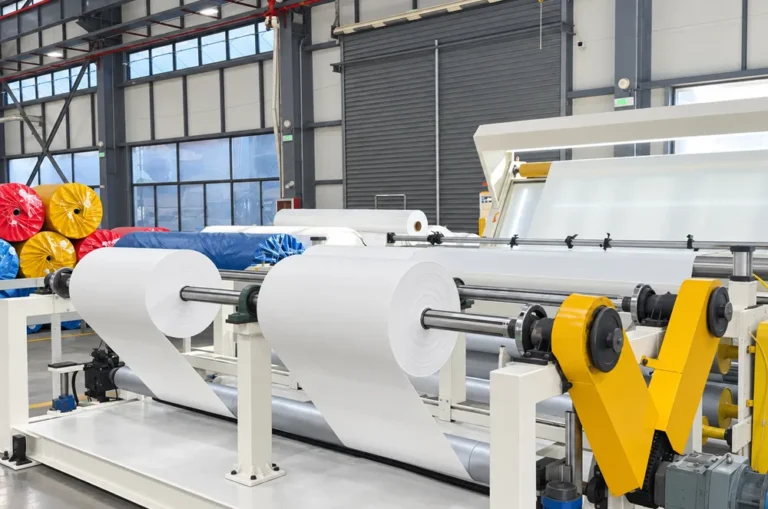
If your team prefers to cut and finish the product locally, tarpaulin rolls may be a better starting point. Roll material gives flexibility for local size programs, but it also means your team needs cutting, edge finishing, and packing control. Finished camping ground tarps are better when you want stable size, sealed edges, grommet positions, and ready-to-sell packing from the factory.
Packaging is part of the product experience. A tarp that is technically strong but impossible to fold back into the bag creates frustration. For campsite teams, stackable packing and visible size marks may matter. For outdoor distributors, individual bags, labels, carton marks, and barcode placement may be part of the approved specification.
V. Confirm Samples Before You Repeat The Order
For a custom camping ground tarp, a small fabric swatch is useful but not enough. A finished sample shows whether the size feels right, whether the edge finish is clean, whether the tarp folds properly, and whether the packing method works after real handling. This is especially important when the same specification will be repeated across many pieces.
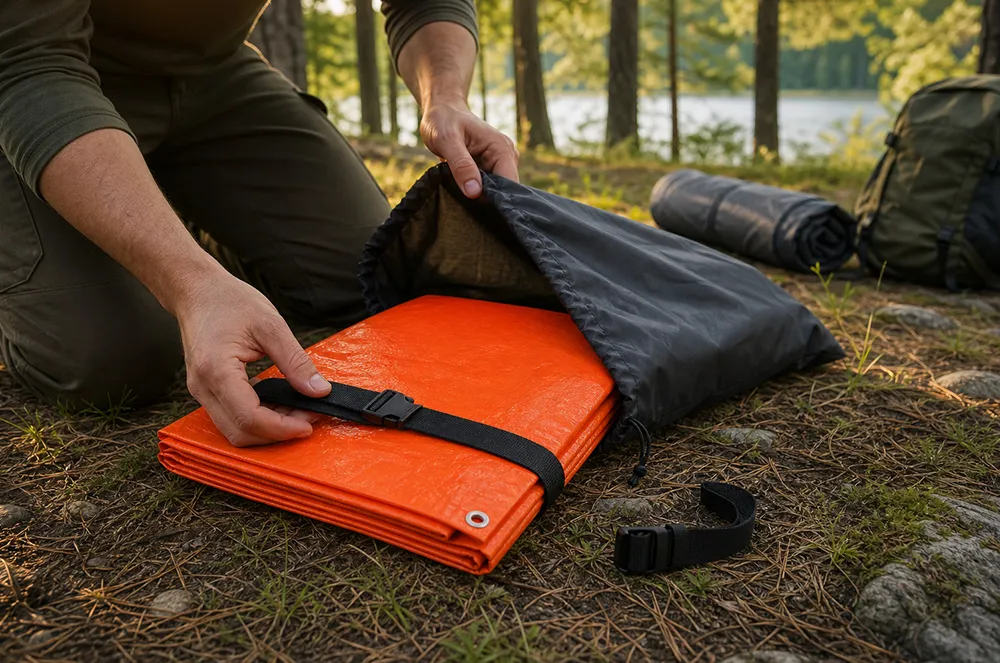
For finished products, custom-made tarps should be confirmed by finished size, tolerance, fabric construction, coating direction, color, edge design, grommet or loop layout, folding pattern, packing, carton mark, and label requirement. If the tarp will be matched with a tent or shelter kit, send the tent footprint or drawing instead of only a general size.
LonaTarp can support material selection, cutting, welding, sewing, grommets, straps, logo printing, and packing for custom ground tarp programs. Custom production normally starts from 5,000 square meters, so it is better to confirm the real sample carefully before repeating the order.
Our quality control process is useful when you need stable repeated production. For camping ground tarps, inspection can focus on fabric weight, coating surface, edge strength, grommet position, finished size, packing, and sample consistency. These checks help the final tarp feel like a planned product, not a random sheet added under a camping name.
The right ground tarp for camping should disappear into the outdoor experience: it protects the tent, keeps moisture away, folds without frustration, and returns to storage without creating complaints. When the material, size, edge, and packing are confirmed together, your camping tarp program becomes easier to sell, use, and repeat.