Choosing welding curtains for an industrial workspace is a safety, workflow, and layout decision. Your curtain system needs to reduce welding arc glare, contain sparks and hot particles, protect nearby workers, and still let people, carts, forklifts, and parts move through the shop without constant interruption.
A useful welding curtain is not just a colored plastic sheet. It should match the welding process, booth size, access route, hanging system, visibility requirement, flame-retardant expectation, and replacement plan. If these details are clear before production, the finished curtain is easier to install and easier to keep in use.
I. Start With The Welding Zone And Nearby Traffic
Before choosing material or color, map the welding zone. A fixed fabrication booth, robotic welding cell, shipyard repair bay, maintenance corner, and training area all create different curtain requirements. The curtain must protect the surrounding area without blocking the normal movement your workshop depends on.
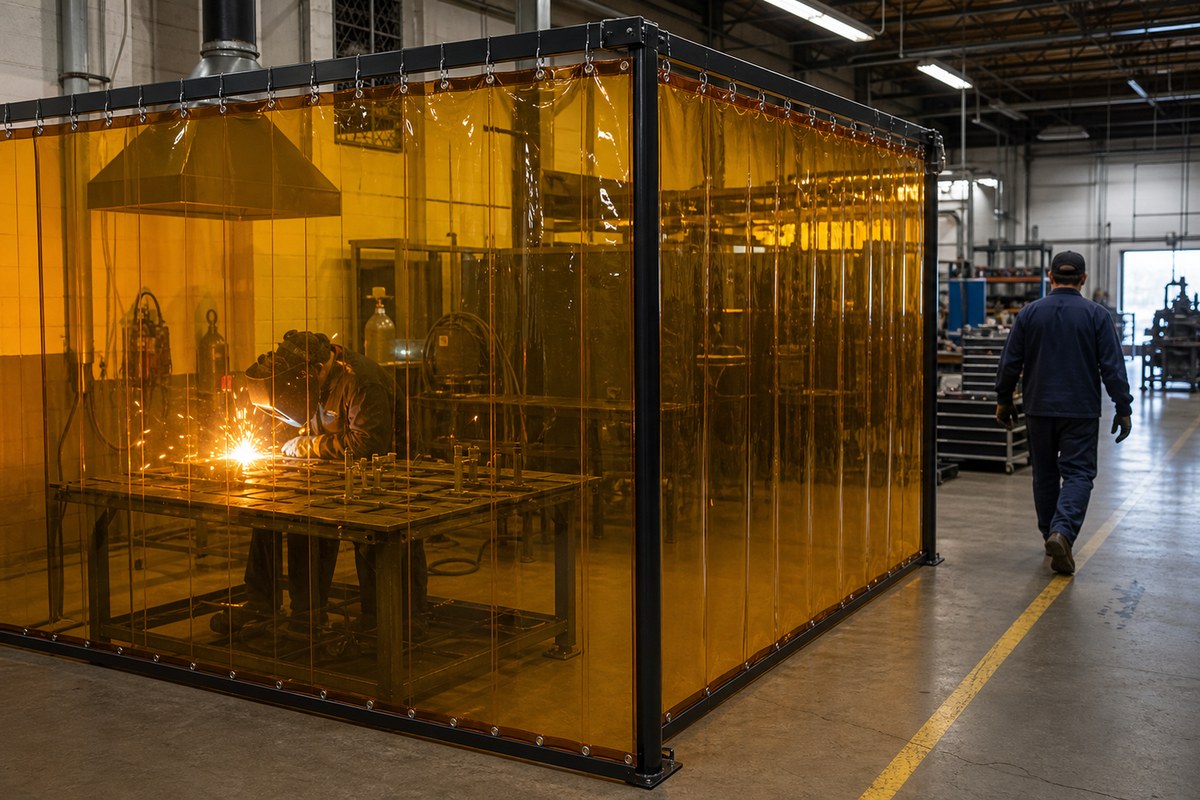
Start by checking what happens around the welding area. Is there forklift traffic nearby? Do workers carry long parts through the opening? Does a supervisor need visibility into the booth? Is grinding or cutting happening in the same zone? These questions decide whether you need full curtain panels, overlapping strips, a portable frame, or a rail-mounted enclosure.
This is different from a general warehouse curtains project. Warehouse curtains may focus on temperature, dust, or traffic control. Welding curtains must also consider arc glare, ultraviolet exposure, sparks, hot particles, and the behavior of people who work beside the welding cell every day.
The goal is not to close the area so tightly that workers bypass the curtain. The safer choice is usually a system that protects the risk zone while still making daily work practical.
II. Choose Full Panels, Strip Curtains, Or Portable Screens By Access Needs
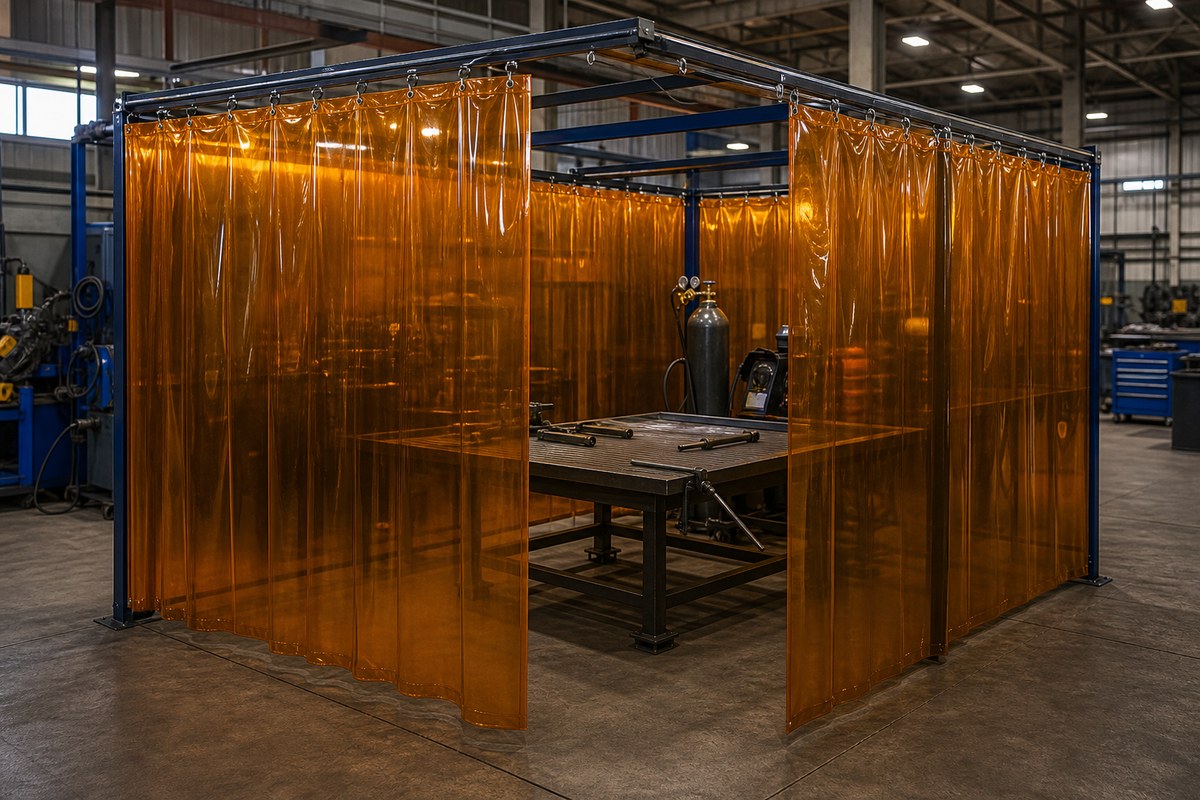
Full welding curtain panels work well when your shop needs a defined booth or fixed separation line. They create a continuous barrier, are easier to specify by finished width and height, and can be made with reinforced hems, grommets, hooks, or track hardware. They are often suitable for stable welding cells and training bays.
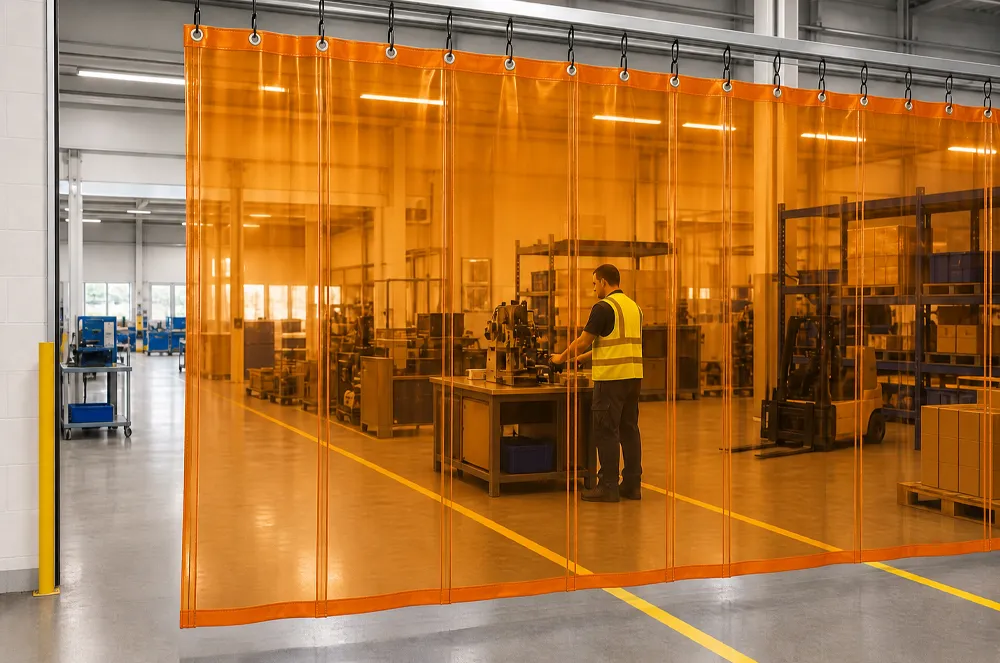
Welding strip curtains are better when your team needs frequent access. Overlapping strips let workers, carts, or parts pass through while the barrier closes back into place. The key details are strip width, overlap percentage, bottom clearance, and whether individual strips can be replaced without removing the whole system.
Portable welding screens are useful when the welding point changes. Maintenance teams, repair crews, and temporary fabrication areas often need a movable frame rather than a permanent rail. In that case, stability, frame height, caster quality, and panel attachment become part of the specification.
If the curtain is inconvenient, people will move it aside. That is why the format must follow the real workflow instead of only the hazard type.
It also helps to decide whether the curtain should stay closed during the whole welding cycle or open frequently between jobs. A booth used for batch welding can use heavier panels and tighter overlap. A maintenance bay where workers move in and out every few minutes may need lighter movement, clearer access, and replaceable parts. The safest layout is usually the one your team can use correctly without extra effort.
III. Confirm Flame-Retardant And Material Requirements Clearly
Welding curtain material should be selected for the actual welding process and safety expectation. PVC or vinyl-based curtain materials are common because they can combine flexibility, controlled light transmission, surface durability, and flame-retardant formulation. Reinforcement may be needed when panels are large, frequently moved, or installed in high-traffic zones.
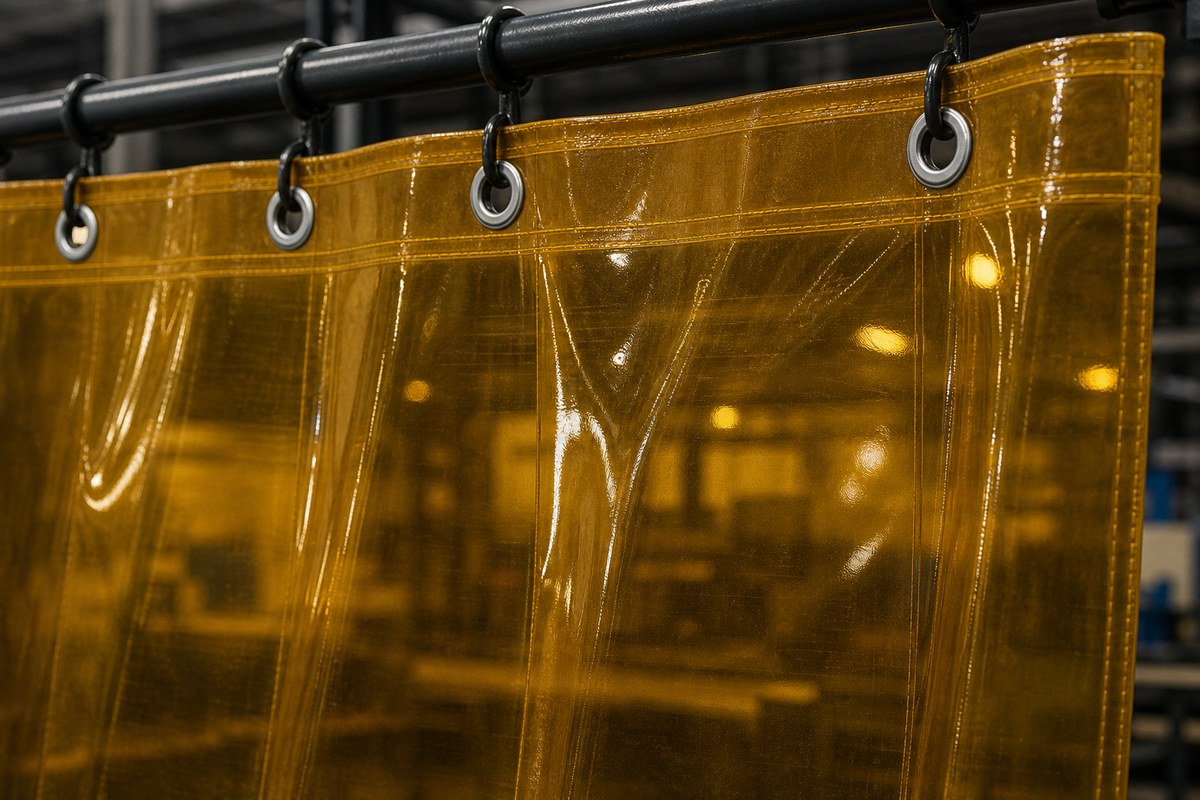
Do not treat every clear or tinted PVC curtain as a welding curtain. A general divider panel may look similar, but welding use brings higher risk from arc glare, hot particles, and local safety checks. If your project needs flame-retardant performance, the target standard, market, sample structure, and inspection requirement should be confirmed before production.
Some projects should also compare the broader fire retardant tarps direction, especially when hot-work areas, sparks, or flame-risk separation are part of the requirement. The wording matters: flame-retardant does not mean the curtain is fireproof under unlimited heat. Performance must be tied to an agreed material, test method, and use condition.
Material quality is not proven by thickness alone. Base fabric, PVC formulation, additives, flexibility, color, surface treatment, weldability, and edge finishing all affect how the curtain performs in real shop use.
For larger workshops, keep one approved material reference for each curtain type. Mixing different tints, different flexibility, or different panel thickness in the same welding area can create uneven visibility and inconsistent handling. If replacement panels are ordered later, the approved sample helps the new batch match the original system.
| Workspace condition | Curtain direction | What to confirm |
|---|---|---|
| Fixed welding booth | Full panels with rail or hooks | Panel size, overlap, tint, top reinforcement, bottom clearance |
| Frequent movement through the zone | Overlapping strip curtain system | Strip width, overlap, traffic direction, replacement method |
| Temporary repair or maintenance area | Portable welding screen | Frame stability, panel attachment, storage, spare panels |
IV. Balance Tint, Visibility, And Glare Control
Welding curtains are often tinted because the material needs to reduce glare and help limit exposure to welding arc light. The right tint depends on how the booth is used. A darker curtain may improve shielding, but it can also make it harder for supervisors to see whether someone is inside the cell. A more transparent curtain can improve visibility, but it must still fit the safety requirement.
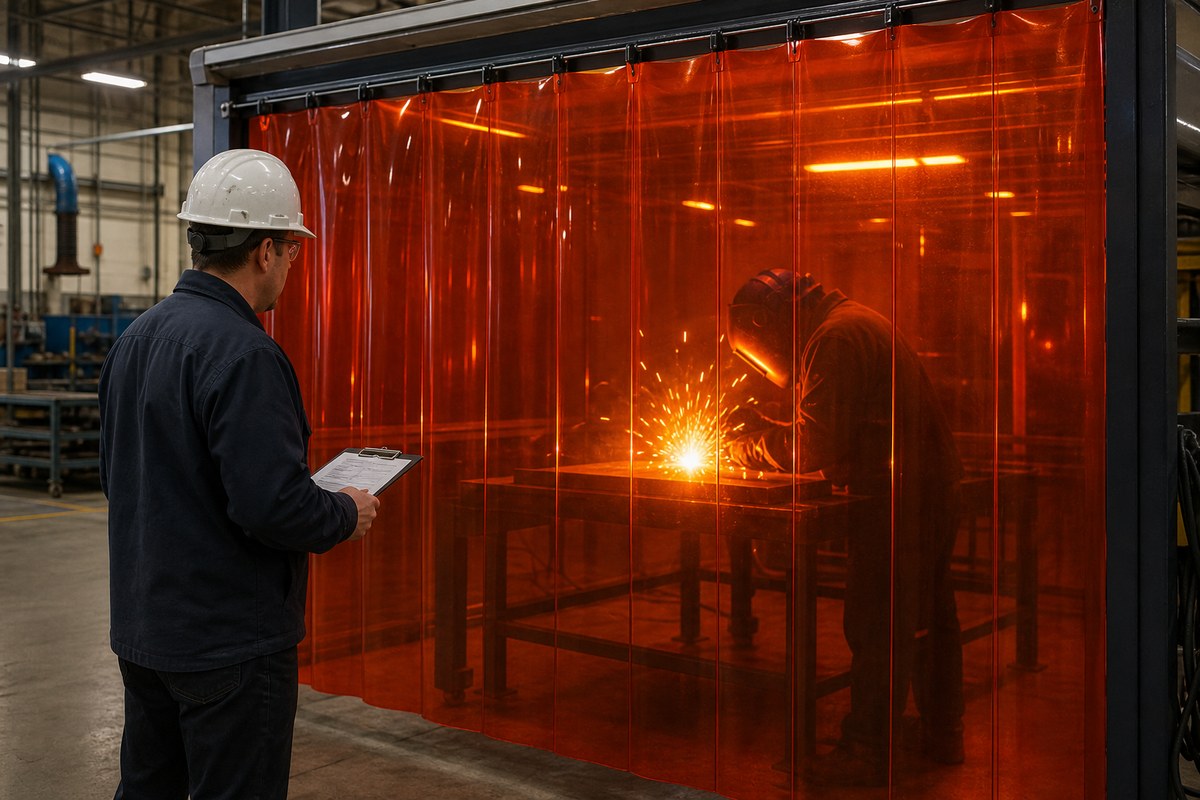
Color should not be selected only by appearance. The workshop should decide whether the main need is arc shielding, side-glare reduction, zone marking, or visual supervision. These are different jobs, and one color or opacity level may not solve all of them equally.
Cleaning also affects visibility. Welding areas collect smoke residue, dust, and oil film. A curtain that starts clear or bright can become difficult to see through if the surface is hard to wipe clean. If your plant has heavy smoke, grinding dust, or oil mist nearby, include cleaning method and replacement interval in the specification.
Some plants prefer one tint for all welding areas because it simplifies purchasing. That can work when the processes are similar. If one area handles light tack welding and another handles heavier hot work, the same curtain may not be the best answer for both. Treat tint and transparency as safety and workflow decisions, not decoration.
V. Installation Details Decide Whether The System Stays In Use
A good material can still perform poorly if the hanging system is weak. For full panels, confirm finished size, top reinforcement, grommet spacing, hook type, rail or cable compatibility, overlap between panels, and whether the curtain needs tiebacks. For strip systems, confirm strip width, overlap, mounting plate, and how each strip will be replaced.
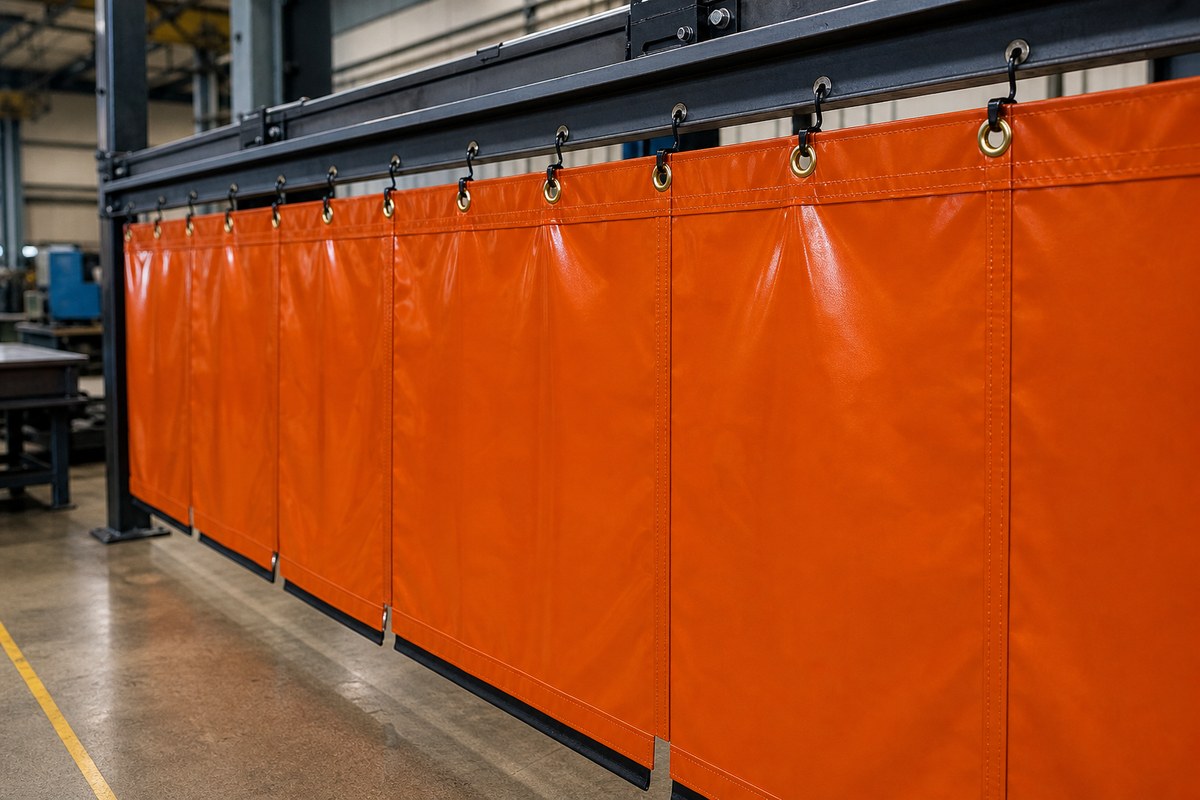
Bottom clearance is a small detail with a large effect. A curtain that drags on the floor may collect dust, slag, or metal chips. A curtain with too much clearance may let sparks or glare escape below the panel. The right clearance depends on cleaning method, airflow, traffic, and the welding process.
Panel size should also be realistic. One oversized curtain can be hard to install, hard to move, and more likely to load the top edge unevenly. Several smaller panels with proper overlap may be easier to handle and replace. If your welding area changes often, plan for modular panels instead of one fixed layout.
Before production, confirm the actual mounting height, the distance from rail to floor, the location of posts or walls, and any obstruction near the track. A small measurement error can leave a gap at the bottom or make the curtain drag on the floor. Photos and a simple sketch usually prevent these problems.
VI. Confirm Samples, Inspection, And Replacement Before Repeating The Order
For custom welding curtains, a finished sample is more useful than a small material swatch alone. The sample should show tint, flexibility, edge reinforcement, grommet or hook spacing, welding or sewing quality, packing method, and how the curtain hangs on the intended hardware.
LonaTarp can support custom-made tarps and curtain products through material selection, cutting, welding, sewing, grommets, hanging details, and packing. Custom production normally starts from 5,000 square meters, so it is better to confirm the approved sample and production sheet before repeating the order.
Our quality control process can focus on finished size, color/tint, surface condition, edge reinforcement, hardware position, seam quality, packing, and sample consistency. These checks help your plant avoid mismatched replacement curtains later.
Replacement planning should be part of the first order. Strip systems may need spare strips. Full-panel systems may need spare hooks, panels, or hardware kits. If your workshop expands the welding area later, a clear record of tint, material, size, overlap, hardware, and packing will help the new curtain match the original system.
For repeat supply, we suggest keeping one file with the approved sample photo, finished drawing, material direction, inspection notes, and packing method. This file is useful when a plant adds new welding bays, when a distributor sells replacement curtains, or when a maintenance team needs the same product months later.
The right welding curtain system should make the workspace safer without making daily work harder. When layout, material, tint, installation, and inspection are confirmed together, the curtain is more likely to stay in place, protect the surrounding team, and support steady production.