Custom clear tarps for industrial enclosures make sense when a buyer needs weather separation and visibility at the same time. They are usually a better fit than opaque PVC covers when the enclosure still needs line-of-sight supervision, forklift awareness, light entry, or visual inspection of the work area. The buying mistake is treating every clear panel like the same flexible plastic sheet. In practice, industrial clear tarps need the right transparency level, reinforcement, edge build, and hardware plan so the finished enclosure stays manageable after installation.
When I review a bulk clear-enclosure project, I do not start with “clear vinyl” as a generic material label. I start with the opening size, the wind and rain exposure, whether the panel will be fixed or rolled, and how the clear section connects to the frame. That is what decides whether the order should use reinforced transparent PVC, a stronger welded perimeter, more controlled grommet spacing, or a simpler panel that prioritizes visibility over heavy structural load.
I. Decide Whether the Project Really Needs a Clear Enclosure Panel
The first question is whether the enclosure should stay transparent after installation or whether the buyer only needs weather protection. In many industrial sites, clear panels are selected because supervisors need to watch the process, loading teams need more daylight, or operators need to see traffic and access points through the curtain. That is different from choosing a standard waterproof tarp where the panel can be fully opaque.
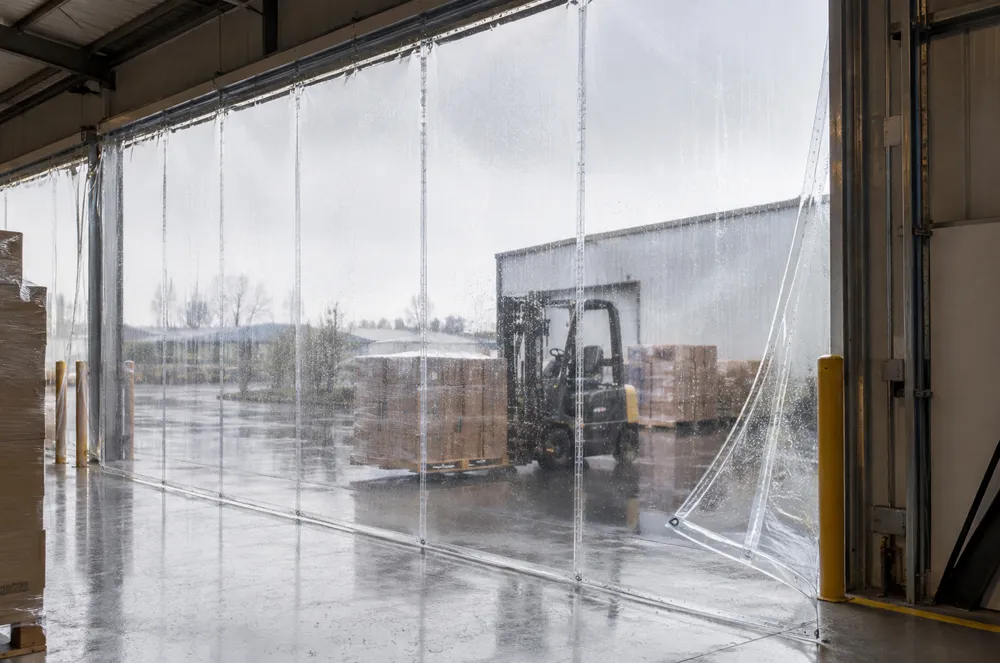
Clear panels also change how buyers judge wear. Scratches, haze, trapped dirt, fold marks, and waviness are more visible on a transparent sheet than on a colored coated tarp. That is why I ask whether the enclosure is mainly for visibility, temporary rain blocking, wash-down separation, or a movable industrial partition. A loading-bay windbreak, a warehouse divider, and a machine-area weather enclosure may all use clear PVC, but they do not need the same edge detail or handling routine.
The strongest projects I see are the ones that define what the clear panel must do and what it does not need to do. If the panel needs frequent rolling, visibility may matter more than maximum mass. If the opening is very large and wind-exposed, the reinforcement logic becomes more important than a perfect showroom look. That application-first decision keeps the blog angle separate from the general clear tarp page, because the real buying job here is specification for a finished industrial enclosure.
II. Confirm Transparency, Reinforcement, and Thickness Before Final Size
Buyers often begin with finished width and height, but the more important conversation usually starts with material behavior. A clear enclosure panel can be made from a smoother transparent PVC sheet or from a reinforced transparent structure with an embedded scrim grid. The visual result, handling feel, seam behavior, and dimensional control can change a lot between those routes. I usually discuss reinforcement first because that choice affects how large the panel can be handled, how it reacts around grommets, and how much visual interruption the buyer will accept.
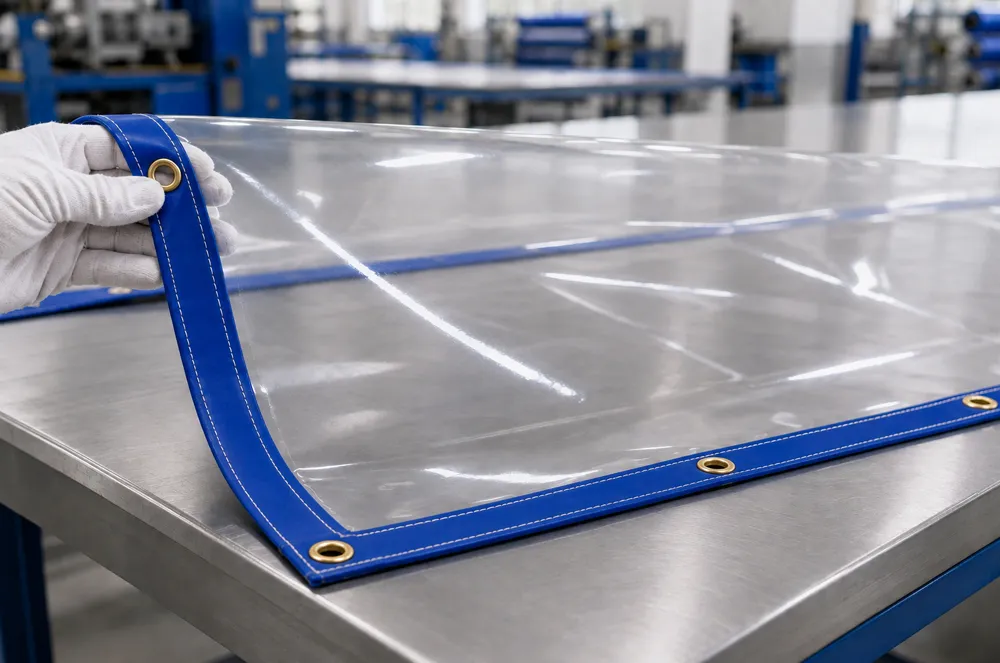
Product knowledge is clear that material performance cannot be judged by one simple thickness impression. The PVC layer, the reinforcement structure, the additive balance, and the finishing route all affect flexibility, weathering, weldability, and outdoor stability. That matters for clear panels because buyers sometimes compare a low-cost transparent sheet to a reinforced enclosure panel as if both will behave the same after rolling, fastening, and repeated outdoor exposure.
I also avoid promising that a thicker-looking clear sheet is automatically the stronger answer. A large panel that has to roll up every day can become awkward if the construction is too stiff for the frame and handling method. On the other hand, a very light panel may look good on a sample table but move too much once it is installed over a wide industrial opening. The useful specification is the one that balances visibility, handling, enclosure size, and fixing method instead of chasing one “heavy duty” label.
| Buyer checkpoint | Why it matters in a clear enclosure | What to send before quotation |
|---|---|---|
| Transparency requirement | Visibility, light entry, and privacy level decide whether a clearer or more reinforced structure is acceptable. | Site photo, viewing distance, and whether operators must inspect equipment through the panel. |
| Reinforcement route | Embedded scrim improves handling and stability but changes the visual appearance compared with a smoother clear sheet. | Application notes, target opening size, and whether the panel will stay fixed, slide, or roll. |
| Thickness and flexibility | The panel must stay manageable during installation and repeated handling, not only look heavy in a sample. | Handling frequency, roll-up need, and whether visibility or rigidity matters more. |
| Surface cleanliness and weather exposure | Outdoor dirt, condensation, UV, and abrasion can change how long the enclosure stays clear enough for the job. | Indoor/outdoor use, wash-down routine, heat source, and any UV or weather-report requirement. |
III. Design the Opening, Wind Load, and Hardware Around the Real Installation
The next decision is not just the panel size. It is how the panel is fixed and where the load enters the edge. A clear tarp panel for an industrial enclosure may use welded hems, webbing, rope-in edges, zipper access, turn buttons, or grommet rows, but those details must match the frame and the expected movement. This is one reason I sometimes ask for the steel frame photo before I confirm the edge plan. A clean opening on a drawing can hide a lot of stress concentration once wind and handling start working on the perimeter.
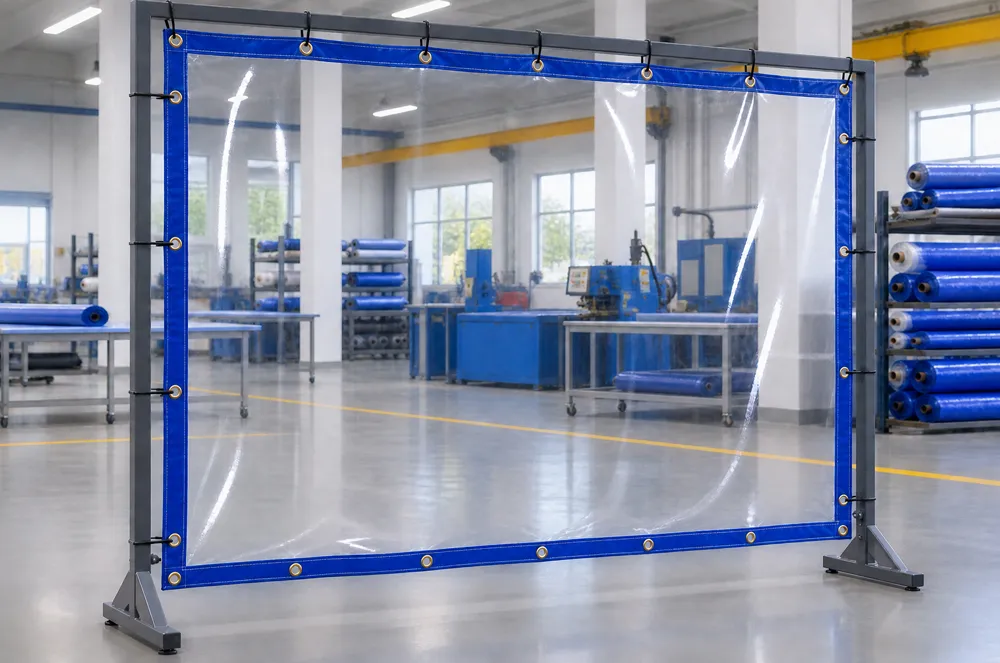
Large clear sections are especially sensitive to edge logic because wind pressure and repeated opening cycles rarely fail in the middle first. They fail where the hardware pulls through, where the hem flexes near a corner, or where a wide unsupported panel begins to distort. That is why I prefer the buyer to confirm finished opening size, fixing-point spacing, corner build, overlap direction, and whether the enclosure should release tension upward, sideways, or downward.
For buyers comparing several suppliers, I would not accept a quote that simply says “clear tarp with eyelets” without the edge method. Grommet spacing changes the pull pattern. Hem width changes how much material carries the load around the hardware. If the panel uses zipper access or a roll-up section, the fastening route should be treated as part of the enclosure system, not as an accessory note added after the price is approved.
This is also where a natural internal step to custom-made tarps makes sense. The buyer is no longer comparing generic material alone. The buyer is defining a finished enclosure panel with a real edge path, a real frame, and a real maintenance routine.
IV. Treat Access, Cleaning, and Condensation as Part of the Specification
Industrial buyers sometimes focus so much on visibility and hardware that they forget how the enclosure will be used after installation. Clear panels show dirt, water marks, and abrasion much faster than an opaque tarp, so access and cleaning need to be planned before the bulk order is released. A panel that looks acceptable in a static sample can become difficult in service if the frame leaves no workable roll path, if the panel rubs against rough steel, or if splash and condensation collect where visibility matters most.
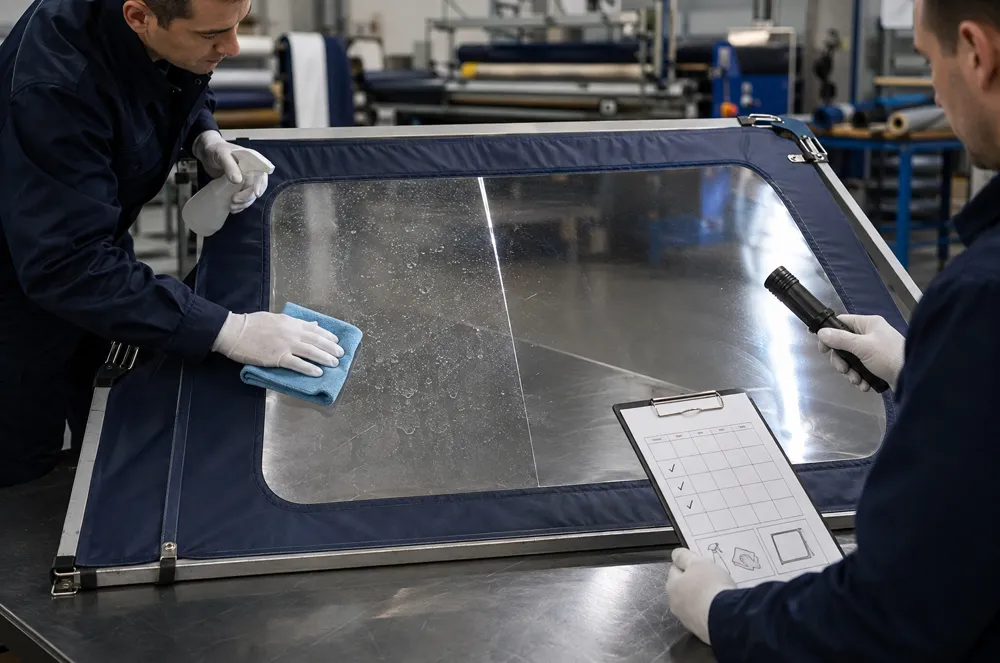
I therefore ask whether the enclosure needs zipper entries, overlap flaps, inspection windows, roll-up sections, or removable panels. Those choices affect seam direction, reinforcement, and packing. They also change the handling force that the operators apply day after day, which can matter as much as the weather load. A clear panel that has to be pulled sharply around a rough bracket will age differently from one that stays tensioned on a smooth frame.
Cleaning expectations matter too. Some projects only need temporary visual separation and basic wipe-down. Others require regular wash-down, forklift traffic awareness, or inspection of equipment through the panel. If visibility is critical, the buyer should say so in the quotation stage, because that affects the acceptable reinforcement look, surface choice, sample review, and the final inspection focus at quality control.
V. What Buyers Should Send Before Approving a Bulk Clear-Tarp Order
The most useful inquiry package is usually short but specific: opening size, site photo, frame detail, indoor or outdoor exposure, visibility requirement, panel movement, edge and hardware idea, and quantity. Once I have those details, I can judge whether the project should use a reinforced transparent panel, where the seams and hems should sit, and whether the panel needs sample approval before full production.
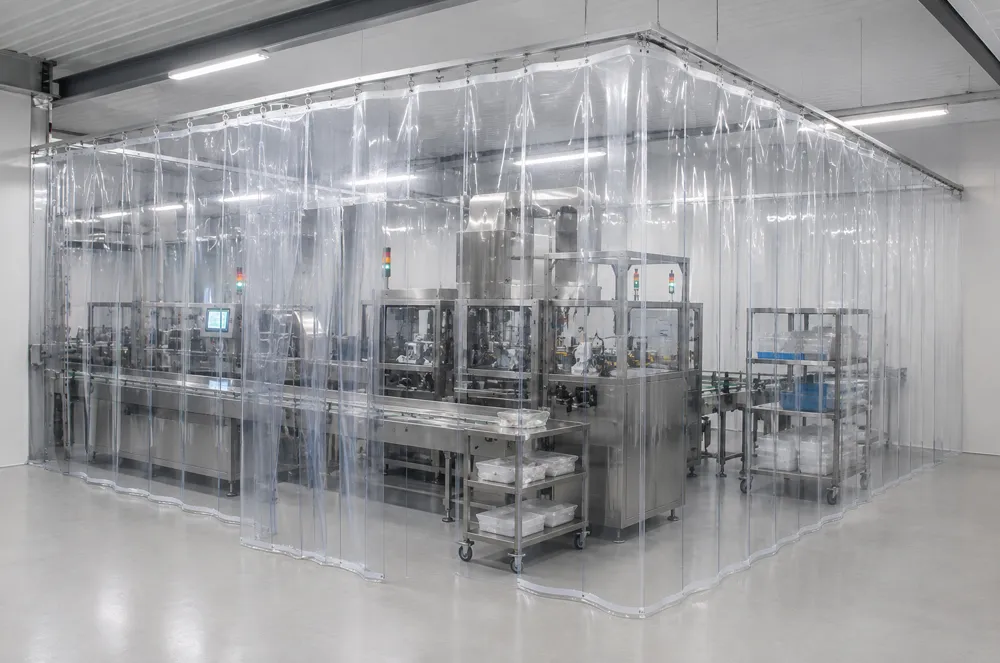
I also want buyers to flag any performance language that must be matched to a real standard or report. Product knowledge is strict on this point: UV resistance, flame retardancy, weathering, and service-life expectations should be tied to the agreed specification, sample, and test method rather than treated as open-ended promises. For clear industrial enclosures, that discipline protects both the quotation and the later inspection.
Before production, prepare these details: opening dimensions, visibility goal, movement method, edge and hardware plan, exposure conditions, cleaning routine, quantity, and any sample or report requirement. That keeps the project focused on the real enclosure decision instead of turning it into a broad comparison of generic clear plastic sheets.
If the enclosure still needs review, send the opening photo, frame details, dimensions, and the access requirement through the contact page. A supplier that can connect transparency, reinforcement, edge construction, and handling into one workable panel plan is usually the better choice for a bulk industrial enclosure order.