Color and printing should be treated as part of the tarp specification, not as decoration added at the end. A custom tarp printing request affects material choice, outdoor appearance, approval time, and repeat-order control just as much as edge hardware or finished size.
In custom production, the biggest problems usually come from vague approval language: “make it blue,” “put the logo here,” or “match the last order.” For a serious B2B order, I want the color reference, print position, surface expectation, and exposure condition defined before bulk production starts. If the buyer needs a custom printed PVC tarp, those visual details should be approved as production requirements, not treated as artwork afterthoughts.
I. Treat Color and Printing as Production Specs, Not Final Decoration
When buyers configure custom tarp colors, they are also deciding how the tarp will look after handling, storage, sun exposure, and repeat manufacture. The color affects heat absorption, dirt visibility, sample approval, and sometimes the coating formula route. Printing adds another layer because the surface, the ink route, and the expected wear all have to work together.
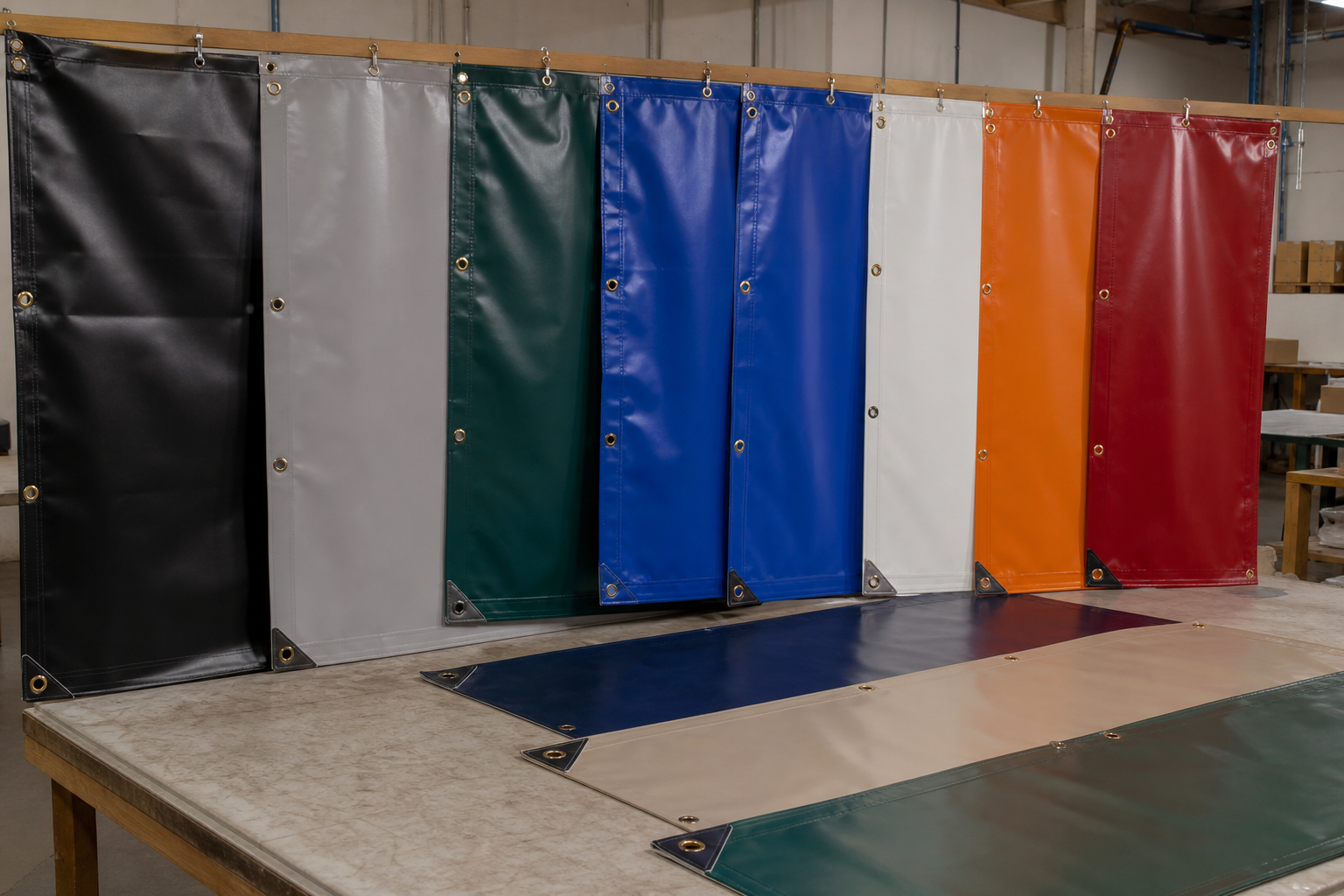
This is why the live custom-made tarps page already combines color, features, logo printing, and drawing upload in one workflow. A buyer who treats those items separately often ends up with an incomplete quotation. I prefer to see the visual request early, together with the application, size, and handling conditions, so the factory can judge whether a plain color, a logo printed tarp, or a larger printed panel is the better route.
The visual goal should also match the use case. A fleet cover, distributor program, and project-site cover may all need branding, but the approval standard is not the same. Some buyers care most about clear identification from a distance. Others care more about batch color consistency across repeat orders.
II. Choose Custom Tarp Color Options by Exposure, Heat, Dirt, and Visual Control
The best color is rarely chosen by preference alone. Outdoor service, solar exposure, temperature, jobsite dirt, and customer branding all change the answer. Our product knowledge is explicit here: bright red, orange, purple, and fluorescent shades often need more careful lightfastness review outdoors, and UV resistance is not the same thing as total weather durability. In other words, outdoor tarp colorfastness should be discussed as part of the material and pigment route, not only as a visual preference.
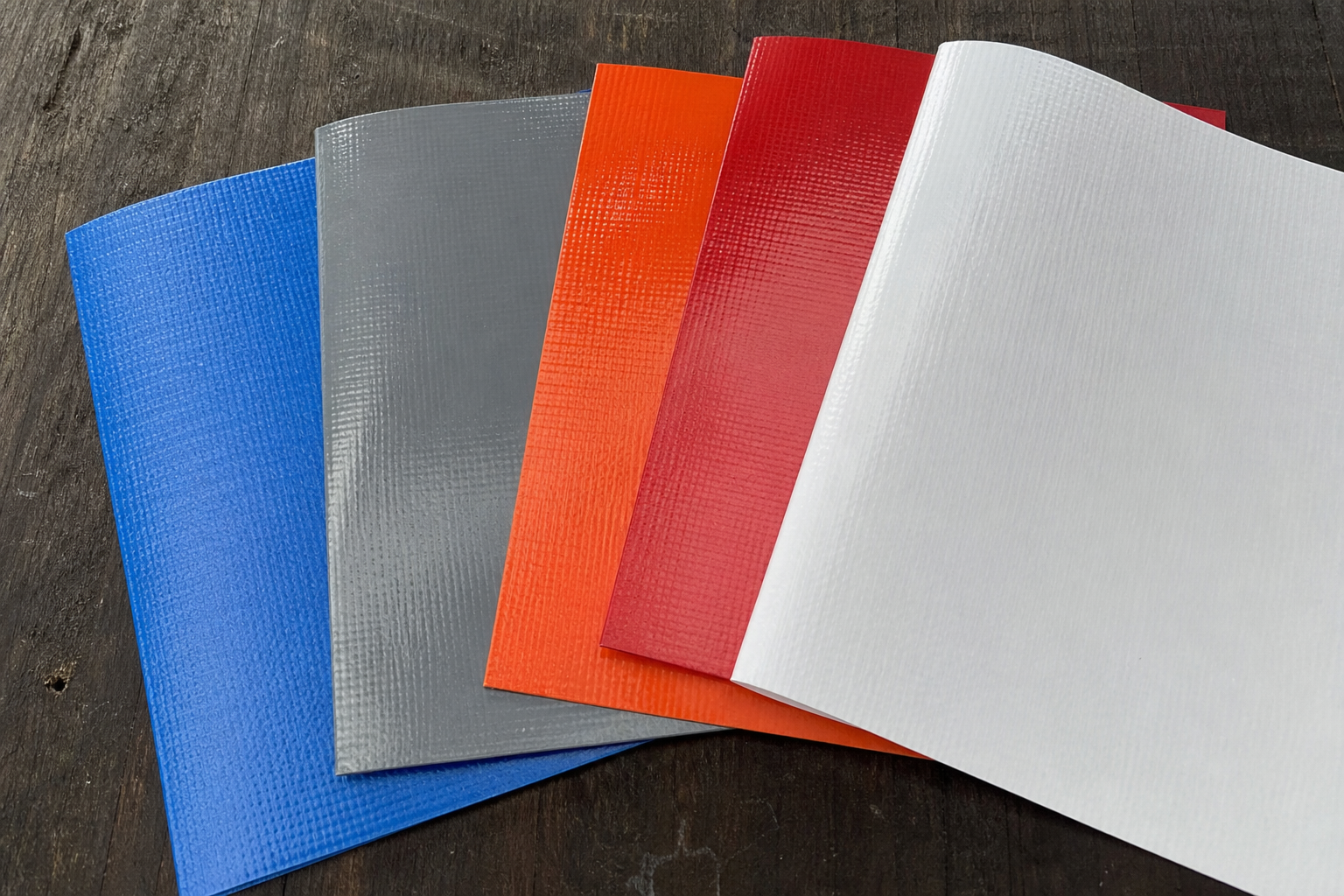
For many industrial covers, neutral gray, blue, green, black, or white are easier to manage because they are common, practical, and easier to align with standard production runs. That does not mean brighter shades are wrong. It means the approval burden is higher. If the buyer expects a saturated outdoor color, I would ask whether the cover is for short-term site use, repeated folding, or long storage under direct sun, because each condition changes how cautious we should be with the final approval.
| Color situation | What I confirm | Why it matters |
|---|---|---|
| Neutral industrial colors | Visual consistency, dirt visibility, and whether one color must span several SKUs. | Good for practical projects where fast approval and repeatability matter. |
| Bright outdoor colors | Color sample route, exposure condition, and whether lightfastness expectations are high. | Pigment stability can be more demanding than buyers expect. |
| White or light panels | Stain visibility, glare, and final-use cleanliness requirement. | A clean look may require stricter handling and packing control. |
| Multi-color programs | Color reference, batch grouping, and how the receiving team will identify each version. | The visual plan must still stay manageable in sampling and packing. |
If the buyer is still deciding between finished covers and raw material supply, it helps to compare the final cover requirement with the underlying PVC tarpaulin surface and color route first. That avoids treating color as a separate cosmetic step disconnected from the coated material.
III. Match the Printing Route to the Surface, Logo Size, and Wear Pattern
Not every printed request belongs on every tarp. A small identification mark, a repeated batch mark, and a large visual panel are different jobs. For a printed tarp or PVC tarp printing request, I want to know whether the print is only for identification, for distributor branding, or for a large visible surface. The answer changes how carefully we must judge the coated surface, the print position, and the expected wear.
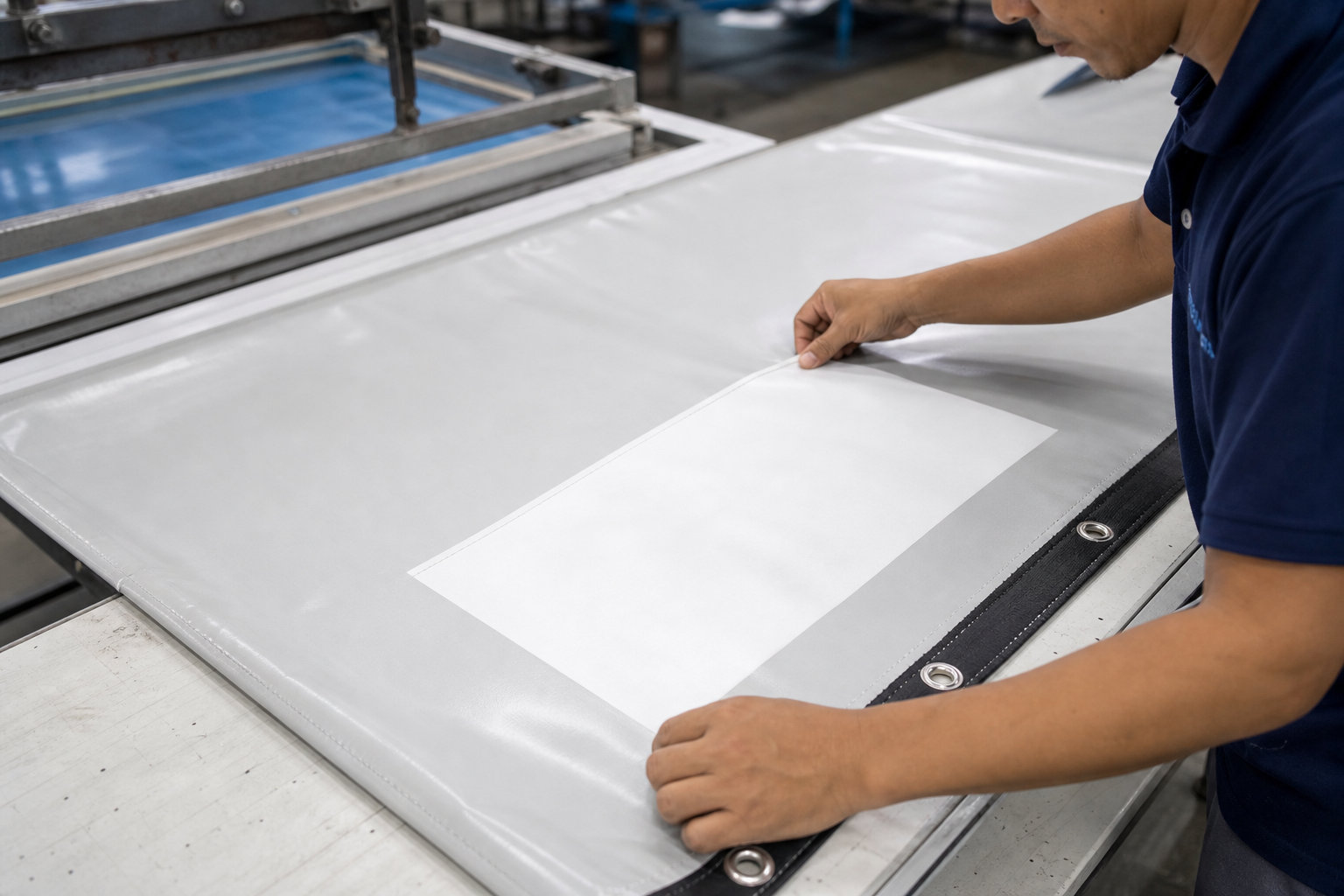
For simple, repeated brand marks, screen-printing or another compatible surface-print route may be practical if the tarp construction and surface treatment allow it. For larger graphics or more demanding visual areas, I would not skip a sample. The coating surface, the expected folding, and the real abrasion path all influence how the printed area behaves after delivery. A custom printed PVC tarp that looks clean on day one but cracks or scuffs quickly in handling will create complaints even when the base material is acceptable.
That is also why tarp logo printing should be approved together with the finished-product layout, not only from artwork files. On a finished cover, seams, hems, tie-down points, and fold lines can all change the best print position. Buyers choosing between roll supply and finished branded covers may also need to compare the finished route with tarpaulin rolls if local conversion is part of the project.
IV. Approve the Visual Standard Before Bulk Production Starts
The safest approval route is simple: one physical or clearly documented sample, one approved color reference, one defined tarp print position, and one record of what counts as acceptable. For some buyers, a Pantone tarp color target or color chip is useful. For others, a kept sample from the first order is more practical. Either way, the factory and buyer should not rely on memory once the order becomes repeatable.

I also prefer to define the visual standard around the real use distance. A small internal asset cover does not need the same print reading distance as a fleet-side cover or a project-site identifier. That helps keep the approval practical instead of overcomplicated. The important point is that sample review should cover color, print location, edge interference, fold direction, and the way the cover will actually be packed and opened later.
When the buyer needs a more formal review route, the project should connect to the relevant quality control checks before mass production. That does not mean promising zero variation. It means agreeing in advance on what must stay controlled and what can vary within a reasonable production tolerance.
V. Protect Repeat-Order Consistency Through Records and Packing
A good first order becomes useful only when the same visual decision can be repeated later. For a distributor or OEM program, I would keep the material code, approved color route, print artwork version, print location, fold pattern, and packing rule together. This is what turns a one-time sample into a stable custom tarp branding program.
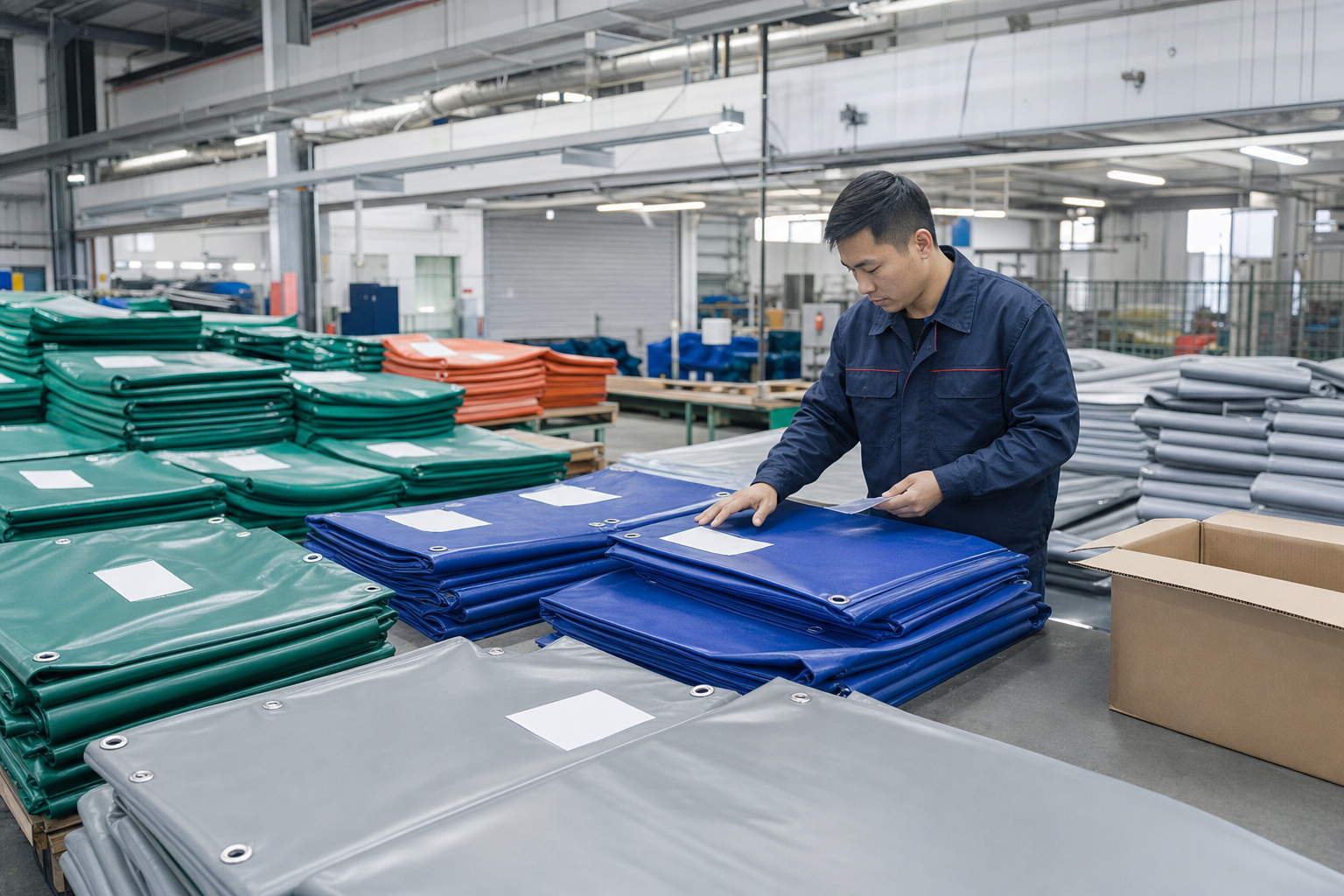
Packing matters more than many buyers expect. If several color versions or printed versions travel together, the outer grouping should help the receiving team separate them without unfolding every unit. Clear grouping, blank-but-distinct labels, or bundle separation by SKU can save real labor after arrival. This is one of the easiest ways to protect OEM tarp color matching and repeat-order control in practice.
Before you request a quotation, prepare the application, target size, color reference, artwork or logo file, print location, exposure condition, quantity, and sample expectation. With those details, a supplier can judge whether the project needs a plain color tarp, a simple branded tarp, or a more carefully controlled printed program. If the visual standard is still unclear, the best next step is to send the brief through the contact form before price is finalized.