If the equipment has sharp corners, vents, service doors, or fixed lifting points, a generic heavy tarp is usually the wrong starting point. A custom equipment cover should be specified around the machine shape, the stress path, and the way the cover will actually be removed, folded, and reinstalled.
From a factory view, the real decision is not only material weight. I first want to know where the cover will rub, where water should run off, where workers need access, and which fastening points carry the load. That is what turns a loose sheet into a usable custom tarps for equipment covers program in bulk production. For buyers comparing custom equipment covers, the better question is whether the cover matches the equipment workflow, not whether it simply looks heavy.
I. Start With Equipment Geometry for a Fitted Equipment Cover
A machine cover becomes custom as soon as the equipment shape changes the fit. Flat panels may work for simple storage, but many industrial equipment covers need allowances for fans, control boxes, exhaust points, protruding frames, or service access. If those features are ignored at the quotation stage, the finished cover often becomes hard to install or easy to tear.
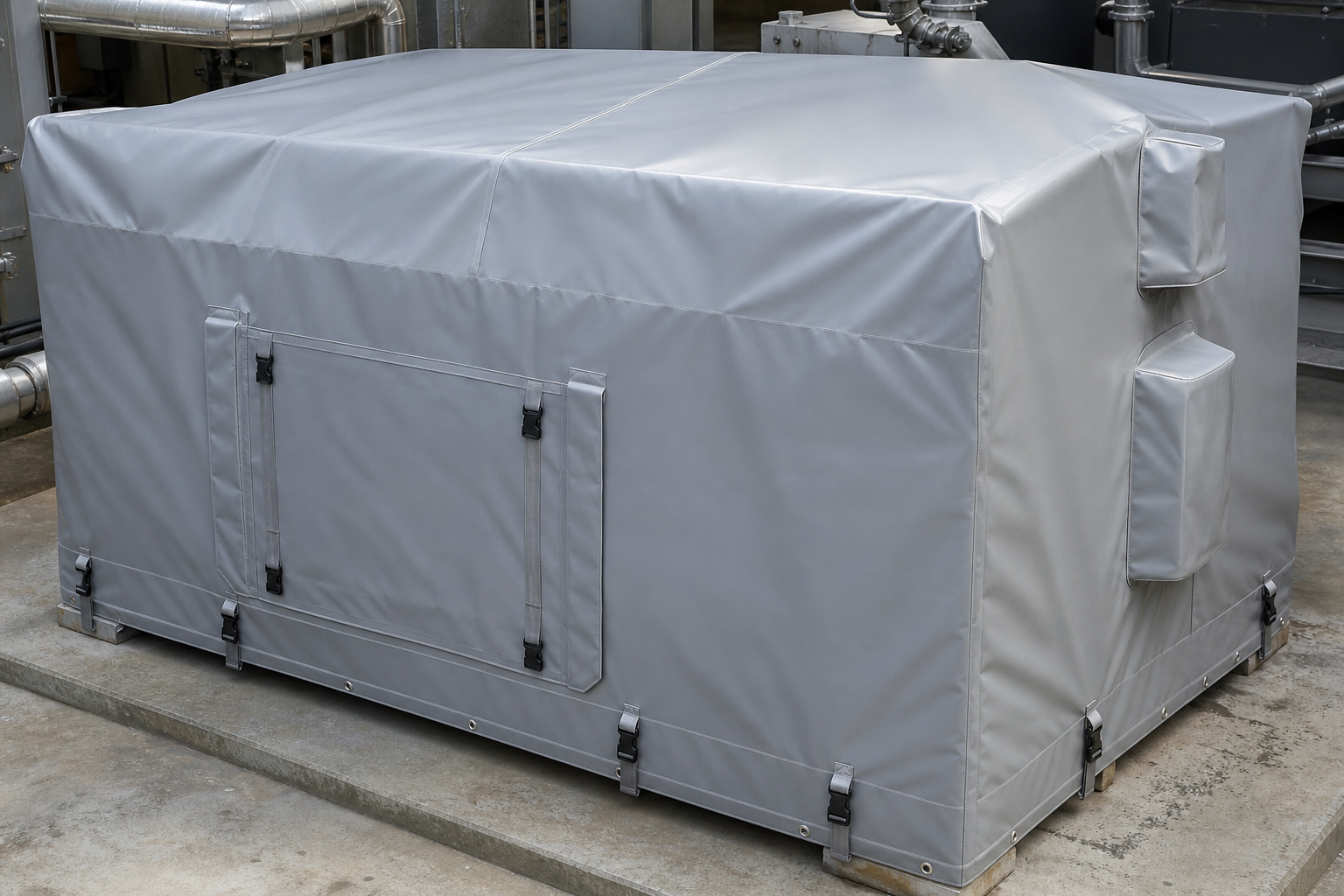
This is where the article separates from a generic heavy-tarp discussion. A buyer who only compares thickness may still miss the real cause of failure: a corner that drags, a buckle line that pulls unevenly, or an access opening that was never reinforced. When I review equipment covers, I want photos or a drawing that shows where the cover must sit and where workers will touch it most often.
Some projects also need a choice between a flat protective sheet and a fitted cover with shaped panels. For a loose outdoor drape, extra overlap may be acceptable. For a fitted machine enclosure, too much loose fabric can trap wind, pool water, and make daily handling slower. That difference is why many buyers move from a generic cover inquiry to a custom-made tarps route after the first technical review. A fitted equipment cover should make daily handling easier, not only make the product photo look cleaner.
II. Confirm the Material Route and Stress Points Before You Talk About GSM
For many PVC equipment cover projects, the best material route is a coated polyester tarp because it combines waterproofing, weldability, and better dimensional control than a bare textile. But I would not approve a cover only because the GSM looks high. Our product knowledge is clear on this point: the same GSM can hide very different base-fabric construction, coating balance, filler level, and long-term behavior.
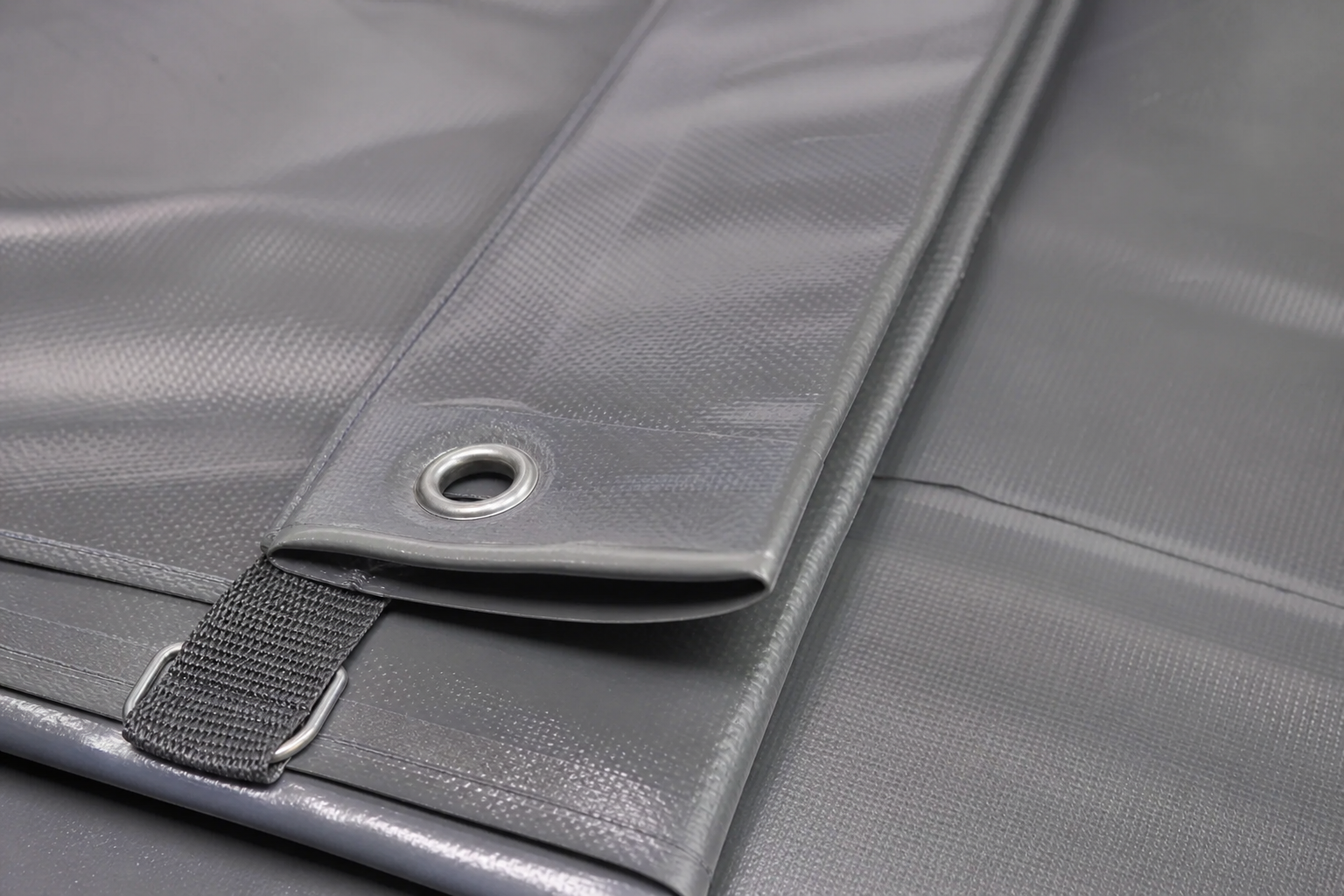
What matters more is where the load starts. A fitted cover over a smooth indoor machine may only need clean hems and light hardware. An outdoor custom machinery tarp over an irregular frame may need stronger abrasion zones, wear patches, heavier hem structure, and more conservative fastening spacing. If the buyer expects long outdoor exposure, UV and weather resistance should be confirmed around the real climate and service cycle rather than by a simplified “how many years” promise.
When the cover must also stay easy to fold and reinstall, I sometimes recommend reviewing the coated-fabric direction against handling first and only then against maximum weight. A cover that survives on paper but frustrates daily use is not a good B2B solution.
| Equipment-cover condition | What I confirm first | Why it matters |
|---|---|---|
| Indoor stored machine | Dust level, removal frequency, and fit around access points. | The cover should stay easy to handle without overbuilding the whole sheet. |
| Outdoor yard equipment | Water runoff, UV exposure, corner abrasion, and fastening load path. | Most early failures start at edges and hardware zones, not in the panel center. |
| Repeated maintenance access | Flap position, closure style, and reinforcement around openings. | A clean panel can still fail if the service opening becomes the weak point. |
| Multi-unit repeat order | Drawing version, material code, and hardware spacing record. | Repeatability is often the real buying target, not only first-order cost. |
III. Design the Edge, Access, and Fastening Details Around Real Handling
A fitted cover only works when the stress path makes sense. That means hem width, corner reinforcement, strap location, and equipment cover grommet spacing should follow how the cover is pulled over the equipment. I spend more time looking at corners, handles, and tie-down zones than I do looking at the middle of the sheet.

If workers need daily inspection access, build that into the cover instead of forcing them to remove the whole panel every time. A reinforced flap, zipper route, hook-and-loop closure, or segmented opening can turn a good cover into a practical one. The wrong opening design does the opposite: it shortens life because the same high-stress point is bent, dragged, or over-tightened every day. This is where equipment cover reinforcement and the equipment cover access flap should be planned together instead of added as separate details.
The fastening route also changes from one project to another. Some machinery covers only need light edge securing in sheltered storage. Others need webbing straps or more structured hardware because wind and vibration keep pulling at the same points. When those decisions matter, I prefer buyers to compare the finished cover plan with a targeted hardware review rather than adding random accessories late in production. That is also why an article like vinyl tarps helps only as a material comparison step, not as the full answer for a shaped cover build.
IV. Treat Sample Approval as an Installed-Fit Check, Not Only a Flat Measurement
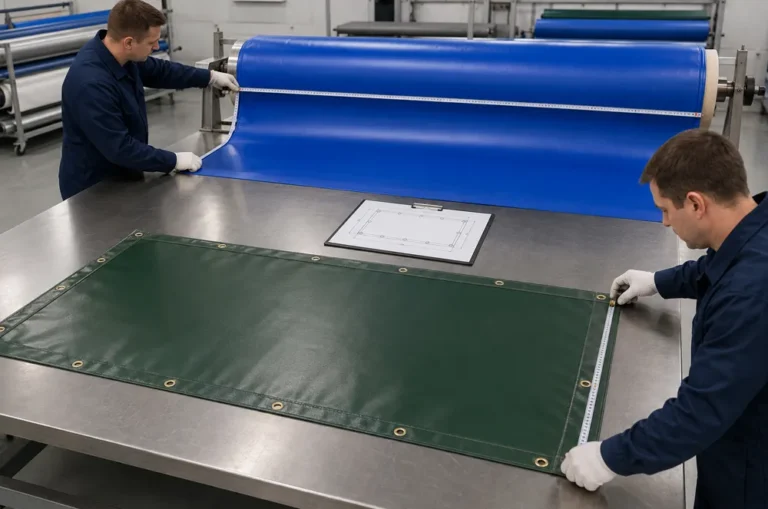
The most common mistake in an equipment cover sample approval is checking the cover only on a table. Flat size still matters, but fitted covers should also be reviewed in the installed state whenever possible. I want to see whether the hem sits where expected, whether the opening lines up with the service point, and whether the operator can remove and reinstall the cover without forcing the corners.
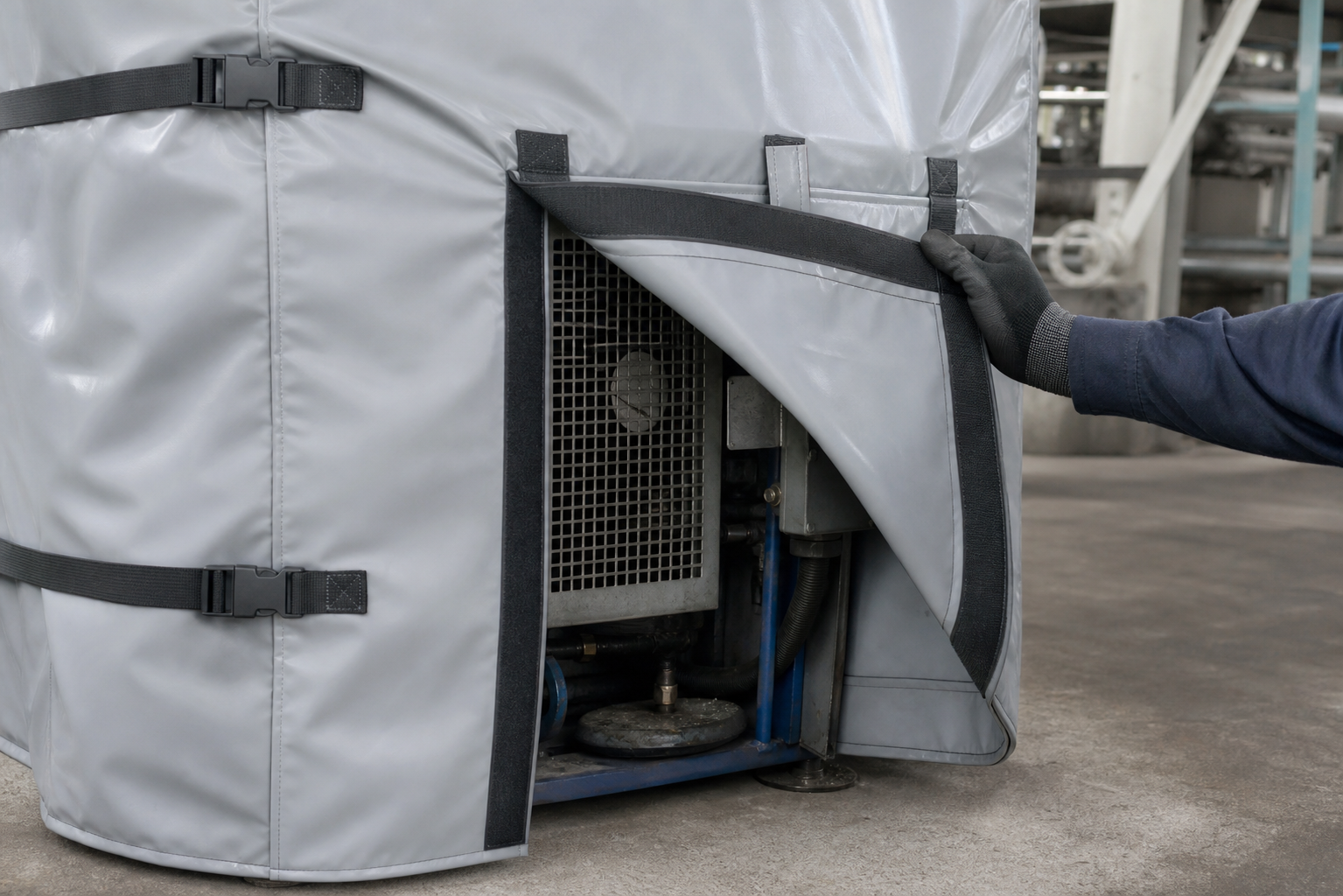
This is especially important when the cover includes access zones or irregular corners. A few centimeters of shift can be acceptable on a loose drape but unacceptable on a fitted machine cover. If the buyer cannot send the physical machine, then clear photos, a drawing, a marked template, or an old reference cover becomes even more valuable. Sample approval is not just about saying “the material looks right”; it is about proving that the geometry and handling routine still work after fabrication.
When the cover is tied to a maintenance schedule or a safety routine, the QC record should also state how the approved sample was checked. That makes later inspection easier and gives the buyer one reference standard instead of several informal opinions. If that level of traceability matters, the buyer should review the related quality control route before mass production starts.
V. Build Repeatable Production and Export Handling From the First Order
The first order should already be prepared as if it might repeat. For many B2B programs, the real target is not one successful shipment but stable reproduction across equipment models, branches, or service contractors. For OEM equipment covers, that means the factory and buyer should keep the same material code, approved drawing, hardware spacing, access layout, color reference, and packing rule in one place.
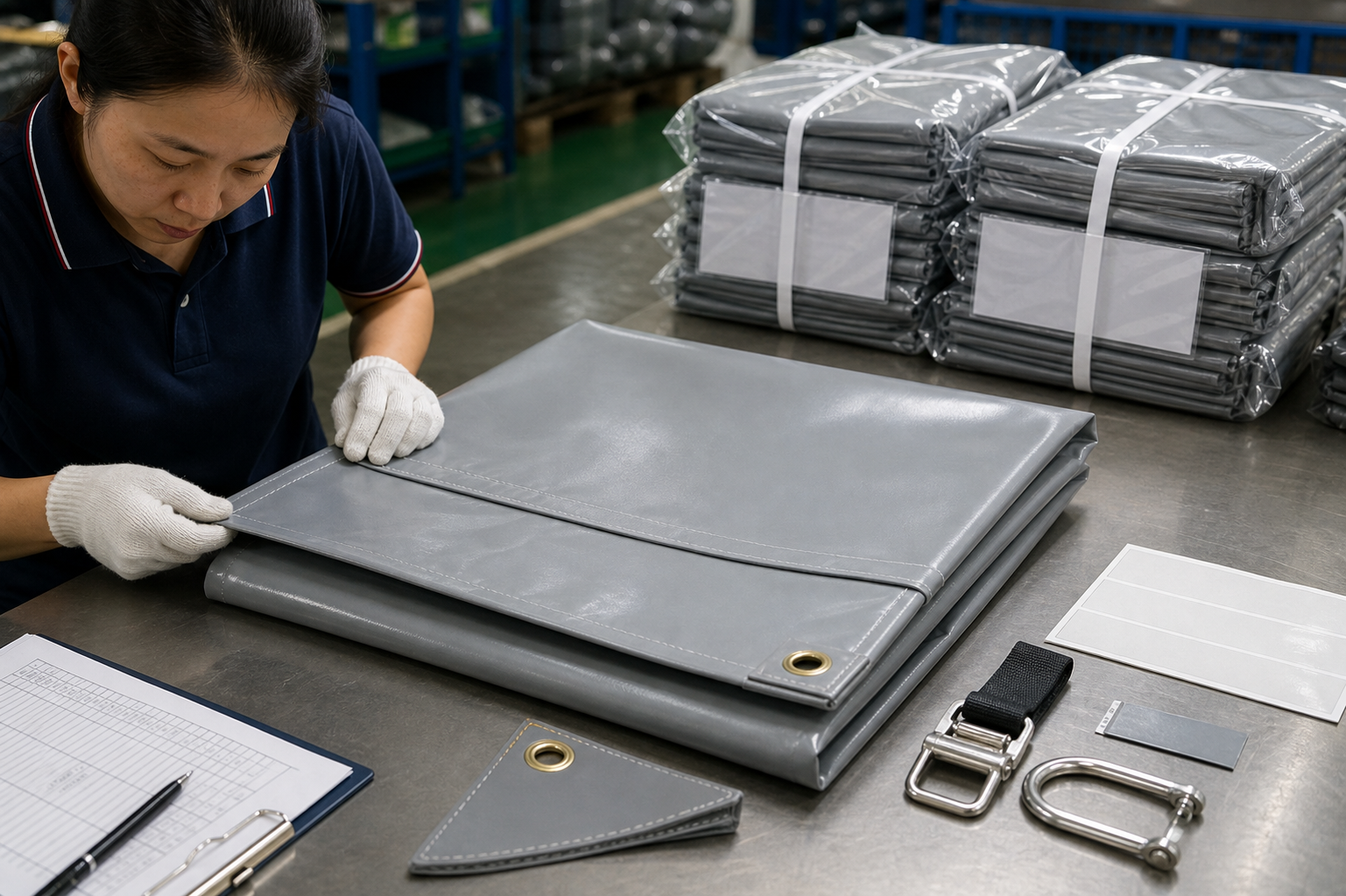
Packing deserves more attention than it usually gets. An outdoor equipment tarp cover may arrive in good material condition but still create confusion if the folded shape, unit identification, or installation side is unclear on site. For multi-size programs, I like to separate batches by machine type or cover orientation so the receiving team does not have to unfold every unit just to find the right one.
Before you place a bulk order, prepare the equipment photos or drawing, installed dimensions, contact points, exposure conditions, access-opening needs, fastening method, quantity, and sample expectations. That is enough to start a serious quotation discussion through the contact page. A custom cover works best when the cover is treated as part of the equipment workflow, not only as a sheet of fabric.