Debris tarps make construction cleanup easier because they turn scattered waste into controlled, movable loads. On an active jobsite, the problem is rarely only “too much debris.” The real problem is debris in the wrong place: nails in walkways, broken material near finished surfaces, roofing waste falling into landscaping, or heavy rubble moved by hand too many times.
The source draft correctly covered collection, transport, roofing debris, lifting tarps, and PVC-coated materials. I would keep those ideas, but for B2B buyers the main decision is not whether a tarp is useful. It is whether the tarp is designed for the specific cleanup method: drag, lift, contain, protect, or sort waste for disposal.
I. Debris Tarps Reduce Repeated Handling on Busy Jobsites
On a construction site, workers often lose time by cleaning the same area again and again. A debris tarp gives the crew a temporary collection surface directly under the work zone. Drywall scraps, packaging, wood offcuts, roofing waste, and lighter demolition material can be gathered in one place before being moved to the disposal area.

This is different from a general construction tarps order. Many construction tarps are used for weather protection, privacy, temporary enclosure, or material covering. A debris tarp has to handle abrasion, pulling force, sharp edges, and repeated contact with waste. If the buyer treats it as only a waterproof sheet, the tarp may fail at the edges before the fabric center wears out.
For contractors, the value is not just a cleaner floor. A controlled cleanup surface helps separate reusable material from waste, keeps walkways clearer, and reduces the number of small trips to the dumpster. In my experience, handling method often matters more than the product name. A tarp dragged across concrete needs different reinforcement from a tarp lifted vertically by loops.
II. Match the Tarp to Dragging, Lifting, or Protection
Not every debris tarp should be built the same way. A drag tarp used for light-to-medium waste needs a tough surface, reinforced pull points, and enough flexibility for workers to fold the edges around the debris. A lifting tarp needs stronger load distribution, reinforced seams, and lifting loops that match the equipment and expected load.
Roofing debris tarps have another job. They are often placed around the building perimeter to catch shingles, nails, underlayment, and small broken pieces. For this use, the tarp must protect landscaping and finished surfaces while keeping sharp debris in a predictable zone. The buyer should consider puncture resistance, finished size, and how quickly the crew can collect the tarp without spilling waste.
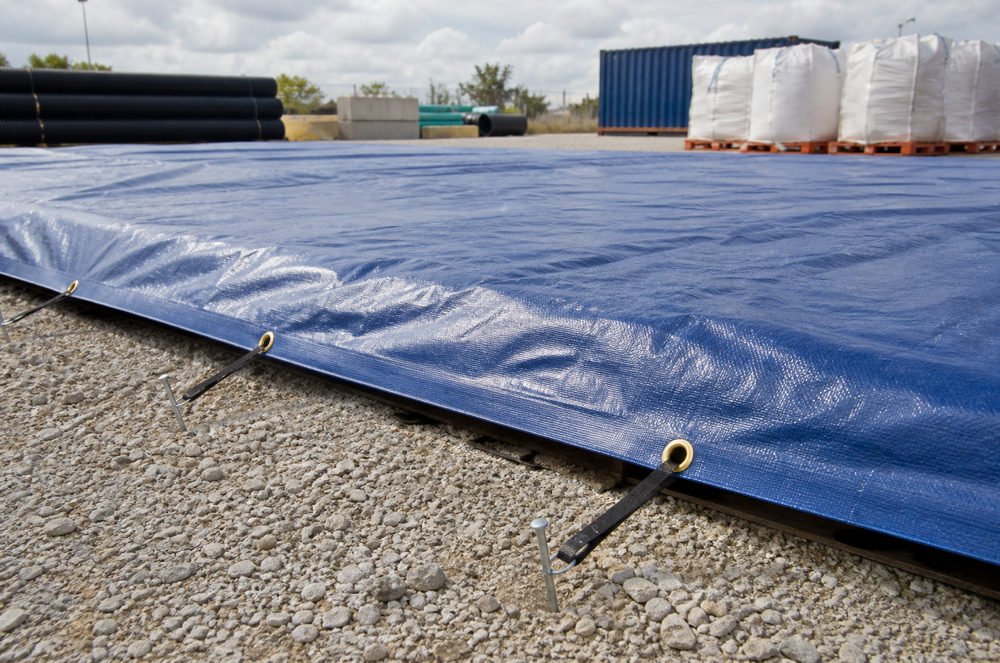
If the project involves heavy debris, I would not recommend guessing from fabric weight alone. Concrete chunks, bricks, steel parts, and wet demolition waste create point loads. The weak point may be the corner, loop, seam, or the place where workers pull against the ground. Buyers should define the load type before discussing GSM or price.
III. Material Choice Should Follow the Failure Point
PVC-coated polyester is a strong direction for reusable debris tarps because it combines waterproofing, abrasion resistance, and weldable or sewable construction. It can be used for custom panels, reinforced hems, corner patches, straps, and hardware layouts. For repeated jobsite cleanup, this makes it more controllable than a thin disposable sheet.

A heavy duty tarps direction may be suitable when the tarp is exposed to rough debris, dragging, repeated folding, or outdoor storage. However, “heavy duty” should still be translated into real specifications: fabric weight, coating direction, reinforcement layout, seam method, eyelet or loop spacing, and packing style.
| Cleanup method | Tarp design focus | Buyer check |
|---|---|---|
| Dragging light-to-medium debris | Abrasion-resistant surface and pull reinforcement | Confirm ground surface, pull direction, and edge stress |
| Roofing waste containment | Large panels with puncture and surface protection | Check sharp nails, landscaping, and removal workflow |
| Lifting heavy debris | Load-rated construction with loops and seam control | Confirm load type, equipment, safety factor, and test method |
IV. Roofing Cleanup Needs Wider Planning Than the Tarp Itself
Roofing debris is difficult because the waste starts above ground level. The tarp may have to protect lawns, paving, windows, HVAC equipment, or finished exterior surfaces. I would ask for photos of the building perimeter before confirming size. A narrow tarp can miss falling material, while an oversized tarp can be hard to handle when loaded with wet shingles and nails.
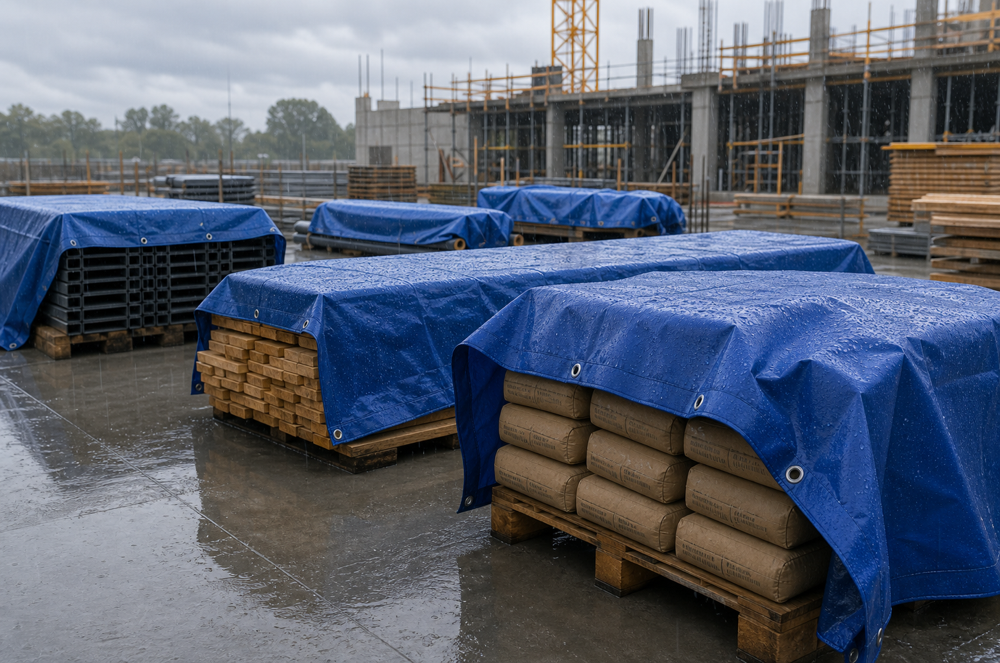
If weather is part of the risk, the buyer may also need a waterproof cover for exposed materials or unfinished areas. This should not be confused with the debris tarp itself. One tarp may be designed to collect waste; another may be used to protect the structure from rain. Combining both functions into one weak specification can create problems on site.
For roofing contractors and distributors, packing also matters. Large tarps should be folded in a way that allows crews to deploy them quickly. If the tarp is too bulky or hard to identify by size, workers may use the wrong piece or skip it when the job is rushed.
V. Custom Production Details for B2B Debris Tarp Orders
For B2B debris tarp projects, LonaTarp can support custom dimensions, PVC-coated fabric selection, welding, sewing, reinforced hems, loops, grommets, straps, printing, and packing. Our normal custom production MOQ is 5,000 square meters, so I prefer to confirm samples before bulk manufacturing when the tarp has lifting points, special corners, or strict packing requirements.
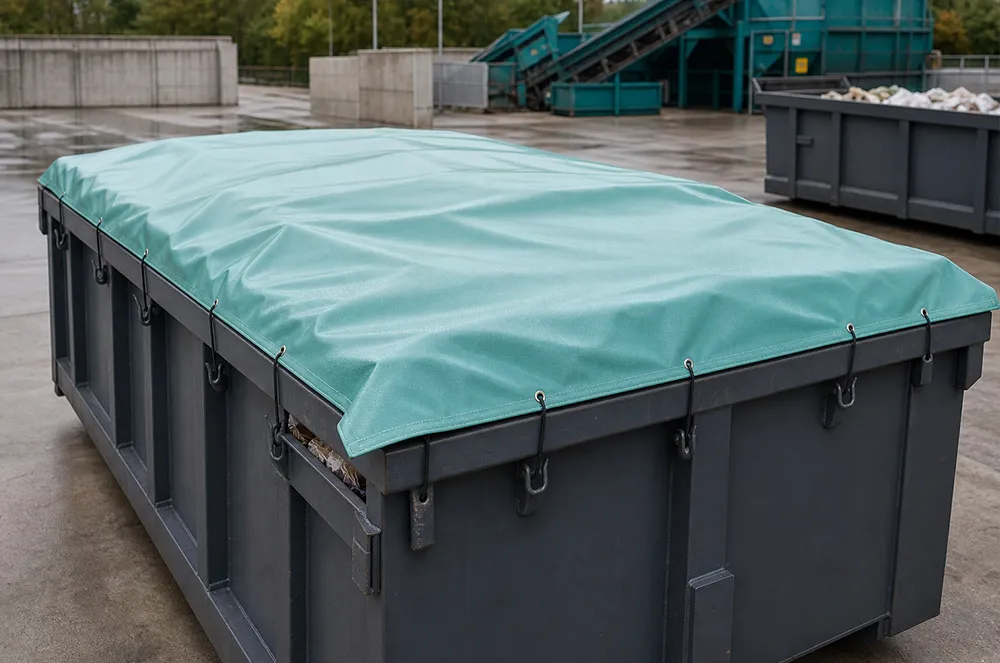
Quality control should match the cleanup method. For drag tarps, I would check surface abrasion, edge reinforcement, and pull-point strength. For roofing tarps, I would check finished size, puncture-prone areas, folding, and surface protection. For lifting tarps, the loop construction and seam direction need special attention because failure under load is a safety risk, not only a product complaint.
A useful inquiry should include debris type, estimated load, movement method, tarp size range, ground surface, exposure to rain or sun, reinforcement requirement, and whether the buyer needs finished tarps or roll material for local fabrication. The clearer the cleanup process is, the easier it is to build a tarp that saves labor instead of becoming another jobsite problem.