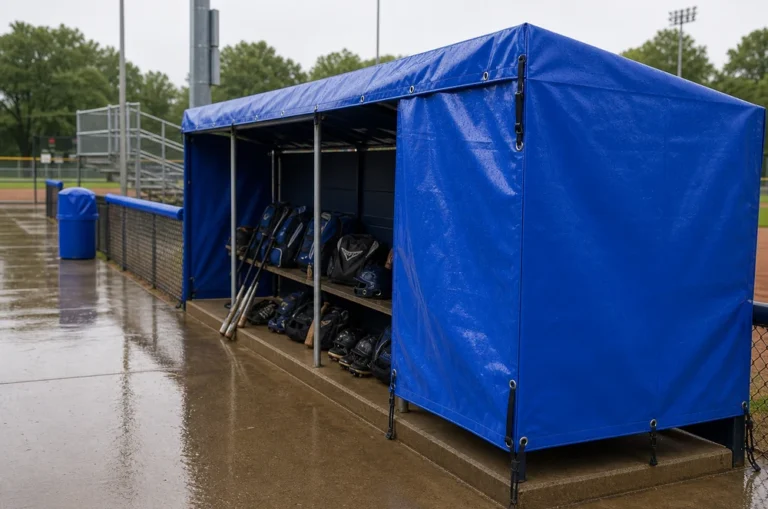
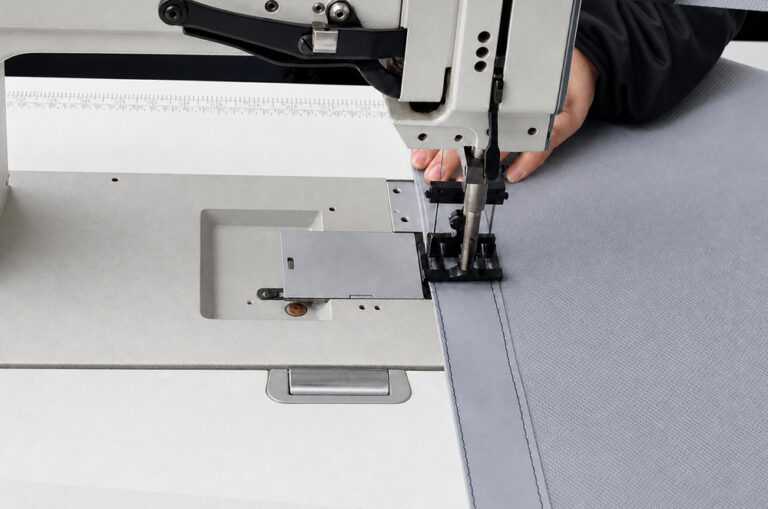
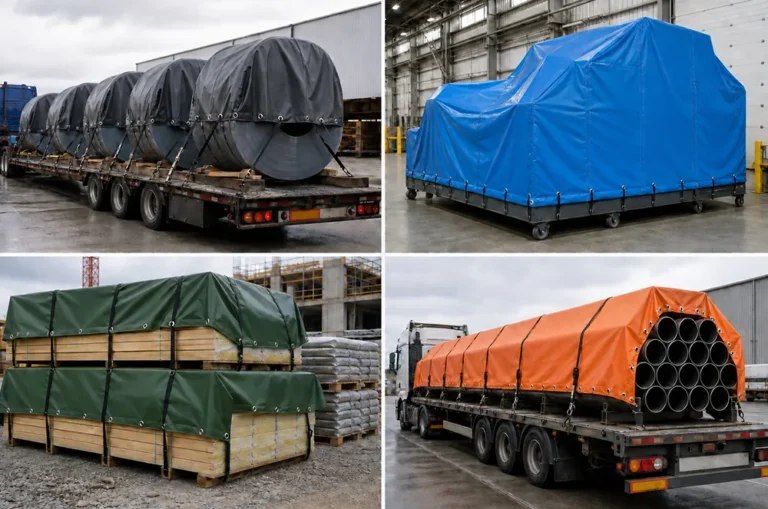
Manufacturers should not inspect a custom tarp by asking only whether the fabric looks clean. A proper custom tarp inspection or tarp quality inspection checks whether the finished tarp still matches the approved drawing, the intended load path, and the real installation method. Before I approve a bulk lot, I want to know whether the supplier checked the material lot, seam strength, tarp size tolerance, grommet spacing, and shipment records against the same reference the buyer approved.
That matters because most field complaints do not come from the panel center. They usually start at the welded hem, hardware row, corner reinforcement, wrong finished size, or an unnoticed change between the sample and the production lot. For buyers, custom tarps quality control should prove how the factory links material, fabrication, measurement, and shipment approval before the goods leave. If your project depends on repeatable covers, ask how the factory inspects the tarp before you approve the shipment.
I. Start With the Approved Reference and Sample Approval, Not the Finished Bundle
A finished tarp can look acceptable on the floor and still be wrong for the order. The first inspection point is the approved reference set: drawing, finished dimensions, edge build, material route, hardware plan, and any sample or swatch the buyer has signed off. Without that reference, the factory is only checking whether the tarp is neat, not whether it is correct.
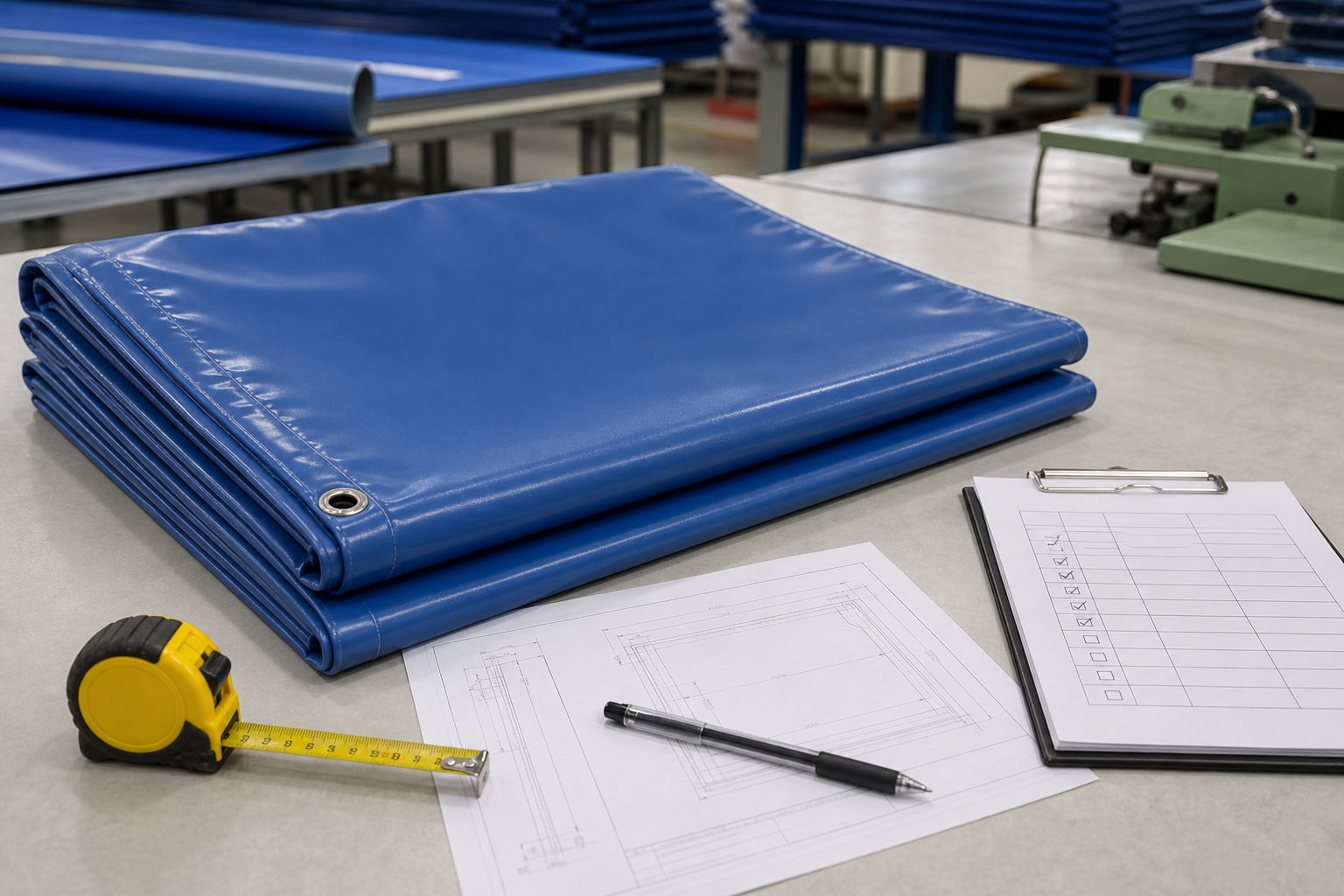
In a real custom tarp project, the reference file should answer practical questions before fabrication inspection even begins. Which size is the finished size and which is the cut size? Are grommets measured from the finished edge or from the hem fold? Is the tarp supposed to use a glossy PVC route, a matte route, or a reinforced transparent panel? If that paperwork is vague, the inspection team may approve a tarp that fits the internal work order but fails at the buyer’s jobsite.
For B2B buyers, this is the point where a custom tarp project becomes easier to control. One approved drawing and one approved sample should govern the inspection language for the whole bulk order. If revisions are made mid-process, the inspection copy must be revised too. Otherwise the shipment record becomes unreliable.
II. Run Incoming Material Lot Inspection Before the Tarp Is Fabricated
Many buyers compare tarps by GSM alone, but that is not enough for inspection. Before cutting starts, the factory should confirm the actual material lot: base fabric route, coating surface, roll width, color, and any agreed testing path. Two rolls can carry the same nominal weight and still behave differently in weldability, tear resistance, stiffness, or fold recovery.
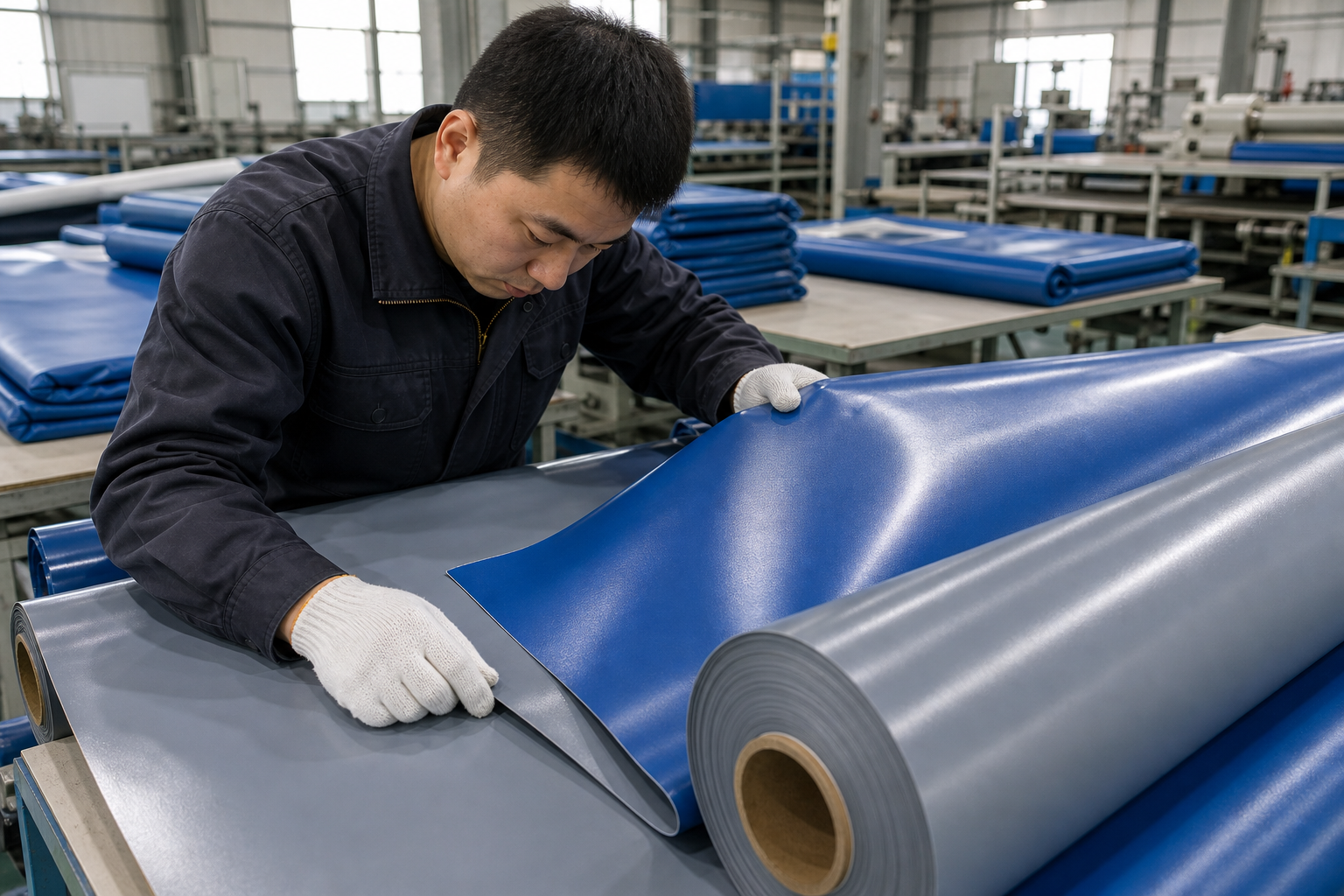
That is why the incoming material inspection should tie the tarp back to the agreed material description rather than a loose nickname such as “heavy-duty blue tarp.” If the buyer ordered PVC tarpaulin with a particular finish, the inspection team should confirm that the production roll matches the approved direction and that any sample confirmation still represents the lot being used. This is especially important when the order includes clear panels, printed areas, fire-retardant treatment, or a specific foldability requirement.
Product knowledge also matters here. The useful question is not “is this roll thicker?” but “does this lot still support the finished use condition?” A tarp for repeated folding and lashing may need a different balance than a tarp for mostly static weather protection. Material inspection should catch that before the tarp is cut, welded, sewn, and packed. If the order depends on a first approved sample, the team should also confirm that the production lot still matches the sample approval logic rather than assuming the sample and the bulk order are automatically the same.
For overseas buyers, this is also the right stage to ask whether any incoming roll was isolated, relabeled, or replaced during production. A clean answer here makes a later custom tarp inspection report much more credible because the material lot check and the finished-product check still point to the same manufacturing route.
III. Inspect Welded Seams, Edges, and Hardware in High-Stress Zones
After fabrication, the inspection should move immediately to the failure-prone areas: seams, hems, corners, reinforcement patches, hardware rows, pockets, straps, and openings. A center panel can look smooth while the edge construction is already weak. In field use, the stress line usually travels through the fixing system and the perimeter long before the middle of the tarp fails.
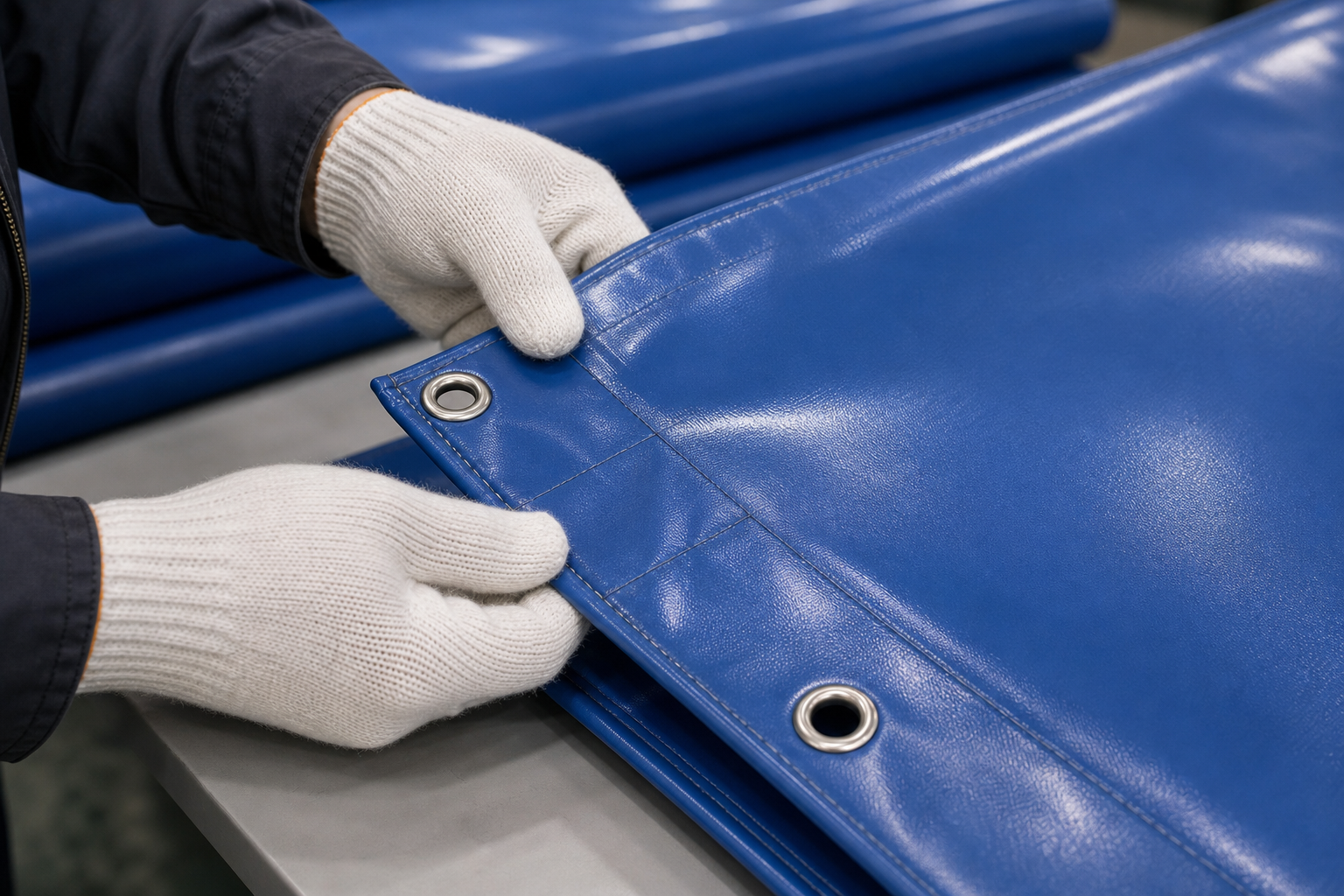
For welded tarps, I expect the inspection team to look at weld continuity, edge alignment, corner build-up, and whether the weld window looks stable across the lot. If the order is sewn, inspect skipped stitches, seam tension, thread exposure, and the way the sewn line interacts with reinforcement tape. If the order uses grommets or D-rings, the hardware check should not stop at count. The critical points are spacing, edge distance, pull direction, and whether the reinforcement behind the hardware still matches the approved structure. That is where a real grommet spacing check becomes more useful than a simple hardware count.
When buyers ask about seam reliability, I also separate appearance from performance. A neat weld line is not enough if the seam peels under stress, and a visually straight hem does not help if the edge reinforcement shifts once the tarp is tensioned. If the application is high-risk, ask the supplier how welded seam inspection or pull-point inspection is documented before shipment.
Buyers should also ask whether the factory inspects the tarp in the way it will actually be loaded. A tarp for repeated truck fastening needs a different seam and hardware focus than a warehouse partition or a machine cover that is rarely removed. This is why a serious finished tarp inspection is application-aware, not just appearance-based.
IV. Measure Finished Tarp Size Tolerance and Hardware Position the Way the Tarp Will Be Used
A custom tarp can use the right material and still fail if the finished geometry is wrong. Measurement inspection should confirm the real installed dimensions, not only a quick tape check on a loosely folded piece. The factory should know whether tolerance is measured flat, under light tension, along the hem line, or from hardware center to hardware center.
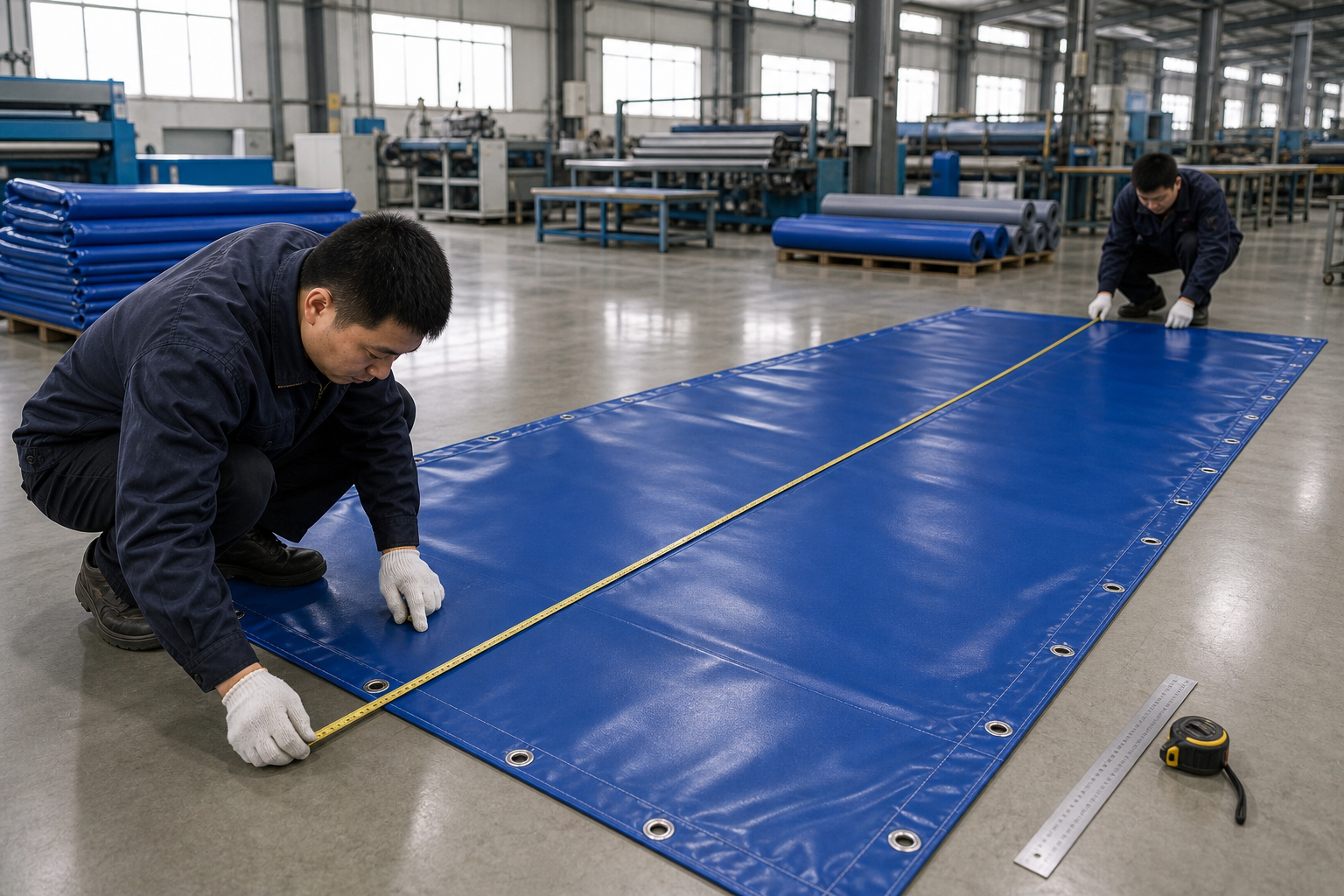
This matters most on large tarps, irregular covers, zipper openings, cutouts, reinforced corners, and any layout where the fixing points drive the fit. If grommet spacing drifts, the tarp may wrinkle, pull unevenly, or overload one corner. If a pocket depth is short, the installation rod may not seat properly. If the buyer uses a frame or equipment outline, the critical measurement may be the opening position rather than the total width.
| Inspection Stage | What the Buyer Should Confirm | Why It Matters Before Bulk Shipment |
|---|---|---|
| Approved reference | Final drawing, finished size, material route, edge build, and hardware plan all match one approved version. | If the factory and buyer inspect against different versions, a “pass” result can still produce the wrong tarp. |
| Material lot check | Base fabric, coating surface, color, roll width, and any required test route are confirmed before cutting. | This prevents sample-to-bulk drift and avoids discovering mismatch only after fabrication. |
| Fabrication check | Welded seams, hems, corners, pockets, webbing, and grommet rows are checked in the stress path, not only at the panel center. | Most field failures start at seams, edges, or hardware zones rather than in the middle of the sheet. |
| Finished measurement | Finished length, width, hole spacing, corner geometry, and opening positions are measured the way the tarp will actually be installed. | A tarp can use the right material and still fail if the finished geometry or hardware layout is wrong. |
| Shipment approval | Inspection records, labels, bundle count, and approved samples are tied back to the shipment lot. | This protects repeat orders and gives the buyer a traceable standard if any claim appears after arrival. |
A buyer should ask for evidence that the factory measures the custom tarp in the same geometry that matters in the field. For some orders that means a flat-floor check. For others it means checking hole spacing, corner angles, strap locations, or zipper placement against the approved drawing. A good tarp inspection checklist or tarpaulin inspection checklist turns these checks into measurable pass/fail points before shipment approval.
V. Tie the Custom Tarp Inspection Report to Shipment Approval and Future Repeat Orders
The last step is traceability. Inspection is only valuable if the approved lot, the sample standard, and the shipment record still connect after the goods leave the factory. Before shipment, the buyer should know which sample was approved, which lot was inspected, what tolerance or visual standard was applied, and whether any hold points were raised during production.
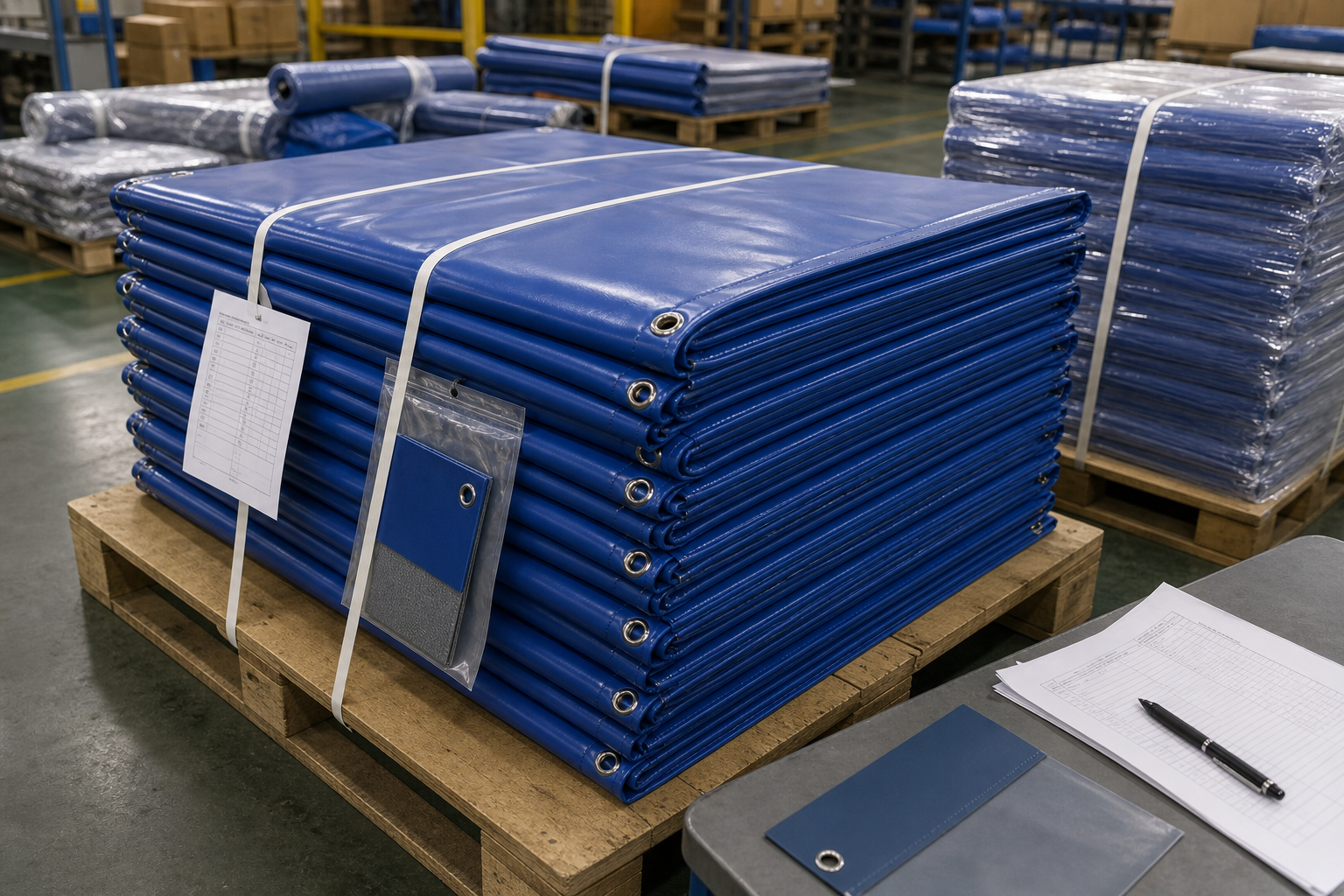
This is where the broader quality control system matters. If the order is sensitive, ask for pre-shipment photos, inspection notes, carton or pallet counts, and confirmation that the shipment still reflects the approved version. If the project involves repeated orders, keep the inspection record together with the drawing, approved sample, and final packing marks. That prevents the next order from drifting even when the title of the material stays the same.
When a buyer sends us the job conditions early, the inspection plan becomes much easier to set. Instead of asking only for a pass report, ask the factory what it will inspect first, how it checks high-stress zones, and which measurements decide whether the tarp is acceptable. If the order is high value, seasonal, or tied to a penalty-driven project schedule, it is also reasonable to decide whether sample approval alone is enough or whether a pre shipment inspection should be added before dispatch. That decision is best made before packing is closed, because the best pre shipment inspection is one that checks the same risk points the buyer will check on arrival.
If you want to align the inspection points with your own receiving standard, you can contact our team with the drawing, sample reference, hardware layout, any sample approval notes, and the inspection report format your market requires.