Industrial divider curtains are used when a factory, warehouse, or workshop needs separate work zones without building permanent walls. For a flexible workspace, the right curtain is not chosen by product name alone. It depends on the separation goal, traffic flow, visibility, material strength, installation method, and how often the layout may change.
When I review this kind of project, I first look at the operation behind the curtain. A curtain for forklift passages should not be specified the same way as a curtain for dust separation, temporary storage, inspection areas, or temperature control. If the buyer defines the workspace problem clearly, the curtain system becomes much easier to design and quote.
I. Start With the Separation Goal
Before choosing fabric weight or curtain thickness, define what the divider must control. Some facilities only need a visual boundary between two work areas. Others need to reduce dust movement, protect finished goods, guide people away from equipment, or separate an air-conditioned zone from a general warehouse space.
This is where many wrong specifications begin. A light divider can organize a storage area, but it may not handle repeated impact from carts. A transparent strip curtain can keep traffic moving, but it may not give enough process isolation. A heavy opaque panel can create a clear boundary, but it may slow daily access if the opening is used all day.
For flexible workspaces, I usually ask the buyer to mark the areas on a layout drawing: production, packing, inspection, loading, storage, maintenance, and pedestrian movement. That drawing tells us whether the curtain should be fixed, sliding, removable, or divided into several zones.
The same drawing also helps avoid over-specifying. A temporary maintenance corner may only need a movable divider with reinforced hanging points. A packing area next to dusty cutting equipment may need better side sealing and easier cleaning. A temperature-controlled passage may need overlap and bottom clearance planning before the buyer even discusses color.
II. Choose Panel, Strip, or Hybrid Curtains by Traffic Flow
Full divider panels are useful when the goal is a stronger zone boundary. They work well for temporary rooms, storage separation, inspection areas, and workshops where the curtain may stay closed most of the time. The panel can be made with PVC coated fabric, reinforced edges, hanging hardware, and welded or sewn details depending on the project.
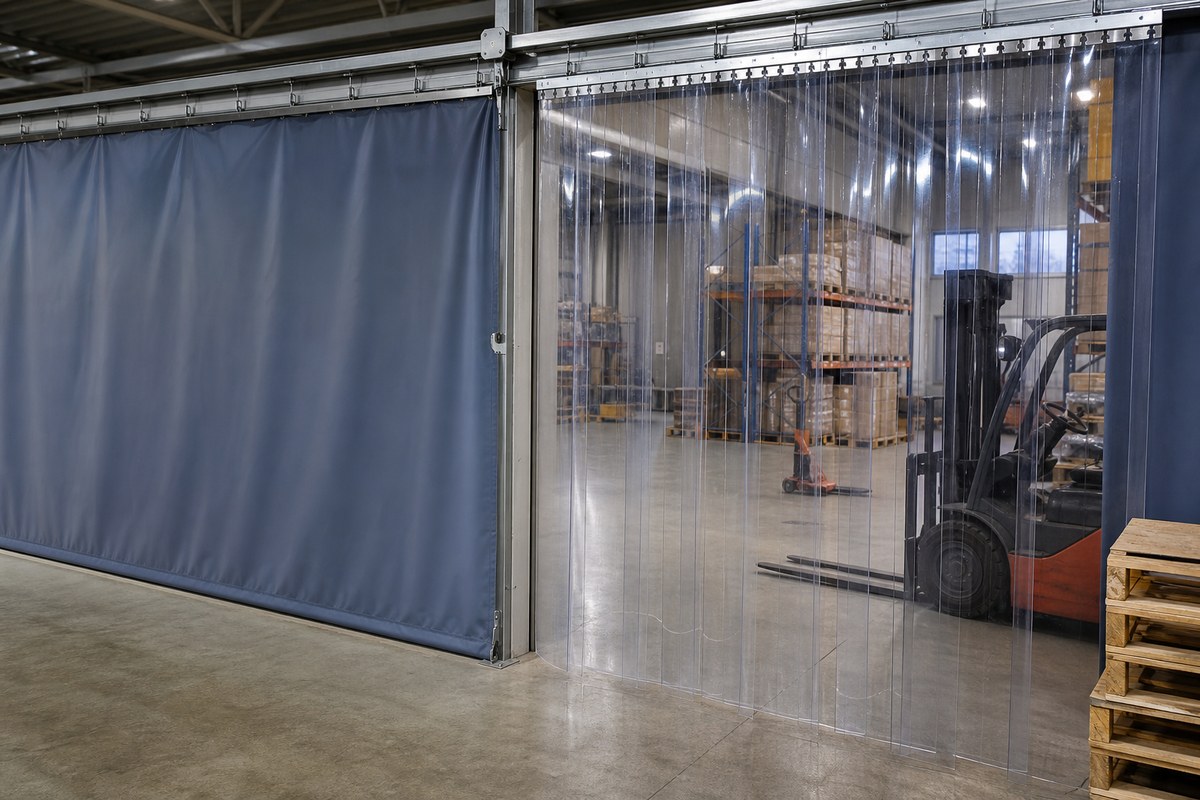
PVC strip curtains are better when people, pallet trucks, carts, or forklifts pass through the opening many times each day. The overlapping strips close after movement, so the barrier keeps working without asking workers to open and close a panel each time. For this reason, strip curtains are common at warehouse passages, cold-area entrances, and production transitions.
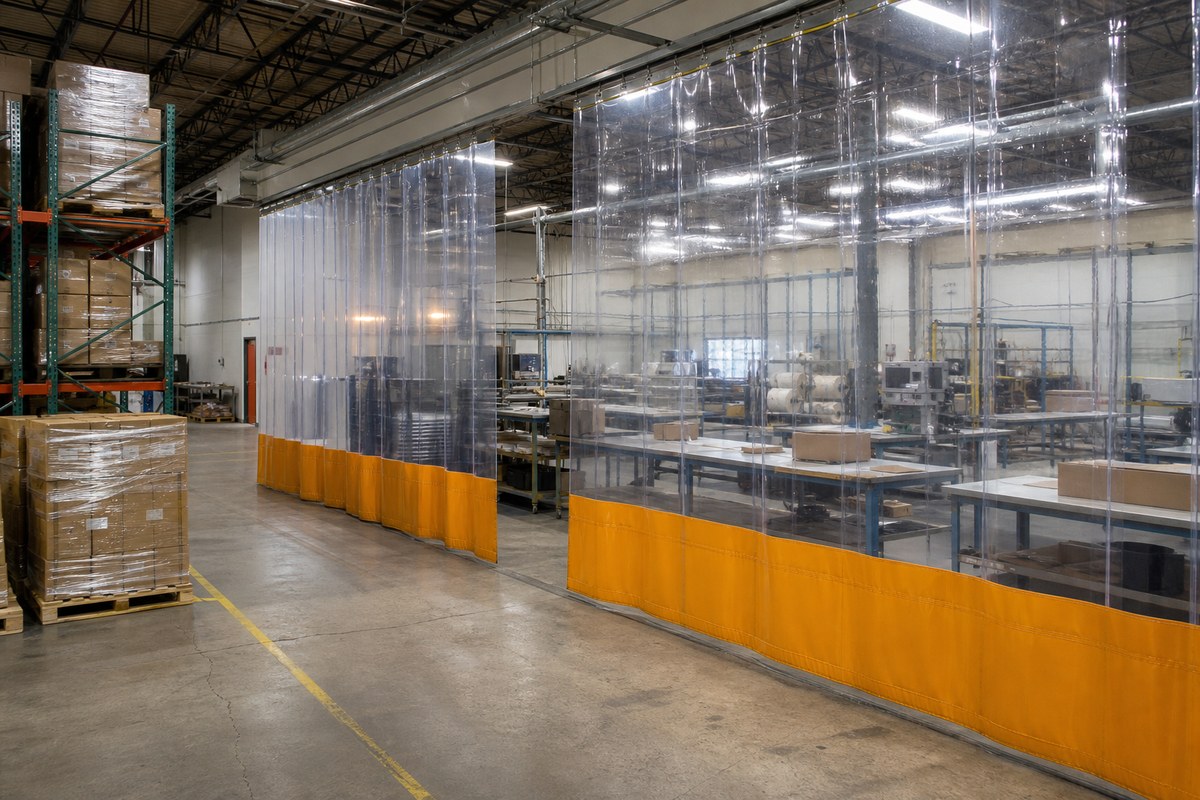
Some projects need both formats. A wide zone may use full divider panels on both sides and a clear strip section at the traffic opening. If the facility handles different workflows during the year, a hybrid design can make the divider more useful than one fixed curtain type.
For access openings, the buyer should confirm the highest load, the widest pallet, and the actual turning path, not only the doorway width. I have seen projects where the curtain size was correct on paper, but the forklift mast or pallet corner hit the strips every day. In those cases, the repair cost comes from the access plan, not from the curtain material itself.
| Workspace condition | Recommended curtain direction | Specification note |
|---|---|---|
| Frequent forklift or pallet movement | PVC strip curtain or clear access section | Confirm opening height, strip overlap, visibility, and replacement strips |
| Dust, packing, or process separation | Full PVC coated divider panel | Check side gaps, bottom clearance, cleaning method, and edge reinforcement |
| Changing production layout | Sliding or modular curtain system | Plan track path, panel width, and parking space for opened curtains |
| Hot work or welding nearby | Dedicated safety curtain direction | Confirm flame-retardant requirement and application standard before production |
III. Match Material and Visibility to the Working Environment
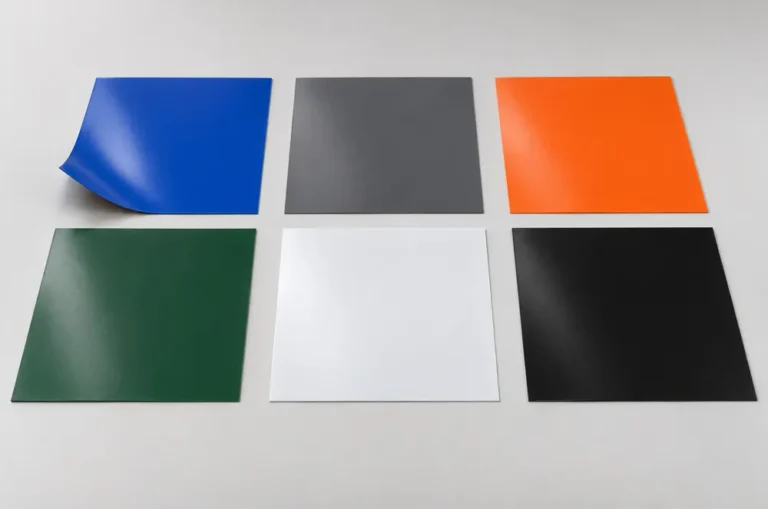
Material choice should follow the working environment, not only the lowest price or the thickest sheet. PVC coated fabric is often used because it can combine water resistance, flexible handling, reinforced polyester base fabric, weldability, and custom color options. Transparent reinforced PVC fabric is useful when the buyer wants visibility across the divider.
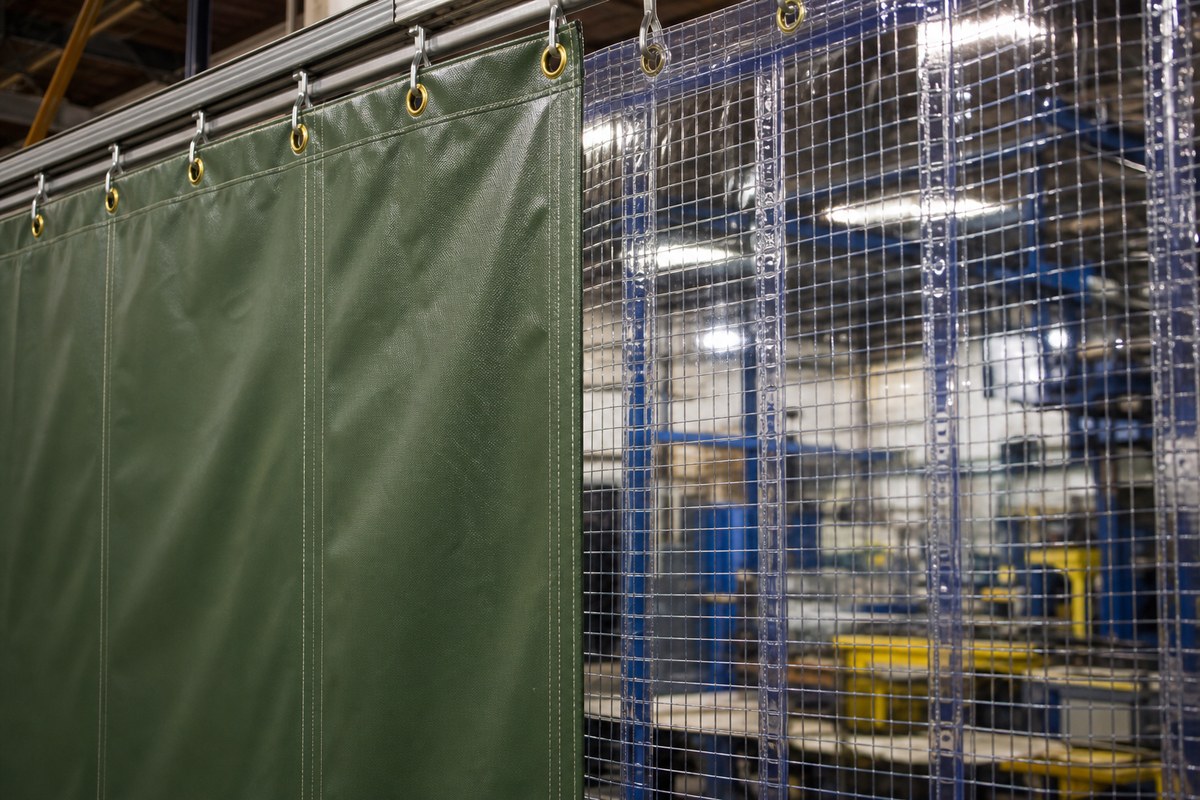
For warehouse zoning, buyers may compare this article with warehouse curtains, especially when temperature control, storage zoning, and logistics flow are the main concerns. If the main issue is airborne dust from cutting, packing, or material handling, the project may be closer to dust control curtains.
Visibility is also a safety decision. Clear panels or strip sections can help forklift drivers and workers see movement on the other side. Opaque curtains can be better for visual separation, privacy, or areas where light control matters. In cold areas, flexibility at lower temperatures should be confirmed. In areas near sparks or hot work, buyers should review a dedicated welding curtains direction instead of treating a standard divider as a safety screen.
Do not judge the material only by one thickness number. For PVC coated fabric, the base fabric, coating adhesion, welding compatibility, edge reinforcement, and expected cleaning method all affect the final result. If the curtain will be pulled often, I pay more attention to the reinforced header and hanging points than to the center panel alone.
For transparent reinforced PVC, the buyer should decide how much clarity is actually needed. Full visibility helps traffic safety, but it also shows the work area behind the divider. Semi-clear sections or mixed opaque panels can be better when the goal is controlled visibility rather than a completely open view.
IV. Installation Details Decide Daily Performance
A well-made curtain can still perform badly if the installation details are wrong. I check track height, opening width, panel width, reinforced header, hanging rings, side fixing points, bottom clearance, and how the curtain will park when opened. These details decide whether workers will actually use the system every day.
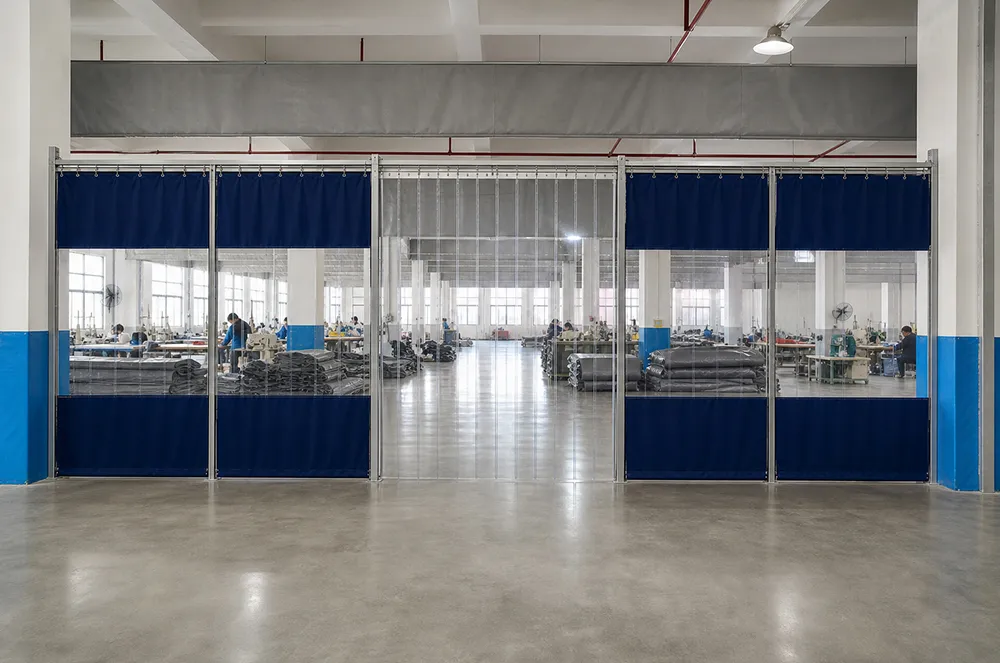
Measure the building before confirming production. Ceiling beams, lights, pipes, sprinkler lines, loading doors, machines, forklifts, and emergency exits can all affect the curtain design. If a buyer sends only the finished curtain size without the building condition, the factory can make the panel correctly but the installation team may still face problems on site.
Large orders also need packing logic. Long panels should be folded or rolled in a way that reduces deep creasing. If several zones are included in one shipment, labels by zone, panel number, or opening position can reduce installation confusion.
Maintenance access should be planned at the same time. If one panel is likely to be damaged by carts, it should be replaceable without dismantling the whole curtain line. For sliding systems, the rail path should allow cleaning, inspection, and roller replacement. These details are easy to ignore during quotation, but they decide whether the divider is convenient after installation.
V. Confirm Samples, Drawings, and Production Details Before Bulk Orders
For custom industrial divider curtains, a material swatch is useful, but it is not enough. A finished sample, small trial panel, or detailed production drawing gives the buyer a better view of edge reinforcement, hanging method, panel joining, strip overlap, hardware spacing, and cleaning surface.
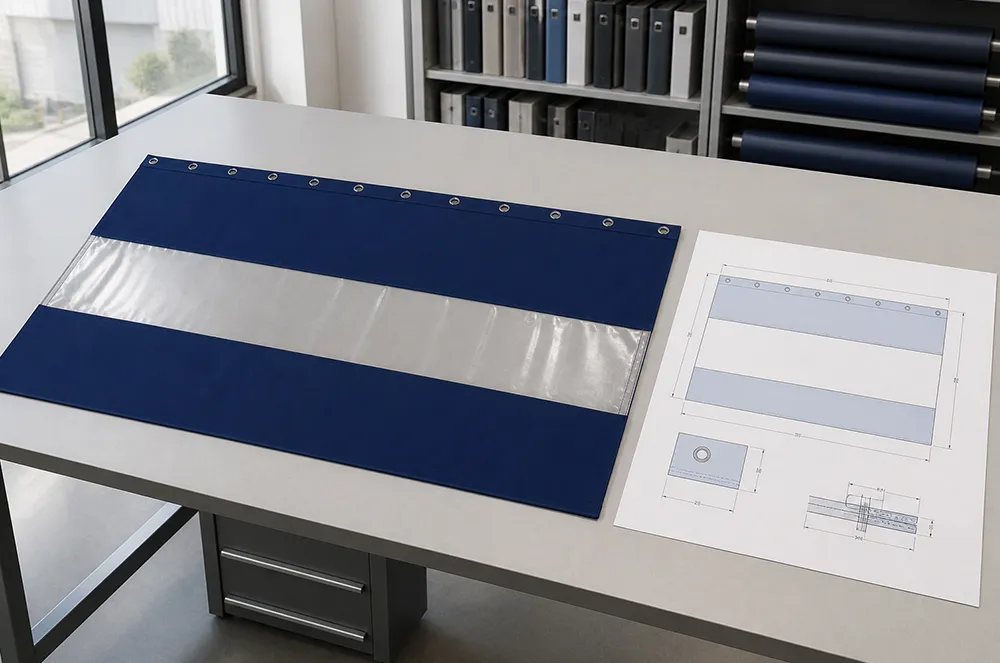
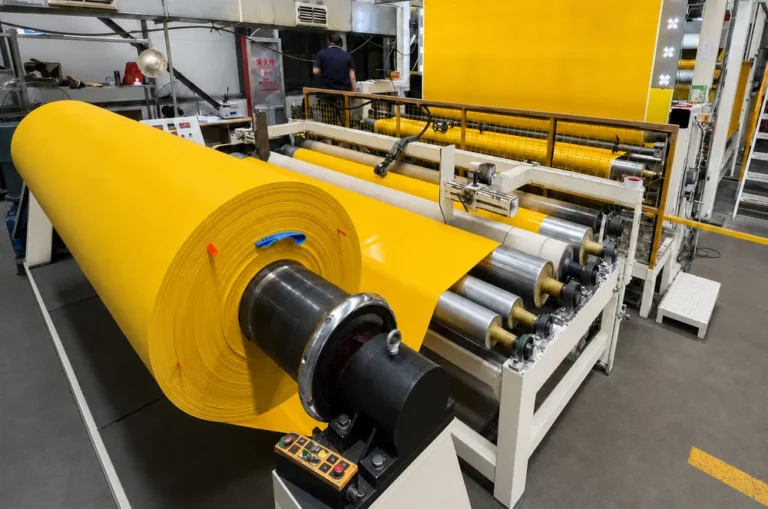
LonaTarp supports custom production through PVC coated fabric selection, cutting, welding, sewing, grommets, hanging details, printing, accessories, and packing. For B2B custom production, our normal MOQ is 5,000 square meters, so the specification should be confirmed before bulk work starts.
A practical inquiry should include the workspace layout, zone size, required height, access points, traffic type, environmental-control target, visibility requirement, cleaning requirement, flame-retardant direction if needed, and expected quantity. With those details, industrial divider curtains can become a flexible space-management tool instead of just a sheet hanging from a rail.
Before production, I prefer to confirm one sample panel or at least a clear drawing with the buyer. The drawing should show finished size, seam direction, hanging spacing, edge reinforcement, bottom design, hardware type, and packing marks. This gives both sides a practical reference for inspection, especially when several curtain zones are produced in one order.
The final specification should also state what the curtain is not expected to do. A standard divider curtain should not be sold as a welding safety screen, a fire barrier, or a sealed cleanroom wall unless the material, test method, installation design, and project requirement support that claim. Clear limits make the order safer for the buyer and easier for the factory to control.