Industrial dust control curtains help a facility keep airborne particles closer to the process that creates them. They are useful around cutting, sanding, loading, mixing, packing, renovation, and material-transfer areas where dust can move into cleaner storage, assembly, or inspection zones.
I do not treat a dust curtain as a stand-alone cure for every dust problem. Extraction, filtration, cleaning routines, and worker safety measures still matter. The value of dust control curtains is that they create a physical boundary around the dust path, so the rest of the system can work with less uncontrolled air movement.
I. Trace the Dust Path Before Choosing the Curtain
The first step is to find where dust starts and where it travels after the process begins. In an open workshop, dust rarely stays inside the square marked on a floor plan. Door movement, fans, forklift traffic, heat from equipment, or negative pressure from extraction equipment can pull particles across the building.
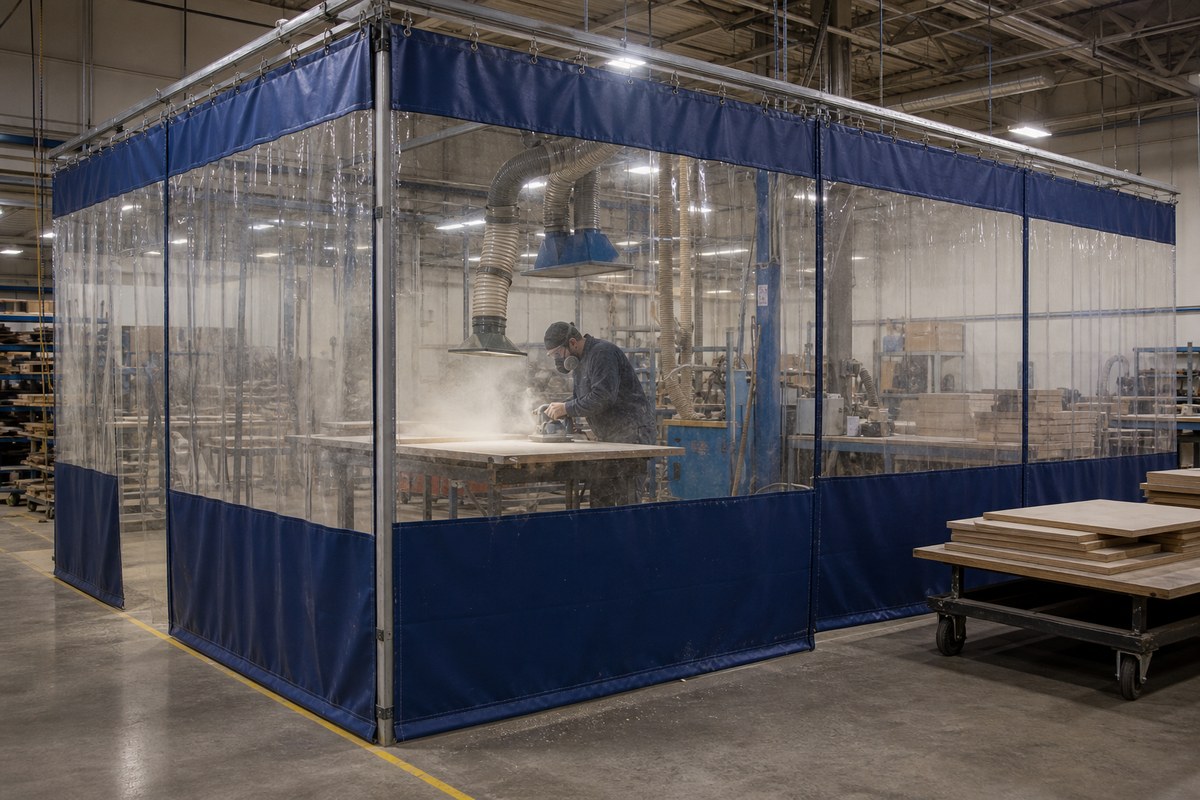
That is why I ask buyers to mark the dust source, nearby clean zones, traffic openings, doors, fans, and extraction points before discussing fabric weight. A curtain placed only for visual separation may look correct, but still allow dust to move through bottom gaps, side openings, or high-traffic access points.
For example, a grinding cell beside packaging needs different planning from a temporary renovation zone inside a warehouse. A bagging or powder-handling area may need better overlap and easier cleaning. A storage zone near loading doors may need a curtain that limits dust movement while still allowing pallets to pass without damaging the panel.
The buyer should also separate visible dust from fine airborne particles. Large chips or heavy debris fall quickly and may only need local separation. Fine powder can travel farther, settle on products, and return during cleaning. When the dust is fine, the curtain layout should be discussed together with ventilation direction and cleaning frequency, not only finished curtain size.
II. Select Material by Cleaning, Visibility, and Contact
Dust control curtain material should match how the curtain will be used every day. A fixed dust barrier can be specified differently from a curtain that workers pull open many times per shift. Clear PVC helps supervisors and forklift drivers see through the barrier, while colored PVC coated fabric can be better when stronger visual separation or privacy is required.
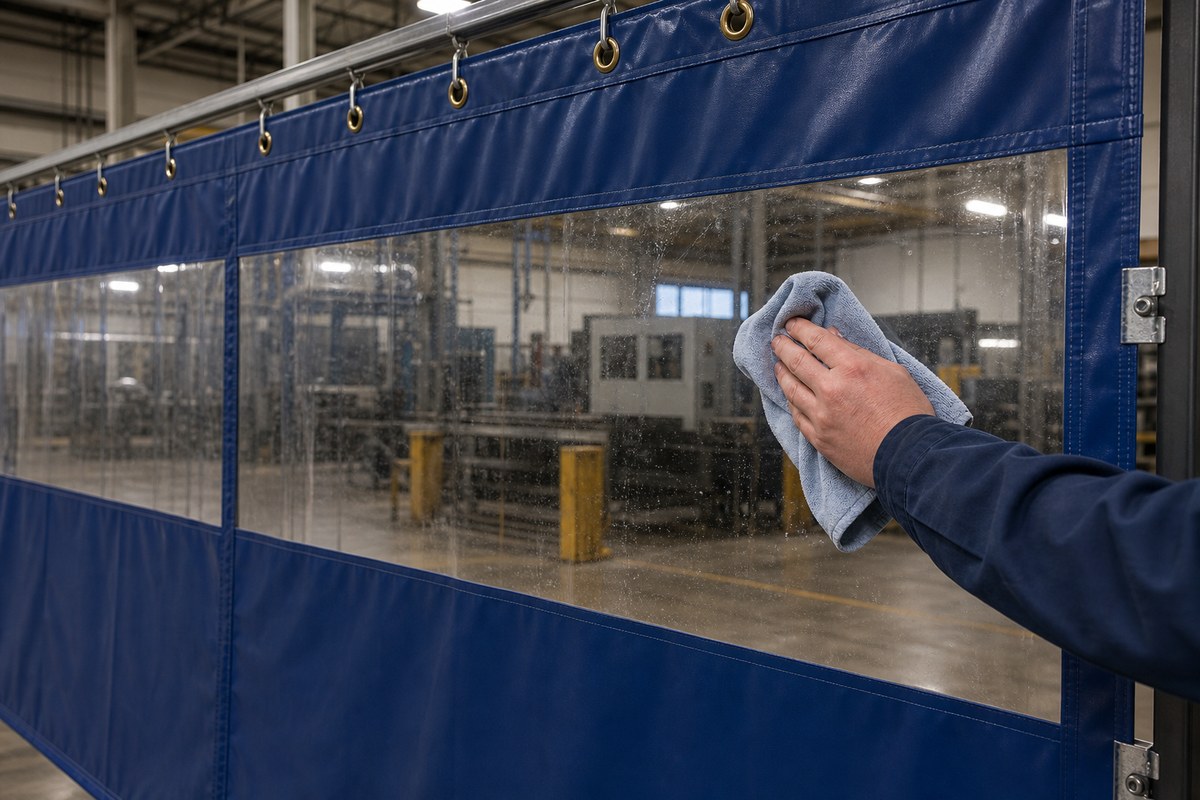
In dusty areas, the cleaning method matters as much as the first appearance. Smooth PVC surfaces are easier to wipe than rougher surfaces. If the curtain is near abrasive dust, carts, pallets, or repeated hand contact, I pay close attention to reinforced edges, hanging points, and repairable sections. A cleanable surface is useful, but only if the hanging design also survives daily movement.
Buyers who compare industrial curtains with broader vinyl tarps should remember that the finished system is different from a simple cover. The material must work with the track, overlap, strip layout, welded seams, grommet spacing, and cleaning schedule. A heavier sheet alone does not guarantee better dust control.
For clear PVC sections, visibility is useful only when the surface can stay reasonably clean. In heavy dust, transparent panels may need more frequent wiping, or they may become cloudy and lose the safety advantage. For colored PVC coated fabric, buyers should check whether workers still need warning lines, viewing windows, or marked access points.
If the curtain is moved often, flexibility and edge stress become important. A stiff material may hang flat but crack or crease under repeated movement. A softer material may handle daily pulling better, but it still needs reinforced headers and stable hanging hardware. I usually treat the top edge as the first area to inspect because the curtain’s weight and movement both concentrate there.
| Dust-control condition | Better curtain direction | Buyer check |
|---|---|---|
| Light dust with visibility required | Clear PVC curtain or transparent strip section | Confirm clarity, overlap, wiping method, and scratch risk |
| Abrasive dust or frequent contact | Reinforced PVC coated fabric panel | Check edge reinforcement, hanging stress, and replaceable sections |
| Ventilation must continue | Solid panel with planned openings or mesh-assisted section | Confirm airflow direction before production |
| Temporary renovation or changing layout | Modular curtain sections on track or removable supports | Confirm reuse plan, labels, packing, and installation sequence |
III. Coordinate Layout, Access, and Airflow
The same curtain material can perform very differently depending on layout. A panel that stops too far above the floor may still allow dust to escape. A curtain with too little overlap can open gaps when air pressure changes. A wide opening for forklift access may need strip curtains, sliding panels, or a reinforced pull section.
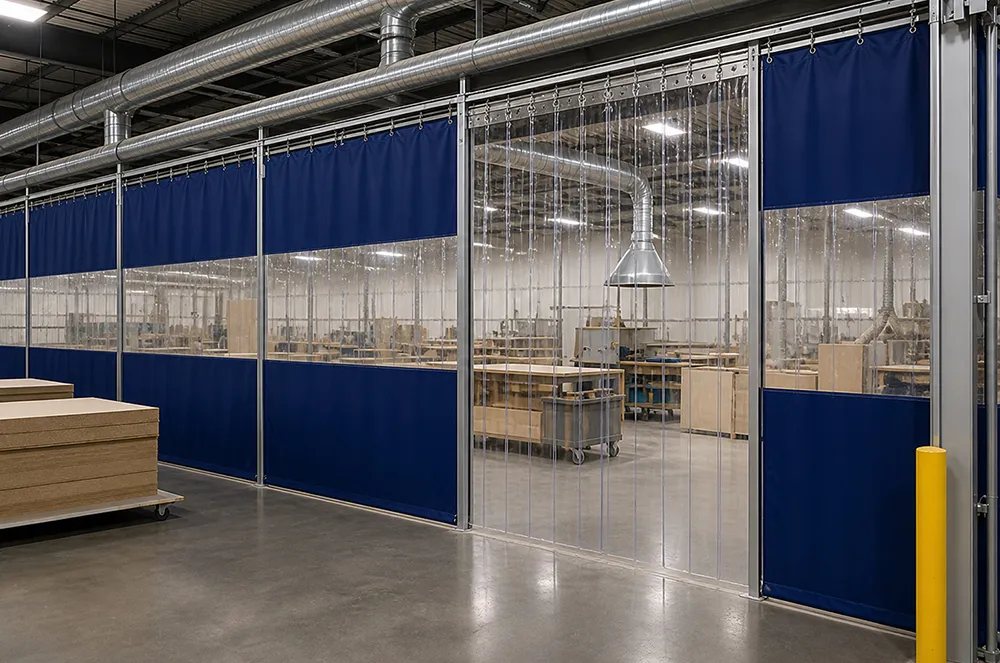
Dust curtains often work together with extraction, negative pressure, or ventilation equipment. The curtain should support that airflow path, not fight it. If a curtain blocks make-up air in the wrong place, dust collection may become less efficient. If it guides air toward extraction points, the whole system can become more stable.
Temporary construction and renovation work brings another problem: the dusty area may move as the project changes. In that case, buyers may also compare broader construction tarps for jobsite protection, but an indoor dust-control curtain still needs more attention to access points, sealing edges, and cleaning routines.
I also check whether the curtain will be opened by hand, pushed by carts, or crossed by forklifts. Frequent access changes the weak points. The failure often starts at the hanging header, strip overlap, side fixing, or bottom edge rather than in the middle of the material.
For airflow-sensitive areas, a fully sealed curtain is not always the best answer. Some projects need a controlled opening, a strip section, or a mesh-assisted area so the extraction system can keep moving air in the intended direction. The buyer should avoid copying a curtain design from another workshop without checking whether the dust source, fan position, and door movement are the same.
Temporary projects need a different mindset. During renovation or construction inside an operating building, the curtain may move from one zone to another. In that case, modular panels, clear labels, reusable hanging points, and simple packing can save more time than a single large fixed curtain that is difficult to reinstall.
IV. Confirm Production Details and Maintenance Before Bulk Orders
Before custom production, the buyer should confirm finished height, finished width, overlap, track type, hanging hardware, side fixing, bottom clearance, cleaning method, and access frequency. If the curtain is part of a larger facility upgrade, panel numbers and packing labels should match the installation plan.
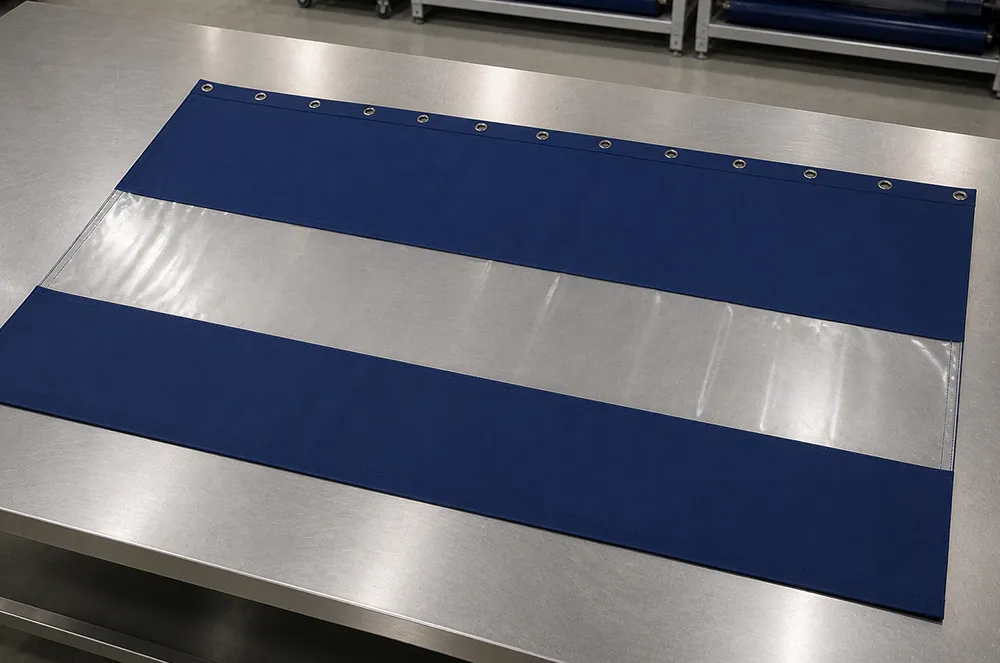
LonaTarp can support custom dust curtain production through PVC coated fabric selection, cutting, welding, sewing, reinforced edges, grommets, hanging details, accessories, and packing. For B2B custom production, our normal MOQ is 5,000 square meters, so sample confirmation or a trial panel is useful before a large facility order.
A practical inquiry should include the dust source, facility layout, curtain height, opening width, access method, airflow target, cleaning requirement, expected movement frequency, visibility requirement, and expected order quantity. If the order has strict inspection needs, the buyer can also review our quality control process before confirming the production standard.
Maintenance planning should be part of the purchase decision. A dust curtain near abrasive work should be easy to inspect, clean, and repair. If one section is likely to be hit by carts or loaded pallets, it should be replaceable without removing the whole curtain line. With those details confirmed, industrial dust control curtains become a practical containment tool rather than just another partition in the building.
For sample confirmation, I prefer to check more than color and thickness. A useful sample should show the edge finish, hanging method, seam direction, transparency level if required, and how the material reacts to the buyer’s normal cleaning process. If the order includes several zones, the drawing should name each zone and match the packing marks so the installation team can identify panels quickly.
The final specification should also define performance limits. A dust curtain can reduce uncontrolled particle movement, but it should not be described as a sealed cleanroom wall or a replacement for extraction unless the full system is engineered that way. Clear limits protect the buyer, the installer, and the factory from unrealistic expectations.