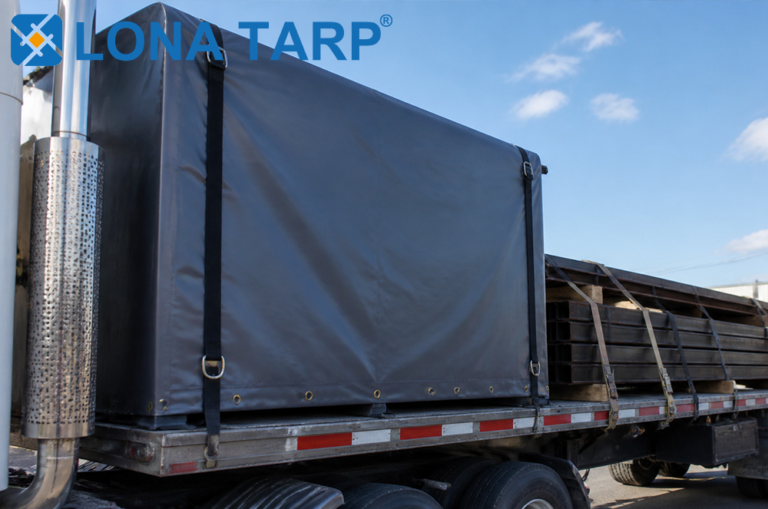
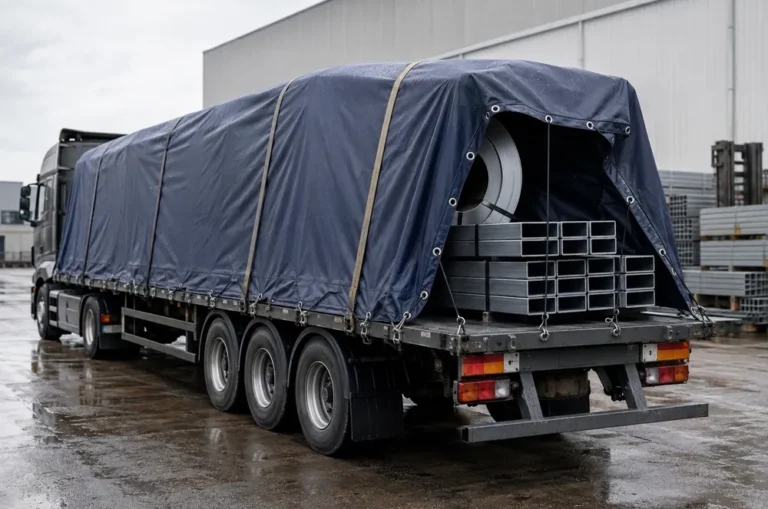
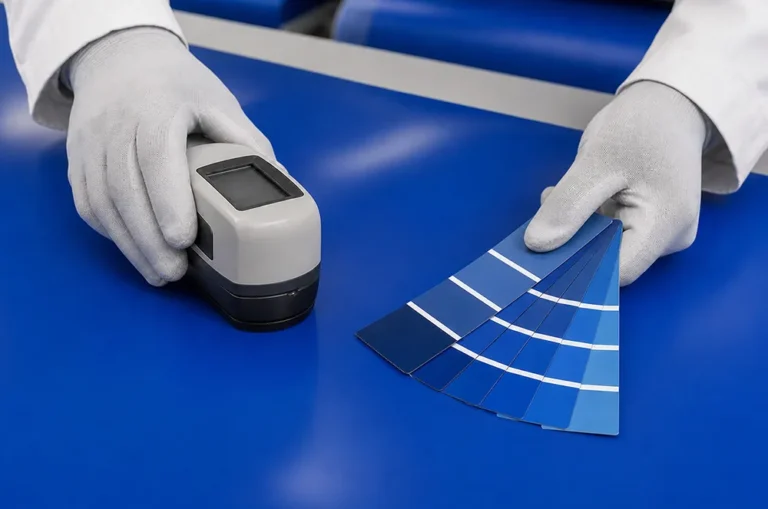
Protecting baseball equipment and facilities outdoors is not only about covering a field before rain. For many schools, clubs, training centers, and municipal venues, the harder problem is protecting dugouts, benches, player gear, storage cages, practice equipment, and steel or wood structures that stay outside through sun, rain, wind, dust, and seasonal temperature changes.
When I review a sports facility cover project, I first separate the assets into two groups: surfaces that affect play and assets that support daily operation. This article focuses on the second group. A cover that works for clay infield protection may not be the right answer for a dugout roof, a batting cage storage zone, or equipment racks beside a training area. That is why baseball facility protection belongs in the wider Sports & Outdoors application path, but still needs its own specification discussion.
I. Start With What The Baseball Facility Needs To Protect
The first step is to identify the protected asset, not the tarp material. A baseball facility may need cover protection for player benches, wooden bats, leather gloves, helmets, field maintenance tools, pitching machines, turf rolls, movable screens, dugout storage, or exposed structural frames. Each item reacts differently to water, UV, dust, heat, and repeated handling.
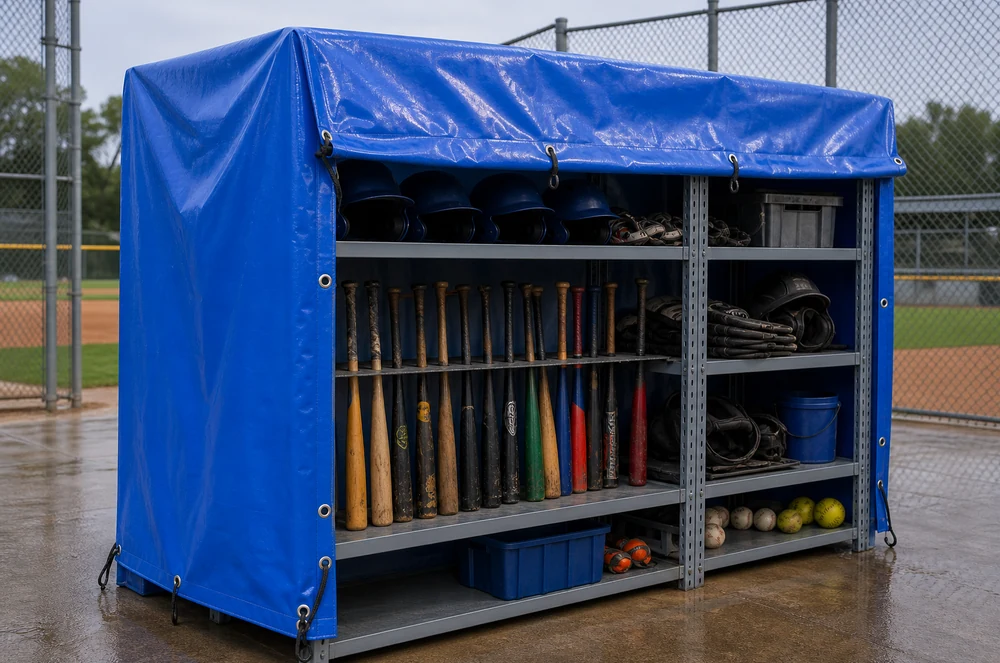
Baseball equipment covers should prevent direct rain contact, reduce dust accumulation, and limit sun exposure without making daily access difficult. If workers must uncover and recover gear every day, the finished cover should be flexible enough to handle, easy to fold, and reinforced where hands pull the material. A stiff or oversized cover may look strong on paper but fail in daily use because the crew avoids using it correctly.
For buyers comparing general equipment covers with baseball-specific covers, the difference is usually in access and shape. A machinery cover may stay in place for weeks, but baseball gear may be handled several times during training, games, or maintenance. That means the cover should not only block weather; it should let staff reach bats, balls, helmets, screens, and tools without fighting a heavy sheet every time.
The covered shape also matters. A bench line needs a different layout from a rectangular storage cage. A dugout opening may need side panels, roll-up access, or tension points. Equipment racks may need smaller fitted covers that do not drag on the ground. Before production, I prefer to confirm the protected dimensions, the opening direction, the storage routine, and the surfaces that may rub against the cover.
Some buyers also compare this topic with baseball field covers. That product family is related, but the purpose is different. Field covers mainly protect playing surfaces. Facility and equipment covers protect assets, structures, and operational areas around the diamond.
II. Weather Exposure Damages Gear, Dugouts, And Support Structures Differently
Outdoor baseball facilities face more than one weather problem. Rain can wet stored gear and accelerate corrosion. UV can fade coatings and make some plastics brittle. Wind can pull at weak edges or lift loose panels. Humidity can encourage mildew odor in shaded storage areas, especially when covers are folded or packed while wet.
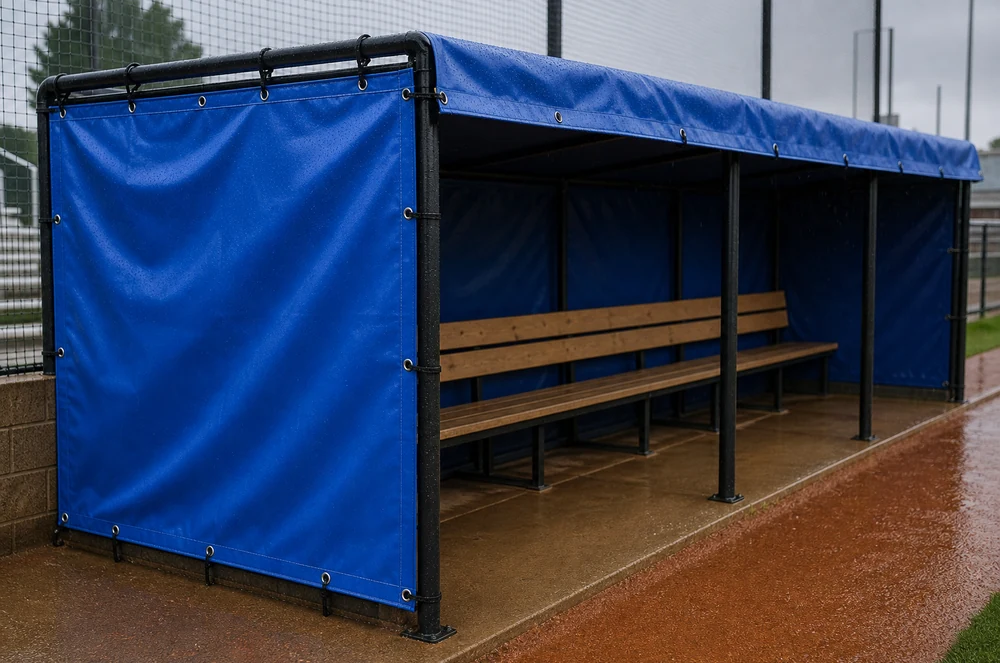
Dugout covers need special attention because dugouts combine people, equipment, and structure in one area. A cover used around player areas should provide shade, shed rain, and stay stable under wind. If the cover traps too much heat or blocks airflow completely, it may protect equipment but make the player area uncomfortable. If it is too open, rain can still reach benches and gear bags.
Drainage should also be planned before installation. A flat cover above a dugout or storage area may collect water and add weight to the frame. A small slope, controlled overhang, or planned water exit can protect the cover itself as well as the equipment below it. This is a simple detail, but it often separates a workable facility cover from one that becomes hard to maintain after the first storm season.
Structural parts create another risk. Steel frames, screws, brackets, and bench supports may be hidden under the cover, but they still create contact points. A tarp rubbing against a sharp bracket can fail faster than the middle of the panel. A good layout usually reinforces corners, frame-contact zones, tie-down points, and edges that workers pull during installation.
For outdoor use, UV resistance and weather resistance should be discussed as specification choices, not as a simple promise. The result depends on fabric construction, PVC formula, color, surface treatment, tension, drainage, cleaning, and storage. If a cover is expected to remain outside for long periods, those details should be confirmed before a bulk order.
III. PVC Material Helps When Waterproofing, Welding, And Cleaning Matter
For many sports facility covers,
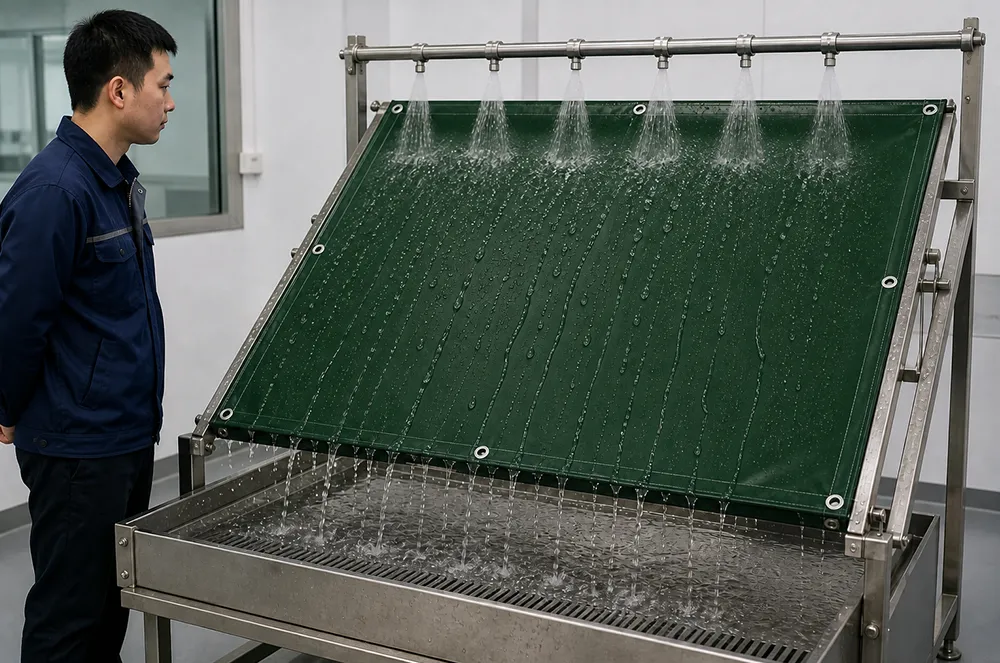
PVC tarpaulin is considered because it combines a polyester base fabric with a waterproof PVC coating. The base fabric carries tension, while the coating provides water resistance, surface protection, color, and cleanability. This structure is useful when the finished cover must be welded, hemmed, fitted with eyelets, and cleaned after dusty or wet use.
Material weight should follow the job. A small equipment cover that workers fold every day may need moderate weight and good flexibility. A larger dugout or shelter panel may need stronger base fabric, reinforced hems, and stable grommet spacing. A cover exposed to frequent pulling should not rely only on the center fabric; edge design is often the first place to check.
PE tarps can be useful for temporary or low-cost protection, especially when the buyer expects short use and easy replacement. For repeated outdoor facility use, PVC coated fabric usually gives more options for welded seams, reinforced edges, cleaner surfaces, and custom fabrication. The right choice depends on exposure time, handling frequency, and the value of the asset being protected.
Fire-retardant or anti-mildew options may be relevant in semi-enclosed public areas or humid storage zones. These should be confirmed by the required standard, test method, and intended use. I avoid treating “fireproof” or “weatherproof” as casual words because different projects need different compliance evidence.
If the cover will be installed near spectators, schools, or public sports areas, the buyer should also confirm whether local rules require flame-retardant documentation or specific hardware safety details. If the cover is mainly for equipment storage away from public traffic, flexibility, cleanability, and edge durability may be more important than a higher-cost safety grade. The order should follow the actual risk, not a general label.
IV. Custom Size, Edge Reinforcement, And Hardware Decide Daily Use
A baseball facility cover can fail even when the sheet material is suitable. The common problem is that the finished cover does not match how the facility crew actually uses it. Corners are pulled in the wrong direction, grommets are spaced for a different frame, water pools in the middle, or the cover is too large to fold without dragging across concrete.
This is where custom-made tarps help. A buyer can confirm size, shape, hem width, grommet spacing, tie-down method, roll-up access, color, surface finish, and reinforcement zones before production. For dugouts and equipment areas, drawings or clear photos with measurements are often more useful than a general size request.
| Facility area | Cover detail to confirm | Why it matters |
|---|---|---|
| Dugout opening | Side coverage, airflow, tie-down points | Protects people and gear without trapping too much heat |
| Equipment racks | Fitted size, access flap, reinforced pull zones | Makes daily use easier and reduces dragging damage |
| Steel or wood frames | Contact-point reinforcement and smooth edges | Reduces rubbing where the cover touches brackets or corners |
| Outdoor storage cage | Drainage slope, bottom clearance, fastening method | Prevents water pooling and keeps the cover from sitting in mud |
Grommet material and spacing should match the frame or anchor method. If a facility is open to strong wind, the layout may need closer spacing, stronger hems, or additional tie-down routes. If workers must remove the cover often, handle position and fold direction become part of the specification, not an afterthought.
V. Maintenance Planning Starts Before The Cover Is Produced
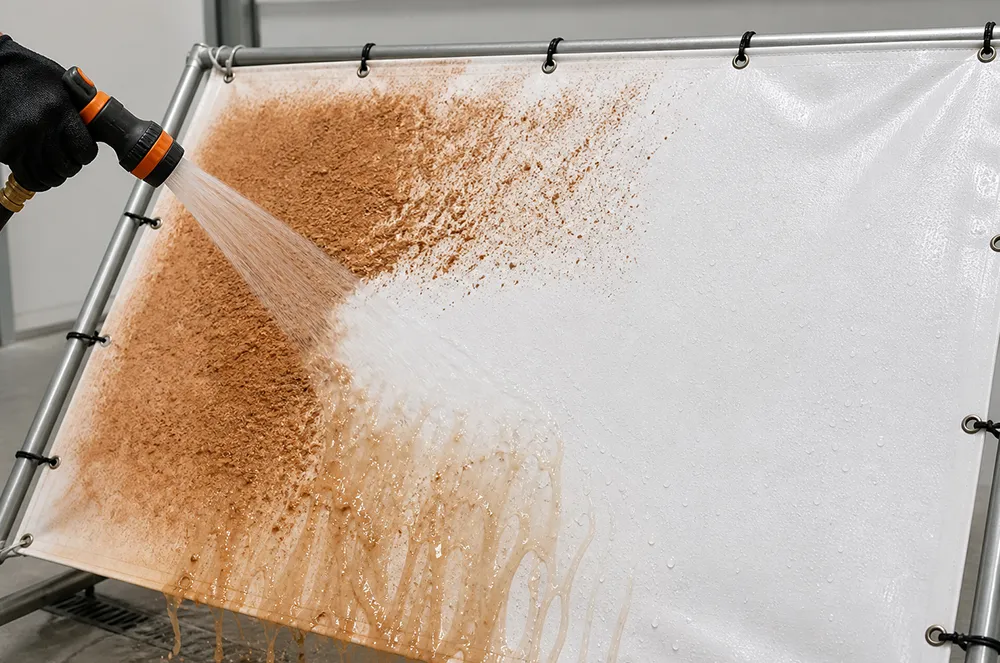
A cover lasts longer when the facility has a practical maintenance routine. Workers should be able to remove loose clay dust, rinse dirt from the surface, dry the cover when possible, and store it without sharp tools or heavy objects pressing into the coating. If the cover will stay installed season after season, inspection points should be clear from the beginning.
Factory quality control helps reduce avoidable problems before shipment. We check finished size, seam quality, welding or sewing position, edge reinforcement, eyelet spacing, and packing condition. For custom baseball facility covers, I also like to confirm which edge will be pulled most often because that is where extra reinforcement can make a real difference.
For B2B orders, samples are useful when the buyer wants to compare hand feel, flexibility, surface finish, color, and edge construction before bulk production. LonaTarp works on a made-to-order basis, with MOQ normally starting from 5,000 square meters, so confirming the specification early is better than correcting a cover after it reaches the facility.
The best outdoor baseball facility cover is not always the thickest one. It is the cover that protects the correct asset, fits the structure, drains water, handles wind, folds with the crew’s routine, and uses reinforcement where the cover will actually be stressed.