Container tarps are heavy-duty covers used to protect containers, containerized cargo, open-top loads, storage boxes, and transport equipment from rain, dust, sunlight, road spray, and temporary outdoor exposure. In B2B use, they are not simple sheets. They are working covers that must match container dimensions, load shape, tie-down points, handling frequency, and weather risk.
I usually treat a container tarp as part of a logistics protection system. The tarp may cover the top of an open container, protect cargo during yard storage, shield a temporary container roof, or work as a replacement cover for repeated transport tasks. Each use changes the fabric, reinforcement, and fastening design.
The following sections explain container tarps from a logistics purchasing angle: what they protect, how they differ from general tarps, which materials make sense, and what details should be confirmed before production.
I. What Container Tarps Are Used For
A container tarp creates a flexible protective layer over a container or container-related load. It can cover open-top containers, cargo waiting in a yard, temporary container storage, equipment loaded into shipping containers, or products that need additional weather protection before final transport.
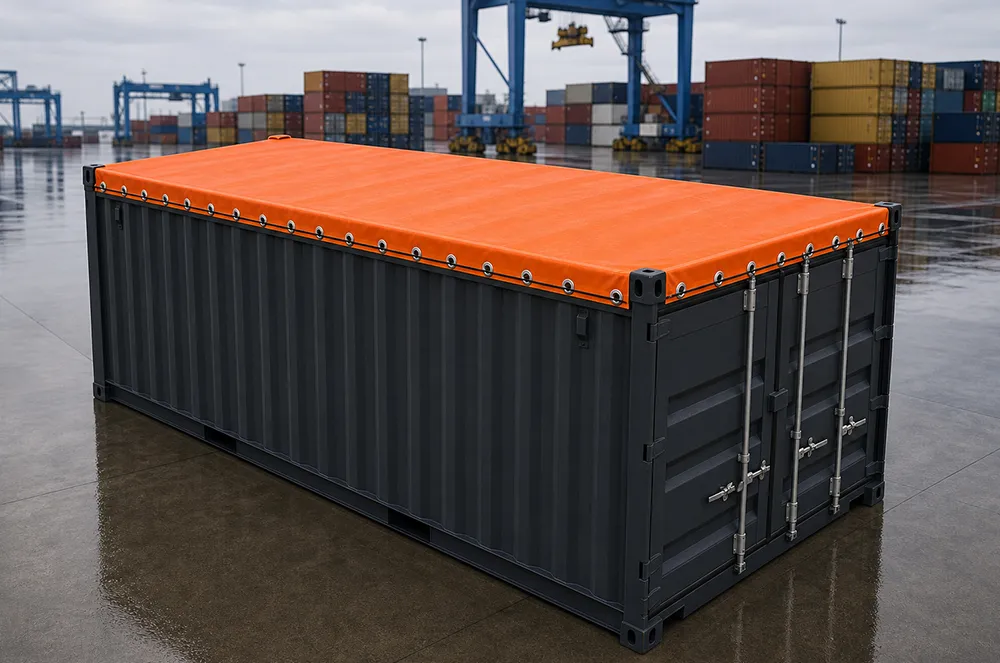
The main purpose is controlled protection. A container tarp may need to keep rain away, reduce dust, protect cargo from UV exposure, or prevent loose materials from shifting during storage. Some buyers use tarps only for short-term yard coverage. Others need covers that are folded, moved, and reused many times.
For buyers who already work with container covers, the key difference is usually the project detail. One order may need finished tarps with grommets and reinforced corners. Another may need roll material for local fabrication. The product name alone does not define the correct specification.
Container tarps are also useful when buyers need temporary protection before a permanent transport decision is made. Cargo may arrive at a yard before the next truck, vessel, or project site is ready. In that gap, a well-fitted tarp can reduce damage risk without forcing the buyer to move cargo into indoor storage.
For leasing companies and logistics contractors, consistency is important. If the same tarp size is used across many container units, the team can store, inspect, and replace covers more efficiently. If every cover is ordered with small undocumented differences, the warehouse team may waste time matching tarps to containers.
II. How Container Tarps Differ From General Tarps
A general tarp may cover many things, but a container tarp must usually follow fixed container dimensions and stronger fastening logic. Standard container sizes, corner castings, side rails, top edges, and cargo height all affect how the tarp is pulled and tied. If the cover is too tight, it may fail at the corners. If it is too loose, wind can lift it and create abrasion.
For transport and logistics work, the cover often needs to survive handling by different teams. A tarp may be installed by one crew, inspected by another, and removed at a different site. That is why I prefer clear edge design, visible reinforcement, and practical packing rather than a cover that only looks good when first unfolded.
In a broader transport and logistics tarpaulin plan, container tarps sit between vehicle covers, cargo covers, and storage covers. They are related to flatbed, pallet, and equipment covers, but the container shape and yard handling routine make the buying questions different.
Another difference is edge stress. Container tarps are often pulled across metal corners, rails, or stacked cargo. If the edge design is weak, the fabric may still look good in the center but fail at the fixing point. This is why I ask buyers where workers will pull the tarp, not only where the tarp will lie.
III. Material and Waterproofing Choices
Material choice should start with the exposure condition. If the container tarp is used outdoors for rain protection, waterproof PVC-coated fabric is usually a strong direction. If the tarp needs to handle heavy abrasion, higher fabric strength and reinforced contact areas may matter more than color or surface finish.
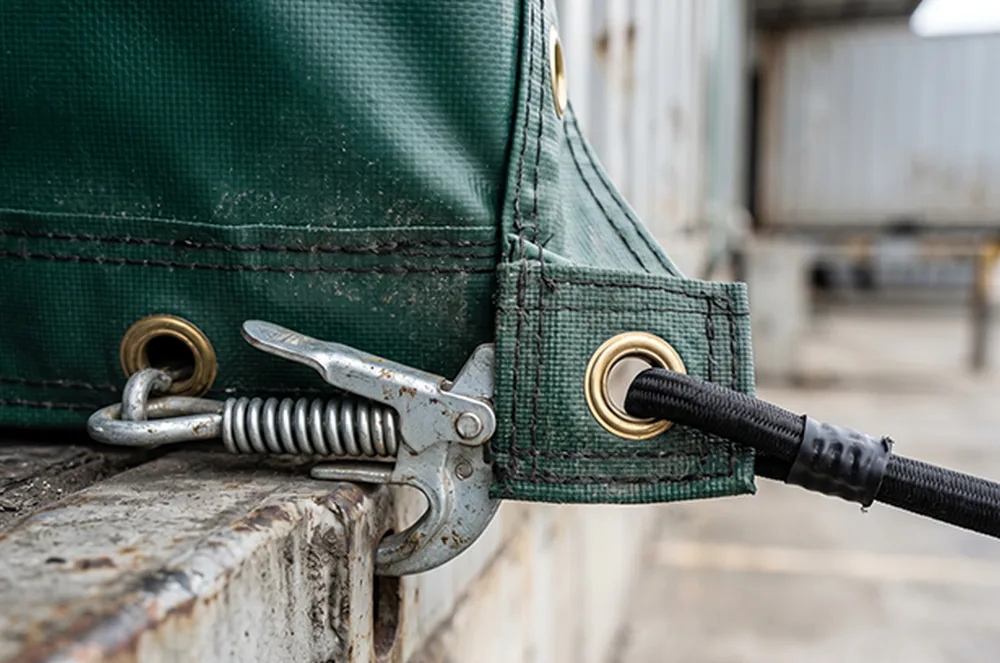
For buyers comparing options, vinyl tarps are a useful material reference because they explain waterproof PVC cover behavior. Container tarp orders, however, also need to consider lifting, pulling, folding, wind, and repeated stress around fixing points.
When rain protection is the main concern, the buyer may compare the tarp with a broader waterproof cover requirement. The difference is that container tarps often need more attention to large panel handling, edge load, and tiedown layout than small equipment covers.
UV exposure and temperature also matter. A cover used in a tropical port, inland storage yard, or winter transport route may age differently. If the buyer expects long outdoor service life, the material discussion should include coating quality, fabric base, color, and cleaning routine.
Color can also have a practical role. Dark colors may hide dirt better in a yard, while lighter colors may reduce heat absorption. For repeat B2B orders, color choice should be recorded with the material specification so the next batch matches the first approved production.
IV. Fit, Fastening, and Handling Details
Fit is one of the main reasons container tarp orders fail. A buyer may provide container length and width, but the actual tarp may need extra allowance for cargo height, edge fold, rope channel, grommet placement, or strap direction. The finished size should be based on how the tarp will sit on the container, not only the top surface dimension.
Fastening should match the container and the handling routine. Some covers use grommets and ropes. Others use straps, webbing, D-rings, buckles, or reinforced hems. The best choice depends on whether the tarp is installed for storage, road transfer, sea freight preparation, or temporary site coverage.
For high-stress use, heavy duty tarps may be the right direction. The buyer should not choose heavy fabric only because it sounds stronger. A very heavy tarp can be difficult to handle, especially when workers must fold and move large panels. The practical specification balances durability with daily operation.
If the buyer wants non-standard shapes or special edge details, the order should be treated like custom made tarps. Photos, drawings, old cover samples, fixing point locations, and packing requirements help the factory reduce misunderstanding before production.
Handling weight should be part of the decision. A thicker fabric can improve strength, but a very heavy container tarp may require more workers or lifting equipment. If the cover must be removed and refitted often, daily handling may be more important than maximum fabric weight.
Packaging should also match the use. A cover used by a port crew may need compact bundles and clear size identification. A distributor may need cartons or bales separated by model. Packing is not only a shipping detail; it affects whether the buyer can deploy the correct tarp quickly.
V. What Buyers Should Confirm Before Ordering
Before ordering container tarps, buyers should confirm container size, cargo height, tarp purpose, exposure period, material direction, finished size, edge design, grommet or strap spacing, color, packing method, and quantity. If the tarp is a replacement item, the old cover size and failure pattern are useful references.
For LonaTarp container tarp projects, the normal minimum order quantity is 5,000 square meters. Before bulk manufacturing, the buyer should approve a material swatch, finished sample, or first article when repeated sizes, hardware spacing, or multi-yard packing consistency are important.
Quality inspection should check more than length and color. For container tarps, I would inspect welding continuity, edge reinforcement, grommet strength, corner patches, fabric surface, packing condition, and whether the finished tarp matches the approved sample. Large covers can be expensive to correct after they arrive at the yard.
If the tarp will be reused, the buyer should keep a simple maintenance record. Note where tearing starts, which grommets carry the most stress, and whether workers find the cover too heavy or too loose. That feedback gives the next production batch a clearer improvement direction.
Incoming inspection should be practical. A buyer can check finished size, edge straightness, grommet spacing, corner reinforcement, weld appearance, fabric defects, and packing quantity before the covers enter yard use. This is faster than discovering a mismatch only after containers are already waiting outdoors.
For repeat logistics programs, I also suggest keeping one approved sample in storage. It gives the purchasing team, warehouse team, and factory the same physical reference for fabric hand feel, edge design, and hardware layout. That reference is useful when staff changes or when the next order is placed months later.
Container tarps work best when the buyer connects the cover design to the container shape, cargo type, weather exposure, fastening method, and daily handling routine. If those details are confirmed early, the finished cover is easier to install, easier to inspect, and easier to repeat for future logistics orders.
| Use condition | Specification focus | Buyer note |
|---|---|---|
| Open-top container | Waterproof fabric, edge allowance, tie-down plan | Confirm cargo height before sizing |
| Yard storage | UV resistance, handling weight, packing | Plan for repeated folding and movement |
| Replacement order | Old cover size, damage points, hardware map | Use old failure pattern to improve design |