Scaffold tarps are temporary protective covers fixed to scaffolding during construction, renovation, demolition, painting, cleaning, or facade repair. They help control dust, debris, rain, wind exposure, overspray, visibility, and site privacy around a working platform.
When I discuss scaffold tarps with contractors or distributors, I do not start with color or price. I first ask where the scaffold is located, how high the project is, how long the cover will stay in place, whether workers need airflow, and what the local wind condition looks like. A tarp that works well on a low interior renovation may become risky on an exposed exterior facade.
This guide explains scaffold tarps from a B2B buying and production point of view. It focuses on what the product does, how buyers choose between mesh and solid materials, what details affect fixing strength, and what should be confirmed before a custom order. LonaTarp works with made-to-order projects, so normal bulk production should be planned around a minimum order quantity of 5,000 square meters and sample confirmation before mass production.
I. What Scaffold Tarps Do on a Jobsite
A scaffold tarp creates a controlled working envelope around scaffolding. Depending on the material and installation method, it can reduce falling debris, limit dust movement, shield workers from rain, protect fresh facade work, or create a more private work zone in a busy street or industrial area.
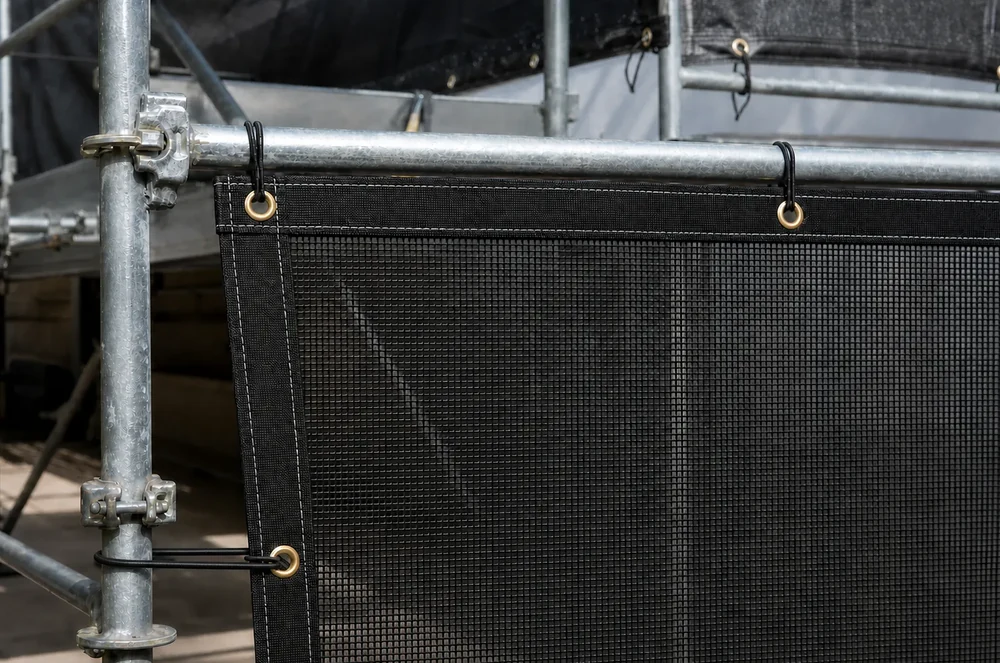
The word “scaffold tarp” can describe several products. Some buyers mean a breathable mesh screen. Others mean a solid PVC-coated cover for stronger weather protection. In some projects, the requirement is closer to a printed facade screen, temporary enclosure, or welding and grinding separation panel. The correct answer depends on the jobsite problem, not only the product name.
For industrial and construction tarpaulin projects, I usually separate the requirement into three questions: what must be blocked, what must still pass through, and what forces will pull on the tarp after installation. Dust, rain, wind, overspray, privacy, and debris are different problems. A single fabric cannot perform every function equally well.
Buyers should also think about project duration. Short renovation jobs may need easy installation and fast removal. Long facade projects need UV resistance, edge stability, and consistent fastening points. If the tarp will remain outdoors for months, material aging and repeated wind movement become just as important as the first installation appearance.
II. Mesh, Solid, and Coated Fabric Choices
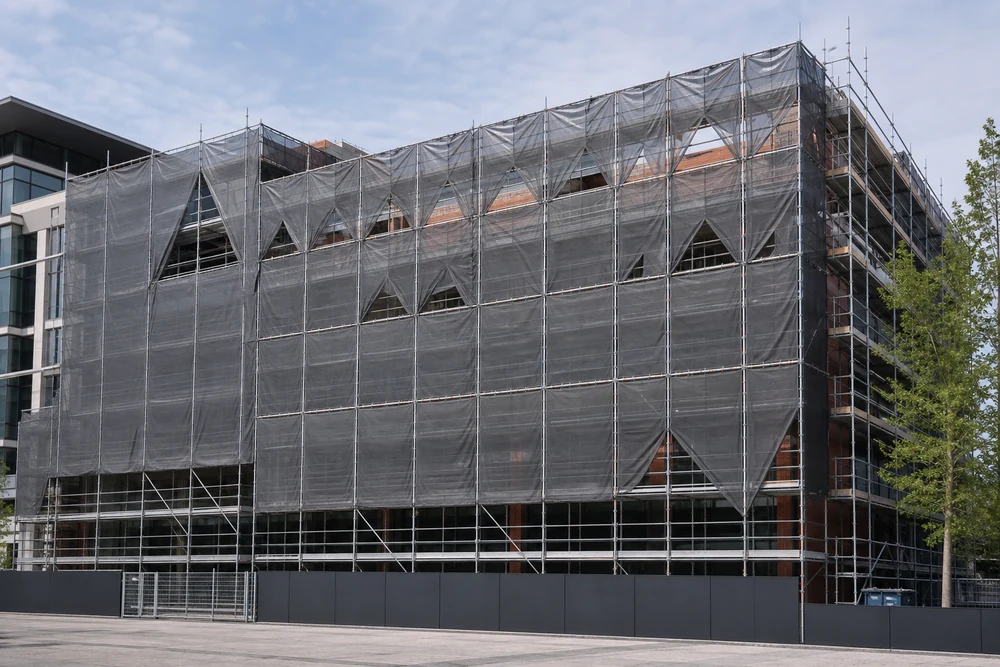
The main material decision is usually mesh versus solid cover. Mesh scaffold tarps allow more air to pass through, which can reduce wind load on exposed scaffolding. They are often used where dust control, visual screening, and partial debris containment matter, but full waterproofing is not the main requirement.
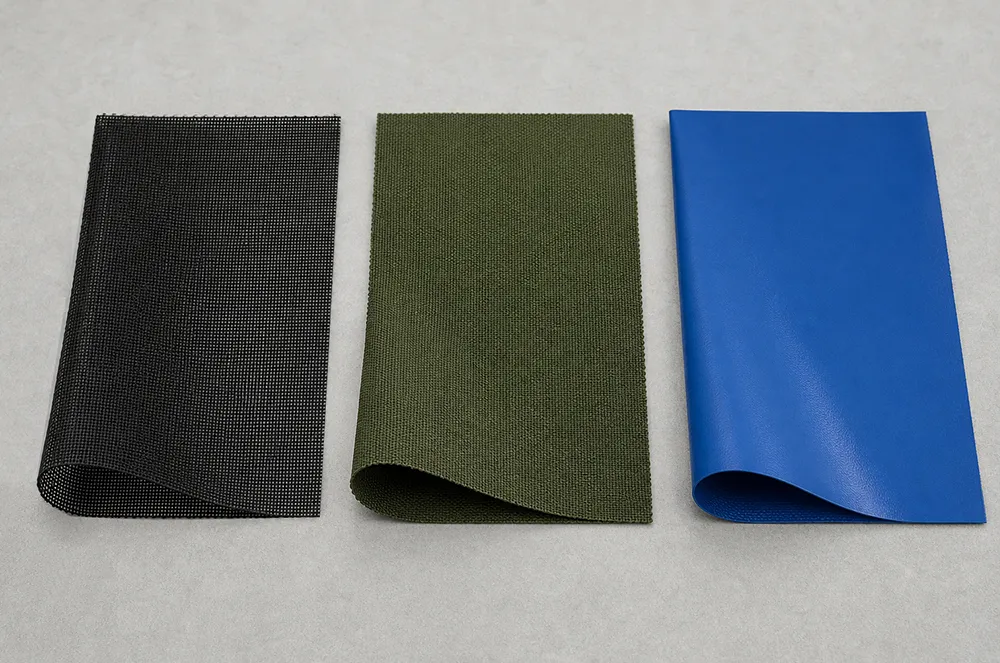
Solid PVC-coated scaffold tarps provide stronger rain and splash protection. They can be useful during facade coating, equipment protection, winter enclosure, or work that must stay drier. The tradeoff is that solid covers catch more wind. If the scaffold is tall, open, or installed in a high-wind location, the project engineer or site manager must consider fixing design and wind pressure before choosing a solid cover.
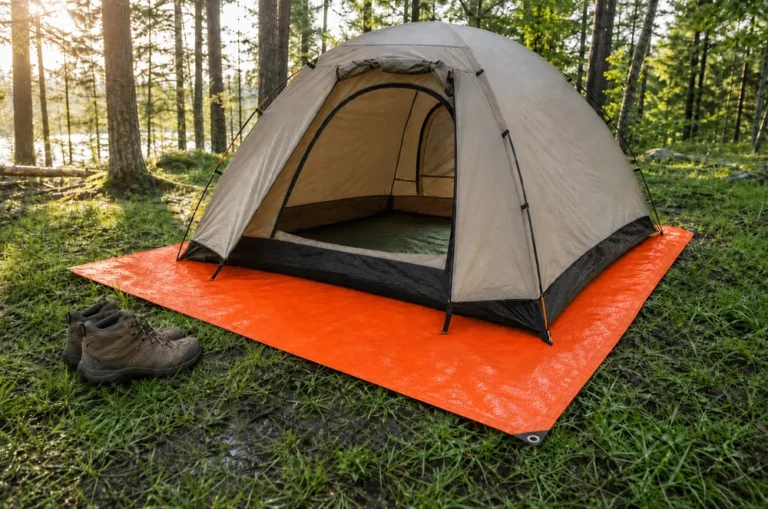
Some buyers compare scaffold tarps with general construction tarps. The difference is the way the tarp is used. A ground cover or roof cover may lie over a surface, while a scaffold tarp is usually vertical, repeatedly loaded by wind, and connected to a metal frame. That changes the edge reinforcement, eyelet spacing, and allowable panel size.
Material weight should be chosen by exposure and handling. A heavier coated fabric may improve tear resistance and service life, but it can also be harder to lift, fold, and install on upper scaffold levels. A lighter mesh may be easier to handle, but it may not provide enough privacy or weather protection. The buyer should define the target performance first, then discuss GSM, yarn, coating, and openness.
| Project condition | Recommended direction | Buyer note |
|---|---|---|
| Dust and visual screening | Breathable mesh scaffold tarp | Better airflow, lower wind pressure than solid cover |
| Rain and splash protection | Solid PVC-coated tarp | Confirm wind exposure and fixing strength |
| Long outdoor facade work | UV-stable material with reinforced edges | Useful for repeat projects and rental fleets |
| Custom scaffold layout | Project-specific panel size and fixing plan | Use drawings, scaffold module size, or sample panel |
III. Wind, Fixing, and Safety Considerations
Wind is the most common reason scaffold tarp orders need careful review. A tarp that looks simple in a product photo can behave like a sail after it is fixed to a tall frame. The higher the scaffold, the more important it becomes to discuss airflow, panel division, tie spacing, and emergency removal planning.
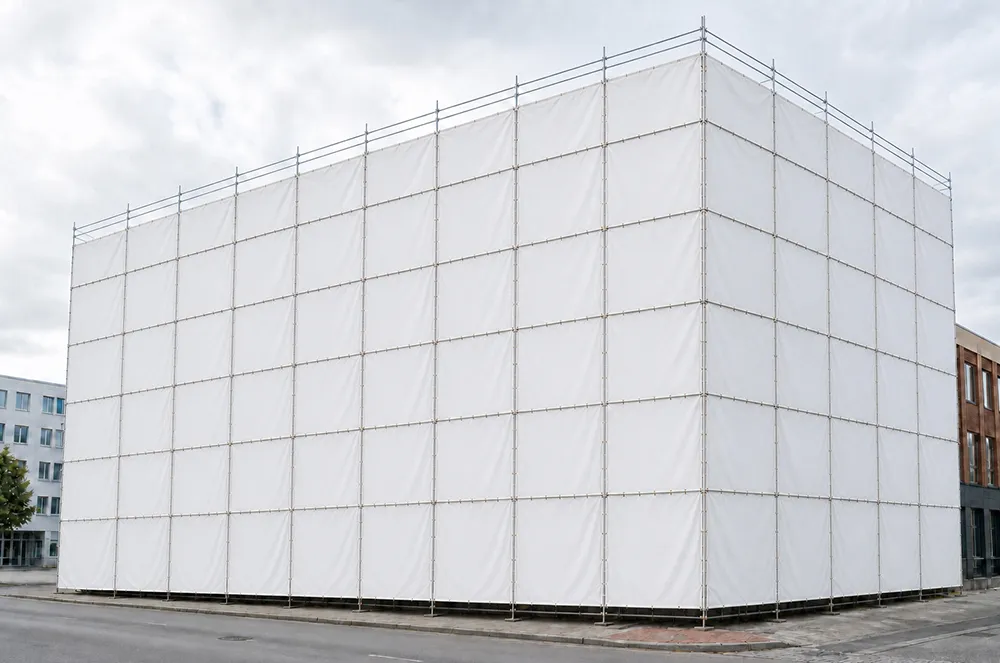
I avoid promising one universal scaffold tarp specification because wind behavior is tied to the building, local weather, scaffold frame, and installation method. For exposed locations, mesh with controlled openness may be safer than a solid sheet. For protected interior work, a tighter cover may be acceptable and more useful for dust control.
Fixing hardware must match the material. Grommets, webbing, reinforced hems, rope edges, hook-and-loop strips, and tie points all distribute stress differently. If the edge construction is weak, the fabric may not fail in the middle; it may tear from the eyelets first. This is why edge reinforcement should be treated as part of the tarp design, not as an afterthought.
For custom jobs, custom-made tarps are often more practical than forcing a standard size onto an irregular scaffold. Buyers should provide the scaffold bay size, required overlap, fixing method, and installation direction. If the tarp will be reused, label positions, panel numbering, and consistent hole spacing can reduce labor during the next installation.
IV. Production Details That Affect Service Life
Scaffold tarps work in rough conditions. They may rub against metal tubes, touch unfinished concrete, face sun exposure, and move repeatedly under wind. Good production details help the tarp survive these conditions without becoming too heavy or difficult to handle.
In production review, I pay close attention to fabric weight, coating adhesion, edge folding, welding or sewing method, and eyelet spacing. For PVC-coated materials, welding can create strong seams when the fabric and equipment are suitable. For mesh or mixed structures, the edge tape and stitching pattern may be more important. The right process depends on the fabric type and the expected loading.
Buyers who purchase tarpaulin rolls for local fabrication should still define the final application. Roll width, coating type, tensile strength, color, and surface finish affect the finished scaffold tarp. If the roll is only selected by price, the fabricator may later discover that it is difficult to weld, too stiff for folding, or not suitable for the planned fixing layout.
Water resistance is another production question. If the scaffold tarp must keep rain away from facade work, the buyer should compare it with a broader waterproof cover requirement. If the goal is airflow and dust control, full waterproofing may be less important than breathable structure and UV stability. Clear priority helps avoid overbuilding the wrong feature.
Color and opacity also matter in real projects. Dark mesh can hide dirt and provide stronger visual screening. Lighter colors may reduce heat absorption and make the work area feel brighter. Printed or branded panels may be useful for contractors, but printing should be planned with coating compatibility, color fastness, and local jobsite rules in mind.
V. What to Confirm Before Ordering Scaffold Tarps
Before bulk production, buyers should confirm the exact use case, scaffold dimensions, panel layout, material direction, color, openness or waterproof requirement, fixing method, edge reinforcement, and packing method. If the tarp will be installed by different crews, the specification should be simple enough for workers to understand without guessing.
Sample confirmation is important for scaffold tarps because small details change the user experience. A sample panel can show fabric hand feel, edge thickness, eyelet strength, transparency, color, and folding behavior. For a project buyer, it is safer to adjust these details before mass production than to discover a handling problem after the full order arrives.
I also recommend checking how the tarps will be stored between projects. Wet folding, sharp scaffold parts, and poor packing can shorten service life. If the buyer plans repeat use, the packing size, panel numbering, and repair method should be discussed together with the original order.
Another detail is replacement planning. Contractors that run several jobsites may need spare panels in the same size and color, especially for corners and high-wear fixing zones. Adding a small spare quantity during the first order is often easier than trying to match material later.
For B2B orders, LonaTarp can help review material direction, custom dimensions, edge design, welding or sewing options, grommet spacing, printing needs, and inspection requirements. Our normal scaffold tarp production is made to order, with a 5,000 square meters minimum order quantity and sample confirmation before bulk manufacturing. A well-prepared specification makes the quotation clearer and reduces disputes during delivery.
The best scaffold tarp is not simply the thickest cover. It is the cover that matches the jobsite exposure, installation method, safety limits, and reuse plan. If those conditions are clear, the supplier can recommend a fabric and fabrication method that protects the project without creating unnecessary handling or wind-load problems.