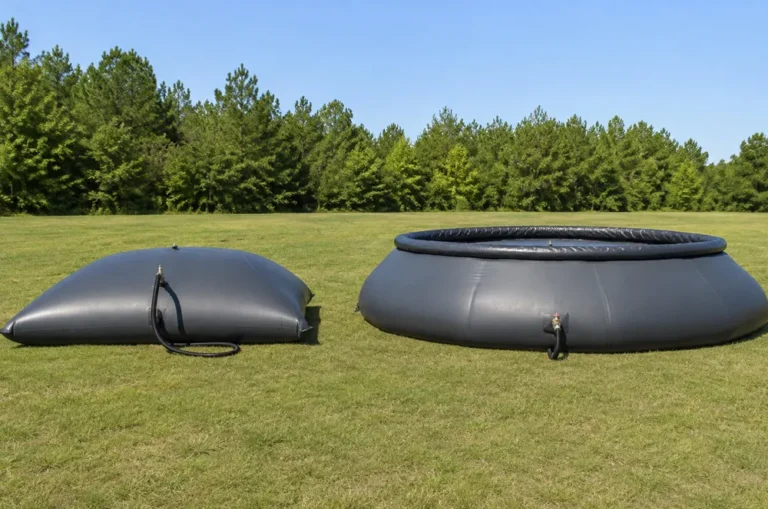
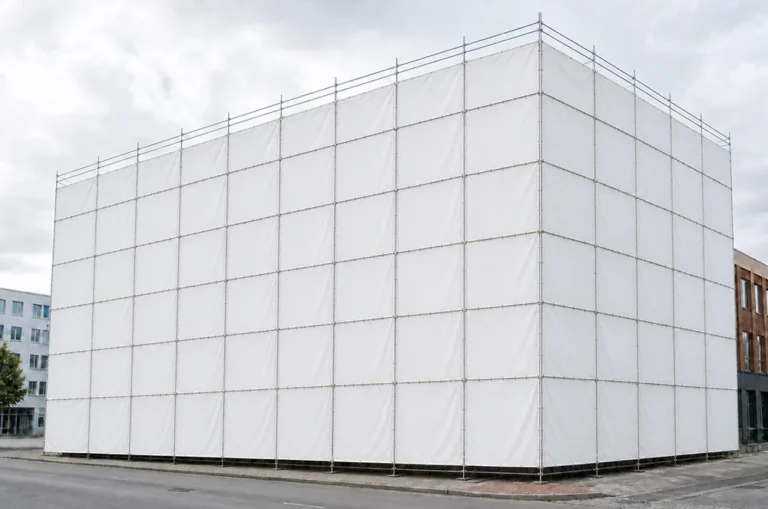
Construction hoarding is a temporary boundary installed around a building, demolition, renovation, or infrastructure site. It separates the active work zone from public areas, controls access, improves site appearance, and helps reduce exposure to dust, debris, and unsafe movement near the project perimeter. For a project team, hoarding is not just a cover material. It is part of site safety, public management, and daily construction organization.
LonaTarp’s role is usually the flexible panel part of the system, such as PVC fabric, PVC-coated mesh, printed panels, reinforced hems, grommets, and custom finished sizes. The posts, frames, gates, foundations, bracing, and local engineering approval must still match the jobsite. That distinction matters because a construction hoarding project fails when the material is specified without the perimeter structure and wind condition.
I. What Hoarding Means On A Construction Site
Hoarding creates a controlled perimeter. On an urban site, it keeps pedestrians away from excavation, machinery, falling-object zones, and material storage. On a renovation project, it can separate public routes from work areas. On demolition or infrastructure work, it can reduce visibility into hazardous zones and help organize access points for workers, vehicles, and deliveries.
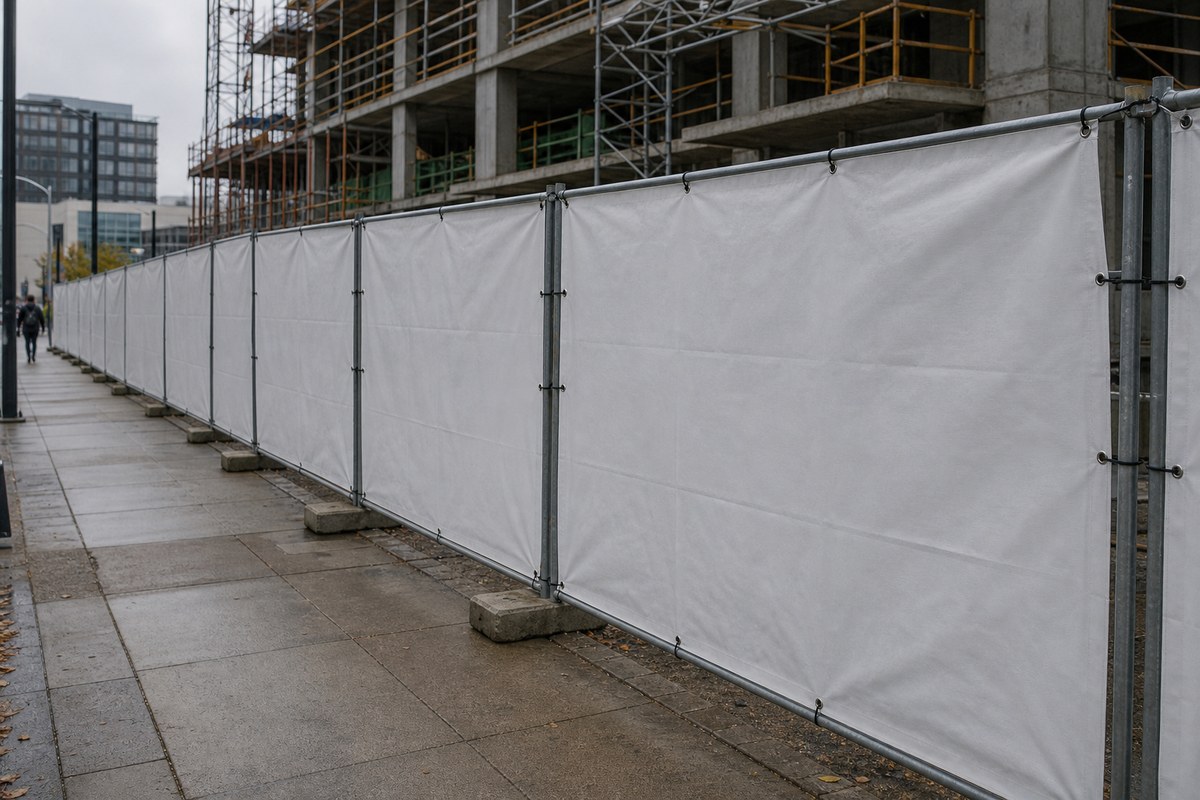
The key difference between hoarding and an ordinary tarp is purpose. A tarp usually covers an object. Hoarding defines a boundary. That boundary may use timber boards, metal panels, modular panels, PVC tarpaulin, PVC-coated mesh, printed fabric, or a mix of materials. The right choice depends on whether the site needs privacy, dust reduction, airflow, public-facing appearance, fast relocation, or reusable panels.
If dust control is the main problem, perimeter hoarding may not be enough by itself. Local cutting, grinding, or dusty processing areas may need process-level containment, extraction, or dedicated dust control curtains. Clear separation between perimeter screening and dust containment prevents one product from being expected to solve every site problem.
Hoarding should also support site workflow. Gate locations, delivery routes, emergency access, visibility at corners, and maintenance access all affect panel layout. When these details are ignored, a good fabric panel can still be installed in the wrong place or removed too often, which weakens the whole perimeter plan.
Project duration changes the decision as well. A two-week renovation screen may only need fast installation and clean appearance. A long infrastructure boundary may need stronger edge design, better weather resistance, planned replacement panels, and more careful packing for repeat relocation. Treating both projects as the same type of hoarding usually creates either unnecessary cost or weak field performance.
II. Compare Rigid Panels With Flexible Fabric Or Mesh Panels
Common construction hoarding materials include timber boards, galvanized metal panels, modular systems, PVC tarpaulin panels, PVC-coated mesh, and printed fabric panels. Rigid panels are often selected when the project needs stronger impact resistance, a more solid visual barrier, or long public-facing use. Flexible panels are useful when the project needs lighter weight, easier transport, fast replacement, printing, or attachment to an existing fence or frame.
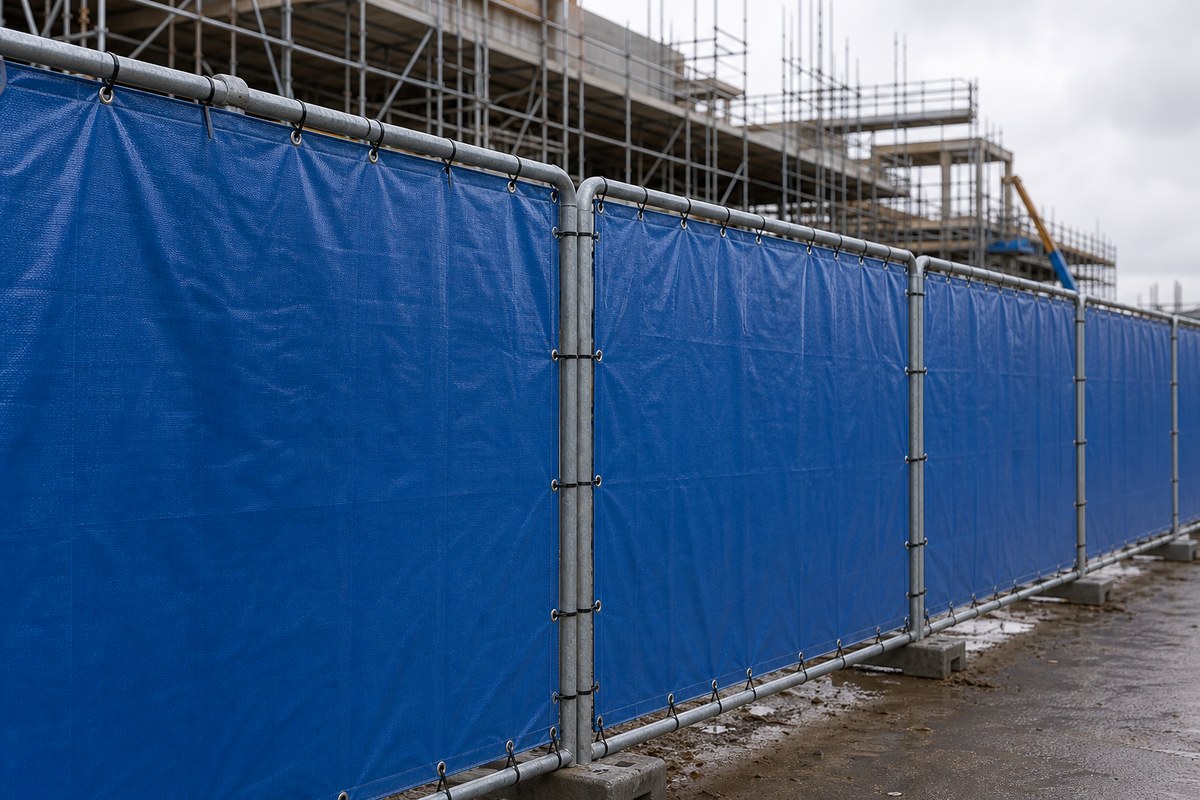
Flexible PVC panels are not a direct replacement for engineered rigid hoarding in every project. They work best when the frame, posts, fixing points, wind condition, and project rules are already clear. Solid PVC fabric can improve privacy and rain resistance. PVC mesh can reduce wind load and allow some airflow while still providing screening.
Material selection should not be reduced to one GSM value. Base fabric strength, coating adhesion, tear resistance, UV/weather formulation, edge reinforcement, grommet setting, and printing surface all affect performance. In outdoor projects, color and surface treatment can also affect heat buildup, appearance, cleaning, and long-term exposure behavior.
The project team should also decide what the flexible panel is not responsible for. Fabric and mesh can screen, cover, brand, and help control site visibility, but they do not provide the structural capacity of posts, foundations, metal frames, or engineered barriers. If impact resistance or crowd-control strength is required, the panel material must be considered together with the full hoarding structure.
| Project condition | Panel direction | Specification check |
|---|---|---|
| Public-facing urban boundary | Solid or printed fabric panel on approved frame | Confirm appearance rules, panel size, and fixing method |
| Wind-exposed temporary fence | Mesh or partly open fabric direction | Balance privacy with airflow and frame capacity |
| Repeat contractor use | Standardized reusable panels | Check packing, replacement panels, and repair plan |
| Project branding or safety graphics | Printable PVC fabric with stable surface | Approve artwork size, color expectation, and print area |
III. Use PVC Mesh When Airflow And Wind Load Matter
Mesh panels are useful when the site needs screening but a fully solid panel would catch too much wind. A PVC-coated mesh tarp can provide visual separation, controlled airflow, and lower panel weight. It may be a better option for temporary fencing, long perimeter lines, or locations where workers need some visibility through the boundary.
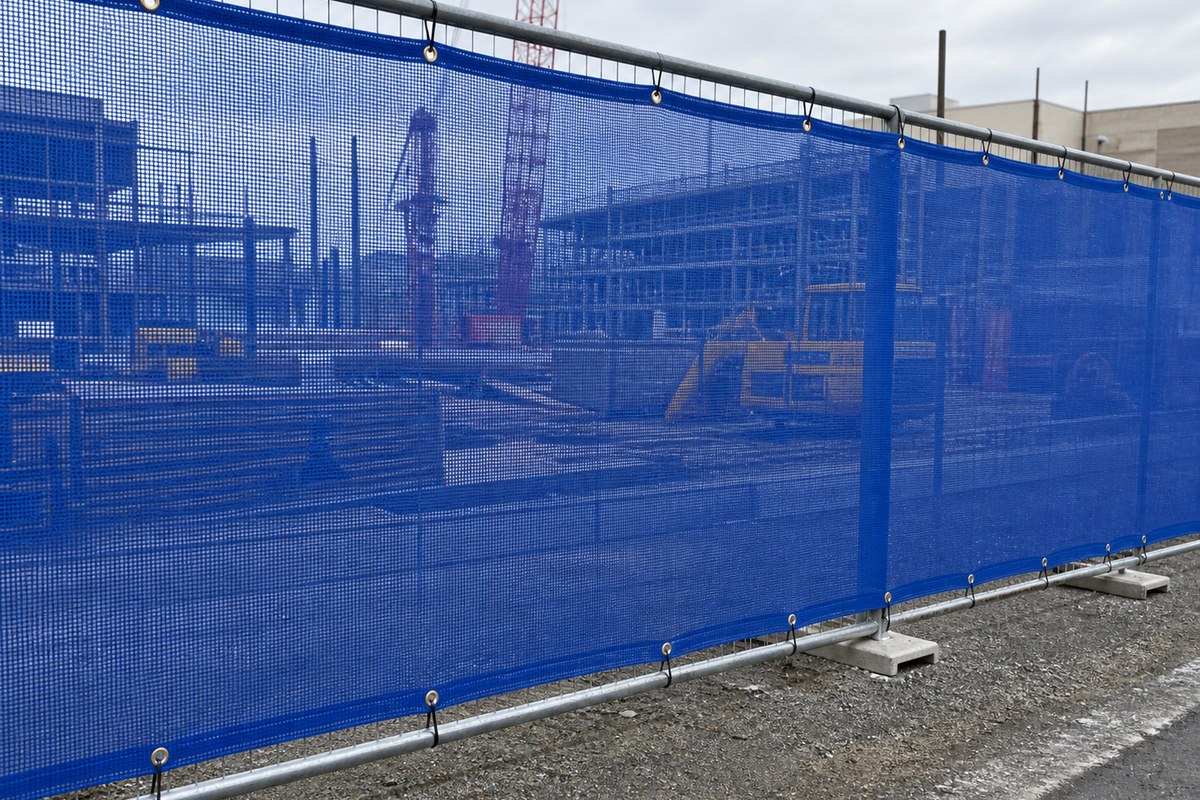
Mesh selection should consider opening size, yarn strength, coating quality, edge reinforcement, and the way the panel is attached to the frame. A mesh that looks acceptable on a sample can behave differently when stretched across a long fence line. Tension direction, grommet spacing, and the distance between fixing points all affect whether the panel stays flat or sags.
Solid PVC fabric still has a place. It is more useful when privacy, branding, rain shielding, or visual blocking is the priority. The tradeoff is wind behavior. A solid panel needs stronger frame support and more careful fixing. A mesh panel gives up some privacy but may reduce wind pressure and handling weight.
There is also a middle direction. Some projects use solid sections in public-facing areas and mesh sections where airflow matters more. This can help balance privacy, cost, wind behavior, and installation speed. For repeat contractors, standardizing a few panel types may be easier than making every jobsite order completely different.
IV. Confirm Wind, Fire, Printing, And Access Requirements
Wind is the first technical question for flexible hoarding panels. The project team should confirm site exposure, panel height, panel width, frame strength, post spacing, tie direction, edge reinforcement, and whether the panel should be solid, mesh, or mixed. If the panel is treated like a simple advertising banner, it may fail at the edge before the fabric center has a problem.
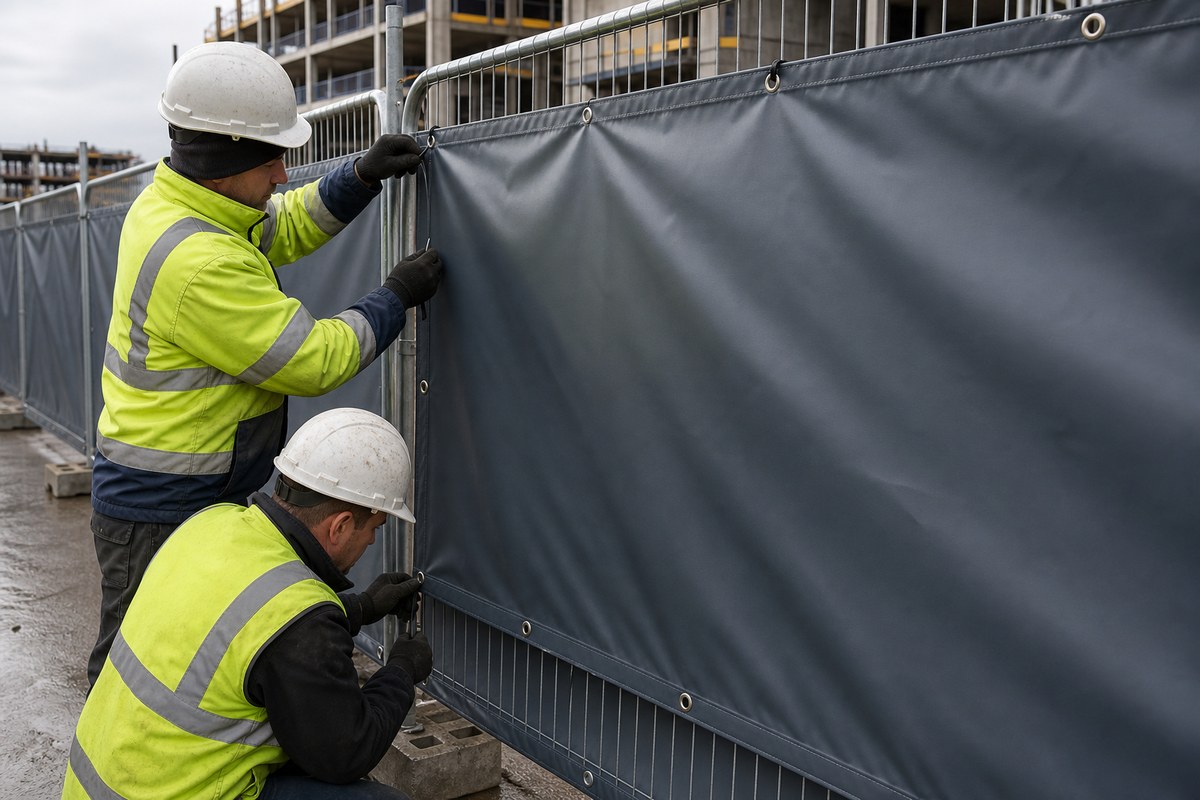
Fire requirements should also be clarified early. Some projects may only need standard outdoor screening, while others may require flame-retardant performance based on local rules or site risk. If that requirement exists, compare the material direction with relevant fire retardant tarps and confirm the exact test standard before production. A general word like “fireproof” is not precise enough for construction procurement.
Printing is another practical issue. Site hoarding may carry project colors, safety messages, wayfinding graphics, or contractor branding. The material surface, artwork size, print area, color expectation, folding method, and packing method should be confirmed before panels are made. If the print will face the public for months, surface stability and color expectation matter more than a quick low-cost print.
Access points should be included in the panel plan. Long hoarding lines may need gates, removable sections, inspection openings, or panels that can move as the project boundary changes. Sending only total length and height is usually not enough for a repeatable custom panel order.
Maintenance should be considered before installation starts. Flexible panels may need retensioning after wind, cleaning after dust exposure, and replacement if an edge is damaged by machinery or repeated relocation. A project that plans spare panels and simple repair rules usually keeps the perimeter looking better than a project that waits until panels are torn or loose.
V. Check Samples Before Ordering Custom Hoarding Panels
A sample swatch can show surface feel and color, but it cannot prove the whole panel. For construction hoarding, a sample panel or drawing should show finished size, hem width, grommet spacing, reinforcement, printing area, packing, and fixing method. These details decide whether the panel can be installed cleanly on the actual frame.
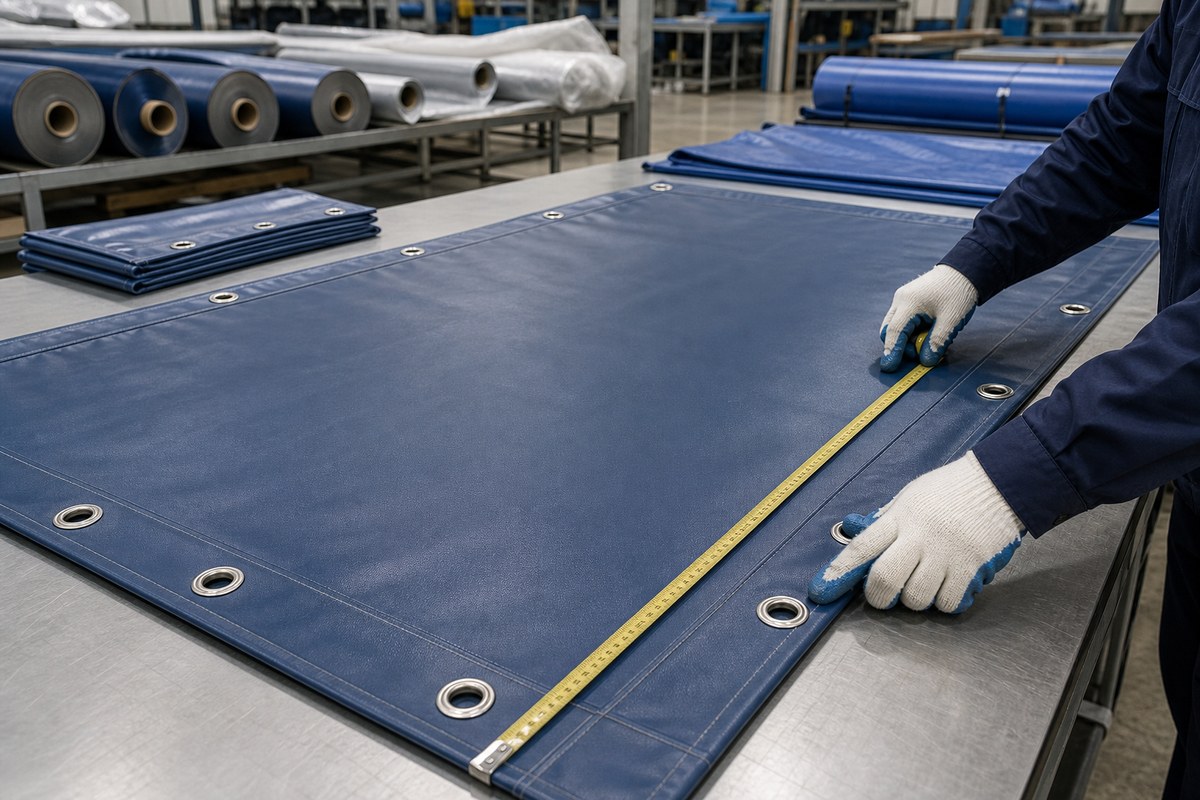
LonaTarp can support flexible hoarding panel projects through PVC fabric or mesh selection, cutting, welding, sewing, reinforced hems, grommets, printing, accessories, and packing. Related custom-made tarps show how finished panel details can be organized for repeated B2B orders. Our normal custom production MOQ is 5,000 square meters, so the finished sample details should be settled before the full order moves forward.
The project request should include site type, project duration, frame dimensions, panel height and width, wind exposure, privacy requirement, airflow requirement, dust or visibility concern, printing need, flame-retardant requirement if any, fixing method, panel quantity, and packing preference. These details help the supplier recommend the correct fabric direction and avoid treating construction hoarding as a generic tarp purchase.
Final review should be done like a site-component check. Confirm whether the grommet spacing matches the frame, whether the reinforced hem is wide enough, whether the panel folds and packs cleanly, whether printing stays within the approved area, and whether the edge design can handle repeated tension. A good hoarding panel should make site installation more predictable, not create extra work when the boundary is already under pressure.
For repeat procurement, keep one approved sample, one drawing, and one packing reference for each panel type. This makes later orders easier to inspect and reduces confusion when the same contractor uses the panels across several jobsites. It also helps the supplier keep fabric, finishing, and packing details consistent from one batch to the next.