To choose a waterproof tarp, start with the job it must do: what it will cover, how long it will stay outdoors, how much wind or sun it will face, and how often workers will move it. A tarp used for one week over palletized materials does not need the same structure as a cover used for repeated equipment protection, construction storage, farm supply protection, or industrial yard work.
In factory discussions, I do not treat “waterproof” as one single specification. A good waterproof cover is the result of material choice, base fabric strength, coating formula, edge reinforcement, grommet layout, seam process, size design, and installation method. If one of those details is wrong, the tarp may still look fine on arrival but fail when rain, wind, folding, and tension meet on site.
I. Define What The Waterproof Tarp Must Protect
The protected object decides most of the specification. Construction lumber, steel components, machinery, agricultural goods, palletized cargo, and temporary work areas all create different stress points. Some items only need rain shedding. Others need abrasion resistance, UV stability, cleanable surfaces, or a cover that can be opened and closed every day.
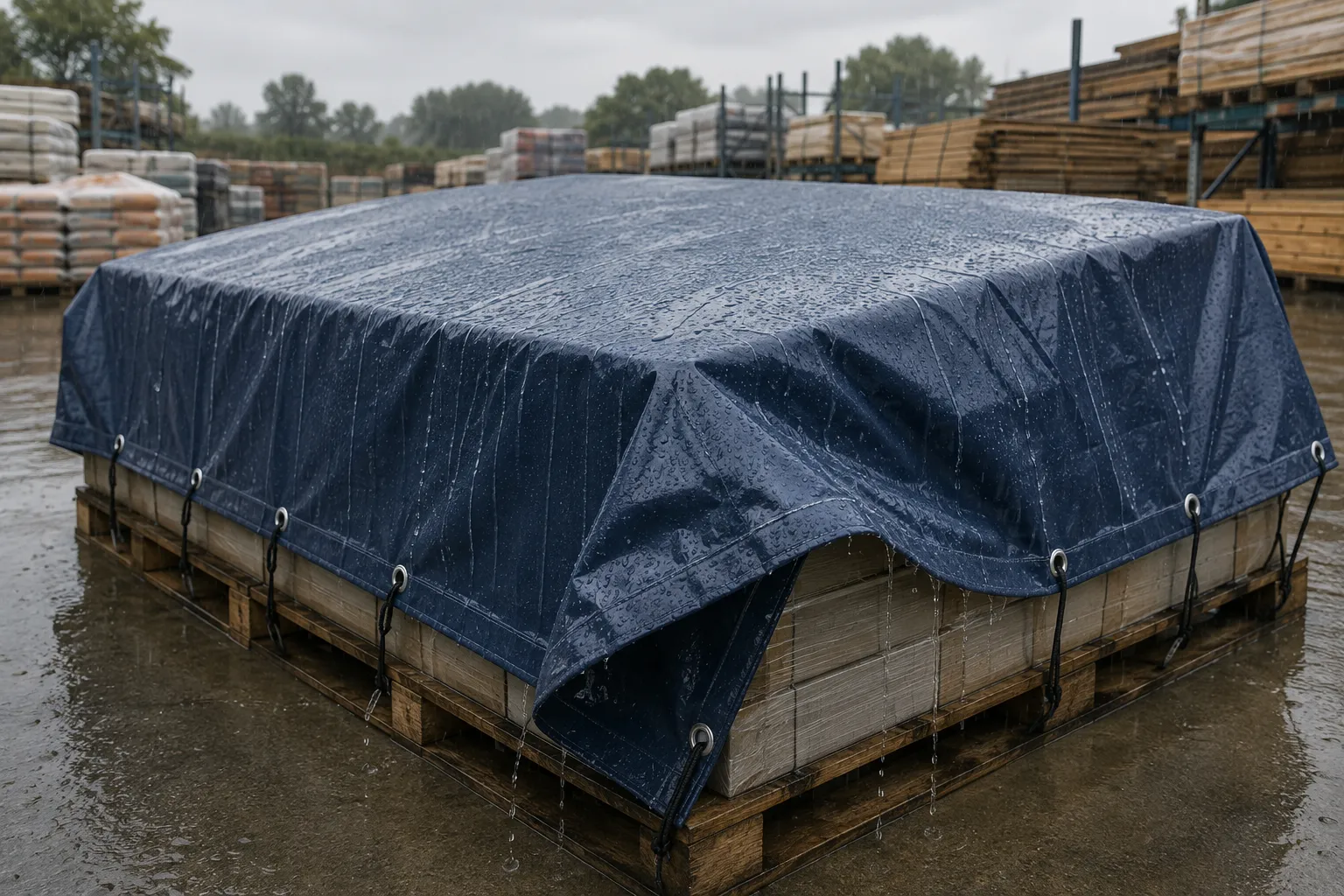
Before choosing material, confirm whether the tarp will cover sharp corners, rough pallets, hot surfaces, dirty ground, or equipment with protruding parts. A smooth pallet stack is not the same as a steel frame with exposed edges. If the tarp will be pulled across abrasive surfaces, tear resistance and coating durability matter more than a low price per square meter.
Exposure time is the second question. A temporary rain cover can be lighter and easier to handle. A long-term outdoor tarp needs better weather resistance, stronger hems, and a size that allows water runoff instead of pooling. If the tarp will remain outside in strong sun, UV resistance and color stability should be discussed before production rather than after the first season of use.
Handling frequency is often missed. A tarp that is folded once and left in place behaves differently from a cover that workers remove every morning and reinstall every evening. Repeated folding can stress coating and seams, while repeated pulling can damage grommet rows. A practical waterproof tarp should match the real routine of the crew using it.
II. Compare Waterproof Materials Without Choosing By Name Alone
Waterproof tarps can be made from PE, PVC/vinyl-coated fabric, canvas-like treated fabric, or other coated materials. The material name gives a direction, but it does not finish the selection. The construction, coating quality, base fabric, weight, and finishing method decide how the tarp performs in actual use.
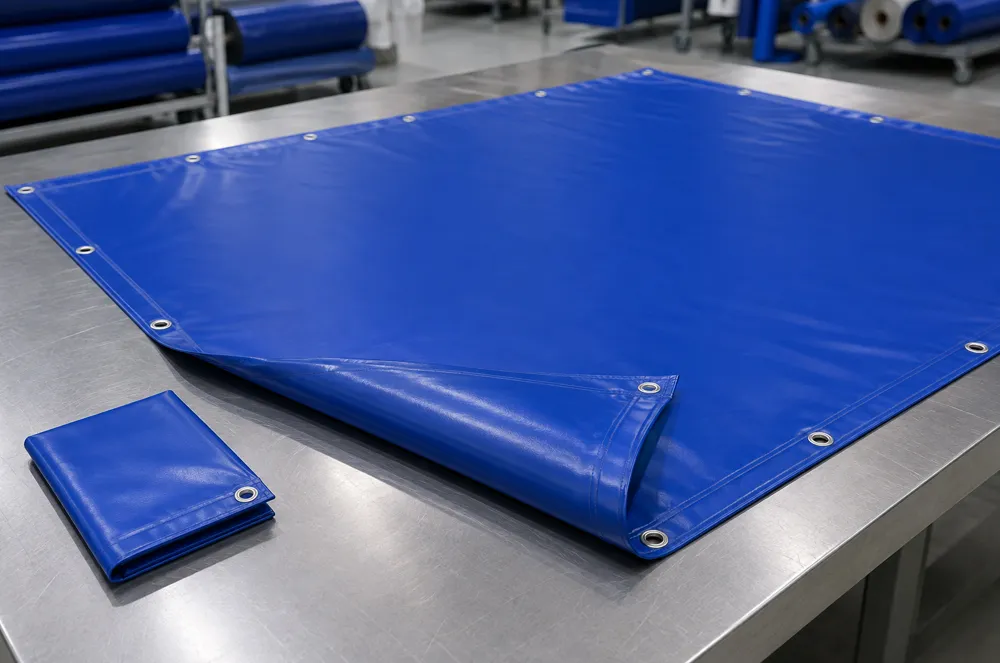
PE tarps are often selected when the project needs a light, economical cover for temporary use. They can work for short-term protection, seasonal coverage, or lower-budget applications where frequent replacement is acceptable. For heavier outdoor work, vinyl tarps or PVC coated tarpaulin are often preferred because they can provide stronger waterproofing, better weldability, and more robust finished cover construction.
Canvas has one important advantage: breathability. It may be useful when the covered item needs airflow and light moisture resistance rather than a fully sealed surface. But when rain protection is the main requirement, a canvas-style cover can absorb water or allow moisture through under longer exposure. For industrial waterproof protection, I usually ask whether the buyer needs breathability, full water blocking, or a balance between the two.
Material comparison should also include cleaning and fabrication. PVC coated fabric can be welded, reinforced, and made into custom covers with hems, grommets, sleeves, straps, and printed marks if needed. PE is often more limited in heavy fabrication. A buyer who only compares material names may miss the more important question: can the finished tarp be made into the structure the job requires?
Color and surface finish should be decided for use, not only appearance. Dark colors may heat faster under direct sun. Very light colors can show dirt sooner in storage yards. A smoother surface can be easier to wipe clean, while a textured surface may handle some abrasion better. These small choices affect how the tarp looks and works after repeated outdoor use.
III. Match GSM, Base Fabric, And Coating To Outdoor Exposure
Many buyers ask for a heavy duty waterproof tarp by GSM or thickness first. Those numbers are useful, but they are not enough. A higher GSM may mean more coating, stronger base fabric, or simply more filler. Real strength depends on the base fabric, coating adhesion, tear resistance, coating formula, and process stability.
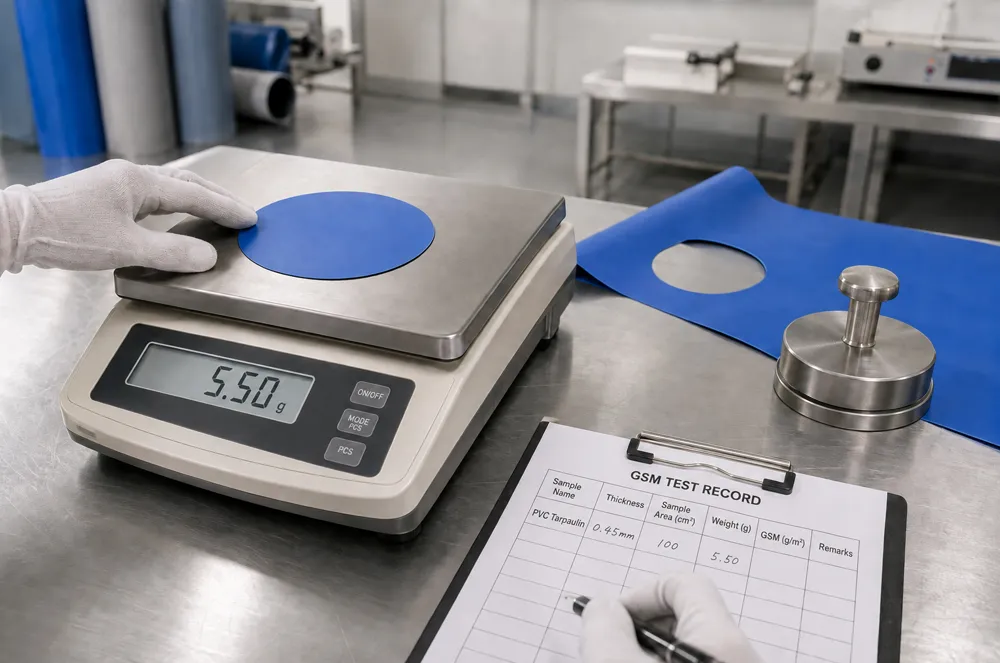
If the tarp will cover equipment, construction materials, or outdoor storage for repeated use, heavy-duty tarps should be evaluated by more than weight. Check how the tarp handles tension, folding, abrasion, and edge pulling. A stiff tarp may resist some damage but become difficult to install. A flexible tarp may be easier to use but needs enough fabric strength to avoid tearing around stress points.
UV resistance should be treated carefully. A UV additive or weather-resistant formula can slow aging, but it does not make any tarp permanent. Outdoor life depends on sunlight intensity, heat, humidity, color, pollution, installation angle, folding, and mechanical stress. If a supplier converts a test result directly into a fixed number of outdoor years without conditions, that claim should be checked.
Waterproofing also depends on seams and edges. A coated sheet can resist water, but a finished cover may still leak through poor stitching, damaged eyelets, open seams, or water pooling. For a true waterproof tarp application, the sheet material and the finished construction must be reviewed together.
| Use condition | Better selection focus | Why it matters |
|---|---|---|
| Short-term pallet rain cover | Lightweight waterproof sheet with easy handling | Keeps labor and cost practical for temporary use |
| Repeated outdoor equipment cover | PVC/vinyl coated fabric with reinforced edges | Improves tear control, welding options, and cleanability |
| Sunny storage yard | UV and weather-resistant coating system | Reduces premature brittleness, fading, and surface aging risk |
| Windy installation area | Stronger hems, grommet spacing, and anchoring plan | Prevents edge tearing and loose flutter damage |
For readers who want to understand weight more deeply, a tarpaulin GSM buying guide can help, but GSM should still be connected to the actual application. The same number can represent different structures if the base fabric and coating formula are different.
IV. Check Edges, Grommets, Seams, And Water Runoff
Most waterproof tarp failures do not start in the quiet center of the sheet. They start where the tarp is pulled, tied, folded, or rubbed. Edges, corners, grommets, seams, and contact points deserve as much attention as the waterproof surface.
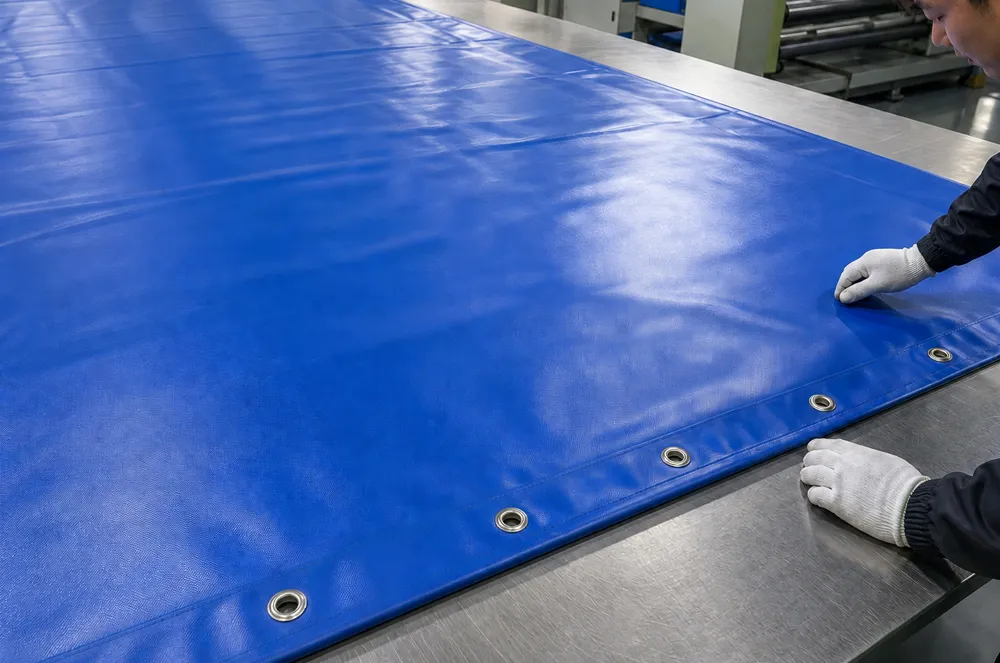
Reinforced hems help distribute pulling force. Grommet spacing should match how the tarp will be tied down, not a default pattern copied from another project. If the cover will face wind, the fastening plan should reduce flutter and avoid putting too much tension on one eyelet. Rope, elastic cord, straps, sandbags, or sleeves can all be considered depending on the site.
Water runoff is just as important. A flat tarp with low points can hold water, stretch, sag, and pull against the hardware. The size should allow enough coverage and overhang, but not so much loose fabric that it becomes hard to tension. If the object has sharp corners, padding or reinforced stress panels may be needed so the tarp is not cut from below.
The installation method also affects material choice. A tarp used as a loose rain cover does not need the same edge construction as one installed on a frame, tied to a trailer, or fixed over large machinery. If the application needs a lighter poly tarps direction, the buyer should still confirm edge design and expected replacement cycle. If the application needs longer service under tension, PVC/vinyl construction may be more appropriate.
V. Confirm Samples, QC, And Order Details Before Production
A waterproof tarp order should be confirmed by more than a color photo. Size, material, GSM or thickness, base fabric, coating color, edge type, grommet material, grommet spacing, seam process, packing method, and expected use environment should all be clear before production starts.
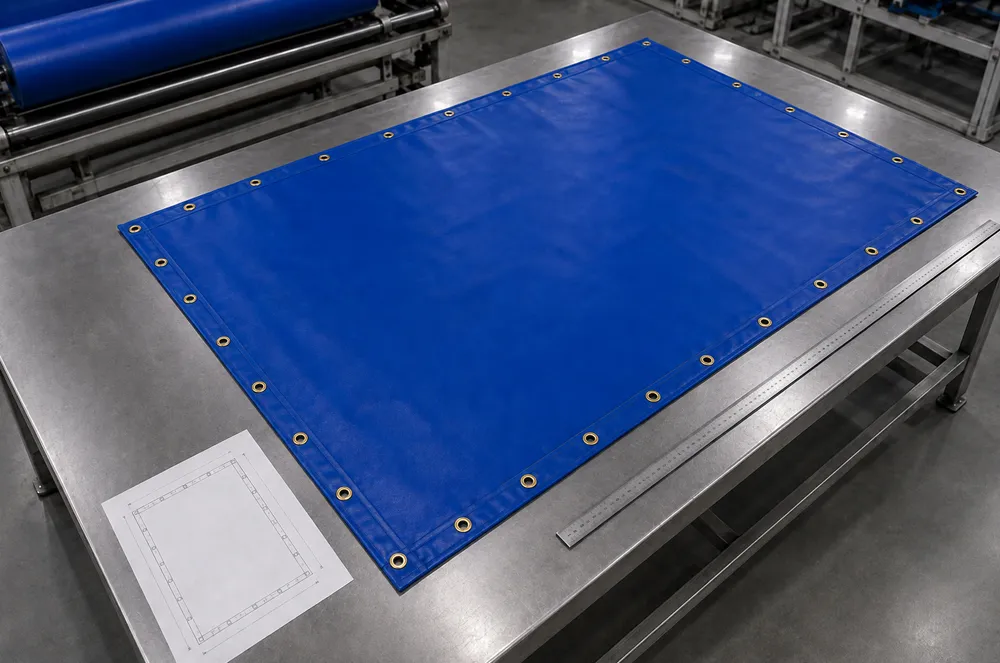
For new projects, a sample can help the buyer check hand feel, folding behavior, surface finish, color, and edge construction. It cannot fully reproduce long outdoor use, but it can reveal obvious problems before a large order. If the application is demanding, testing requirements should be discussed by method, not by vague words like “strong” or “long lasting.”
In production, I pay close attention to whether the finished cover matches the drawing, whether hems are straight, whether grommets are secure, whether welded seams are clean, and whether packing protects the tarp from sharp creases or dirt before shipment. A waterproof tarp is a working tool. It should arrive ready for the job, not as a sheet that the customer must fix on site.
The best choice is usually the one that matches the real exposure, crew handling, and protected asset. If the project is temporary, keep the tarp practical and easy to move. If the project is repeated or industrial, spend more attention on base fabric, coating, reinforcement, and quality checks. That selection discipline is what turns a waterproof tarp from a simple cover into a reliable part of the buyer’s operation.