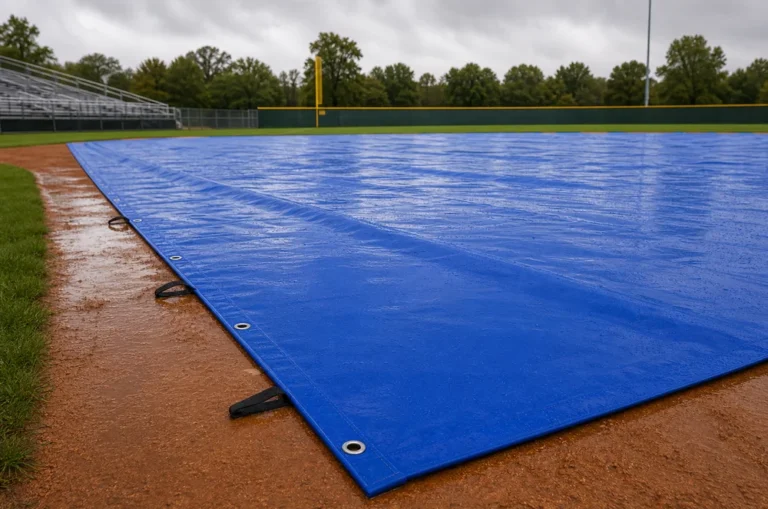
To choose tarpaulin GSM, start with the finished product, the stresses it will face and the way it will be fabricated. Then compare materials within the right structure. GSM tells you mass per area; it does not identify the reinforcement, seam performance or exposure limits that decide whether the material will work.
This buying guide explains how a fabricator or industrial buyer can narrow the specification, compare sample constructions and choose a weight without using it as a shortcut for quality. The aim is a material that meets the product’s requirements at a manageable mass and cost.
Identify the material structure before choosing a weight
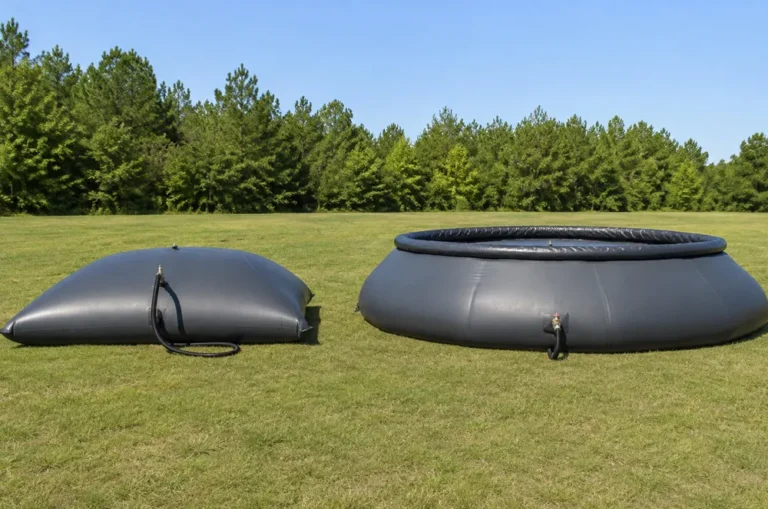
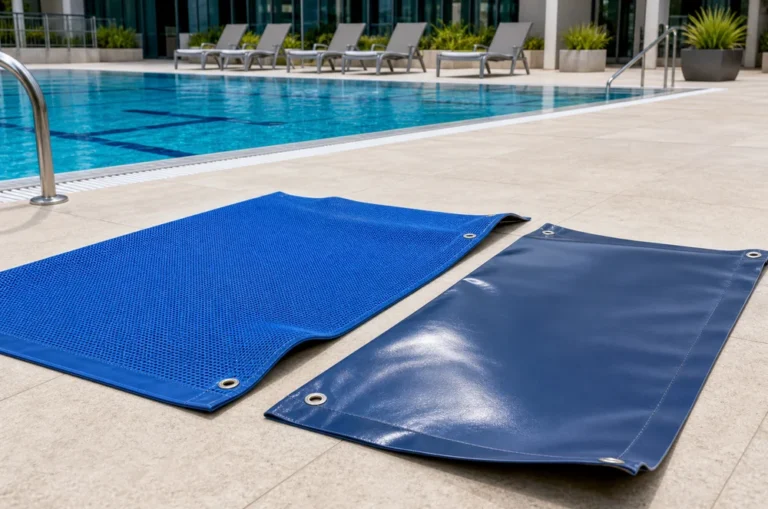
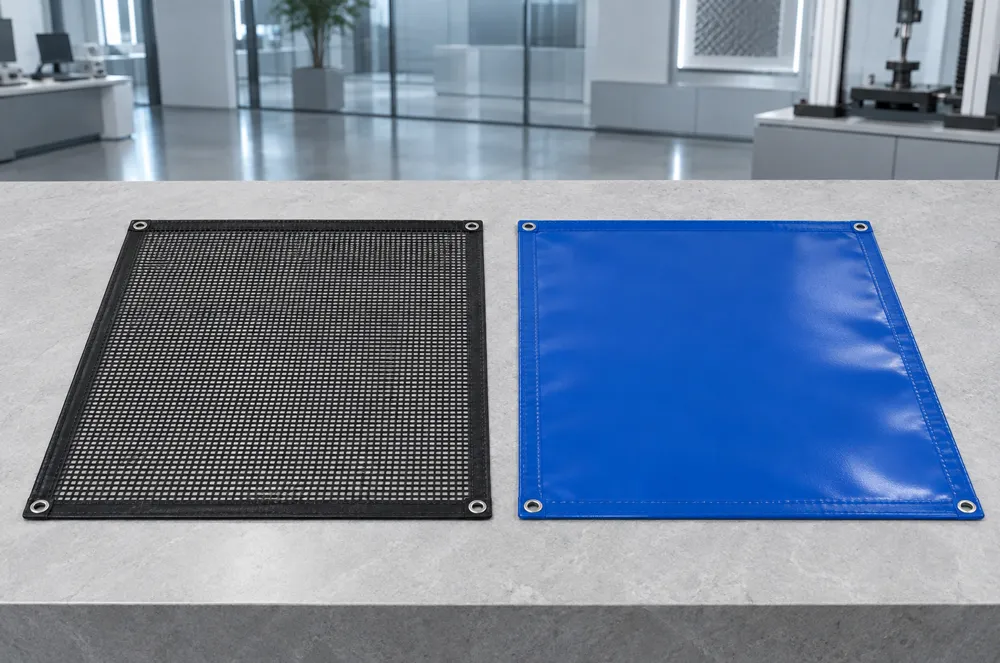
A solid reinforced PVC tarpaulin, an open mesh and a clear reinforced PVC sheet solve different problems. The mass of one cannot be used as a universal quality benchmark for the others. First decide whether the finished product needs a continuous barrier, intentional airflow, transparency or another structure-specific function.
Within reinforced PVC materials, the base-fabric yarns and density, PVC layers, formulation and surface treatment affect the result. Two samples with the same GSM can differ in tear behavior, adhesion, flexibility or converting performance. Compare those properties directly.
If the weight label itself is unclear, the GSM, oz and thickness measurement guide explains the units and checks. Use the rest of this guide to decide what the application needs.
Translate the use environment into acceptance requirements
Write down what can cause the product to fail, rather than starting with a “light-duty” or “heavy-duty” weight label. A fixing edge, seam, rubbed corner or repeatedly folded section may determine the useful specification before the center of the sheet is heavily loaded.
| Finished-product situation | Selection question | Evidence to compare |
|---|---|---|
| Frequently handled curtain or removable panel | Can a lighter construction meet the actual edge and seam requirements? | Handling trial, fixing/edge construction and required strength |
| Truck cover or repeatedly folded cover | Where do rubbing, pulling and repeated folding occur? | Tear, adhesion, seam and folding checks on the candidate sample |
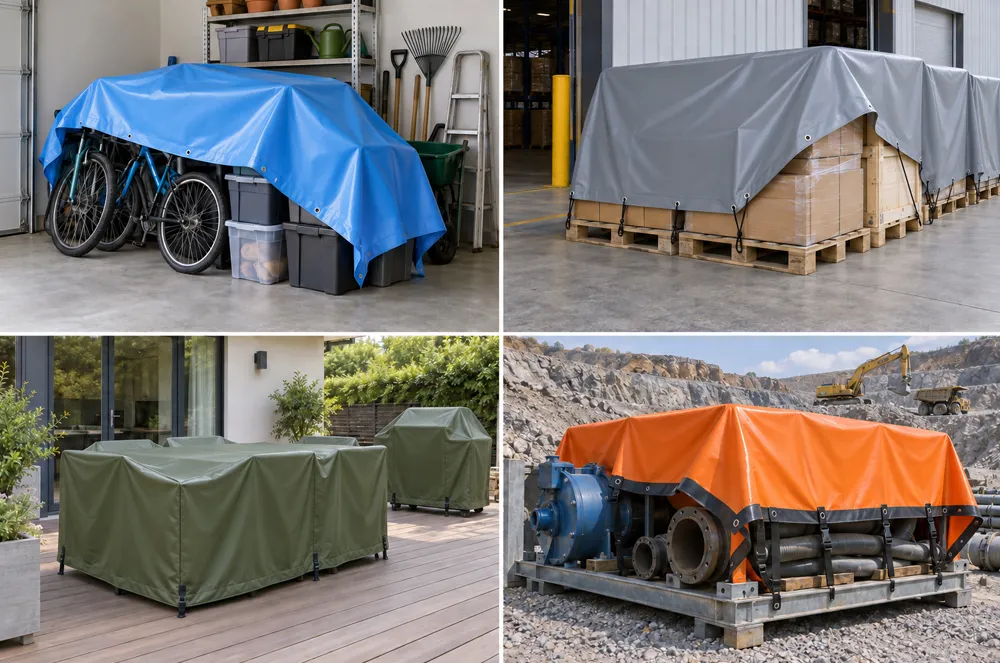
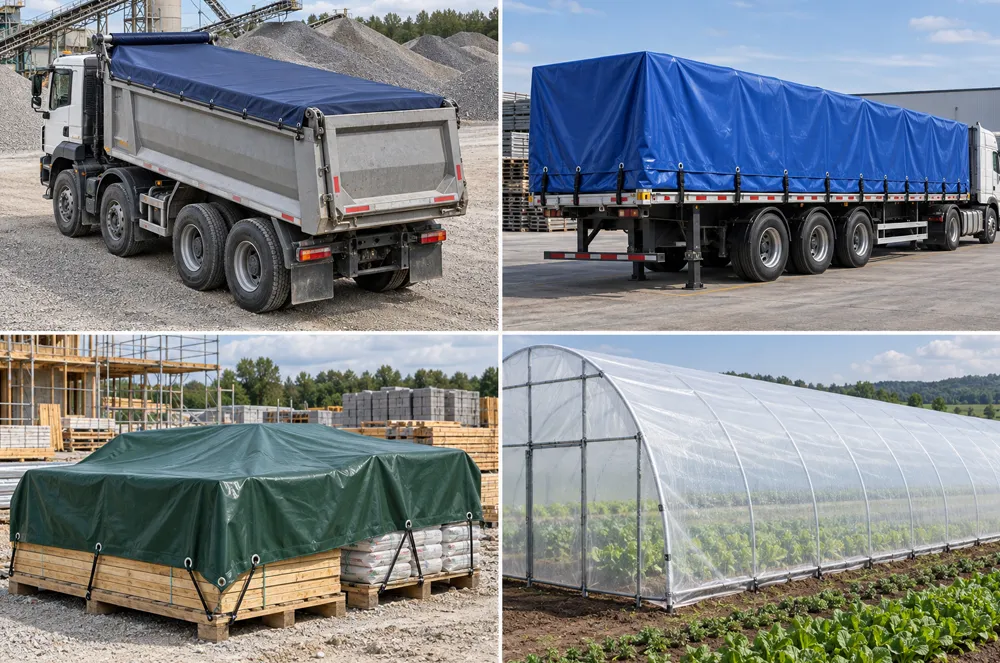
| Outdoor equipment or storage cover | What exposure, contact surfaces and fixing arrangement must it tolerate? | Relevant weathering requirements, abrasion/contact checks and joined-panel trial |
| Canopy or tensioned panel | What loads and installation conditions are specified for the assembly? | Project design requirements and material/seam results; engineering review where applicable |
| Material with a fire requirement | Which classification and documentation does the project accept? | A report whose scope matches the proposed material and use |
These are assessment routes, not universal minimum GSM values. A fabric selected for one installation should not be assigned to another just because both applications are called “outdoor covers.”
Compare the reinforcement and PVC layers at the candidate GSM
Ask what is changing when a supplier proposes a heavier material. It may be the reinforcement, the PVC quantity or formulation, a surface treatment, or several factors together. Without that explanation, you cannot tell whether the extra mass addresses the actual failure risk.
If the concern is tear propagation at an edge, compare the relevant reinforcement and tear results. If the concern is coating separation or a weak welded seam, inspect adhesion and the processed join. More total weight is not a complete solution to either problem.
Keep the comparison fair: use the same product geometry, intended processing and agreed test methods. Record differences in construction instead of presenting two GSM numbers as if they were otherwise identical materials.
Balance product mass against the validated requirements
Once suitable constructions are shortlisted, use GSM to assess handling and material consumption. A heavier approved option may increase the mass of a removable cover or a large curtain without changing its dimensions. That affects the people and equipment used to install, fold or move it.
As an illustration, 120 m² at nominal 400, 500 and 550 g/m² contains 48, 60 and 66 kg of material respectively, before seams, fittings or packaging. These figures describe mass only: the 400 GSM option is acceptable only if its own construction meets the agreed product requirements.
Compare total finished-product cost, not just the price per square metre. Usable width, panel layout, joining, material waste and handling can change the result even when the purchased area is similar.
Run a sample trial before freezing the specification
Use the proposed roll construction in a representative piece of the final product. Follow the intended welding, sewing, cutting or printing route and inspect the areas that matter to acceptance. Include seams and fixing details when those are the likely weak points; a flat swatch alone cannot represent every fabricated condition.
Review the sample with production and quality staff. Agree the required values, methods, appearance standard and allowed variations before placing the order. When the design or material changes, check the affected requirements again rather than carrying approval over from the GSM label.
Keep the approved GSM within a complete purchase specification
The final specification should tie finished mass to reinforcement, PVC construction, color, surface, usable width, roll length, processing requirements and the agreed test results. Keep it with the approved sample so repeat orders can be checked against the same construction, not simply the same weight.
For bulk roll-material review, send us the finished-product use, existing sample or target requirements, processing route and order area. We can assess candidate constructions before sampling. Custom roll production requires at least 5,000 m²; the material grade and delivery conditions are confirmed with the order.