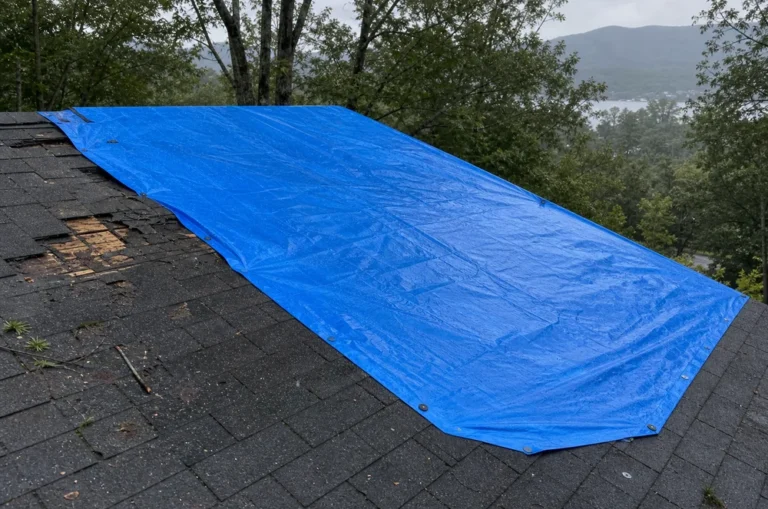
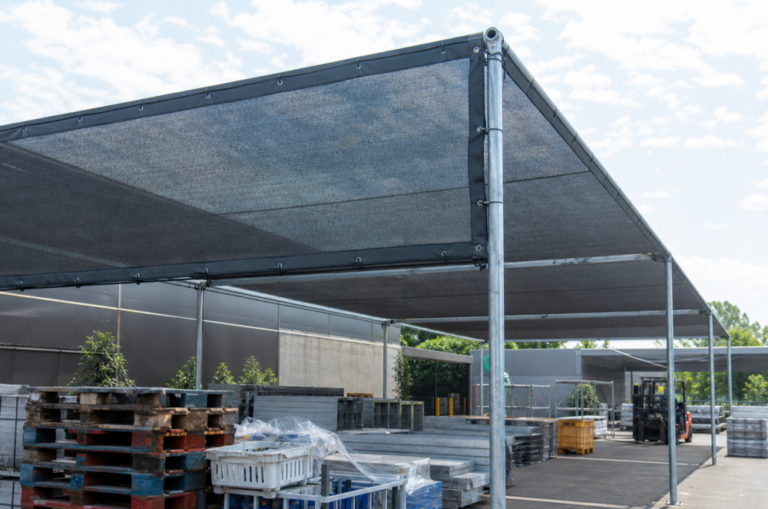
The wrong quotation path usually starts with the wrong question. If your project only needs stable coated material for in-house cutting and fabrication, a PVC fabric supplier may be the correct route. If the project needs shaped panels, seams, hems, eyelets, windows, labels, or finished export packing, the buyer is no longer buying only fabric. In that case, a finished tarp manufacturer usually carries the more useful responsibility.
From a factory side, I separate these two routes early because they answer different risks. Roll-goods supply is mainly about material structure, width, finish, consistency, and shipping control. Finished-tarp manufacturing adds drawing interpretation, panel layout, reinforcement, welding or sewing method, hardware placement, sample approval, and final inspection. A buyer who mixes those two scopes too late often compares prices that were never built on the same responsibility line.
I. First Decide Whether You Need Material or Finished-Cover Responsibility
The fastest way to choose the right supplier type is to define where your own team stops. If your team already owns the cutting pattern, sewing route, hardware standard, and final inspection method, then buying
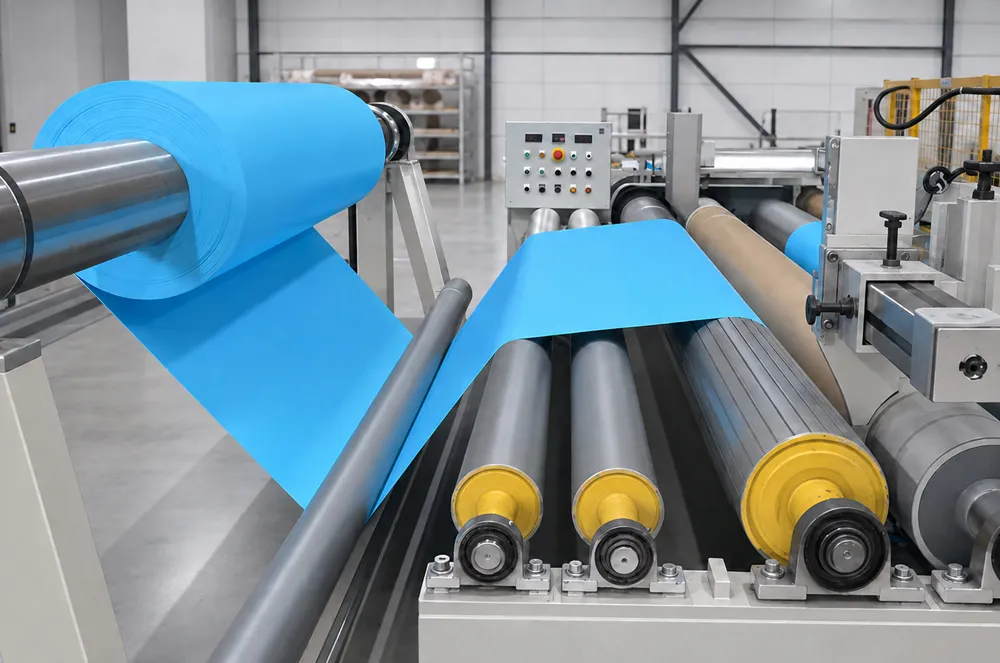
PVC fabric rolls can be the right commercial path because the plant only needs stable coated material, width, finish, and shipment control. That is a material supply decision, not a finished-cover manufacturing order.
Many buyers, however, sit in the middle. They know the application and the approximate size, but they do not have a finished drawing, a seam route, or a clear edge-and-hardware specification. In that situation, a low raw-material price can be misleading because the difficult part of the order has not yet been assigned to anyone. The better route is to decide early whether the supplier is shipping fabric or taking responsibility for the finished product.
That scope decision also affects sampling. A roll sample can confirm coating feel, color, base fabric, and some test direction. It cannot fully confirm whether the finished panel layout, welded edge, or hardware zone will work in the field. If the application depends on those details, the order should move closer to finished-fabrication responsibility before pricing becomes the main discussion.
II. When a PVC Fabric Supplier Is Enough
A PVC coated fabric supplier is usually enough when the buyer already has fabrication capability or a second-stage converter. This route works well for companies that cut their own panels, own the sewing or welding process, or need standardized roll goods for repetitive internal production. In those cases, the supplier should be judged by material consistency, width range, finish, repeatable color, batch stability, and documentation tied to the agreed structure.

| Buying route | What the supplier is mainly responsible for | What still stays with the buyer or converter |
|---|---|---|
| PVC fabric supplier | Roll width, material code, coating finish, batch consistency, roll packing, shipment documents | Panel cutting, seam route, edge design, hardware layout, finished inspection |
| Finished tarp manufacturer | Material plus finished drawing interpretation, reinforcement, hardware, sample approval, packing logic | Application brief, acceptance standard, and final commercial approval |
| Hybrid route | Agreed split of roll supply and key fabricated samples or semi-finished parts | Clear responsibility boundary and revision control between all parties |
This route is especially workable when the finished geometry is simple and the buyer already knows the target seam logic. In that case, the main value sits in material stability, not in finished-product development. The buyer should still confirm how roll width affects panel layout and waste, but the supplier does not need to own every downstream fabrication decision.
III. When You Need a Finished Tarp Manufacturer Instead
Once the project needs shaped panels, reinforced edges, access openings, welded hems, or a defined hardware layout, it has moved from raw-material buying into
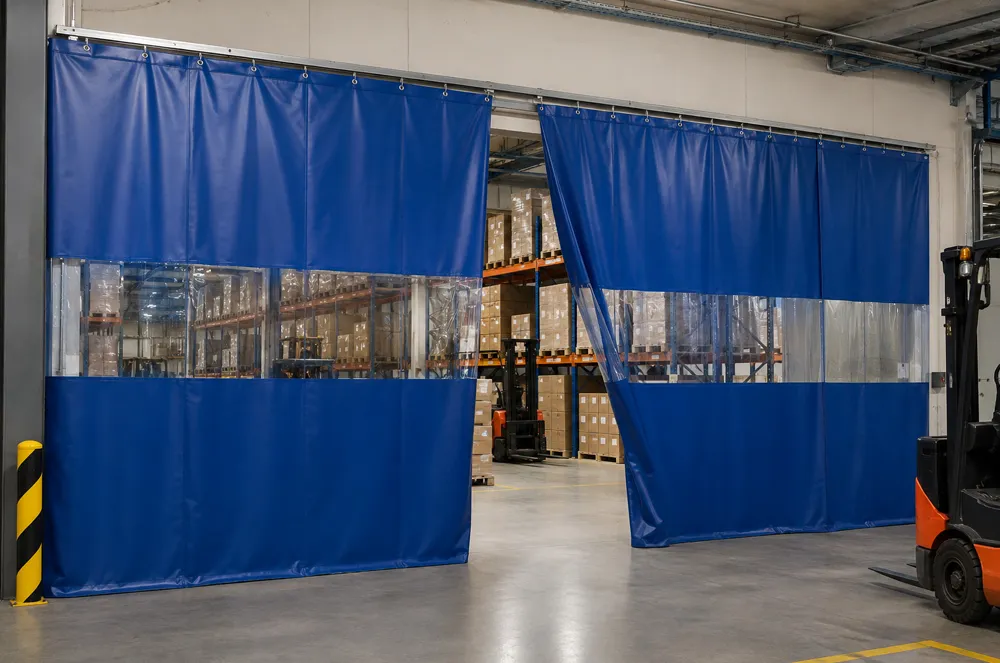
custom-made tarps. At that point, the supplier is no longer only shipping fabric. The supplier needs to connect material choice with cutting, reinforcement, seams, windows, straps, eyelets, label positions, and how the cover will actually be installed or handled.
A warehouse divider curtain is a good example because the buyer may start by asking for PVC material, but the real order usually depends on finished width, viewing window, track compatibility, reinforcement, and installation method. The same pattern appears in transport covers, machine enclosures, and side panels. When the finished product controls performance, the manufacturer must own more than the roll code.
This route also makes sample approval more meaningful. A finished sample can confirm seam route, edge structure, hardware pull points, and visual fit in a way a roll swatch never can. That usually reduces downstream complaint risk, especially when the buyer is ordering by drawing revision rather than by a generic material name.
IV. Lock the RFQ Questions Before You Compare Price
Before bulk release, I want the buyer to decide which items belong to the
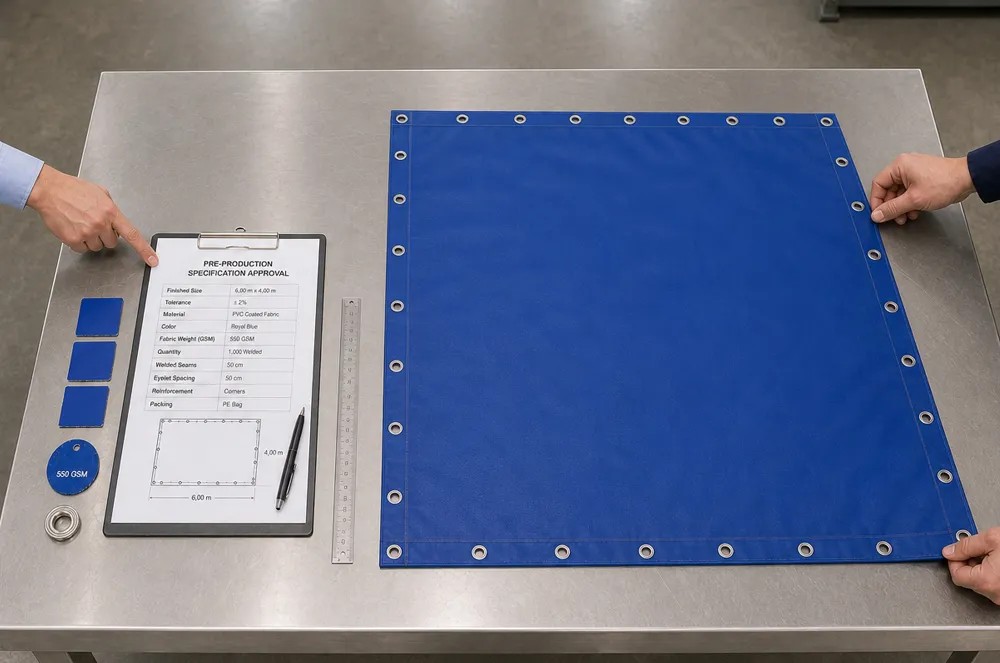
quality control record: material code, seam route, edge construction, hole spacing, sample reference, label format, and packing standard. The factory can only quote fairly if the responsibility line is clear. Otherwise, one supplier is pricing roll goods while another is quietly pricing finished risk.
The practical RFQ checklist is simple: What is the final application? Do you already own a drawing? Who defines seam and hardware logic? Is a roll sample enough or is a fabricated sample needed? Who owns final packing and label format? Once those answers are fixed, the supplier type becomes much easier to judge, and the quotation becomes comparable in a way that is useful for procurement.
If the project still sits between roll supply and finished fabrication, the best route is to send the application, drawing status, quantity, and sample requirement through the contact route so the factory can judge where the responsibility should start and stop. That usually saves more time than comparing two prices built on different assumptions.