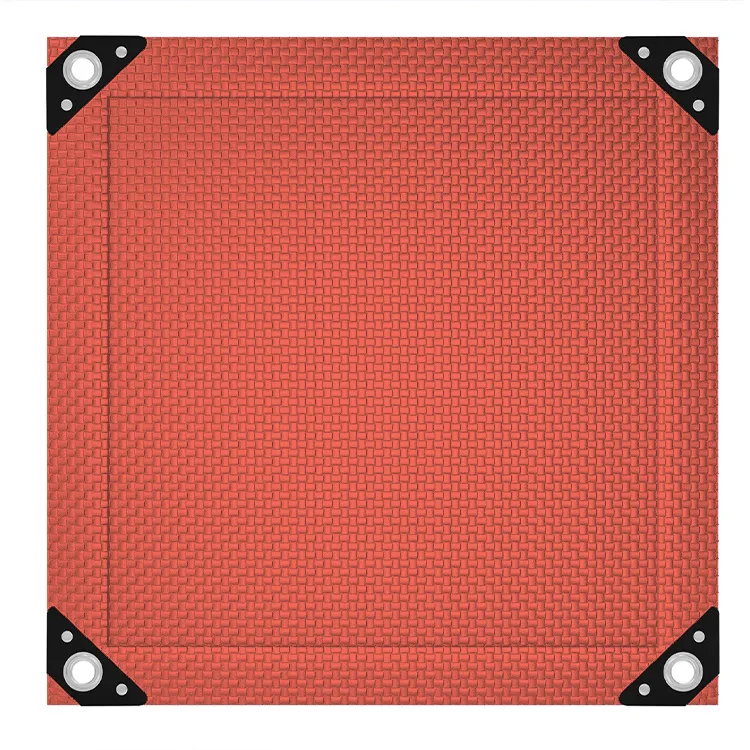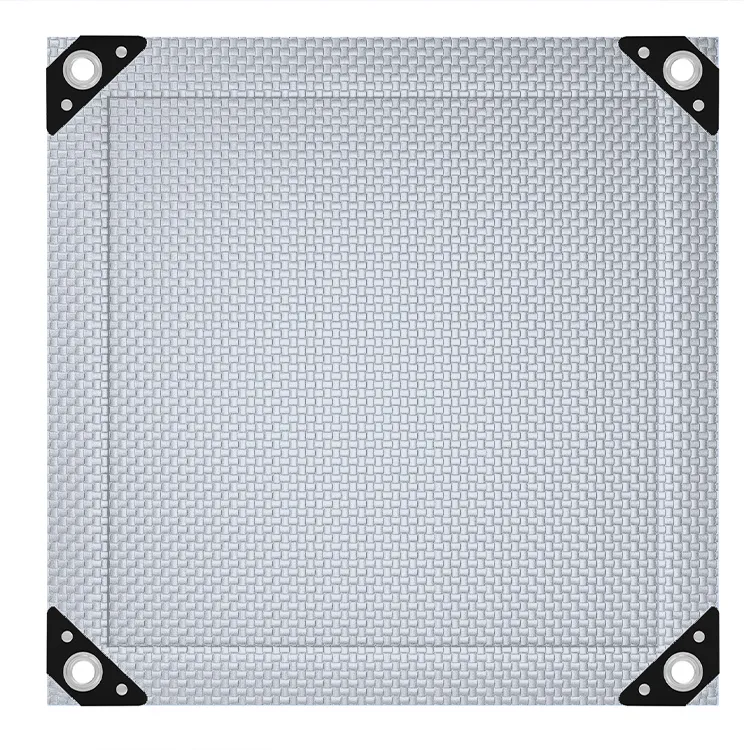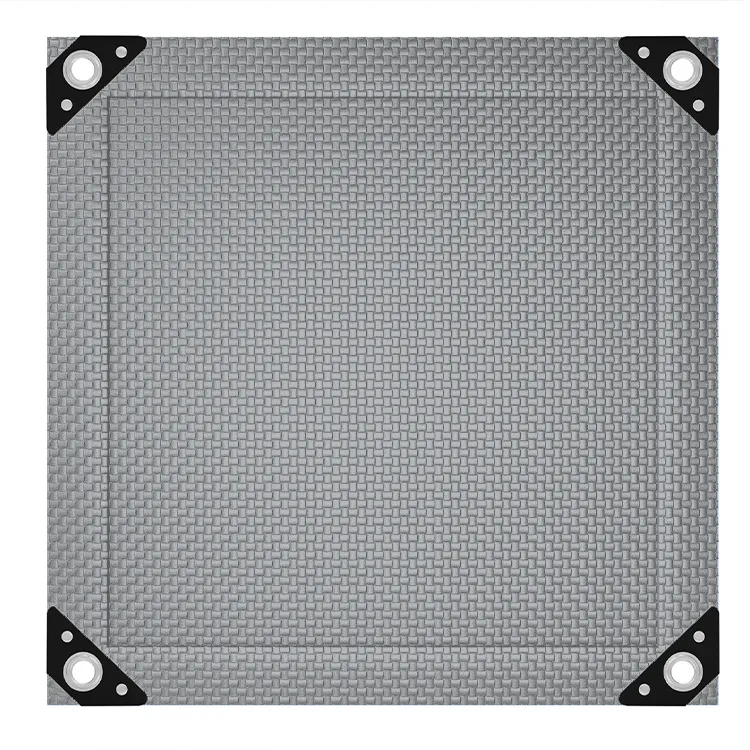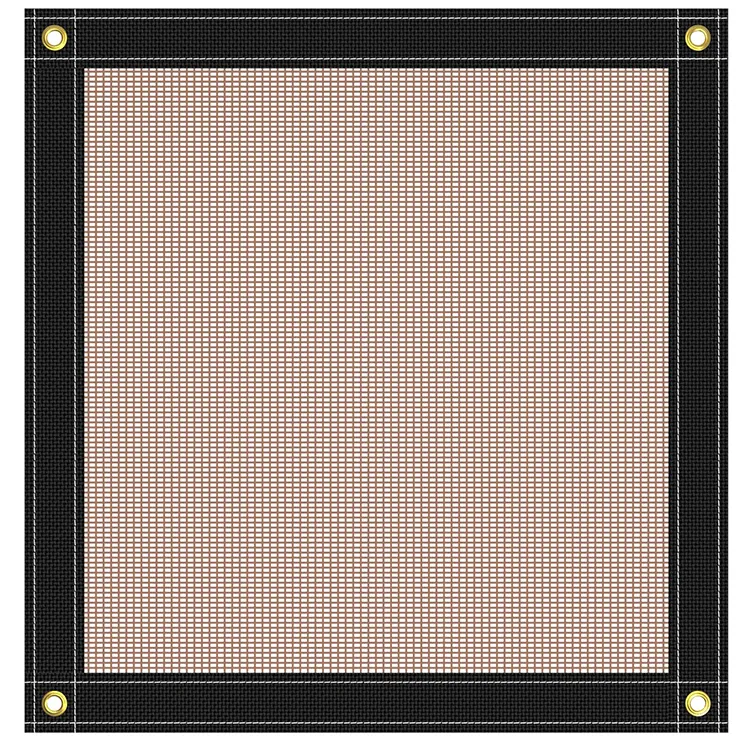


When a jobsite asks for a fire-retardant barrier, a solid tarp is not always the right answer. Scaffolding, restoration work, temporary partitions and containment areas often still need airflow, visibility control and debris reduction. That is where fire retardant mesh tarps need a different specification path.
Before asking for price, confirm the fire-retardant requirement first. A mesh tarp cannot be judged only by color, size or shade percentage when the project also asks for NFPA, DIN, EN, NF, JIS, FTMS or another fire test method. The safer way is to define the required test method, then choose the mesh opening, PVC coated mesh direction, edge reinforcement and grommet layout.
Start With the Fire Test Requirement, Not the Mesh Color
A fire retardant mesh tarp should not be specified with the sentence “make it FR” only. Fire-retardant performance depends on material structure, coating formula, additives, sample construction and the selected test method. Different markets may ask for different methods, and the results are not automatically interchangeable.
If the buyer needs an NFPA 701 fire retardant mesh tarp, send the exact method, version, project market and whether the report must cover material only or finished tarp construction. If the requirement is DIN 4102, NF P92-507, JIS L 1091, FTMS 191A or another method, the same details should be confirmed before sampling.
Choose Mesh by Risk, Not by One Specification
The mesh should match the jobsite risk. A containment screen for dust and light debris does not behave like a wind-relief partition or a visual barrier around hot work zones. Fire retardant debris mesh tarps should balance three questions: what must be contained, how much air must pass through, and how the tarp will be tied to the frame.
Jobsite decision | What to confirm | Why it matters |
|---|---|---|
Fire-retardant requirement | Standard name, version, sample type, report acceptance | Avoids testing the wrong construction or wrong method |
Mesh opening | Debris size, airflow need, shade / privacy target | Too open may leak debris; too dense may increase wind load |
Material direction | PVC coated mesh, HDPE / PE sales option, color, GSM | Affects coating control, flexibility, hand feel and export consistency |
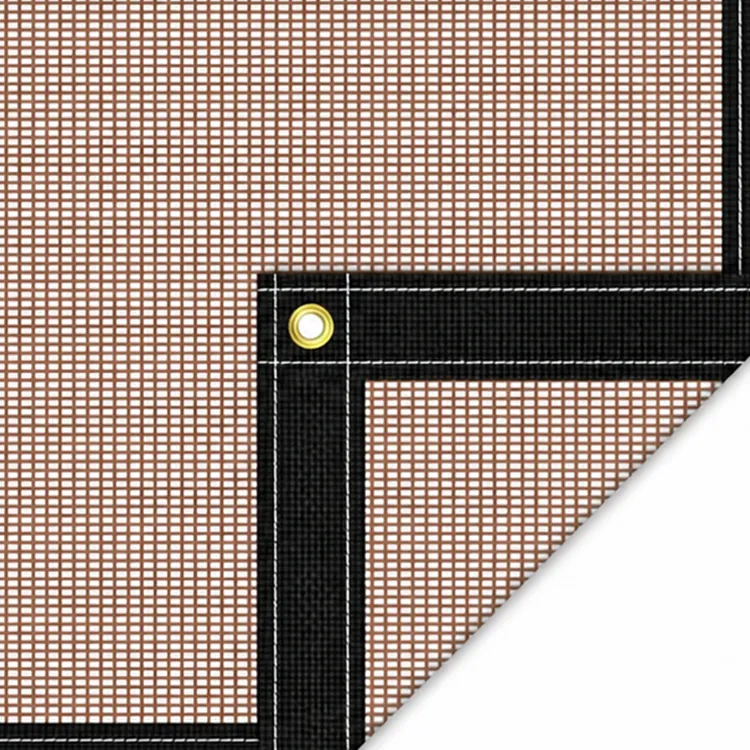
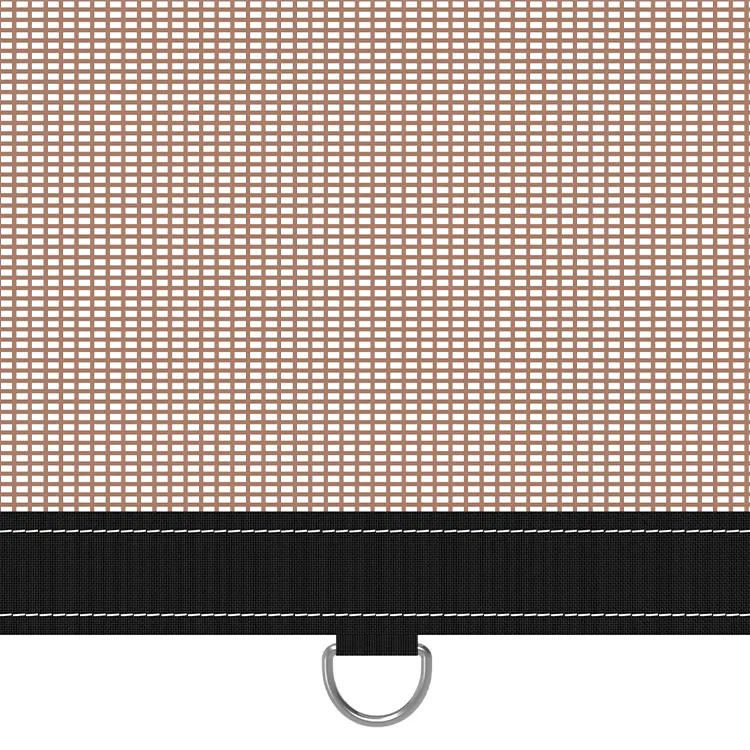
Edge structure | Welded hem, sewn hem, webbing, rope edge, corner patch | The fixed edge often fails before the center mesh |
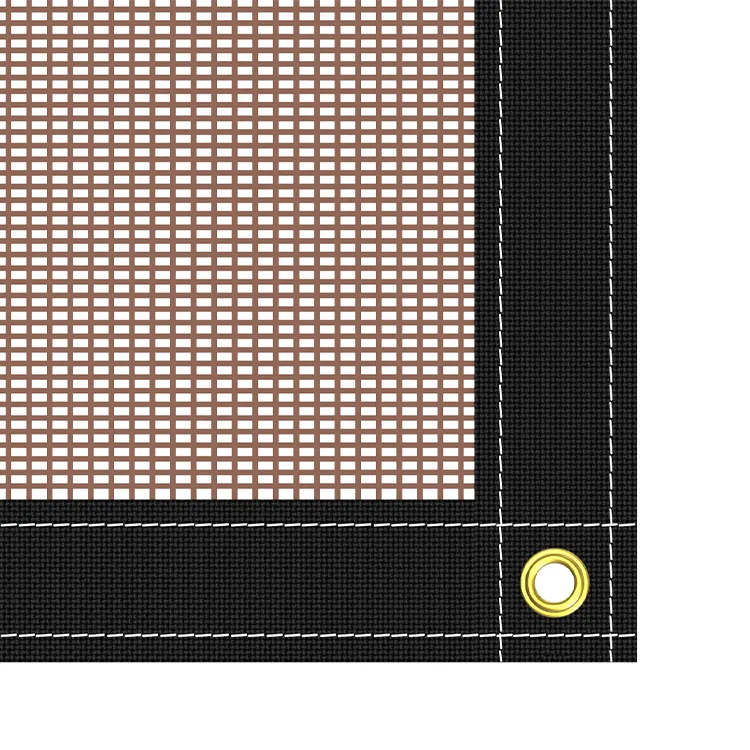
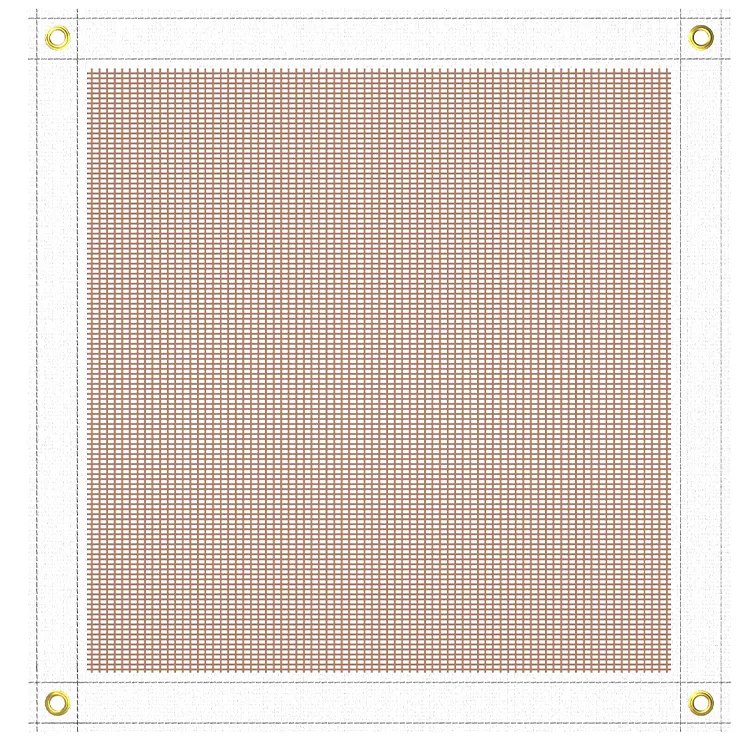
Grommet layout | Metal / plastic grommet, spacing, edge distance | Fire retardant mesh tarps with grommets still need edge strength |
Documentation | Sample report, production inspection, certificate files | Keeps the quote aligned with the project safety requirement |
For fire retardant mesh tarps for scaffolding, do not choose only by tarp length and width. The connection method, overlap between panels, flapping control and grommet spacing are often what decide whether the installation stays clean on site.
PVC Coated Fire Retardant Mesh Tarps for Repeatable Orders
PVC coated fire retardant mesh tarps are a better direction when the order needs repeatable color, coating control, welding or sewing compatibility, export packing and clear documentation. PVC mesh is part of LonaTarp's core product direction, so the discussion can include mesh opening, GSM, color, coating formula direction, edge finishing and packing plan.
PE or HDPE mesh may be discussed only as a sales option when the buyer needs a cost-sensitive construction netting direction. It should not be written as LonaTarp's core manufacturing advantage.
Edge Details for Fire Retardant Mesh Tarps with Grommets
Fire-retardant performance is important, but the tarp still has to survive installation. If the tarp is pulled across scaffolding, tied through repeated grommet points or exposed to wind, the edge construction should be reviewed with the mesh itself.
Options may include welded hems, sewn hems, webbing reinforcement, rope edge, corner patches, internal seams, metal grommets or plastic grommets. For large panels, ask whether extra tie points or internal seam reinforcement are needed to reduce flapping. Sample testing should check both the material hand feel and the finished edge.
Avoid These Fire Retardant Mesh Tarp Mistakes
The first mistake is using the word fireproof. A fire retardant mesh tarp is not fireproof. It is built to meet or be evaluated against an agreed fire-retardant test method, and the result depends on the submitted sample and the method used.
The second mistake is separating the report from the real tarp. A material swatch, a sewn finished tarp and a reinforced grommeted panel may not be treated the same by the buyer's project team. Confirm whether the buyer needs material documentation, finished-product testing or both.
If the project does not need airflow, compare broader fire retardant tarps before forcing a mesh construction. Solid covers may be a better direction when rain protection, full dust blocking or enclosed coverage matters more than ventilation.
The third mistake is choosing a dense mesh only because it looks safer. A tighter mesh may contain more dust or debris, but it can increase wind load. A more open mesh may reduce wind pull, but it may not hold back smaller jobsite materials. This is why flame retardant mesh tarps should be selected by both fire requirement and containment target.
Finished Tarps, Rolls or Panels
Choose finished fire retardant mesh tarps when the project needs ready-to-install size, hems, grommets, internal seams, labels and carton packing. Choose roll material when the buyer has local fabrication, later cutting or multiple panel sizes to manage.
The quote path is different. Finished tarps need drawings, tolerance, panel layout, grommet spacing, edge distance and packing. Roll orders need roll width, roll length, GSM, mesh opening, color tolerance and pallet packing. If the jobsite will combine multiple panels, send the installation layout instead of only the single-panel size.