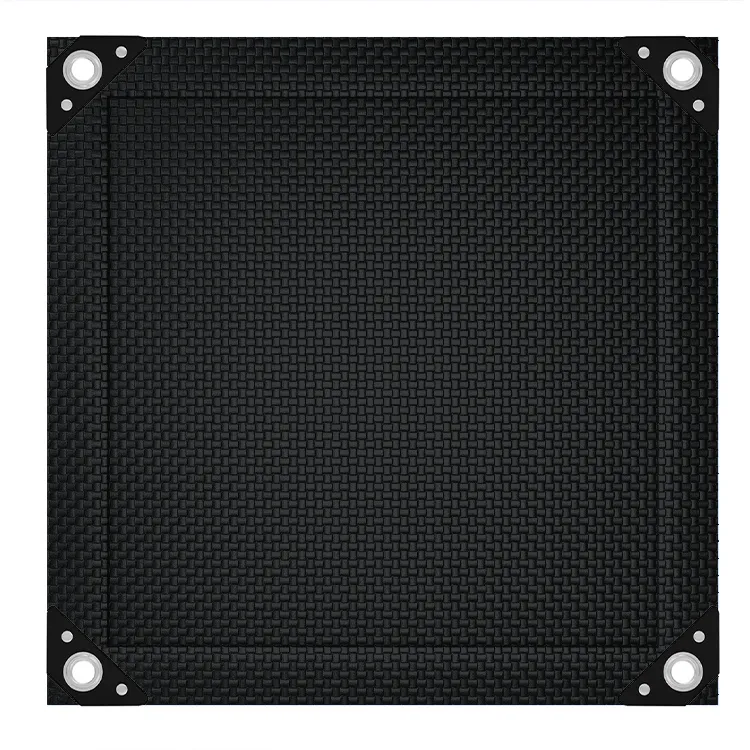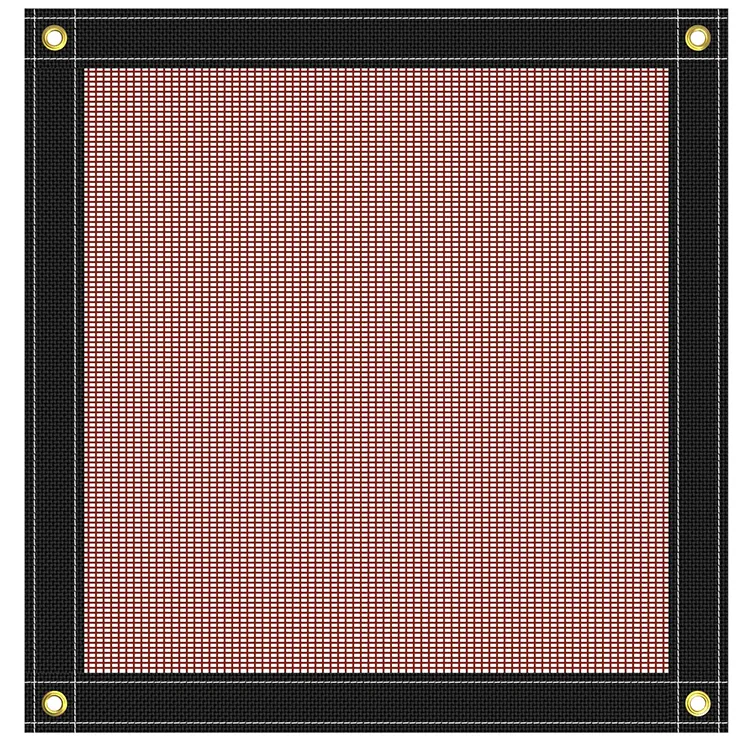


LonaTarp supplies heavy duty mesh tarps for B2B projects where a cover must breathe, reduce wind load and still hold up under repeated fixing. These tarps are used for airflow control, shade, debris containment, fencing, transport covers, storage yards and other outdoor jobs where a solid tarp would trap too much pressure or heat.
A heavy duty mesh tarp is not defined by weight alone. In factory review, the weak point is often the edge, corner or grommet row, not the center mesh. Before asking for price, buyers should define the material, mesh opening, base fabric strength, reinforced hem, grommet spacing, UV exposure, finished size and packing method.
When a Heavy Duty Mesh Tarp Is the Right Choice
A heavy duty mesh tarp is the right choice when the job needs airflow and controlled protection at the same time. It will not seal rain like solid PVC tarpaulin, but it can reduce wind pressure, improve ventilation and keep larger debris, shade or privacy coverage under control.
For procurement, heavy duty should be translated into measurable construction details. A buyer should ask how the base fabric carries tension, how the coating supports outdoor use, how the mesh opening balances airflow and retention, and how the hem and grommet layout will handle pulling force after installation.
Specify Heavy Duty Mesh Tarps by Stress Point
A useful quote starts with the stress points. For reinforced heavy duty mesh tarps, the factory needs to understand where the tarp will be pulled, how often it will be installed, and whether the edge or corner will take concentrated force.
Stress point | What to confirm | Why it matters for heavy duty use |
|---|---|---|
Pulling direction | Frame fixing, truck-side tie-down, fence fixing or vertical hanging | Helps judge whether the edge, corner or full panel carries the main load |
Base fabric | Polyester mesh structure, yarn direction, scrim strength or denier if required | Affects tear resistance and dimensional stability |
Mesh opening | Hole size, woven / knitted structure and desired shade or retention level | Balances airflow, wind relief, shade and debris control |
Coating and material | PVC mesh as core direction; PE / PP mesh only as sales option | Controls outdoor durability, color consistency, fabrication and cost direction |
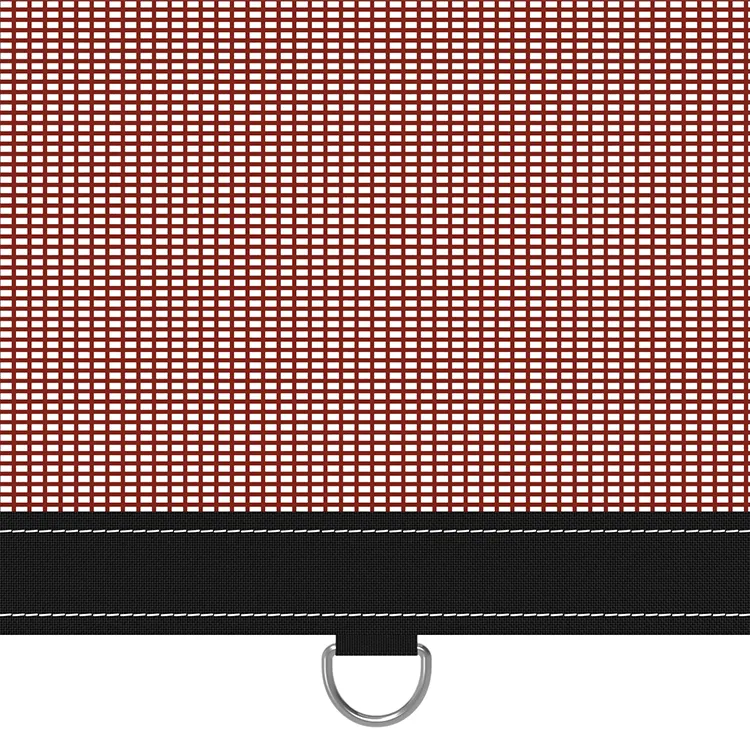
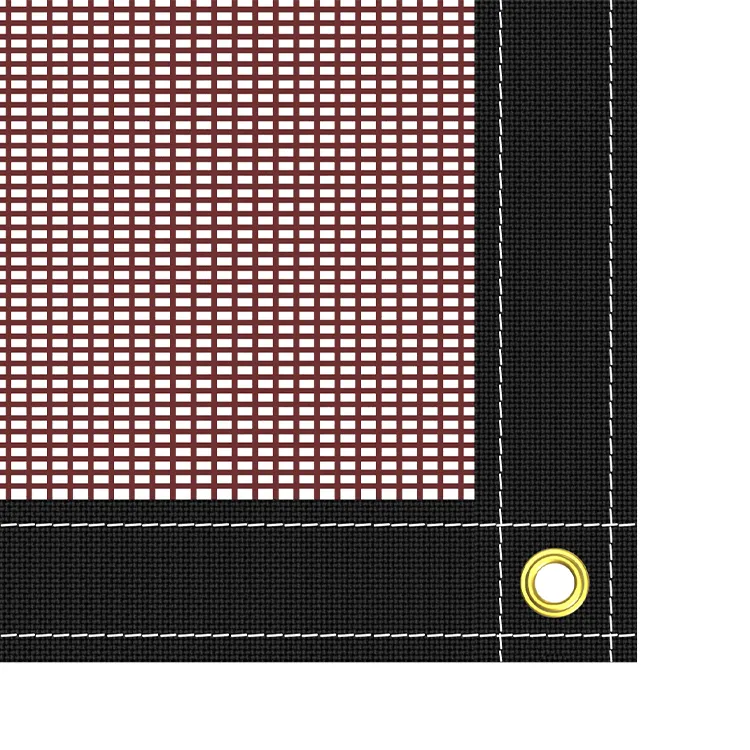
Reinforced hem | Welded, sewn, webbing, rope edge or wider folded hem | Protects the area most likely to fail under repeated tension |
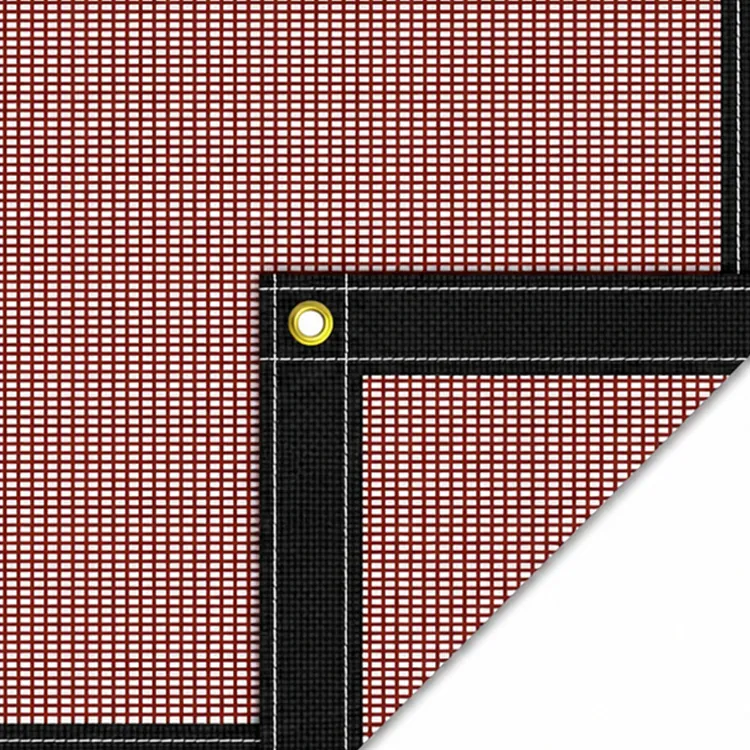
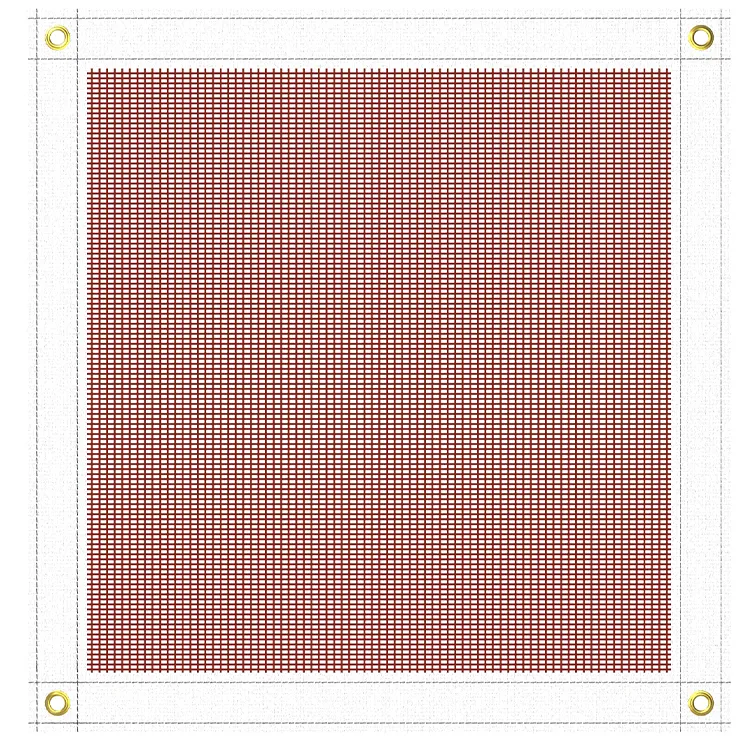
Grommet layout | Metal or plastic grommets, spacing and edge distance | Decides how pulling force is distributed along the edge |
Corner design | Corner patches, extra layers, D-rings or webbing loops | Reduces concentrated stress at the highest-load points |
UV exposure | Outdoor duration, color, test requirement or local climate concern | Helps select a suitable UV and color-stability direction without overpromising lifespan |
Finished size | Length, width, drawing, tolerance and whether the tarp is tensioned | Prevents installation mismatch and over-pulling |
Order format | Finished tarps, roll material, pieces, cartons or square meters | Confirms production route, MOQ and packing |
Heavy duty mesh tarps with grommets should not be specified by grommet spacing alone. If the hem is too light, adding more holes can simply create more weak points. The edge structure and the fixing method need to be designed together.
Heavy Duty PVC Mesh Tarps for Stronger Material Control
Heavy duty PVC mesh tarps are the preferred direction when buyers need repeatable coating, color control, fabrication compatibility and factory-side inspection. PVC mesh is part of LonaTarp's core material direction, so it is a better fit for custom B2B orders than a purely price-led light mesh option.
PE or PP mesh can still be discussed as a sales option when the project is closer to light shade screen, temporary cover or cost-sensitive distribution. We do not present PE or PP mesh as LonaTarp's core manufacturing advantage. For heavy-duty use, material choice should follow tension, exposure, fabrication method and inspection requirements.
Reinforced Heavy Duty Mesh Tarps for Tie-Down Points
Reinforced heavy duty mesh tarps should be built around the fixing method. If the tarp is pulled across a frame, tied to a truck body, fastened to fencing, used on a storage rack or removed repeatedly, the edge cannot be treated as a simple finishing detail.
Options may include wider hems, webbing reinforcement, corner patches, rope edge, D-rings or closer grommet spacing. For larger covers, the factory should review the full pull path: panel, hem, corner, grommet, tie-down and frame. That is where a reinforced heavy duty mesh tarp becomes different from a standard mesh cover.
Match Heavy Duty Mesh Tarps to Airflow, UV and Debris Control
Heavy duty mesh tarps for airflow are useful when the job needs wind relief, ventilation and partial cover at the same time. Heavy duty mesh tarps for shade may use a tighter opening, while debris-control covers may need enough open area to reduce wind pressure. The right choice depends on what the tarp must let through and what it must hold back.
For industrial heavy duty mesh tarps, buyers should describe outdoor exposure, wind level, contact with sharp edges, installation frequency, expected tension and any flame-retardant or anti-static requirement. A UV resistant heavy duty mesh tarp may be needed for long outdoor exposure, but UV test hours should not be converted directly into guaranteed outdoor years.
Finished Heavy Duty Mesh Tarps or Roll Material
Some buyers need finished heavy duty mesh tarps ready for installation. Others buy roll material so their local workshop can cut, sew, weld or stock repeated sizes. These are different quote paths and should not be mixed in one vague request.
Finished tarps require final size, tolerance, edge finishing, grommet spacing, reinforcement and packing details. Roll material requires roll width, roll length, GSM, color tolerance, coating direction and pallet packing. If a distributor needs both formats, send the finished tarp drawing and the expected roll usage in the same inquiry.