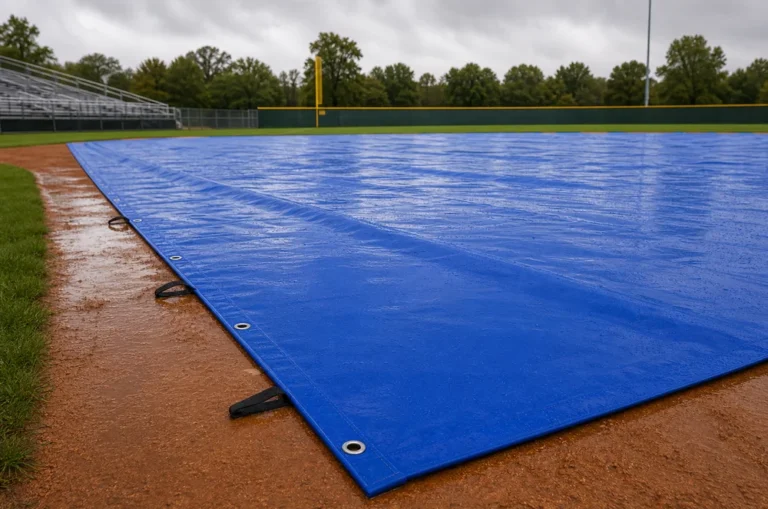
Tarpaulin welding quality should be checked by seam performance, not by appearance alone. A clean-looking weld can still fail later if the overlap is wrong, the surface treatment blocks fusion, the material pair is mismatched, or the production window drifts between sample and bulk order. For B2B buyers, a practical tarp welding review has four parts: confirm the real product structure, lock the seam geometry, test peel or shear behavior where relevant, and review the seam at edges, corners, folds, and hardware zones before approving mass production.
This matters because welded seams often decide whether a custom tarp maintains its intended barrier, keeps its shape, and survives repeated handling. In PVC tarpaulin welding, results are influenced by heat input, power, pressure, time, overlap width, surface cleanliness, and the material’s earlier thermal history. Surface lacquer, contamination, or the wrong process window can reduce fusion even when the seam looks acceptable from the outside. If you are still at the early configuration stage, the main custom made tarps page gives the broad product route. The article below focuses on what buyers should verify when seam performance is the buying risk.
I. What a Good Welded Tarp Seam Should Actually Prove
A welded tarp seam should do more than look straight. It should keep the load path continuous through the finished tarp, resist peeling at the edge, and stay stable when the cover is folded, tensioned, or installed around real hardware. If the project needs water containment or weather protection, the seam also has to maintain the intended barrier function under the actual service condition. That is why a proper welding review checks seam function, not only appearance.
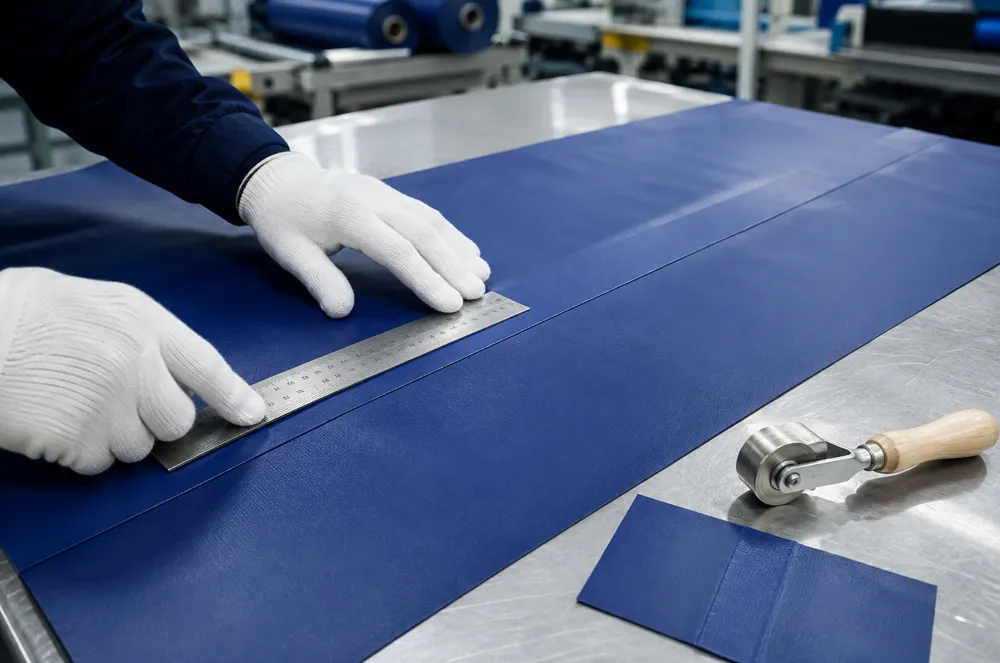
In practice, the buyer should ask where the seam will sit on the finished tarp and what load it will carry. A center-panel seam on a large cover behaves differently from a hem seam beside eyelets, a corner reinforcement seam, or an enclosure flap seam that opens and closes daily. A good sample should reflect that real geometry. Otherwise, the seam may pass a bench check but fail once the tarp is tensioned in the field.
This is also where buyers should separate a welding-quality review from a welding-method debate. The article on hot air welding vs high frequency welding for PVC tarps compares the process families directly. Here the buyer question is different: how to decide whether the actual welded seam is strong enough for the approved product structure before 5,000 square meters or more go into production.
II. How Material, Pressure, and Tarpaulin Welding Temperature Affect the Seam
There is no universal tarpaulin welding temperature that can be copied safely from one fabric or machine to another. The usable setting depends on the coating formulation, fabric weight, surface finish, welding method, line speed, pressure, and dwell time. In industrial tarp welding, the practical control is an approved process window tied to the exact material and seam structure, not one temperature number taken from a different product.
Seam quality also changes when the material pair, overlap width, or surface condition changes. Two points are easy to miss. First, the welding zone is affected by the material’s earlier heat history, including coating, plasticizing, and prior processing. Second, lacquer or surface treatment that improves cleanability or weatherability can narrow the welding window if the seam area is not planned correctly. Those are production details, but they directly affect the reliability of the finished tarp you receive.
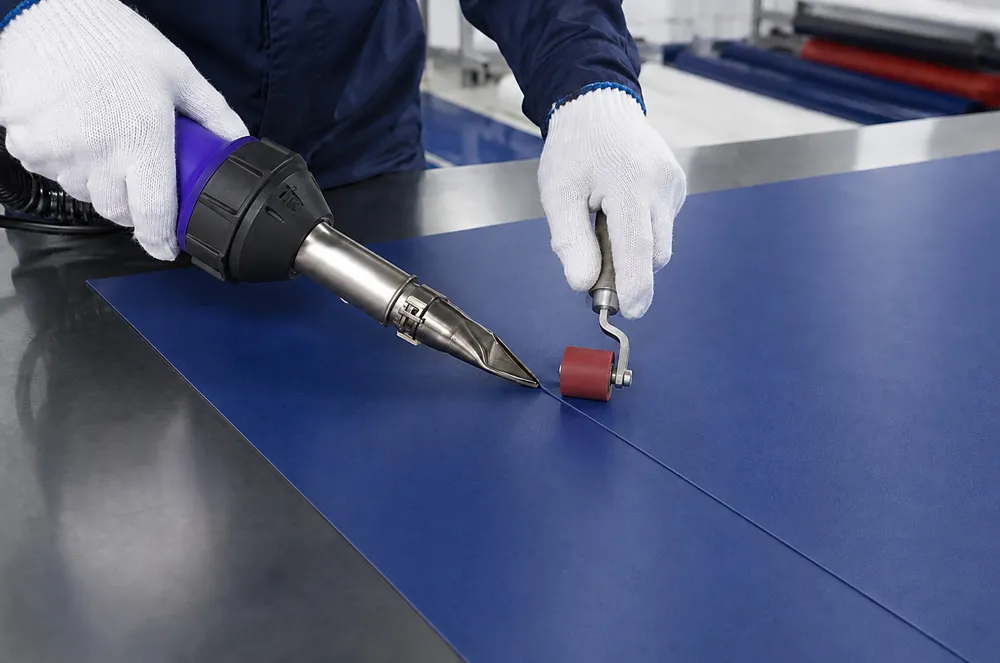
Surface cleanliness is another major variable. Dust, release residue, print contamination, and poor handling at the overlap line can reduce fusion or make the seam performance inconsistent from piece to piece. The same goes for mismatch between body fabric and reinforcement strip. If the buyer wants a printed area, extra reinforcement, or a very clean outer surface, that should be stated before the sample is made so the supplier can keep decorative or protective layers away from the functional weld zone where needed.
| Seam check item | What the buyer should confirm | Why it matters in production |
|---|---|---|
| Overlap and seam route | Width, location, and whether the seam crosses corners or hardware zones | The same material can pass on one seam geometry and fail on another |
| Material compatibility | Body fabric, reinforcement strip, surface treatment, and printed area around the weld | Lacquer or mismatched layers can reduce fusion consistency |
| Test method | Peel, shear, liquid-tight, or field flex test as required by the project | Appearance alone does not show how the seam behaves under load |
| Process stability | Heat input, pressure, dwell time, speed, and operator control on repeat runs | A good first sample is not enough if the bulk window is not held |
The product knowledge also notes that polyester base fabric changes dimension with heat history. That matters when the seam sits on a long panel or a tight-fit custom cover, because width drift, skew, or internal stress can show up later as fit complaints even when the seam itself appears bonded. Buyers who care about a critical fit should ask for both seam strength confirmation and finished-size tolerance confirmation on the same representative sample.
III. What a Useful Welding Sample Should Include
A useful welding sample should be built from the same material family and seam logic planned for the order. If the finished tarp will have reinforced hems, hardware rows, zipper openings, or sleeves, the sample should include the risky zone rather than only a flat center-panel strip. A narrow lab coupon may show whether two coated surfaces can fuse, but it does not tell the buyer enough about how that seam behaves near real load concentration points.
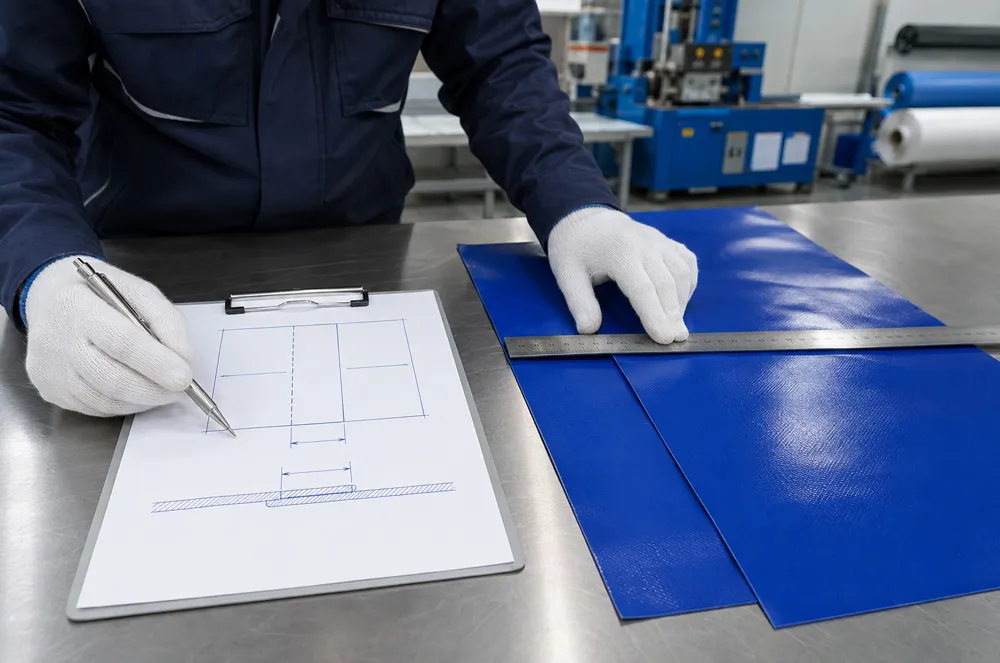
For most B2B orders, I recommend four sample checks before release. Confirm the seam geometry on the drawing, confirm the overlap width and material stack-up on the physical sample, confirm the inspection method that matters to the job, and confirm whether the sample represents the final edge and hardware construction. Treat this as a three-layer acceptance method: screen the construction, test the performance that matters, then verify that production can repeat it. When the tarp is intended for enclosure, containment, or water-shedding service, the buyer should also ask whether the seam is only structurally bonded or also checked for the needed liquid or air barrier behavior.
How to Read a Failed Seam Sample
A test result is more useful when the failure location is recorded, not just the peak number. The joint may separate at the welded interface, the coating may peel from the base fabric, or the fabric may tear outside the seam. Those failure modes point to different risks. Ask the supplier to retain a labeled specimen or clear photo with the material code, seam direction, test method, and result. Do not compare two strength figures unless the specimen geometry, loading direction, unit, and test method are the same.
The published custom tarp inspection article is useful here because it shows how the seam check should sit inside the wider release routine. Seam approval is strongest when it is connected to size tolerance, eyelet spacing, edge quality, and final packing, rather than treated as a stand-alone yes or no.
IV. How to Hold Welding Quality Through Bulk Production
Bulk production control starts after the sample is approved. The buyer should ask the factory to tie the approved seam structure to the exact material code, overlap note, and process route used in production. The inspection record should also name the test method, specimen direction, and reporting unit; results from different methods are not automatically comparable. If the order has multiple sizes, confirm whether the same seam detail is valid across every size or whether larger covers need a different reinforcement or seam position. Repeatability matters more than one strong sample.
When the Approved Welding Setup Needs Revalidation
Revalidation is sensible when a change can alter heat transfer, fusion, or load concentration. Examples include a new fabric construction, a different coating or lacquer, added printing near the seam, a new reinforcement layer, a changed overlap, a different welding process, or a seam moved into a corner or hardware zone. Not every routine production adjustment requires a new customer approval, but the supplier should identify which changes fall outside the approved window and how they will be checked before the remaining quantity is produced.
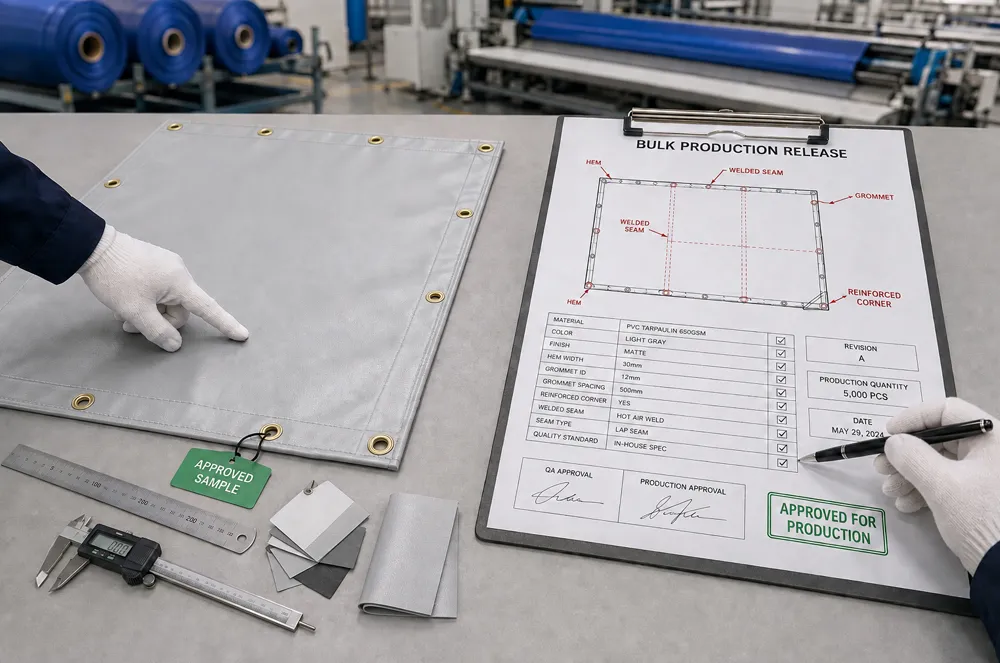
A good mass-production release normally includes the approved sample, seam note on the drawing, process control window, in-line inspection points, and the final acceptance rule for peel or related checks when applicable. It should also state how damaged or inconsistent seams are segregated before packing. For buyers who need a stronger documentary route, linking the order with the factory quality control process early reduces confusion later when reports, photos, or shipment approval records are requested.
Tarpaulin welding quality is not a cosmetic detail. It is a controlled manufacturing decision that affects service life, leak risk, and complaint rate after delivery. Buyers usually get the best result when they approve the real seam structure, test the right performance, and keep the sample, drawing, and production record on the same revision before the order moves to bulk.