The practical answer to single layer vs double layer SUP is not that one label always wins. A single-layer build can support a lighter, easier-to-pack product and a more accessible price point. An added reinforcing layer can increase the structural margin against surface wear and deformation, but a traditional glued second skin may also add weight, folding resistance and another interface that must be controlled. Fusion-laminated constructions try to combine reinforcement with a more controlled bonding route, yet their performance still depends on the actual material, board geometry, rails and production discipline.
For an OEM buyer, the decision should begin with the market promise: who will use the board, how often it will be handled, the target carrying weight, the expected water and shore conditions, and the selling-price range. Only then should the factory freeze the face construction, rail design, finished weight target and sample test plan. Counting layers before defining those conditions reverses the decision.
I. First Define What the Supplier Counts as a Layer
Every inflatable SUP needs a drop-stitch core with a top face and a bottom face. “Single layer” does not mean the board has only one wall. In a typical
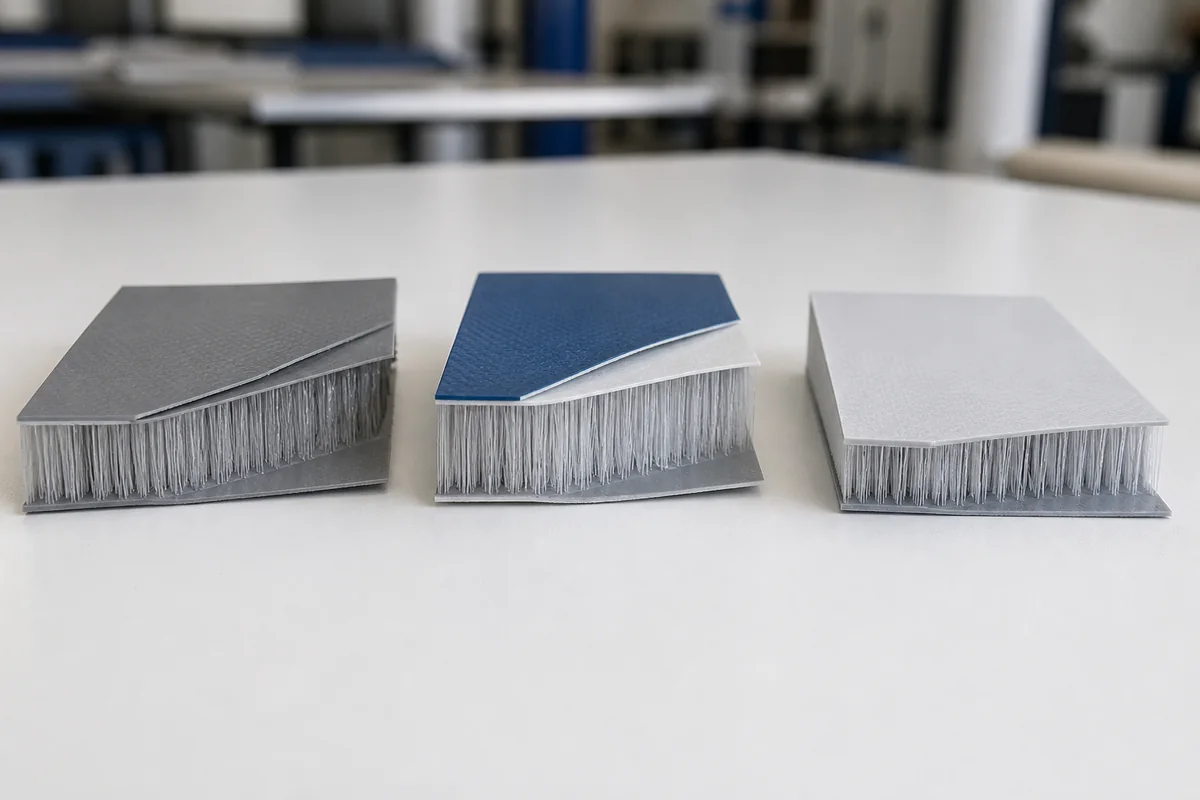
single layer drop stitch description, each outer face has the basic airtight coated or laminated construction without a separate full-area reinforcing skin added over it. Rails, deck pads and localized patches are separate parts of the finished board and may still use more than one strip or reinforcement.
A traditional double-layer description normally means that another full-area PVC-reinforced skin is bonded over the prepared face. A fusion or machine-laminated route also adds or integrates reinforcement, but the bonding sequence differs from manually applying a second sheet with a substantial adhesive layer. Brand terms are not standardized, so two suppliers may count textile, coating, film, adhesive and reinforcement in different ways.
That ambiguity is why the quotation should carry a simple cross-section, not only a construction name. Ask the supplier to mark the drop-stitch textile, airtight surface, added reinforcement, bonding route, rail bands and local patches. Our guide to complete inflatable paddle board construction explains the rest of the board anatomy; here, the decision is whether the selected face build is suitable for the intended product.
II. A Single-Layer SUP Works When the Product Brief Leaves Enough Margin
The strongest commercial case for a single-layer SUP is controlled simplicity. With less full-area reinforcement, the board may be easier to carry, roll and ship, while material and processing costs can be kept closer to an entry or value-market target. That can be appropriate for general recreational lines, promotional programs or travel-focused products when the approved sample proves the required shape and handling performance.
The mistake is treating low weight as proof that the construction is optimized. Face structure is only one contributor. Board length, width, thickness, rocker, pressure condition, rail build and the user load all influence perceived flex and dimensional stability. A carefully developed single-layer board can fit its market; a poorly controlled one can show excessive bending, surface damage, rail movement or inconsistent shape.
For this route, we usually ask the buyer to define three limits before material approval:
- the finished-board weight and packed-size window that the sales channel can accept;
- the load, use frequency and shore-contact conditions represented by the sample test;
- the allowed change in shape, dimensions and pressure during the agreed evaluation.
If the board will be dragged over rough launching areas, handled daily by a rental fleet or loaded near the edge of its design brief, the cost saved in the face build may be smaller than the later warranty and replacement exposure. The question is not whether single layer is “cheap.” It is whether the complete board still has sufficient margin for the promised duty.
III. A Second Skin Adds Reinforcement, Not Automatic Quality
A buyer may see “SUP double layer drop stitch” in a quotation, but that phrase still leaves important questions open. What is the second skin made from? Does it cover the complete deck and hull faces or only selected zones? How is it bonded? What is the resulting board weight? Which rail bands close the chamber, and which test proves that the extra interface remains stable after folding and heat exposure?
When the additional skin and its bond are well controlled, the construction can provide a useful reserve against abrasion, localized impact and face deformation. It may suit rental fleets, schools, heavier-duty recreational programs or distributors who would rather accept more carrying weight than expose the line to frequent rough handling. The second skin can also make the board feel more planted, but the degree of change cannot be predicted responsibly from the word “double” alone.
There are costs to manage. More material can increase finished weight, freight burden and roll stiffness during packing. A hand-glued second layer introduces adhesive coverage, curing, trapped air, surface preparation and alignment as process variables. If those controls are weak, adding material can create bubbles, cosmetic variation, local delamination or an unnecessarily heavy board.
Most importantly, a reinforced face does not repair a weak perimeter. Rail overlap, corner transitions, valve patches, fin zones and handle attachments remain their own load and sealing paths. Approve the face build and the finished perimeter separately, then evaluate the inflated board as one product.
IV. Fusion Changes the Weight–Reinforcement Trade-Off, but Not the Approval Rules
Fusion-laminated material is often discussed as the third route between basic single-layer faces and a traditionally glued double skin. The reinforcing polymer or fabric-supported layer is integrated with the drop-stitch face during a controlled lamination stage rather than being added later as a heavily adhesive-dependent sheet. This can reduce some of the weight and manual variation associated with older double-layer processing while retaining a reinforced face concept.
However, “fusion” is also used as a broad commercial term. A supplier still needs to identify the base textile, surface system, added layer, bonding method and compatible rail process. It is not safe to transfer a stiffness, weight or durability percentage from one brand’s construction to an unrelated material or board.
For premium travel, touring or performance-oriented lines, a validated fusion route may offer a useful balance: the product team can pursue reinforcement without accepting all the bulk of a traditional glued second skin. For value programs, the material and process premium may not create enough customer-visible benefit. For hard-use fleets, the face may be suitable while the rails, fittings or deck zones still need additional protection.
The buyer should therefore compare finished samples built to the same outline and target use, not isolated material labels. Record the board weight, packed behavior, dimensions at the agreed condition, load response, surface and rail condition, and pressure retention. That evidence shows whether the construction change improved the product the buyer actually plans to sell.
V. What Is the Best Material for an Inflatable Paddle Board Program?
There is no universal
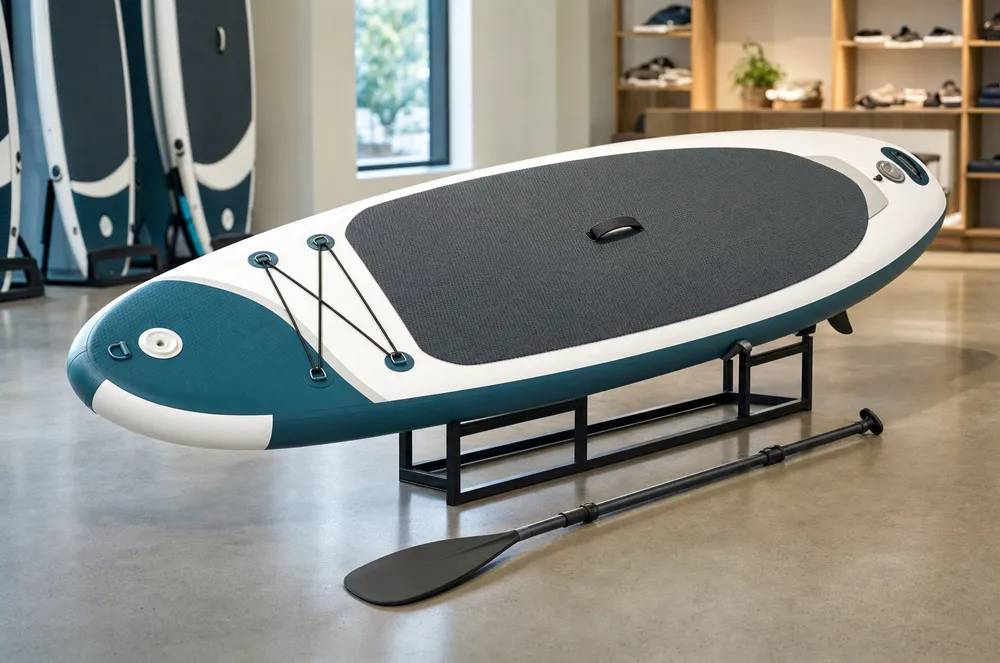
best material for an inflatable paddle board without a product brief. The best choice is the construction that meets the promised use, handling and price conditions with an acceptable sample and a repeatable production plan.
| Program | Starting construction direction | What may justify it | Evidence required before approval |
|---|---|---|---|
| Entry or value recreational line | Validated single-layer face with appropriate rail reinforcement | Lower carrying weight, compact packing and controlled cost matter more than maximum reinforcement | Finished weight, shape under the agreed load, rail condition, pressure retention and basic handling checks |
| Travel or premium all-round line | Fusion-laminated or another verified lightweight reinforced build | The buyer wants a stronger face concept without making the packed product unnecessarily heavy | Cross-section, board-to-board weight consistency, dimensions, load response, folding behavior and surface bond evidence |
| Rental, school or frequent-use fleet | Reinforced face, robust rail package and protected high-contact zones | Daily handling, dragging, repeated inflation and varied users create a higher damage exposure | Repeated handling protocol, abrasion/contact review, rail and fitting inspection, pressure test and repair plan |
| Touring, cargo or higher-load design | Construction selected together with board geometry and load target | Length, narrowness, carried load or paddling expectations can make flex and dimensional control more visible | Agreed load setup, deflection or shape record, tracking of dimensions, fitting reinforcement and complete-board test |
| Promotional or short campaign program | Cost-controlled construction matched to a clearly limited duty | The program has a defined use window and does not promise professional or fleet performance | Written duty boundary, approved sample, packaging check and batch inspection tied to that boundary |
This table gives a starting direction, not a substitute for testing. A reinforced material can still be the wrong choice if it makes the product miss its carrying-weight target. A single-layer material can still be the wrong choice if the sales promise implies repeated rough use. Market fit is proven when the construction, complete board and commercial claim agree.
VI. Normalize Supplier Quotations Before Comparing Price
Layer names become most dangerous when quotations look comparable but describe different products. One supplier may include a reinforced rail package in “double layer,” another may only mean an extra face skin, and a third may use a fusion term without showing which surfaces are integrated. Price comparison should pause until the same construction fields are visible in every quote.
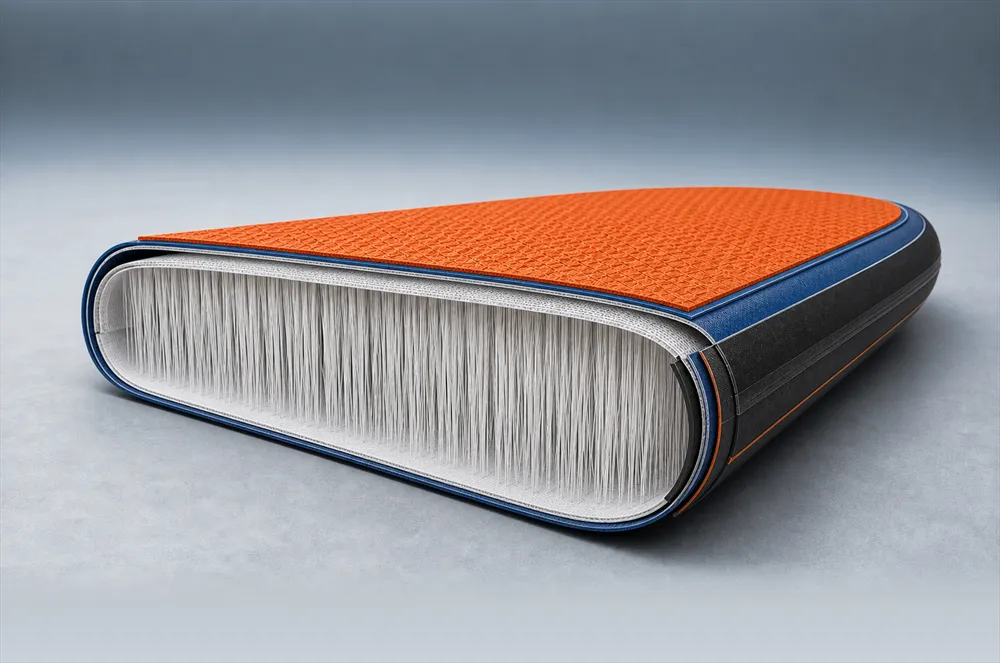
| Comparison field | What the quotation should state | Why it changes the decision |
|---|---|---|
| Face cross-section | Base drop-stitch reference, airtight surface and any full-area or localized reinforcement | Shows what the layer name actually buys |
| Bonding route | Coated, laminated, fusion-integrated or later adhesive bonding, with the approved material reference | Identifies process variables and the evidence needed for interface stability |
| Rail package | Number and location of rail bands, corner transitions and joining method | The perimeter may control leaks and edge stiffness independently of the faces |
| Board geometry | Length, width, thickness, outline and rocker reference | Geometry can change flex, weight and handling even when the face material is unchanged |
| Finished weight | Target and allowed tolerance for the complete board, not an isolated fabric value | Protects the carrying and shipping promise made to the market |
| Use and load condition | Intended user range, cargo, frequency, water conditions and shore-contact exposure | Prevents a recreational sample from being approved for fleet duty |
| Acceptance evidence | Dimensions, shape or deflection record, pressure-retention method, surface/rail checks and approved sample | Converts marketing language into pass/fail evidence |
| Batch control | Material lot, process record, inspection frequency and change-approval rule | Shows whether bulk production can repeat the sample |
I prefer to compare two complete sample specifications side by side. If a supplier cannot fill a field, mark it as open instead of assuming it matches the other quote. This method often explains a price gap before negotiation begins and prevents the lower quote from winning by silently removing reinforcement, testing or process controls.
VII. Make the Sample Reproduce the Real Duty Cycle
A showroom sample that is inflated once on a clean floor cannot represent every commercial program. The approval sequence should reproduce the stresses that distinguish one construction from another.
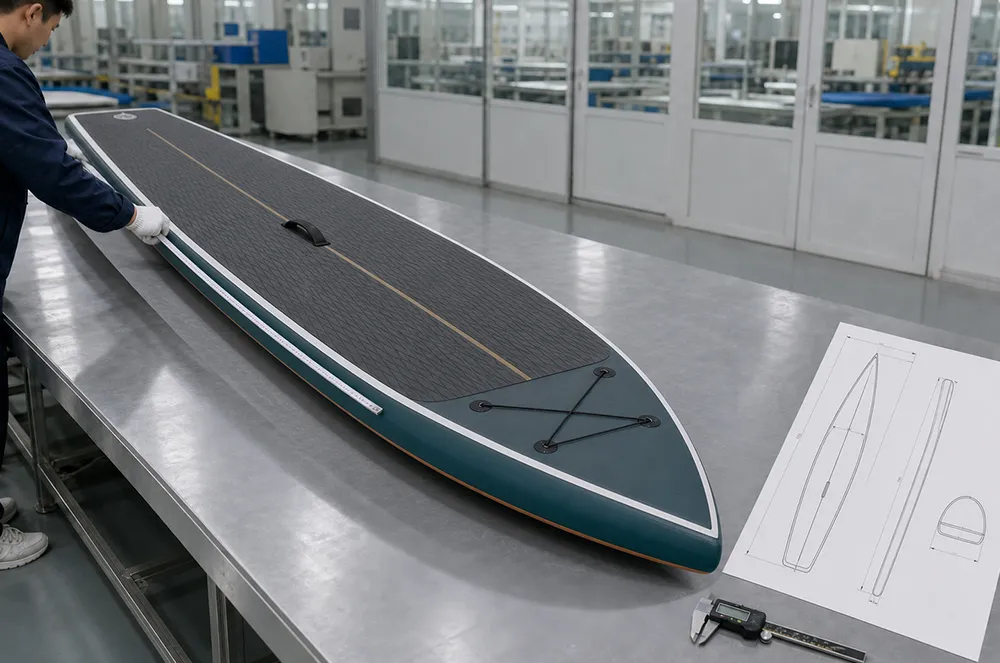
First, lock the board drawing, construction cross-section and finished weight target. Next, condition and inflate the sample under an agreed method, then record dimensions and shape before applying the representative load. After the use or handling sequence, inspect the faces, rails, corners, valve and fittings; repeat the agreed pressure check; and note any movement, whitening, lifting, bubbles, leakage or permanent change. Where a joint is critical, confirm its process and inspection method through the supplier’s welding-quality checks, adjusted to the actual SUP material and joint.
The test plan does not need to imitate years of use in one afternoon. It needs to expose the decisions that matter to this order. A travel line may focus on weight, rolling and repeated packing. A rental line may add dragging, stacking and frequent inflation cycles. A touring design may place more emphasis on loaded shape and dimensional control. The buyer and factory should agree on these conditions before deciding whether the result is acceptable.
Once the sample passes, its material reference, process sheet, drawing revision, weight window, artwork, fittings and acceptance record become the production baseline. Bulk inspection then checks whether the factory repeated that baseline. Without this transfer, the buyer approved a prototype, not a repeatable product.
VIII. Choose the Construction That Can Be Specified, Tested and Repeated
Choose a single-layer SUP when low carrying weight, compact packing and price discipline are central, and the approved complete board still meets the real use boundary. Choose a traditional double-layer route when added surface reserve matters enough to justify its weight and processing demands, and the supplier can prove the bond and perimeter controls. Consider a fusion-laminated route when the program needs reinforcement with a tighter weight target, but verify the actual cross-section and finished sample instead of buying the technology name.
For a new range, send the intended channel, board drawing or target dimensions, user/load profile, use frequency, shore conditions, finished-weight target, artwork and required tests. LonaTarp can review the drop stitch fabric options, converting route and sample acceptance points together before a bulk specification is finalized.
The right construction is not the one with the largest layer count. It is the one your supplier can define clearly, your sample can prove under relevant conditions, and your production batch can reproduce.