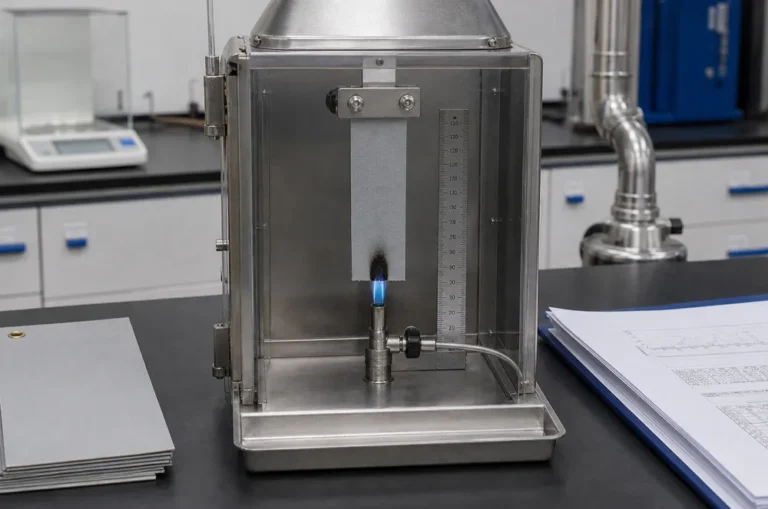
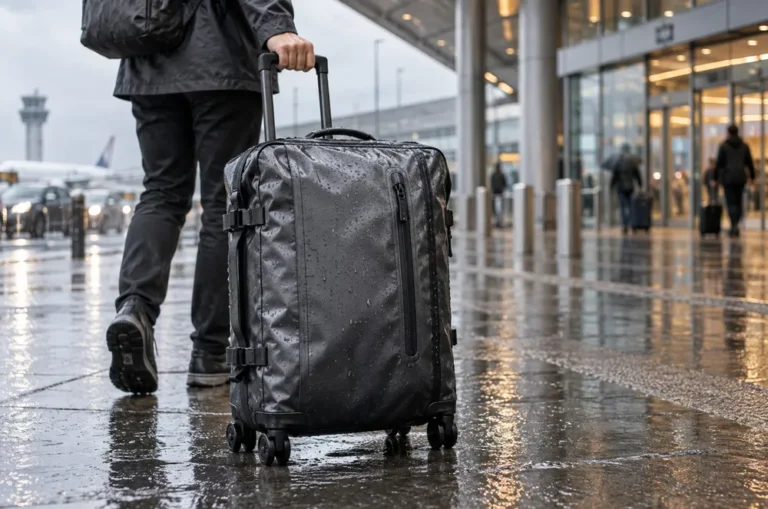
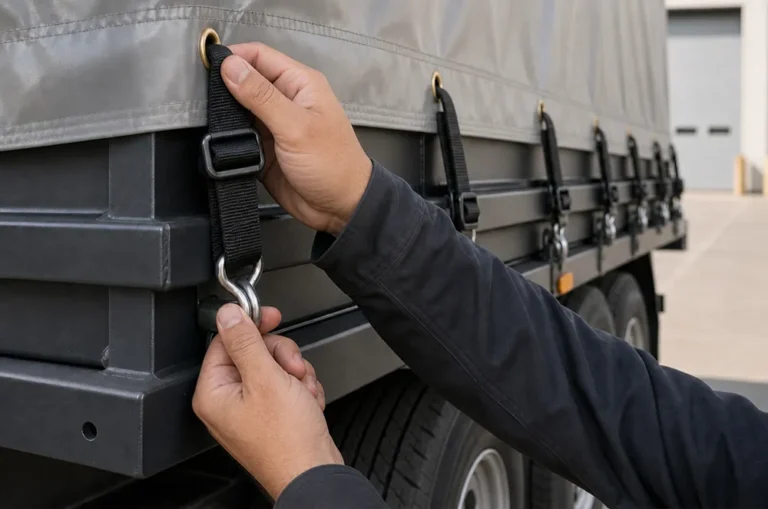
Industrial strength tarps are used today wherever a cover must protect valuable goods, equipment, work areas, or raw materials under stress. The common point is not only rain protection. These tarps often face wind, repeated folding, abrasion, tie-down tension, UV exposure, dirty work sites, and handling by crews who need the cover to work again tomorrow.
In our factory discussions, I usually start with the operating environment before talking about weight. A tarp used over a flatbed load moves at road speed. A tarp over a container roof must control rain and pooling. A tarp used on a construction site may rub against scaffolding, lumber, concrete, or steel. Those use conditions explain why industrial buyers move from light temporary sheets toward stronger heavy-duty tarps and custom-finished cover systems.
I. Industrial Strength Tarps Are Used Where Failure Stops Work
A light cover may be enough for short storage or a low-risk temporary job. Industrial strength tarps are used when failure creates downtime, damaged cargo, wet materials, unsafe work areas, or repeated replacement cost. The tarp becomes part of the operation, not a small accessory.
The first question is usually: what happens if the tarp fails? If a pallet of packaging gets wet, the cost is different from a cover tearing over machinery or a truck load. If workers need to remove the tarp twice a day, hand feel and folding behavior matter. If the cover will stay outside for months, UV resistance, coating stability, drainage, and edge strength become more important than first-day appearance.
This is why I do not treat industrial strength as one fixed product. In one project, the most important point may be tear resistance around tie-downs. In another, the buyer may care more about cleanable coating, anti-mildew performance, flame-retardant confirmation, or stable color under sunlight. The word “industrial” should lead to better questions, not a single automatic specification.
Industrial use also changes how the tarp is pulled. Many failures start around the edge, not in the center. Eyelets, hem width, corner reinforcement, welded seams, webbing, sleeves, and tie-down layout should match the real stress path. A stronger sheet with weak finishing is still a weak cover.
II. Transport And Logistics Need Covers That Handle Motion
Transport is one of the clearest places where industrial tarps are used. Cargo may face wind pressure, road debris, rain, sun, vibration, and repeated loading cycles. A cover that looks fine in a warehouse can behave differently when it is tightened over steel, lumber, coils, pallets, or irregular machinery on a trailer.
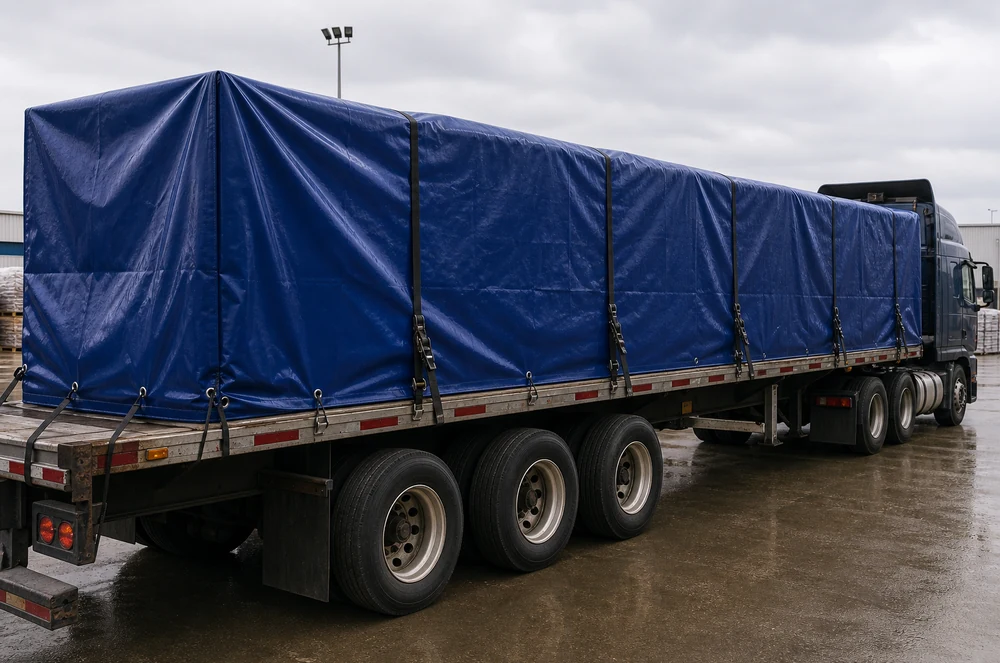
For transport logistics, the cover should be judged by more than waterproofing. It needs tear resistance around tie-down points, enough flexibility for folding, stable coating adhesion, and edge design that can tolerate repeated tension. If the load has sharp corners, the buyer may also need padding, sleeves, or reinforced stress panels.
Flatbed covers, trailer covers, side curtains, dump truck covers, smoke tarps, coil tarps, and lumber tarps all belong to transport protection, but their stress patterns are not the same. That is why a buyer should confirm load type, fastening method, route exposure, folding routine, and whether the tarp will be handled by drivers, warehouse workers, or a dedicated crew.
Transport buyers should also check repair and replacement workflow. A large fleet may prefer standardized sizes and hardware so drivers can replace panels faster. A fabricator making custom covers may prefer tarpaulin rolls and consistent welding behavior. A project buyer covering unusual machinery may need one-off finished panels with reinforced corners. The same material family can support all three, but the finished cover design will not be identical.
III. Containers, Construction Sites, And Outdoor Storage Need Weather Control
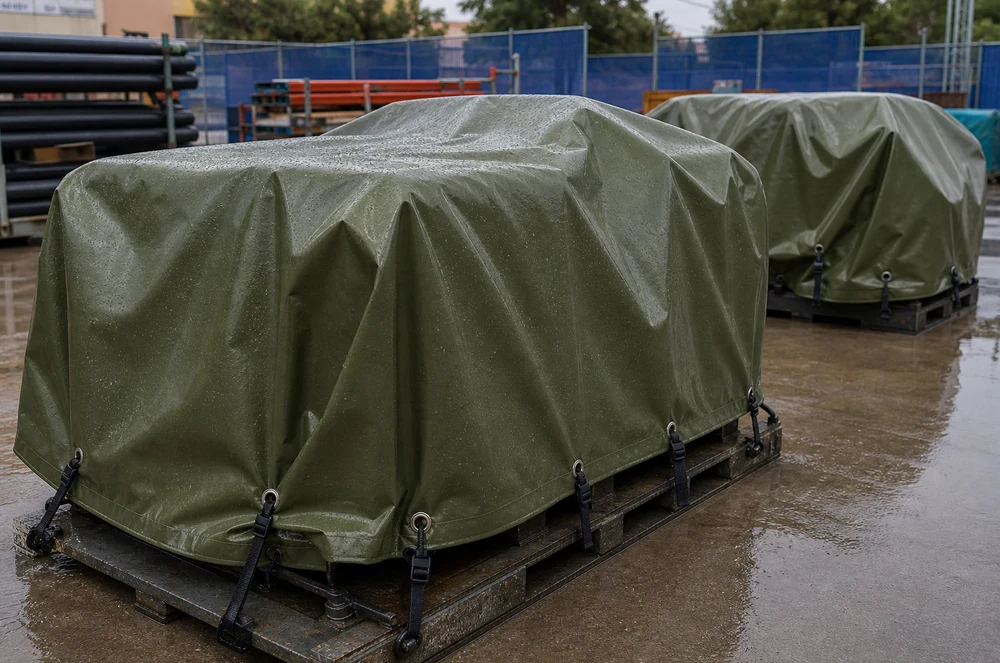
Industrial tarps are also used over shipping containers, temporary storage sites, pallet stacks, steel bundles, construction materials, and outdoor work zones. In these settings, the biggest problem is often water management. A cover that holds water in low spots can sag, stretch, pull at eyelets, or push moisture toward the item it is supposed to protect.
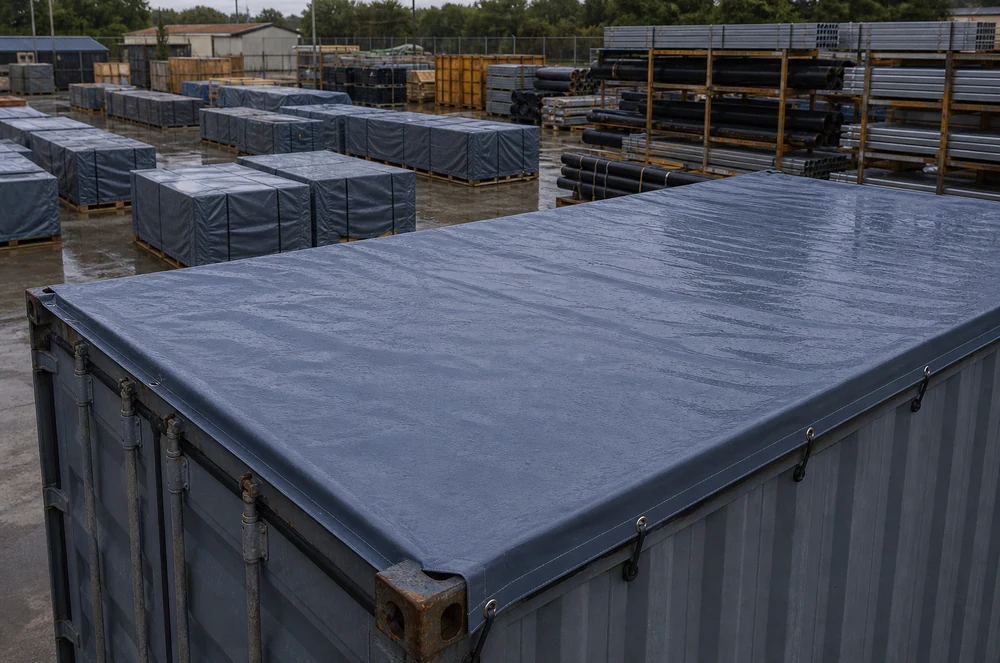
For container covers, the buyer should consider roof span, drainage slope, anchoring method, wind exposure, and whether the container is used for transport, jobsite storage, or long-term outdoor inventory. A container cover may need reinforced edges and tie-down points that make sense for the container shape, not only a rectangular sheet.
Construction tarps face a different environment. They may touch rough concrete, rebar, scaffolding, timber, dirt, and debris. Some are used for weather protection; others help separate zones, cover materials, or reduce wind-blown dust. Abrasion resistance and easy cleaning may matter as much as waterproofing.
Outdoor storage sites also need a realistic replacement plan. If a project needs only a few weeks of temporary cover, a lighter material can be practical. If the tarp will stay outside through heat, rain, and repeated handling, reinforced PVC or vinyl construction usually gives more stable fabrication choices.
For long outdoor storage, color and surface finish are not only appearance choices. Dark colors can heat faster in direct sun, while very light colors may show dust and stains sooner. A smoother PVC-coated surface is usually easier to rinse after dirty yard use, while a more textured or reinforced material may be chosen where abrasion is the larger risk.
IV. Factories And Warehouses Use Tarps For Flexible Protection
Inside industrial buildings, tarps are used differently. They may cover machinery during maintenance, protect raw materials from dust, divide temporary work zones, shield finished goods, or create flexible curtains around production areas. These applications may see less rain but more abrasion, forklift traffic, dust, oil, cleaning, and repeated opening.
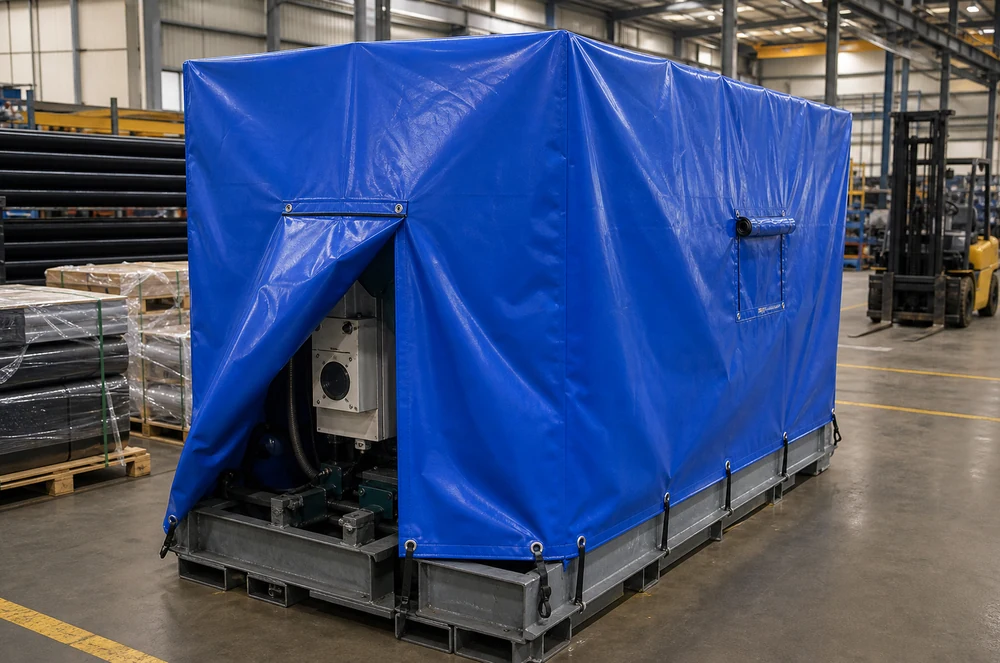
Vinyl tarps and PVC coated covers are often selected in these settings because they can be made with a smooth, cleanable surface and welded or sewn into finished shapes. The buyer may need covers with sleeves, zippers, hook-and-loop closures, straps, printed marks, or special openings around equipment parts.
When we review factory or warehouse covers, I pay close attention to how workers will move around them. A cover hanging near a walkway may need rounded or reinforced corners. A machine cover may need access flaps for control panels. A curtain-style tarp may need a track, overlap, or bottom clearance. These details decide whether the tarp helps production or becomes a daily obstacle.
V. Agriculture, Mining, And Environmental Projects Need Site-Specific Tarps
Industrial strength tarps are not limited to cities and warehouses. Agriculture, mining, waste handling, and environmental projects use tarps to protect bulk materials, isolate dirty zones, line temporary work areas, cover hay or feed, reduce runoff, and manage wind exposure. The site is often open, dusty, wet, or hard to access.
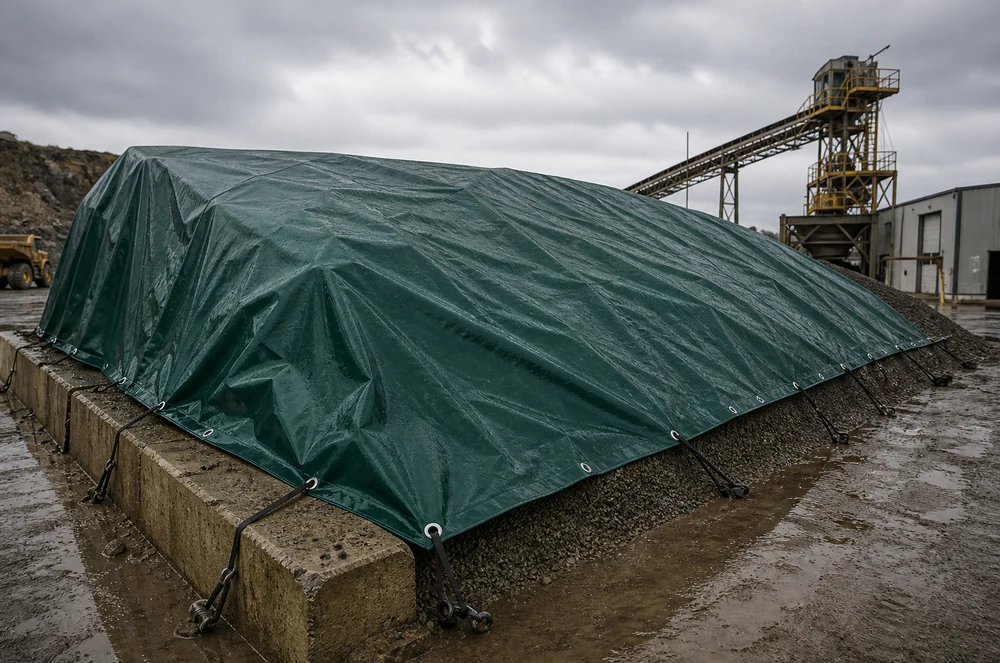
In these projects, the material may need UV resistance, anti-mildew treatment, stronger tear resistance, or a coating that can be cleaned after dirty use. If the cover will contact chemicals, manure, minerals, or oily surfaces, compatibility should be discussed before production. Not every tarp material is suitable for every substance or cleaning method.
Agricultural and environmental buyers also need to think about installation tools. Some covers are moved by hand; others are pulled with machinery, ropes, straps, or lifting points. If the tarp will be dragged across soil, gravel, or rough concrete, the bottom contact zones may need different reinforcement from a cover that only hangs from a frame.
Wind is another reason site-specific design matters. A large outdoor tarp can behave like a sail if it is not anchored correctly. Grommet spacing, reinforced hems, sandbag zones, sleeves, straps, or weighted edges should be planned according to the site, not copied from a warehouse cover.
VI. Match Material, GSM, Edges, And QC To The Use Case
The final choice depends on the type of stress the tarp will face. PE tarpaulin can be suitable for short-term, economical, or lower-stress work. Reinforced PVC coated fabric is often preferred where buyers need stronger waterproofing, welding options, better tear control, cleaner surfaces, and repeated outdoor use.
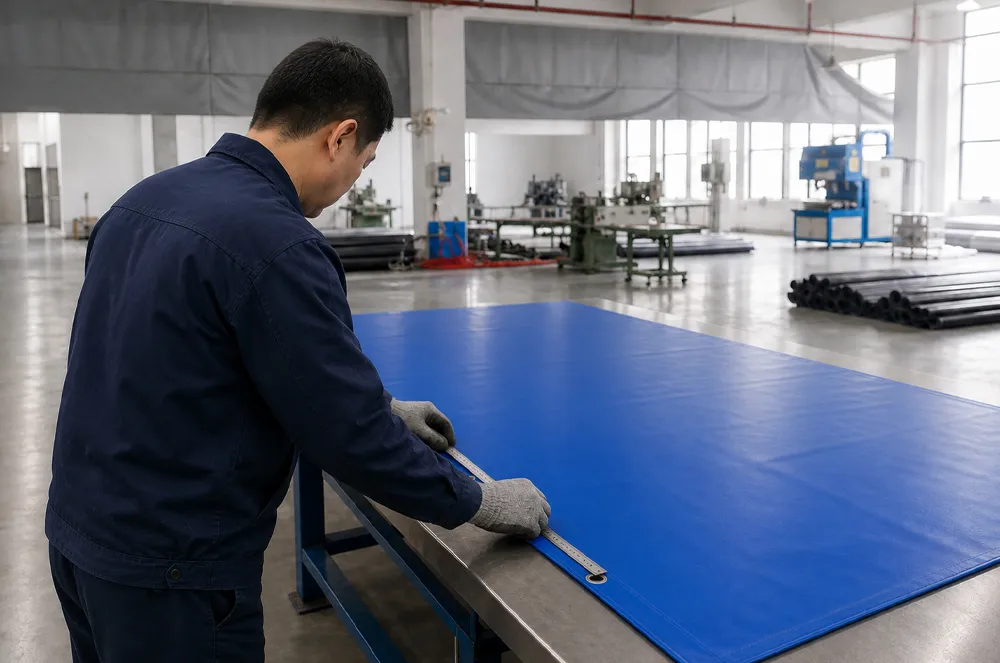
The comparison between PVC tarpaulin vs PE tarpaulin should not be handled only by price. Buyers should also compare expected exposure time, handling frequency, welding needs, edge reinforcement, repairability, and the cost of product damage if the cover fails. A short project and a long-term outdoor operation should not use the same decision logic.
| Use environment | Main stress | Specification focus |
|---|---|---|
| Road transport | Wind, vibration, tie-down tension | Tear strength, reinforced edges, flexible folding |
| Outdoor storage | Rain, UV, pooling, dirt | Waterproof coating, drainage layout, UV-resistant formula |
| Construction site | Abrasion, rough contact, debris | Coating durability, hems, hardware, easy cleaning |
| Factory protection | Repeated access, dust, equipment shape | Custom openings, sleeves, straps, cleanable surface |
GSM is useful, but it should not be treated as the whole answer. A tarpaulin GSM buying guide can help buyers understand weight, yet the final specification should also include base fabric, coating formula, welding method, grommet spacing, color, surface finish, packing, and quality checks.
For custom industrial tarp orders, LonaTarp normally asks buyers to confirm application, size, material, GSM or thickness, color, edge design, hardware, expected exposure, and order quantity. Samples are useful before bulk production, especially when the cover will face repeated outdoor use. Our made-to-order B2B production usually starts from 5,000 square meters, so the best time to solve specification problems is before the first roll is produced.