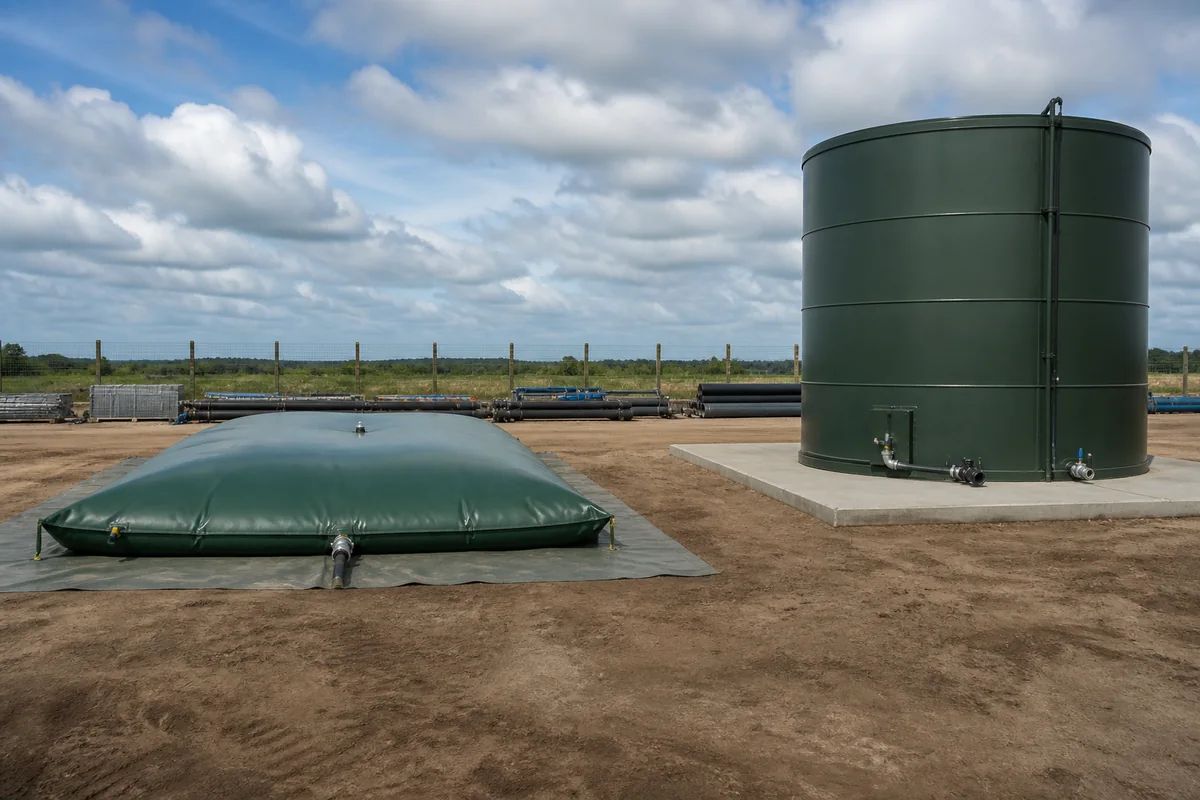
In a pillow tank vs rigid tank decision, a pillow tank usually fits non-pressurized, temporary, relocatable water storage where empty transport volume and rapid deployment matter. A rigid tank is usually the stronger candidate for permanent installations, fixed structural systems, pressure duty, underground placement, or projects governed by a prescribed tank standard. Neither option wins by default. The correct choice depends on the liquid, storage period, available footprint, ground conditions, fill and discharge system, inspection access, failure consequences, relocation plan, and local engineering requirements.
Pillow Tank vs Rigid Tank at a Glance
The table is a screening tool, not an engineering approval. A flexible tank that appears easy to deploy can still fail if placed on poor ground or loaded through an unsupported hose. A rigid tank that appears permanent can still require inspection, corrosion control, foundation maintenance, and replacement planning.
| Decision factor | Pillow tank | Rigid tank |
|---|---|---|
| Empty transport and storage | Collapses into a compact package; useful when equipment must move between sites | Keeps its full volume and usually needs dedicated freight and storage space |
| Site preparation | Needs clean, level, stable ground, suitable groundsheet, drainage, clearance, and supported connections | May need a designed pad, foundation, anchoring, lifting plan, and fixed pipework |
| Operating shape | Changes as it fills and empties; normally low-profile and non-pressurized | Fixed shell maintains dimensions and can be engineered for defined structural duties |
| Relocation | Practical when empty, cleaned, dried, inspected, and packed | Possible, but often requires lifting equipment and transport planning |
| Inspection access | External inspection is straightforward; internal access may be limited | External and, for suitable designs, internal inspection can be planned |
| Typical damage | Puncture, abrasion, fold damage, weld or fitting stress, site-related damage | Corrosion, cracking, joint leakage, foundation movement, coating or liner deterioration |
| Capacity expansion | Multiple tanks may be connected as a designed modular system | Expansion usually adds another fixed tank, foundation, and pipework |
| Best-fit use | Temporary or seasonal static storage, remote projects, emergency deployment | Permanent infrastructure, prescribed structural systems, pressure or underground duties |
How Their Structures Change Installation Requirements
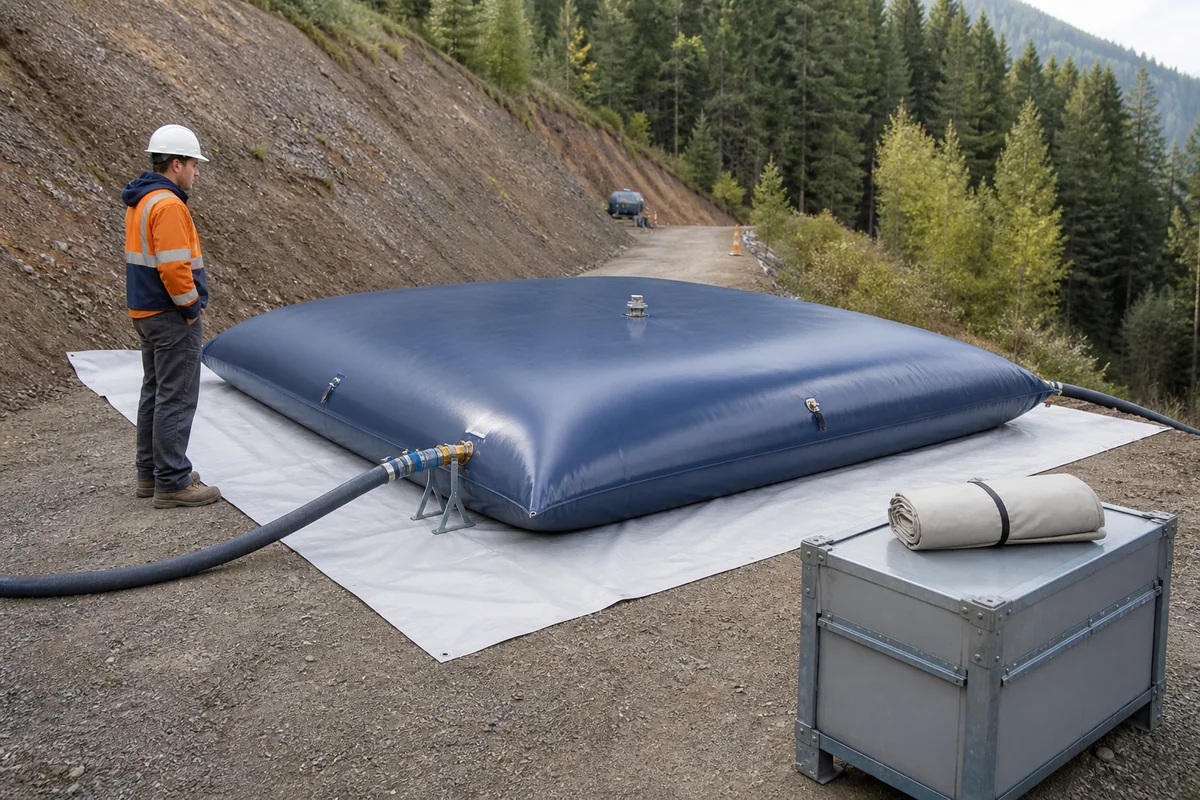
A pillow tank is a closed flexible container whose shape changes with liquid volume. The shell does not create a self-supporting rigid wall, and normal static water-storage designs are not pressure vessels. The tank therefore needs a flat, clean, load-bearing surface without sharp objects, an appropriate groundsheet where specified, drainage and secondary containment based on spill consequences, enough clearance for expansion, and supported fittings and hoses.

These pillow tank installation requirements are easy to underestimate because there may be no crane or concrete shell. Site preparation still determines whether the fabric rubs, rolls, stretches locally, or pushes against an obstruction. Fill rate, venting or air management, connection elevation, hose movement, weather exposure, access control, and maximum fill level must be planned. The tank should be positioned while empty and should not be treated as a transport container once filled unless it was specifically engineered and approved for that duty.
A rigid tank maintains its shape through its shell and supporting structure. Depending on the material and project, it may need a concrete pad, anchoring, structural restraint, lifting equipment, access platform, vents, overflow, level control, and fixed pipework. Wind, seismic, snow, vehicle impact, internal pressure or vacuum, and underground loads may enter the design. That added infrastructure can be justified when the installation is permanent or the project specification requires it.
This is the central difference in a flexible water tank vs rigid tank assessment: the flexible option transfers more responsibility to the prepared surface and controlled operating envelope, while the rigid option transfers more responsibility to structure, foundation, lifting, and fixed integration.
Transport, Deployment, and Modular Capacity
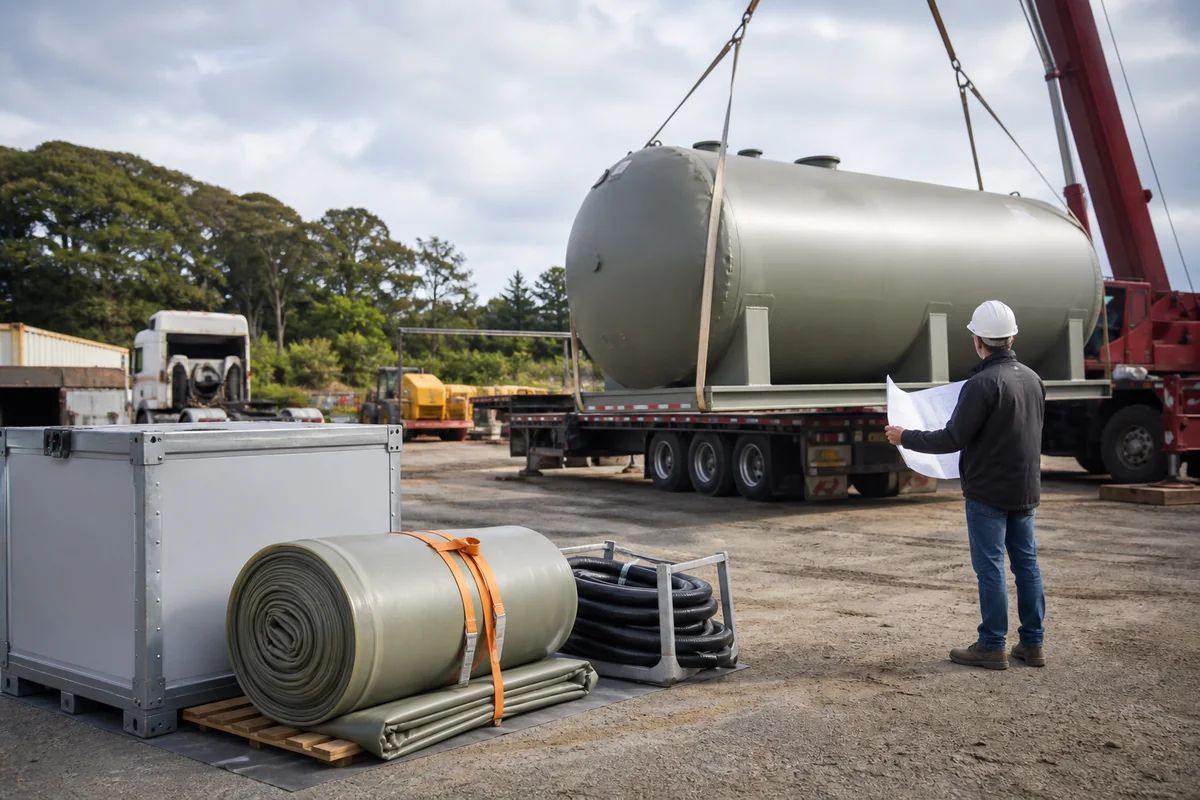
The main pillow tank advantages appear when the tank is empty. A collapsed unit occupies far less freight and warehouse space than a fixed-volume vessel, which can matter more than the purchase price for remote sites, island projects, seasonal agriculture, mining campaigns, construction phases, and emergency stocks. Deployment can also use smaller handling equipment, provided the site and connection plan are ready.
A collapsible water tank vs rigid tank comparison must separate empty mobility from full mobility. Flexible tanks are made practical to move because they can be drained, cleaned, dried, folded, inspected, and packed. Moving a filled tank creates a different dynamic load and is not a normal assumption for a static pillow tank. If the project requires liquid transport, specify a purpose-designed transport system rather than improvising with a storage bladder.
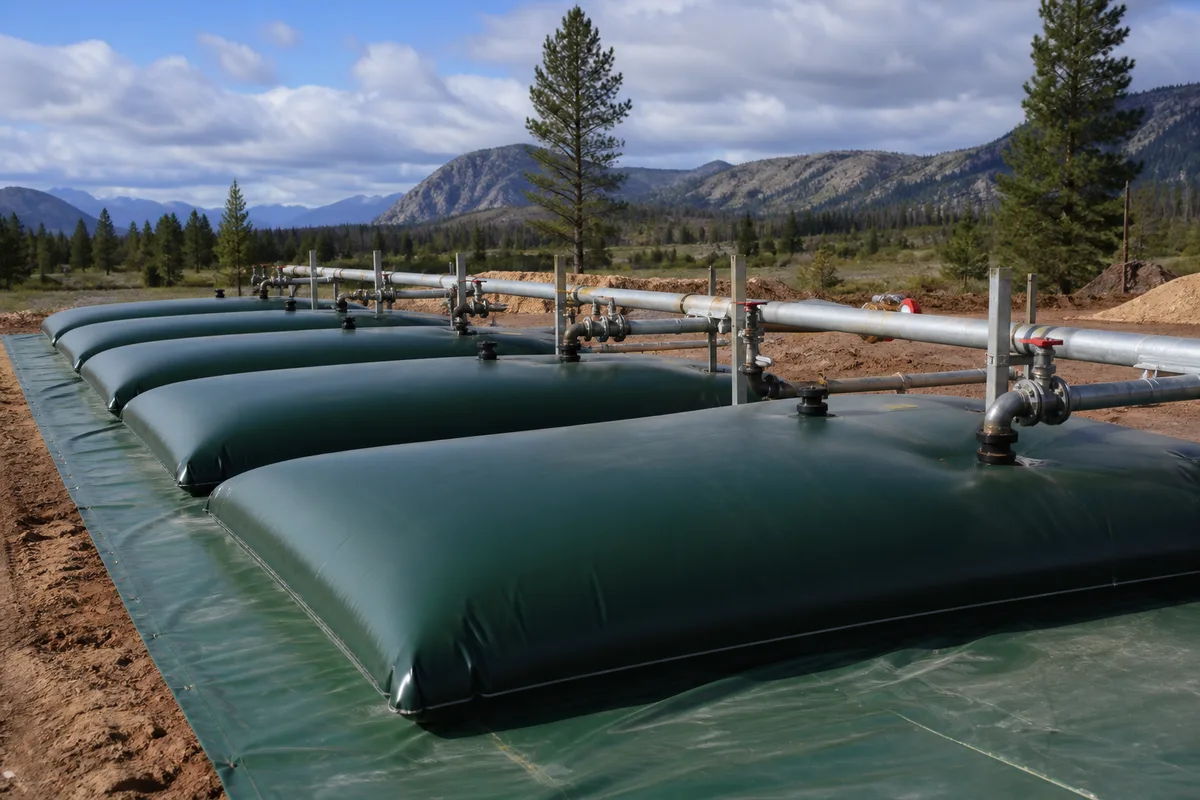
Modular capacity is another useful feature. Several equal or compatible pillow tanks can be connected through a designed manifold so a project can add capacity, isolate one unit, or distribute storage across a site. But parallel tanks do not balance themselves safely under every condition. Pipe diameter, elevation, flow resistance, valve control, overflow, containment, and operating sequence require engineering review. A modular plan should show how one tank is isolated without transferring an uncontrolled load to the others.
Compare Total Project Cost, Not Only Tank Price
Pillow tank cost should be evaluated as a project cost, not as a single supplier line. Start with the tank and fittings, then add international or domestic freight, unloading, site preparation, ground protection, pipework, pumping, secondary containment, labour, inspection, cleaning, storage between projects, repair, downtime, and final replacement. For a rigid tank, include foundation work, lifting, structural supports, access equipment, fixed connections, corrosion or liner control, permits where applicable, and the cost of relocating or abandoning the installation.
This temporary water storage tank comparison often changes after the operating calendar is added. A pillow tank may create value when it is used for one season, stored compactly, and redeployed at another site. A rigid tank may create value when it remains in service for years, the site is permanent, and inspection or automation is easier to integrate. Lowest purchase price is not the same as lowest cost per useful project cycle.
A realistic review of flexible water tank advantages and disadvantages should also price the consequences of failure. Include the stored liquid’s value, cleanup, production interruption, environmental exposure, lost water, emergency replacement, and damage to nearby assets. A low-cost tank with inadequate site protection can be more expensive than a higher-cost system matched to the risk.
Failure Risks and Maintenance Differences
Flexible and rigid tanks fail differently. A pillow tank is sensitive to puncture, abrasion, trapped debris, hard creases, local stretching, weld defects, fitting loads, unsuitable liquids, overfill, UV exposure, and poor storage. Many of those risks are manageable through a prepared site, compatible material and fitting specification, controlled operation, and inspection records.
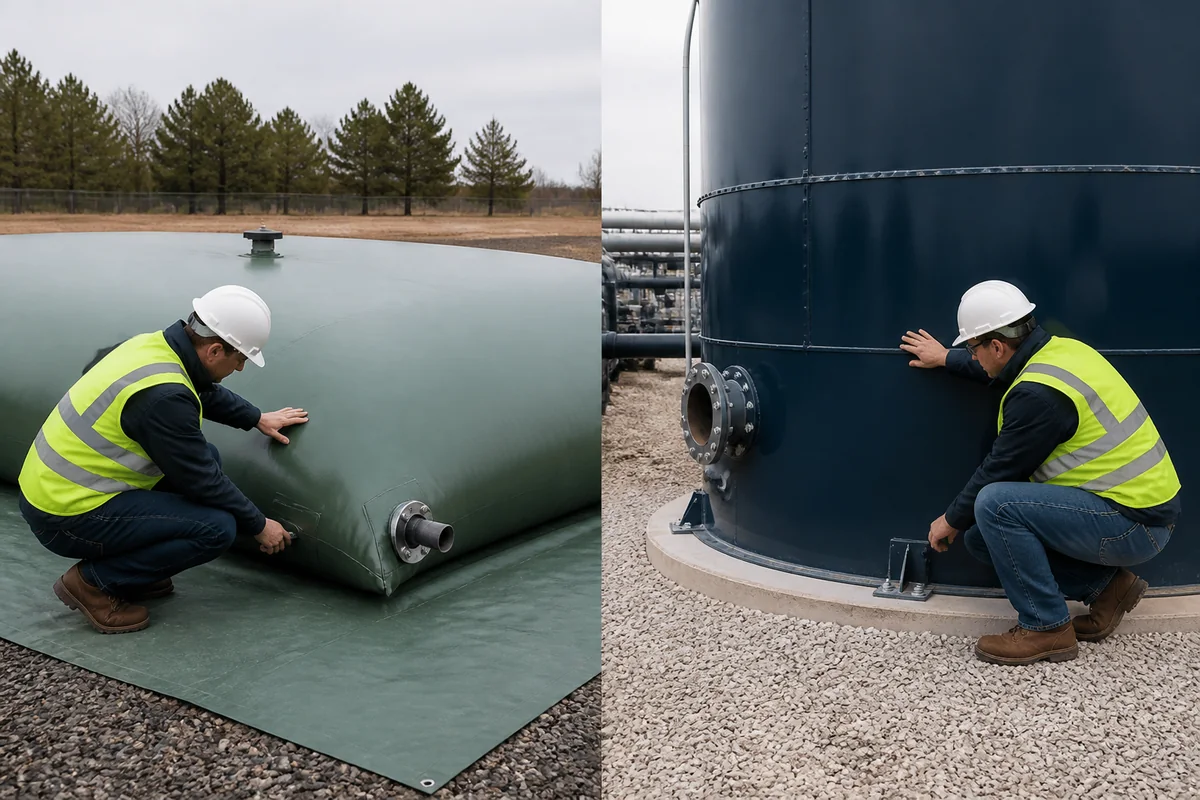
Rigid tanks may experience corrosion, brittle cracking, joint leakage, stress around nozzles, liner damage, settlement, anchoring problems, and difficult internal cleaning. Material, water chemistry, temperature, structural loading, and maintenance access influence those failures. A permanent shell should not be mistaken for a maintenance-free shell.
Both systems need a consequence-of-release review. Ask where the liquid will go if containment is lost, whether secondary containment is required, how quickly the system can be isolated, and whether the tank sits near electrical equipment, foundations, traffic, waterways, or occupied areas. Inspection frequency should follow service severity and project rules rather than a universal calendar copied from another product.
When a Pillow Tank Is the Better Choice—and When It Is Not
Choose a pillow tank for temporary industrial water storage when the service is non-pressurized, the ground can be prepared, the tank must travel empty between sites, low profile is useful, or modular capacity supports a changing project. Typical examples include construction water, temporary process water, remote camps, seasonal agricultural supply, mine-site water management, and emergency staging—subject to the liquid, site, and project requirements.
Prefer a rigid tank when the system is permanent, pressurized, buried, structurally integrated, frequently accessed internally, exposed to uncontrolled impact, or governed by a specification that prescribes a fixed tank construction. Permanent fire-water systems, drinking-water systems, fuel service, and chemical storage can carry additional regulatory and compatibility duties; neither tank type should be selected for those duties from a generic comparison article.
When the answer is still unclear, score the project rather than the products. Give one point to the pillow-tank route for each confirmed need for empty-state relocation, compact off-season storage, low-profile installation, short project duration, and phased modular capacity. Give one point to the rigid-tank route for each confirmed need for permanent anchoring, pressure duty, underground placement, internal-entry inspection, and integration with a prescribed fixed system. This is not a design calculation, but it exposes conflicting requirements early. If both columns score highly, the project may need separate temporary and permanent storage stages instead of forcing one tank to perform both jobs.
Before requesting a quote, prepare the liquid and water-quality requirement, usable site length and width, required capacity, operating period, number of relocations, temperature and UV exposure, ground condition, filling and discharge rates, fitting and hose plan, pressure or vacuum conditions, secondary containment, applicable standards, and order quantity. For a made-to-order industrial pillow tank, those inputs allow the fabric system, weld layout, fittings, dimensions, site instructions, and sample approval plan to be reviewed together.