
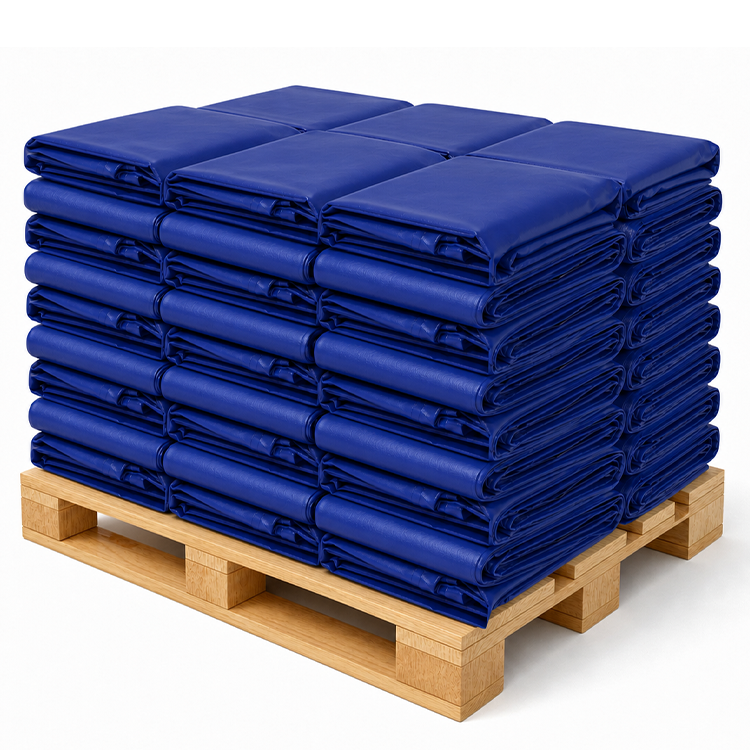


Black Vinyl Tarp Specifications and Custom Options
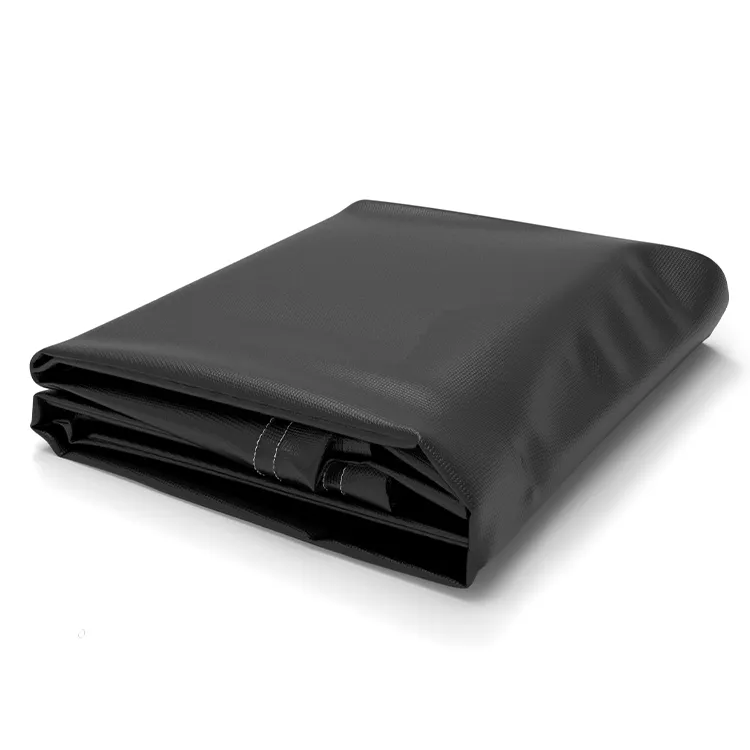
LonaTarp manufactures black vinyl tarps from PVC-coated polyester fabric for transport, industrial equipment, construction protection, outdoor storage, wholesale product lines, and OEM programs.
Finished tarps can be produced in different fabric weights, dimensions, panel constructions, seam methods, edge reinforcements, and fastening layouts. Logo printing, product labels, and private-label packaging are also available for repeat and multi-SKU orders.
If you already source an 18 oz black vinyl tarp or another established specification, we can work from your material requirements, drawing, specification sheet, or approved sample. New products can be developed around the intended application and finished-cover construction.
| Specification | Available Options |
|---|---|
| Material | PVC-coated polyester fabric |
| Color | Black |
| Fabric Weight | Multiple weights according to the required finished construction |
| 18 oz Specification | Available when 18 oz is part of the required product specification |
| Thickness | Defined separately according to the selected fabric |
| Finished Size | Standard sizes or custom finished dimensions |
| Seam Construction | High-frequency welding, hot-air welding, industrial sewing, or combined construction |
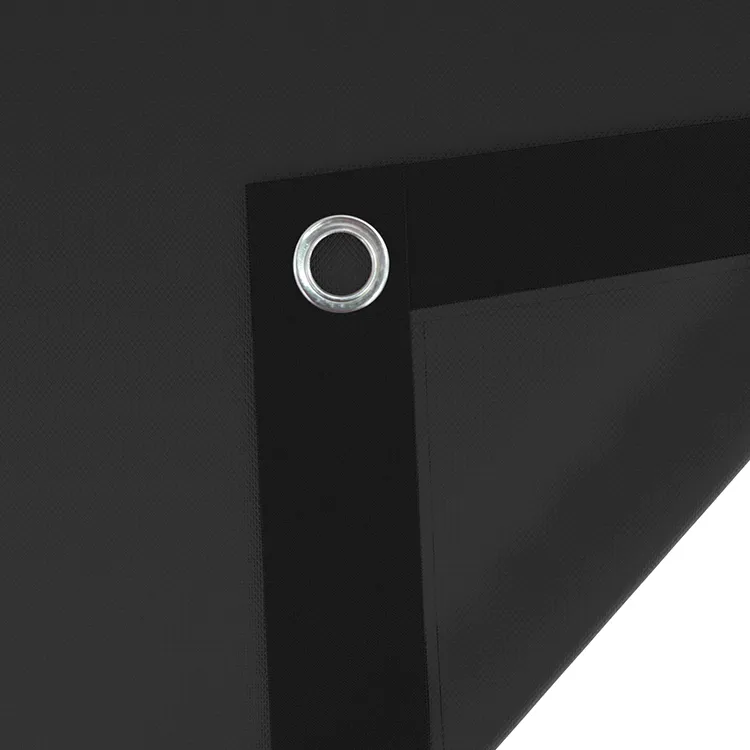
| Edge Reinforcement | Hemmed edges, rope reinforcement, webbing, reinforced corners, or application-specific reinforcement |
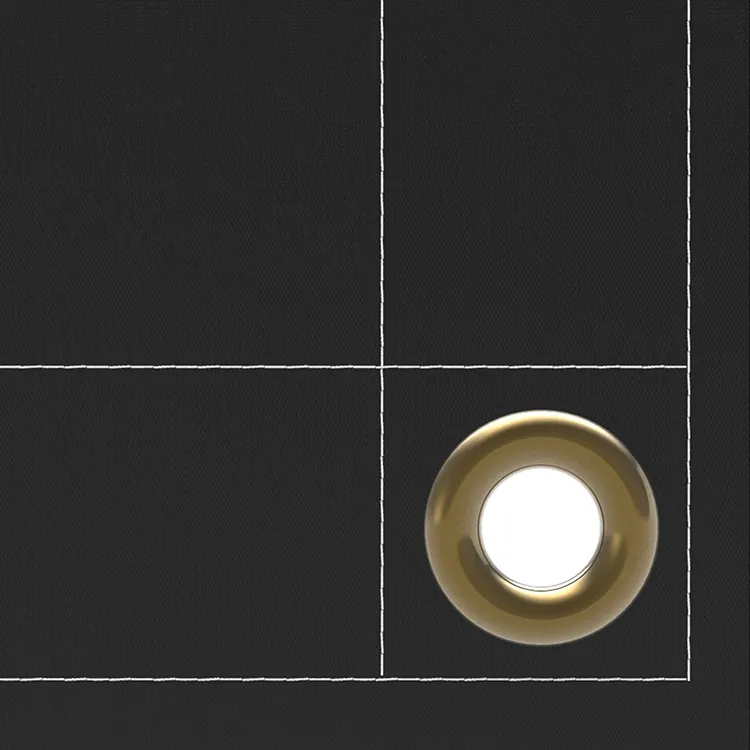
| Grommets | Metal or plastic; custom spacing and placement |
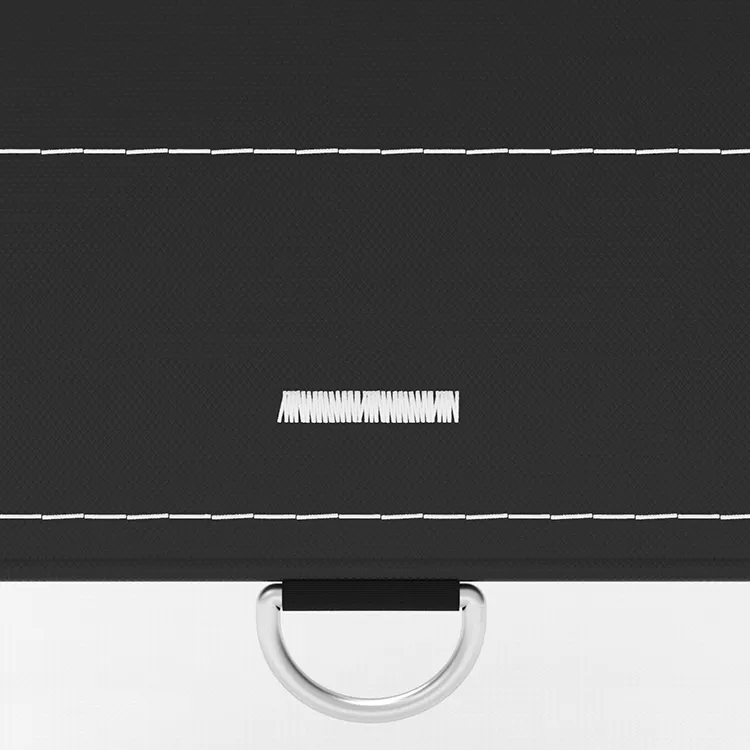
| Fastening Hardware | D-rings, straps, buckles, webbing, or other specified components |
| Printing & Labeling | Logo printing, product identification, labels, and private-label requirements |
| Packaging | Bulk, individual, export, or private-label packaging |
| Finished Product MOQ | 30 pieces |
| Typical Production Lead Time | Approximately 15 days after final specification and sample approval, subject to order requirements |
Understanding 18 oz and Other Black Vinyl Tarp Specifications
An 18 oz specification is commonly used to describe the material weight of a vinyl tarp, but weight alone does not define the complete product.
For an existing black tarp SKU, 18 oz can be an important production reference. When comparing products or transferring a specification between suppliers, it is also useful to look at thickness, polyester base-fabric construction, PVC coating, and the finished fabrication.
What Does 18 oz Mean for a Vinyl Tarp?
An 18 oz vinyl tarp generally refers to a material weight of approximately 18 ounces per square yard.
This gives a useful reference for the amount of material in the fabric, but it does not mean that every 18 oz black vinyl tarp has the same construction.
Two products carrying the same 18 oz description can use different polyester reinforcement, PVC formulations, coating structures, thicknesses, or surface treatments. The way the material is converted into a finished tarp can also differ.
For a repeat SKU, the most reliable production specification therefore combines the required weight with the other material and finished-product details.
Weight and Thickness Are Different Specifications
Material weight and thickness describe different characteristics.
A tarp can meet a specified material weight without automatically matching another product's thickness. For this reason, buyers replacing an existing tarp can provide both values when they are important to the product.
The same principle applies to tensile strength, tear strength, flexibility, cold resistance, flame-retardant performance, or other technical requirements. These properties should be treated as separate specifications when they are required rather than inferred from an 18 oz description.
Compare the Material Before Comparing the Finished Tarp
Material weight is most useful when it is compared on the same basis.
For an existing product, useful reference information can include the material weight, thickness, polyester construction, PVC structure, surface finish, and any required test data.
The finished tarp can then be evaluated separately for dimensions, seams, reinforcement, attachment points, and hardware.
This prevents two products with the same general “18 oz black vinyl tarp” description from being treated as identical when their actual constructions are different.
What Makes a Black Vinyl Tarp More Durable?
Durability comes from the complete finished construction, not from black color or material weight alone.
A tarp exposed to repeated handling, abrasion, strong tie-down loads, transport movement, or long periods outdoors can require a different construction from a stationary cover used under lighter conditions.
PVC-Coated Fabric Construction
The polyester base fabric provides the reinforcement inside a PVC-coated tarp, while the PVC coating provides the protective outer surface and supports welded fabrication.
For more demanding applications, fabric weight, polyester construction, PVC coating, flexibility, and required functional treatments can be selected together.
A heavier material can be part of a durable specification, but increasing material weight does not eliminate the need for suitable seams, edges, and attachment points.
Seams and Panel Construction
Large black vinyl tarps may require multiple fabric panels.
High-frequency welding or hot-air welding can be used for compatible PVC-coated panels, while industrial sewing can be used for webbing, straps, accessories, or structures that require stitched assembly.
Panel layout and seam positions can be planned around the finished size, material width, expected load direction, and way the tarp will be handled.
Reinforced Edges and Stress Points
The perimeter of a tarp often receives different loads from the main fabric surface.
Hem reinforcement, rope, webbing, additional PVC layers, and reinforced corners can be incorporated where repeated pulling or concentrated stress is expected.
Reinforcement can also be positioned around known contact points when the tarp will rub against equipment, cargo, frames, or other surfaces.
Fastening System
Grommets, D-rings, straps, webbing, and other fastening components transfer loads into the finished tarp.
Their position and surrounding reinforcement can be designed together rather than treating the hardware as an independent accessory.
This is particularly important for large covers, transport applications, and products that are repeatedly tensioned or removed.
For applications where heavy-duty construction is the main purchasing requirement rather than black color, our heavy duty vinyl tarps cover additional heavy-duty specification options.
Custom Black Vinyl Tarp Sizes and Fabrication Options
Black PVC tarps can be manufactured as standard rectangular covers or custom products based on drawings, measurements, equipment dimensions, existing samples, or established SKU specifications.
Custom fabrication allows the dimensions, panel arrangement, seams, reinforcement, and attachment system to work as one finished product.
Custom Finished Sizes and Panel Layouts
Finished dimensions can be produced for machinery, cargo, storage areas, construction materials, industrial equipment, and other defined covering requirements.
For large-format tarps, multiple PVC-coated panels can be joined to create the required finished dimensions. Panel layout can take account of available fabric width, seam position, load direction, and installation requirements.
For repeat products, approved dimensions and critical tolerances can be retained as part of the SKU specification.
Welded or Sewn Fabrication
Different fabrication methods can be combined within one finished tarp.
High-frequency welding and hot-air welding are available for compatible PVC panel construction. Industrial sewing can be used for webbing, straps, fasteners, and other components that require stitched assembly.
A finished cover may therefore use welded main panels together with sewn reinforcement or accessories.
Grommets, D-Rings and Attachment Components
Metal or plastic grommets can be installed at regular intervals or specified positions.
D-rings, straps, buckles, webbing, sleeves, pockets, and other attachment components can also be incorporated where required by the finished design.
For replacement tarps, an existing drawing or approved sample can be used to reproduce important attachment locations so the new product works with the current frame, vehicle, equipment, or tie-down arrangement.
Black Vinyl Tarps for Transport, Industrial and Outdoor Applications
Different applications place different stresses on a finished tarp. The black color can remain consistent while the fabric, reinforcement, seams, and fastening system change according to the working environment.
Transport and Cargo Covering
Transport covers may experience wind movement, vibration, repeated loading and unloading, abrasion against cargo or vehicle surfaces, edge tension, and concentrated tie-down loads.
A black vinyl tarp for transport can combine a suitable PVC-coated fabric with reinforced perimeter construction, protected stress points, and attachment positions arranged around the vehicle or load.
For recurring fleet or cargo programs, finished dimensions, reinforcement locations, and fastening layouts can be standardized for repeat production.
Industrial Equipment and Machinery
Machinery covers may need custom dimensions, shaped sections, openings, fastening points, or reinforcement around areas that contact the equipment.
Covers that are regularly removed for operation, inspection, or maintenance can also incorporate handling features and reinforced areas for repeated use.
An existing equipment cover can be reproduced from a sample or drawing, while a new cover can be developed from the equipment dimensions and required attachment layout.
Construction and Jobsite Protection
Jobsite covers can be exposed to rough surfaces, repeated repositioning, rain, wind, abrasion, and concentrated anchoring loads.
Large black PVC tarps can combine welded panel construction with reinforced perimeters, corners, and fixing points for covering building materials, equipment, temporary work areas, or other exposed items.
Where a project requires flame-retardant performance or another defined test standard, the corresponding material and testing requirement can be incorporated into the product specification.
Outdoor Storage and Inventory
Outdoor storage covers may remain exposed for extended periods and can experience sunlight, rain, wind, surface contact, water accumulation, and seasonal handling.
Fabric construction, reinforcement, fastening layout, and finished dimensions can be adjusted around the stored object and expected covering period.
Known anchoring or contact points can be reinforced during fabrication instead of relying on the same construction across the entire tarp.
Black Shade and Surface Finish for Repeat Orders
For an ongoing product program, “black” alone may not be a precise enough appearance reference.
PVC-coated fabrics described as black can still differ in shade, gloss, texture, and surface finish. These differences become more important when the same SKU is reordered or when several sizes are sold as part of one product range.
An approved fabric sample, finished-tarp sample, or agreed color reference can be used as the appearance basis for production.
For repeat orders, the black reference can be retained together with the fabric specification, finished dimensions, reinforcement, hardware, printing, and packaging requirements. This provides a more consistent production reference than color name alone.
If a product requires a defined color tolerance or inspection method, that requirement can be included in the approved specification.
OEM Black Vinyl Tarps for Bulk Orders
LonaTarp manufactures black vinyl tarps for importers, distributors, brands, fleet-related buyers, industrial customers, and other companies purchasing finished covers in volume.
An OEM product program can include an established 18 oz black tarp specification, another material weight, or different constructions for different applications. Multiple finished sizes can be produced under the same product line while maintaining agreed branding and packaging requirements.
Available OEM options include:
- Custom finished dimensions and multiple SKUs
- Defined PVC-coated fabric specifications
- Custom reinforcement and fastening layouts
- Logo and identification printing
- Product labels and carton marks
- Individual or bulk packaging
- Private-label packaging
- Sample and specification approval
- Repeat-order production references
For an existing product line, drawings, material specifications, approved samples, printing files, and packaging instructions can be used as production references.
For a new product, the first specification can be developed around the application, required dimensions, material requirement, construction, and intended sales or distribution program.
Finished black vinyl tarp orders have a minimum order quantity of 30 pieces.