

If a solid tarp turns your cover area into a wind sail, a breathable mesh tarp is usually the safer direction. The question is not simply whether air can pass through. You need to decide how much airflow the site needs, what the tarp must block, and where the cover will be fixed.
Breathable mesh tarps are useful for B2B projects such as outdoor storage yards, nursery shade areas, fencing screens, debris-control covers, truck or trailer ventilation covers and temporary worksite partitions. For custom orders, the key is to match mesh opening, PVC mesh direction, edge finishing and grommet layout to the actual use condition.
Start With What Must Pass Through the Mesh
A breathable mesh tarp should be selected from the airflow path first. If the site needs wind relief, heat reduction or ventilation, the mesh opening cannot be treated as decoration. It decides how much air can escape before the cover starts pulling against the frame, fence or tie-down points.
For shade or privacy, a tighter structure may look more controlled, but it can also increase wind load. For debris control, an opening that is too large may let leaves, chips, loose packaging or small fragments pass through. This is why breathable mesh tarps should be specified by the balance between open area and blocking target. Breathable mesh tarps for debris control should be selected by the smallest material that must be stopped, not by shade percentage alone.
Choose Breathable Mesh Tarps by Blocking Target
A useful breathable mesh tarp quote should not start with size only. It should start with the material that needs to pass through or stay outside the cover.
Blocking target | What you need to confirm | What the wrong choice causes |
|---|---|---|
Wind and heat | Open area, mesh opening and installation tension | Too dense may create wind pull and heat buildup |
Sun and glare | Shade target, color and outdoor exposure | Too open may not reduce light enough; too dense may increase wind load |
Leaves and loose debris | Mesh opening and expected particle size | Oversized openings allow debris to pass through |
Privacy or screening | Viewing distance, color and mesh density | Too open gives poor screening; too dense may behave like a sail |
Repeated fixing | Hem type, grommet spacing and edge distance | Edges may tear before the center mesh fails |
Distribution packing | Folding method, label, carton and pallet plan | Finished tarps may be hard to store or resell consistently |
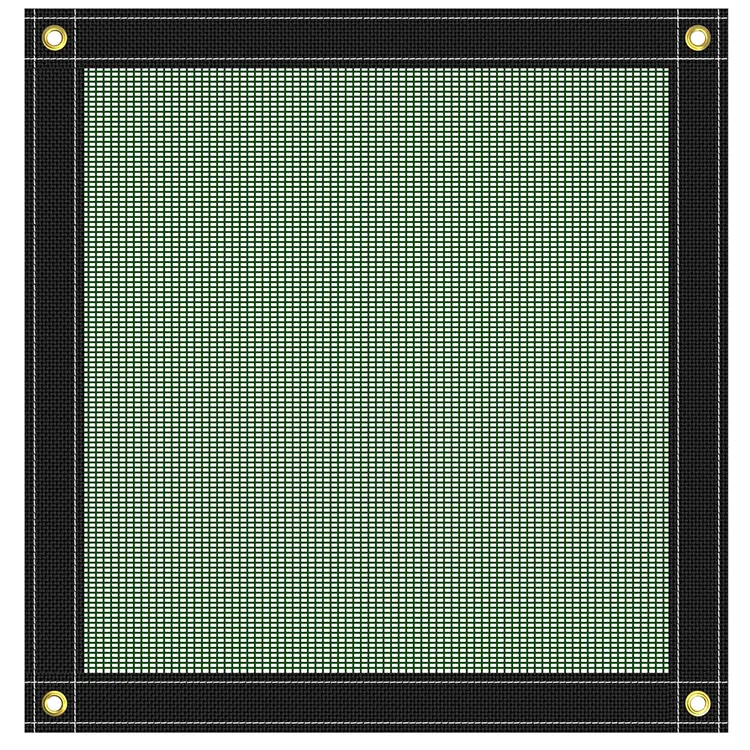
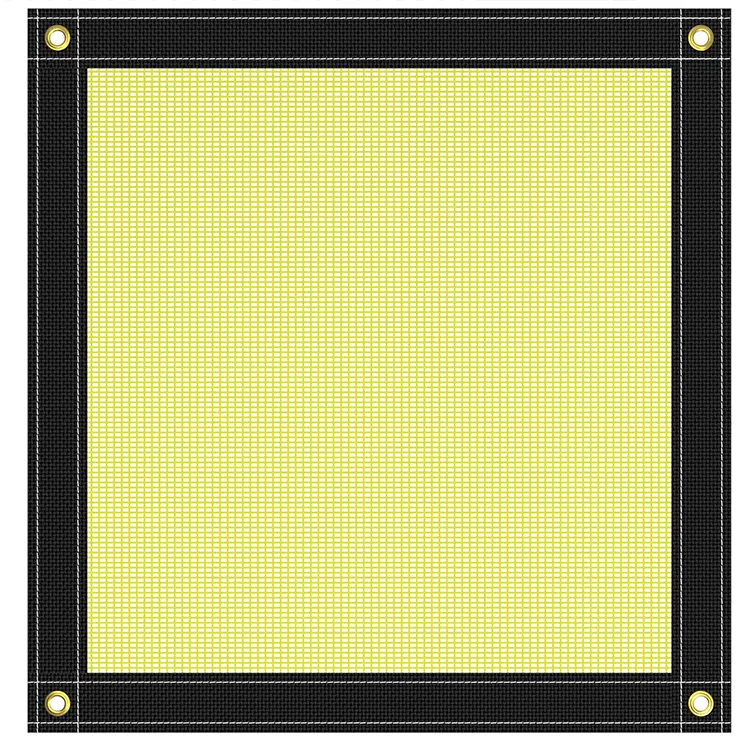
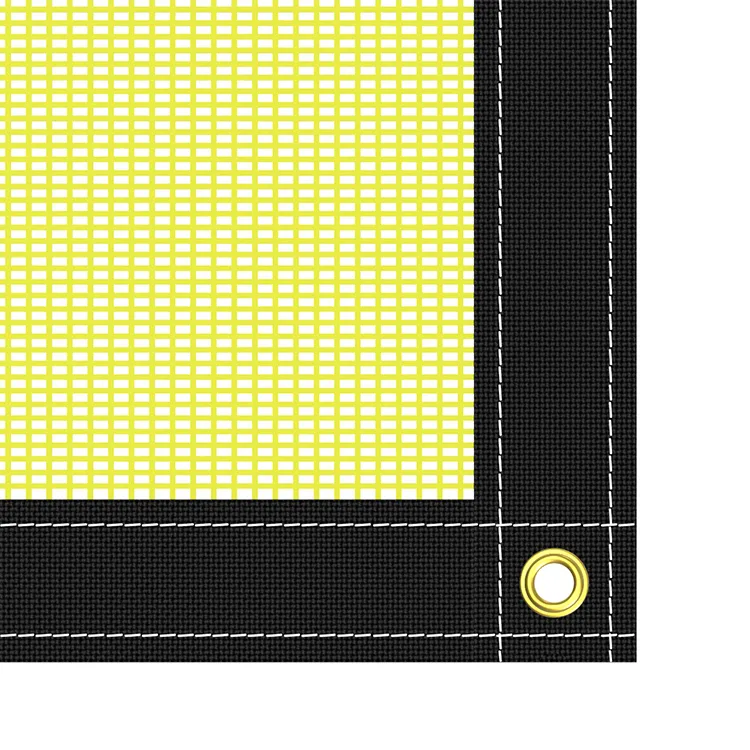
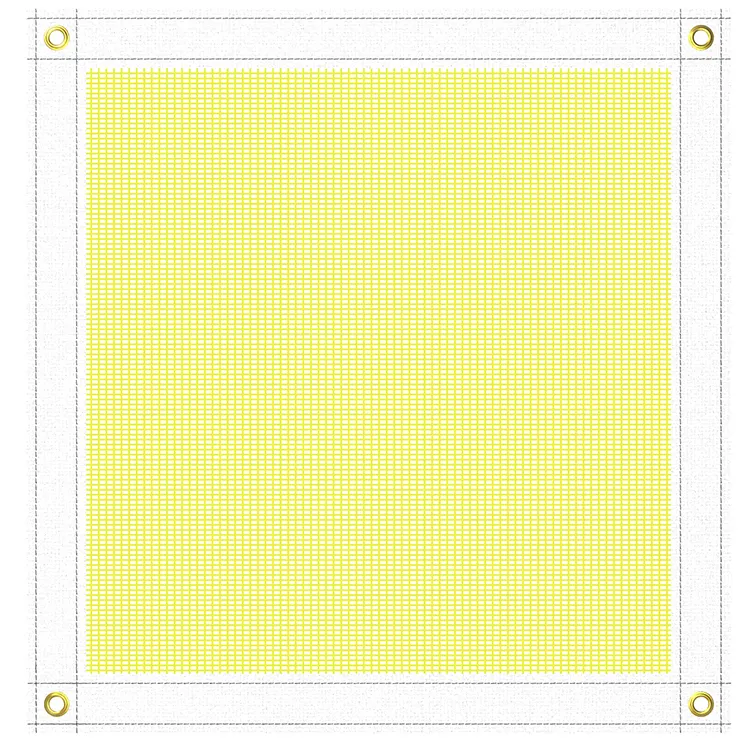
For breathable mesh tarps with grommets, the grommet row should match both the mesh strength and the expected tension. More grommets do not automatically mean better performance if the edge construction is too light.
Breathable PVC Mesh Tarps for Repeatable B2B Orders
Breathable PVC mesh tarps are a better direction when the order needs repeatable color, coating control, welding or sewing compatibility and export packing. PVC coated mesh is part of LonaTarp's core product direction, and it can be discussed by mesh opening, GSM, color, edge finishing and packing plan.
PE or PP mesh may be discussed only as a sales option when the project is closer to temporary shade screen or cost-sensitive distribution. It should not be presented as LonaTarp's core manufacturing advantage.
Edge and Fixing Details for Breathable Mesh Tarps with Grommets
Breathable mesh tarps fail differently from solid waterproof tarps. Because wind can pass through the center panel, the problem often moves to the fixed edge, corner patch or grommet row. The edge should be discussed before the buyer finalizes spacing.
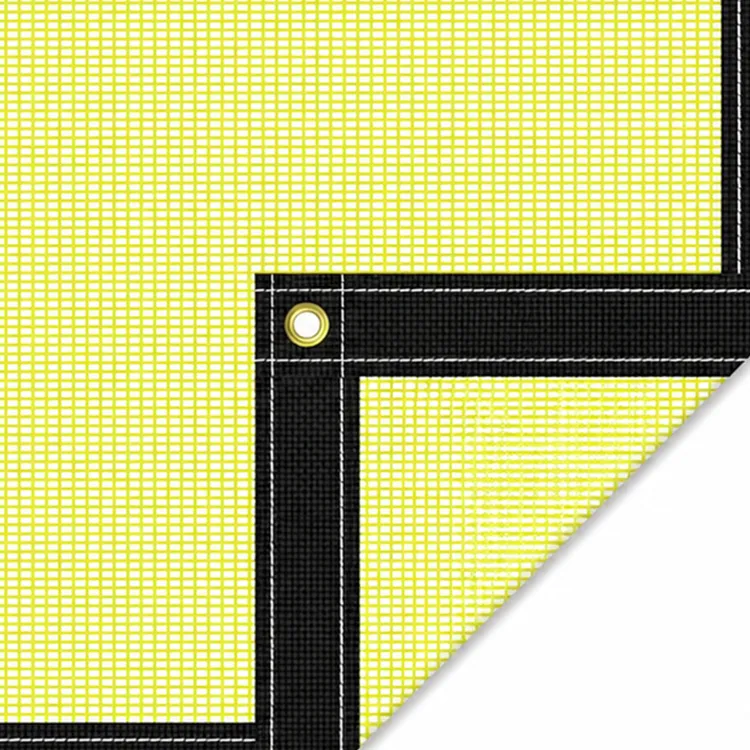
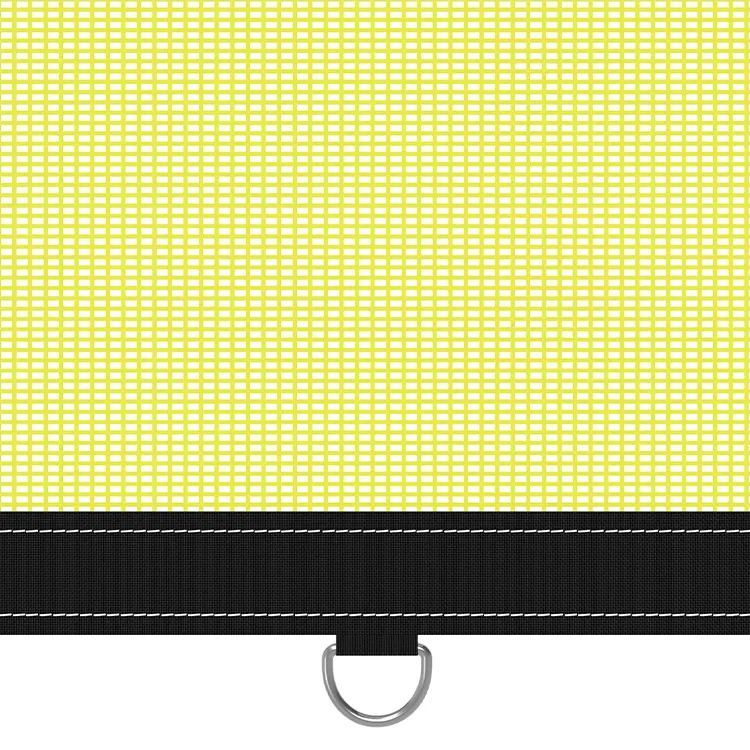
Options may include sewn hems, welded hems, webbing reinforcement, rope edge, corner patches, metal grommets or plastic grommets. If the tarp will be removed often, packed repeatedly or pulled across a frame, sample checking should include the mesh hand feel, edge thickness and grommet distance from the edge.
Avoid These Breathable Mesh Tarp Selection Mistakes
The most common mistake is treating breathable as a single feature. In real use, breathable can mean three different things: wind can escape, heat can reduce, or moisture can dry faster. A tarp that works for ventilation may not block enough small debris; a tarp that blocks more sunlight may carry more wind load.
Another mistake is asking only for a fixed size copied from retail pages. B2B buyers should confirm the frame size, finished tarp size, edge allowance, tension direction and packing format. If the tarp is installed outdoors, UV and color stability should be discussed as requirements, not converted into a simple guaranteed number of outdoor years. A UV resistant breathable mesh tarp may be needed for long outdoor exposure, but UV test data should be treated as a comparison method, not a guaranteed service-life promise.
Finished Breathable Mesh Tarps or Roll Material
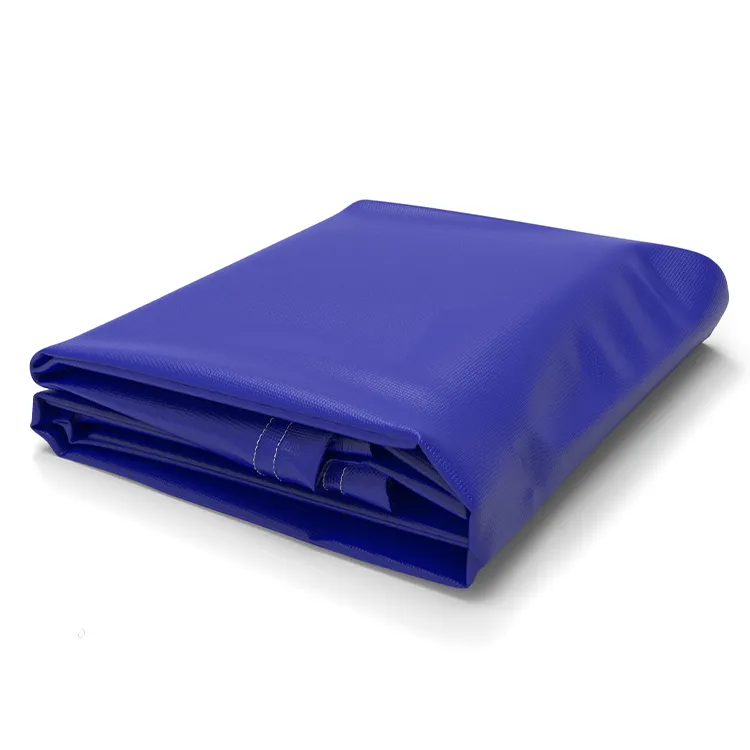
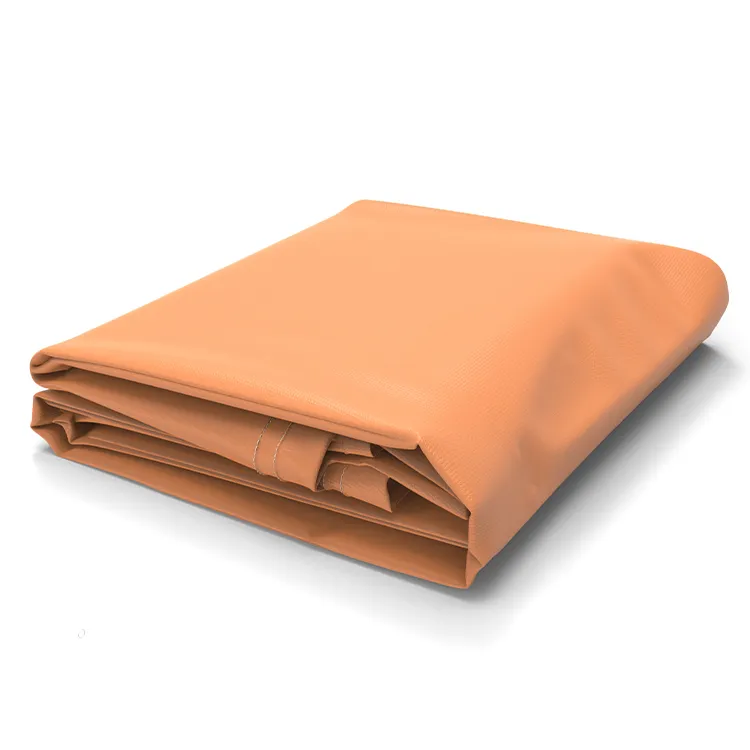
Choose finished breathable mesh tarps when the order needs cut size, hems, grommets, corner reinforcement, labels and carton packing ready for project installation or distribution. Choose roll material when local fabrication, later cutting or stocking multiple sizes is the main task.
The quote path is different. Finished tarps need drawings, tolerance, fixing method and packing details. Roll material needs roll width, roll length, GSM, color tolerance, mesh opening and pallet packing. If you need both, send the finished tarp drawing and expected roll usage together.