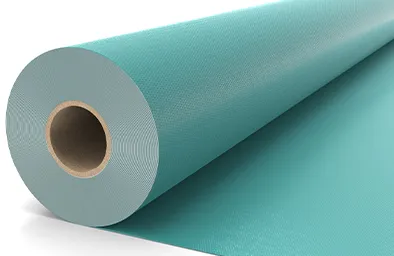
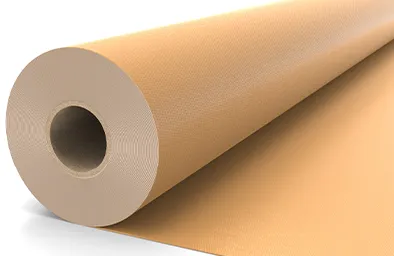
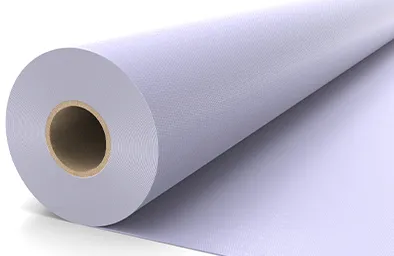
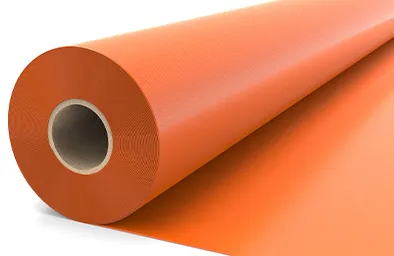
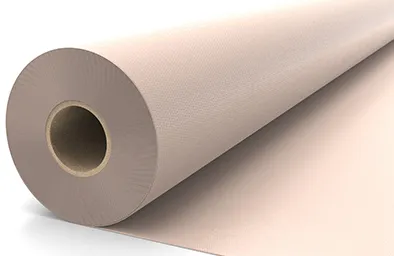
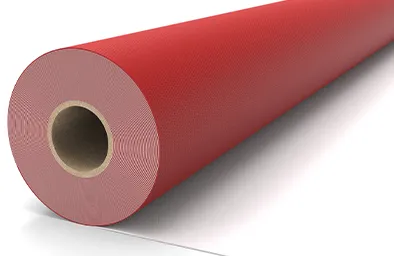
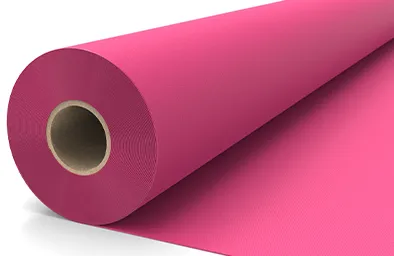
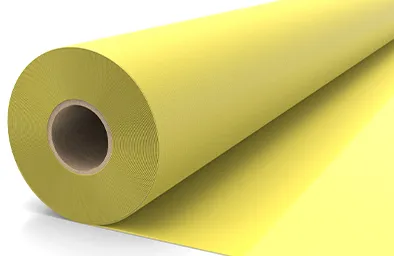
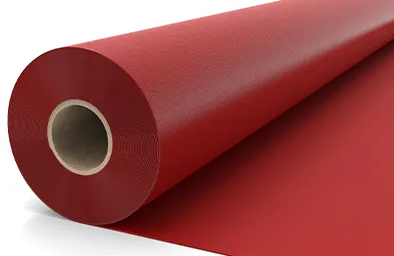
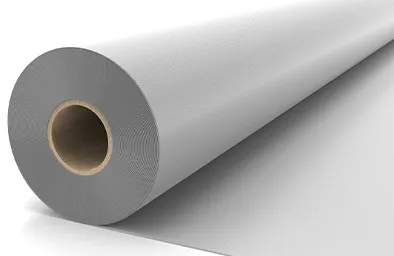
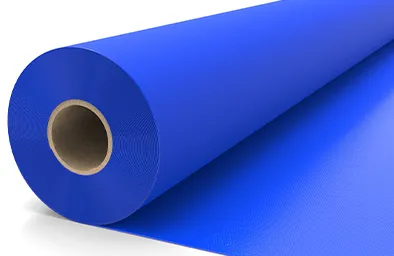
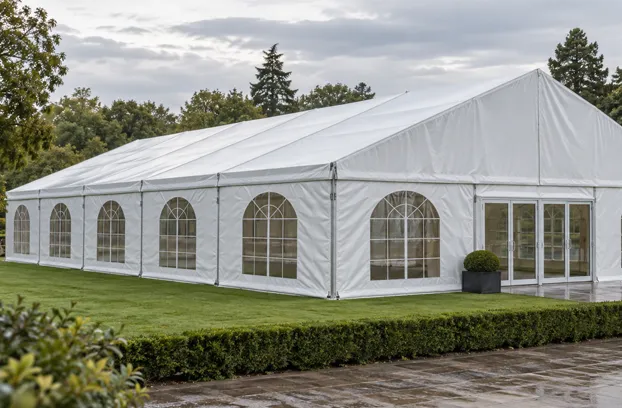
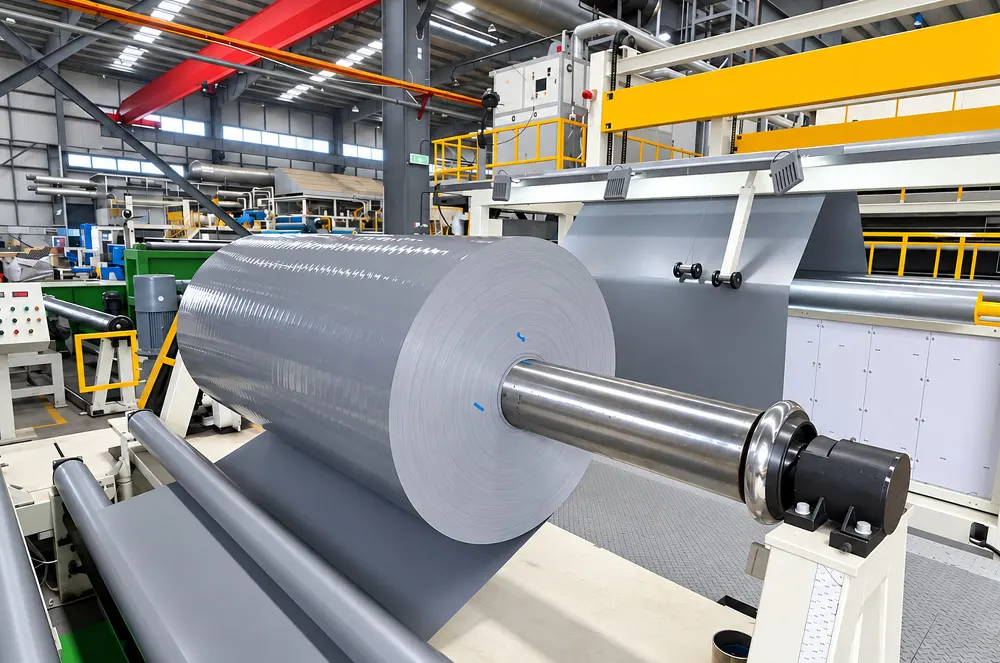
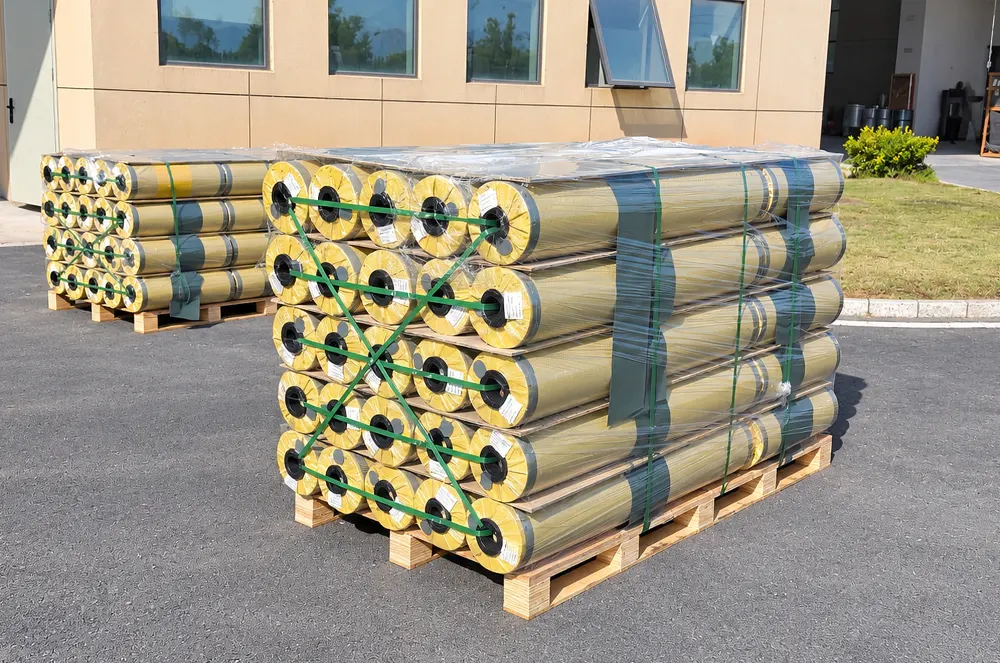
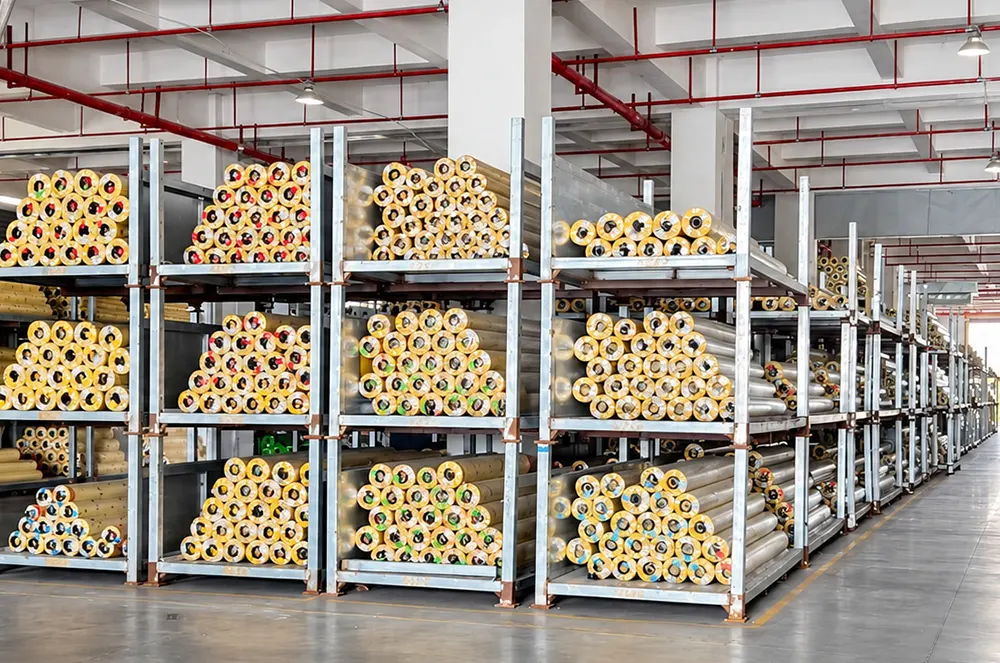
Fire retardant vinyl fabric, also sold as FR vinyl fabric or fire retardant PVC fabric, is a polyester base fabric coated or laminated with a flame-retardant PVC compound. It resists ignition and slows flame spread under a specified fire test, but it is not fireproof. LonaTarp supplies it in rolls for fabricators, built to the fire standard your market requires.
Why PVC Coated Fabric Burns
Fire retardant vinyl fabric is engineered to limit flame propagation under specified test conditions. However, the finished fabric is not non-combustible. Its fire behavior depends on several components: the polyester reinforcement, the PVC compound, plasticizers, additives, and surface treatments.
The key distinction is that PVC resin has some inherent flame-retardant characteristics, but a flexible, reinforced PVC coated fabric does not automatically meet a particular fire classification. The complete material must be tested.
How the Components Respond to Heat
| Component | Behavior Under Fire Exposure |
|---|
| Polyester base fabric | Polyester is combustible. At sufficient temperatures it can shrink, soften, melt, and burn, potentially forming molten material. |
| PVC resin | Chlorine in the polymer influences flame behavior, but PVC can still thermally decompose and burn; decomposition can release hydrogen chloride and smoke. |
| Plasticizers | Many organic plasticizers used to make PVC flexible are combustible and can change the fire performance of the compound. |
| Surface finishes | Organic finishes, printing, and other treatments can affect how the finished material responds to a flame. |
Buyers should evaluate the actual coated or laminated fabric rather than assume that the PVC resin or the fabric weight alone determines fire performance.
Fire Retardant vs Fire Resistant Vinyl Fabric
Can PVC be flame retardant? Yes. A flame-retardant PVC compound helps the coated fabric resist ignition and self-extinguish once the flame is removed under the test conditions. In supplier listings, fire resistant vinyl fabric, FR vinyl fabric and vinyl fabric FR usually describe the same property. None of these terms means fireproof: the reference is the test report for the actual material. For how untreated and treated PVC fabric behaves in a fire, see Is Vinyl Fabric Flammable?
How We Engineer Flame Retardancy
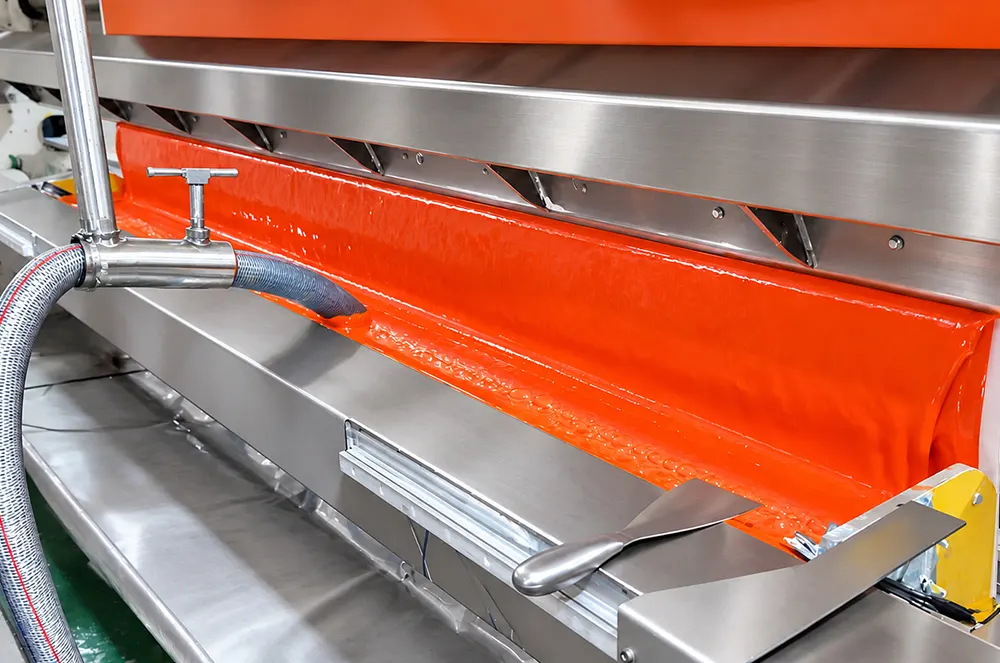
LonaTarp develops fire retardant PVC fabric by specifying a flame-retardant PVC compound together with the reinforcing fabric, coating or lamination construction, and intended fabrication method.
Flame-Retardant PVC Formulation
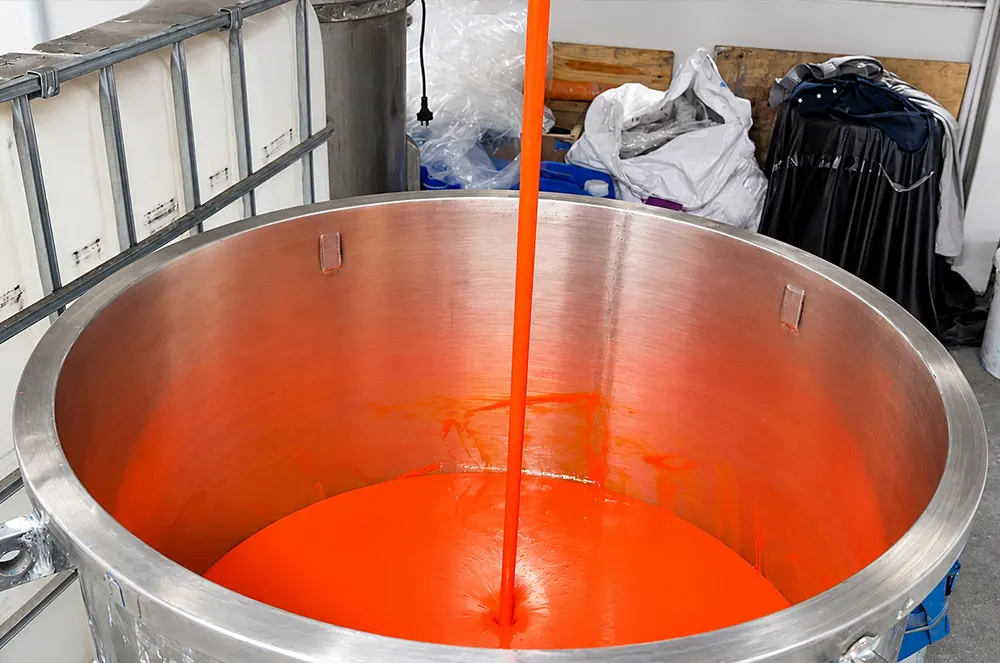
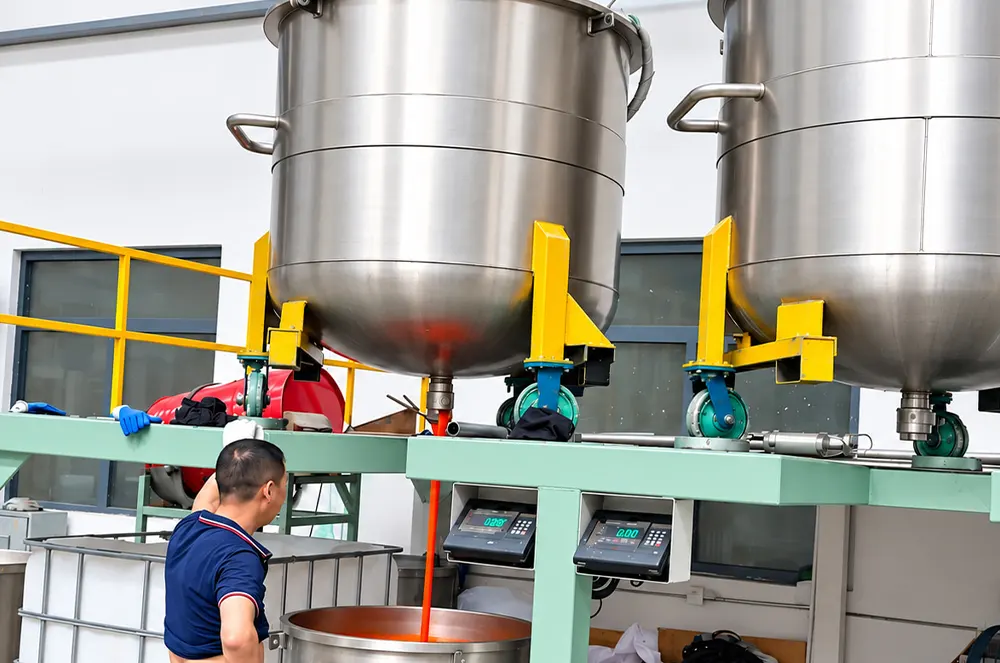
In flexible PVC, the resin, plasticizer system, and flame-retardant additives must be balanced. Flame-retardant technologies can help suppress combustion reactions, absorb heat, or form protective residues, depending on the selected formulation. The exact additive system is selected for the required material properties and target test, rather than treating a single additive as a universal solution.
Reinforcement and Coating Construction
Polyester yarns supply tensile and tear strength, while the formulated PVC layers surround and protect the reinforcement. Coating coverage, compound composition, and the overall construction all influence the result obtained when the finished fabric is fire-tested.
Fire Performance and Fabrication
The selected construction must also remain suitable for cutting, sewing, hot-air welding, or high-frequency welding, as specified by the customer. Surface treatments and weld areas are reviewed together with the fire requirements. An approved material sample and the agreed test method establish the reference for bulk production.
Fire-Retardant Standards by Market
Different countries and applications use different fire-test methods. A test standard is not interchangeable with another standard simply because both are described as “flame retardant.” The destination market, final use, and required classification should be identified before the material is finalized.
| Market | Common Standard | Typical Evaluation or Application |
|---|
| United States | NFPA 701 | Flame propagation testing for applicable textiles and films; the correct test method depends on the product. |
| United States | CPAI-84 | Flame-resistance requirements for tent and camping-structure fabrics. |
| United States | ASTM E84 | Surface burning characteristics (flame spread and smoke-developed index) of building materials. |
| United States (California) | California State Fire Marshal, Title 19 | Flame-resistance registration for fabrics used in regulated public spaces. |
| Canada | CAN/ULC-S109 | Flame tests for applicable fabrics and films. |
| European Union | EN 13501-1 | Reaction-to-fire classification for applicable construction products, with defined mounting and use conditions. |
| Germany | DIN 4102-1 B1 | Classification of applicable building materials as flame retardant. |
| France | NF P 92-507 (M classifications) | French reaction-to-fire classifications for relevant materials. |
| United Kingdom | BS 7837 | Flammability testing for textiles used in marquees and similar structures. |
| Australia / New Zealand | AS/NZS 1530.3 | Ignitability, flame propagation, heat release, and smoke release measurements for relevant building materials. |
| Japan | JIS L 1091 | Textile flammability test methods; the appropriate method must be selected. |
| China | GB 8624 | Reaction-to-fire classification of relevant building materials and products. |
This is a selection guide, not a claim that every LonaTarp grade has passed every listed standard. Existing third-party test evidence is available for specified materials under NFPA 701, DIN 4102-1, EN 13501-1, GB 8624 and California TB 117-2013. Other standards and classifications can be discussed and tested for the agreed project specification.
For details of testing scope, sample construction, and documentation, see our fire-retardant tarpaulin specifications guide.
Selecting Fire Retardant Vinyl Fabric
Choosing fire retardant vinyl fabric requires more than selecting a GSM value. Buyers need a construction that meets the required fire test while retaining the strength, flexibility, weatherability, and processing performance needed for the finished application.
| Selection Point | What It Changes |
|---|
| Fire standard and grade | Defines the required test, classification, and evidence for acceptance. |
| GSM and thickness | Influence handling, flexibility, and construction, but do not by themselves guarantee a fire grade. |
| Base fabric and Denier | Determine reinforcement characteristics such as tensile strength, tear strength, and dimensional stability. |
| Coated or laminated structure | Affects layer construction, compound selection, mechanical performance, and processing compatibility. |
| Finish and color | May affect surface performance and the final formulation submitted for testing. |
| Conversion method | Requires evaluation of welding, cutting, sewing, and any changes to the finished assembly. |
Two rolls with the same weight can obtain different flame-test results when the PVC formulation or material structure changes. Acrylic surface treatments and other finishes should also be considered when confirming welding behavior and the agreed fire-performance scope.
Fire Retardant Vinyl Fabric Weights: oz/yd² and gsm
US suppliers usually list fire retardant PVC fabric by ounces per square yard, while we specify rolls in gsm. Use the conversion below when comparing a US specification with our quotation.
| Weight (oz/yd²) | Approx. gsm |
|---|
| 10 oz | 339 gsm |
| 13 oz | 441 gsm |
| 18 oz | 610 gsm |
| 22 oz | 746 gsm |
| 40 oz | 1,356 gsm |
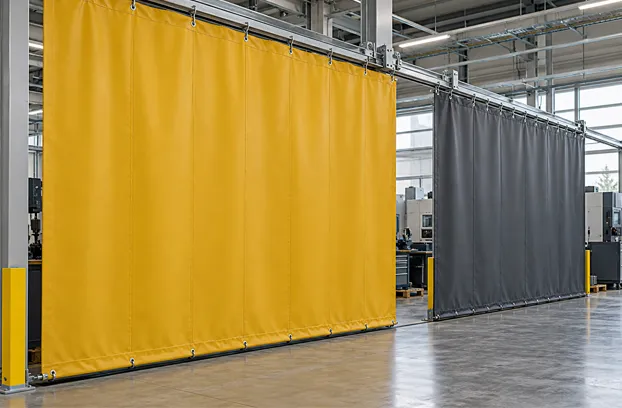
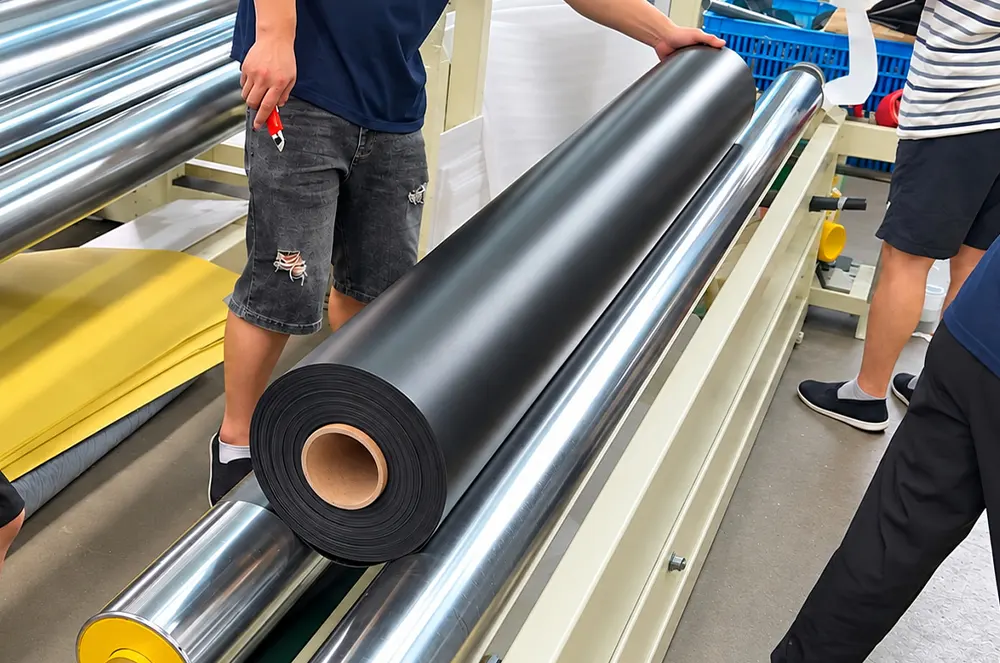
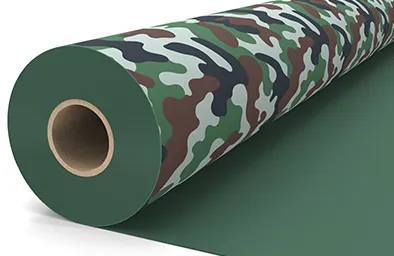
Lighter grades are easier to handle and fold in curtains and enclosures; heavier grades add abrasion and tear resistance for covers and partitions. We produce 300–2,500 gsm in widths up to 3.2 m (about 126 in), with roll length set per order. Colors are matched to RAL or Pantone references, including fire resistant black vinyl fabric, and transparent flame-retardant PVC rolls are also available when a project needs visibility.
Third-Party Tested Fire Performance
LonaTarp holds SGS reports and a CNAS-accredited laboratory report for several PVC vinyl, tarpaulin and membrane samples. The examples below identify the tested construction and its reported outcome rather than extending one sample result to our entire product range.
| Test Standard | Sample Reported | Reported Result |
|---|
| NFPA 701:2019, Method 1 | Approx. 305 gsm single-layer PVC Vinyl | Tested sample meets Method 1 requirements (20 Jan 2021). |
| DIN 4102-1:1998-05 | Approx. 1200 gsm PVC membrane, style 6000N | Tested sample meets Class B1 requirements (14 Jan 2025). |
| DIN 4102-1:1998-05 | Approx. 1000 gsm structure membrane, 1000D 30×32 | Tested sample meets Class B1 requirements (1 Dec 2025). |
| EN 13501-1:2018 | PVC Tarpaulin, style X11-000038/750 | Classification B-s3,d0 (9 Jan 2026). |
| GB 8624-2012 | Approx. 1200 gsm membrane material, style 6000N | Classification B1 (B-s3,d0) (13 Jan 2025). |
| DIN 4102-1 | Approx. 550 gsm black PVC tarpaulin | Tested sample meets Class B1 requirements (CNAS-accredited laboratory, report W2025-04029). |
| California TB 117-2013, Section 1 | Approx. 411 gsm knife-coated PVC fabric | Tested sample complies (SGS, Mar 2026). |
How to Read the Reported Classification
In the EN 13501-1 classification B-s3,d0, “B” refers to the reaction-to-fire class, “s3” to the smoke production category, and “d0” to the flaming-droplet category. s3 is not a low-smoke rating. For the tested sample, the SGS report records a fire growth rate index (FIGRA) of 117.5 W/s, a 600-second total heat release of 2.7 MJ, and no flaming droplets in the EN 13823 test.
The reported EN 13501-1 classification is limited to the stated test arrangement: specified A1/A2 substrates, mechanical fixing, and no joints. NFPA 701 Method 1 evidence for a 305 gsm single-layer vinyl sample does not establish compliance for all heavier polyester-reinforced tarpaulin rolls.
Test results apply to the samples and conditions described in their reports. If the intended construction, surface treatment, installation, or finishing differs, the relevant testing and acceptance scope must be confirmed for that order.
Quality Control & Fire-Performance Commitment
For a flame-retardant material order, the agreed fire classification is part of the product specification—not just a marketing label. LonaTarp reviews the required standard alongside the polyester reinforcement, PVC compound, coating or lamination construction, material weight, finish, and fabrication needs.
From Approved Sample to Shipment
Before bulk production, we establish the agreed material specification and approved sample, including the relevant flame test and any required third-party documentation. Production and inspection are referenced against the agreed construction, roll dimensions, surface appearance, and quality criteria. The testing arrangement and applicable acceptance procedure are confirmed as part of the order.
Our Fire-Performance Commitment
LonaTarp stands behind the fire-performance standard and classification expressly agreed with each customer before order confirmation. We can document the specified test method and edition, target classification, approved material construction, sampling, and independent verification procedure in the purchase agreement.
Once we accept a contractual commitment to a particular fire-performance requirement, the delivered material must meet that agreed requirement. If the delivered material fails the agreed test and the failure is confirmed to result from a manufacturing or material nonconformity attributable to LonaTarp, we take responsibility for the resulting losses as defined in the signed purchase agreement.
The agreed acceptance process also addresses representative sampling, retesting, remedies, and changes made after delivery. This provides a clear basis for verifying the product and allocating responsibility if a manufacturing-related nonconformity is established.
Custom Rolls & Bulk Supply
LonaTarp supplies fire retardant vinyl fabric in roll form for importers, wholesalers, distributors, industrial fabricators, and OEM manufacturers. Custom specifications include material construction, polyester reinforcement, GSM, width, color, surface finish, and the agreed flame-retardant requirement.
| Supply Item | Available Direction |
|---|
| Minimum order quantity | 5,000 m² |
| Maximum roll width | 3.2 m |
| Roll length | 10 m short rolls to 1,000 m+ by slitting, set per order |
| Service temperature | -30 °C to +70 °C |
| Transparent option | Clear flame-retardant PVC rolls; fire standard confirmed per order |
| Construction | PVC coated or PVC laminated polyester fabric |
| Fire-performance requirement | Specified standard, classification, and agreed testing plan |
For a quotation, send the destination market, intended application, required standard and grade, GSM or sample specification, base fabric, roll dimensions, surface finish, and quantity. We will confirm the material construction, applicable test evidence, and contractual acceptance conditions before accepting the order.