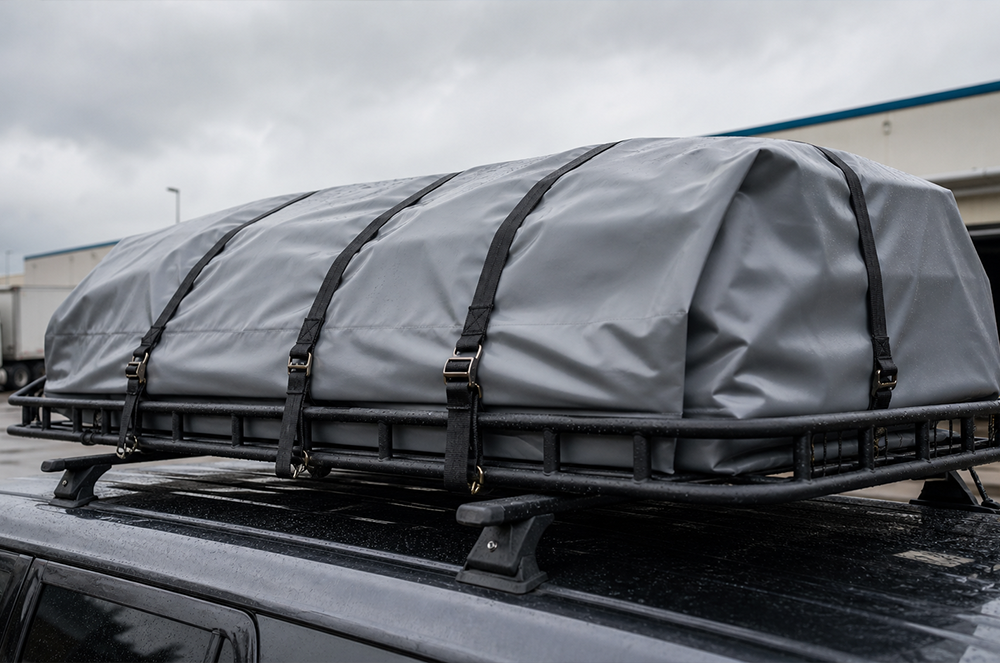
Transporting cargo on a vehicle roof requires reliable protection against rain, wind, sunlight, and road debris. A high-quality PVC tarp is one of the best solutions for protecting roof cargo during transportation because of its superior waterproof performance, durability, and weather resistance.
Whether transporting construction materials, industrial equipment, camping gear, or commercial freight, using the correct PVC tarpaulin and securing it properly can significantly reduce the risk of cargo damage and transportation accidents.
Choosing Waterproof PVC Tarp Materials for Roof Cargo Protection
When protecting roof cargo, selecting the right PVC tarp material is critical. PVC-coated polyester tarps are widely used in transportation and logistics industries because they combine strength, flexibility, and long-term outdoor durability.
I.Why PVC Tarps Are Ideal for Roof Cargo Covers
Compared with PE tarps or canvas tarps, PVC tarpaulins offer several advantages:
- Excellent waterproof performance
- High tensile and tear strength
- Strong UV resistance
- Better wind resistance
- Long outdoor service life
- Easy cleaning and maintenance
- Flexible in both hot and cold environments
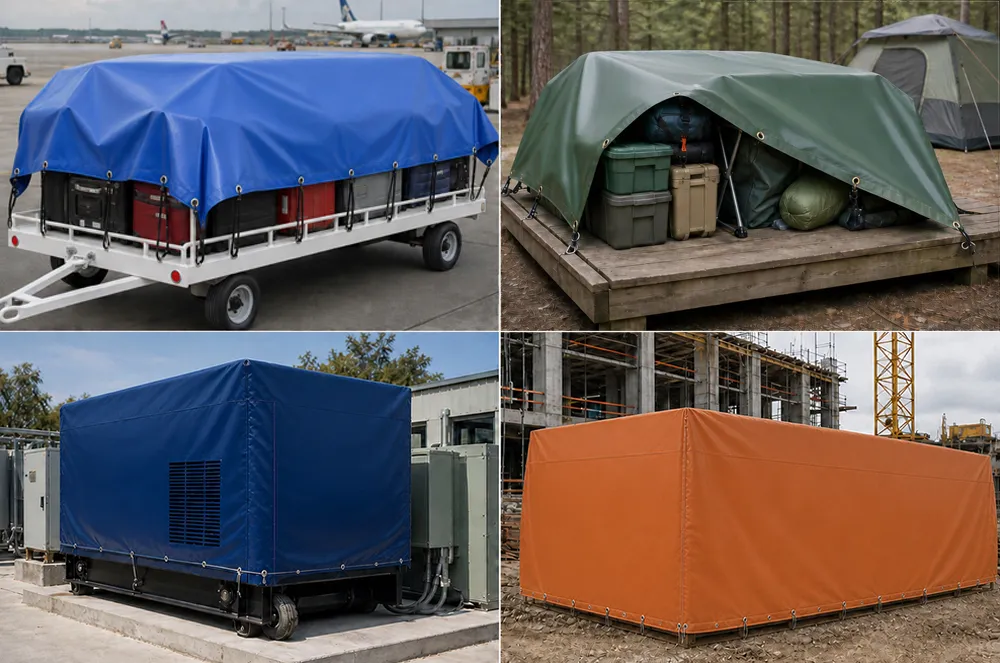
PVC tarps are especially suitable for long-distance transportation and heavy-duty cargo applications where durability and stability are essential.
Recommended PVC Tarp Specifications
Different cargo types require different tarp specifications.
Light-Duty Cargo Protection
Recommended for:
- Luggage
- Camping equipment
- Household goods
Suggested specification:
- 500gsm–650gsm PVC tarp
Heavy-Duty Transportation
Recommended for:
- Machinery
- Construction materials
- Industrial cargo
- Commercial freight
Suggested specification:
Important Features to Consider
When choosing a PVC roof cargo tarp, pay attention to:
- Waterproof coating quality
- Fabric tensile strength
- UV resistance
- Heat-sealed seams
- Rust-resistant eyelets
- Flame-retardant options
- Abrasion resistance
A properly manufactured PVC tarp can maintain stable performance even under continuous highway wind pressure and changing weather conditions.
II.Step-by-Step Instructions for Securing a Roof Cargo PVC Tarp
Even the best PVC tarp cannot provide effective protection if it is installed incorrectly. Proper securing methods improve safety and extend tarp lifespan.
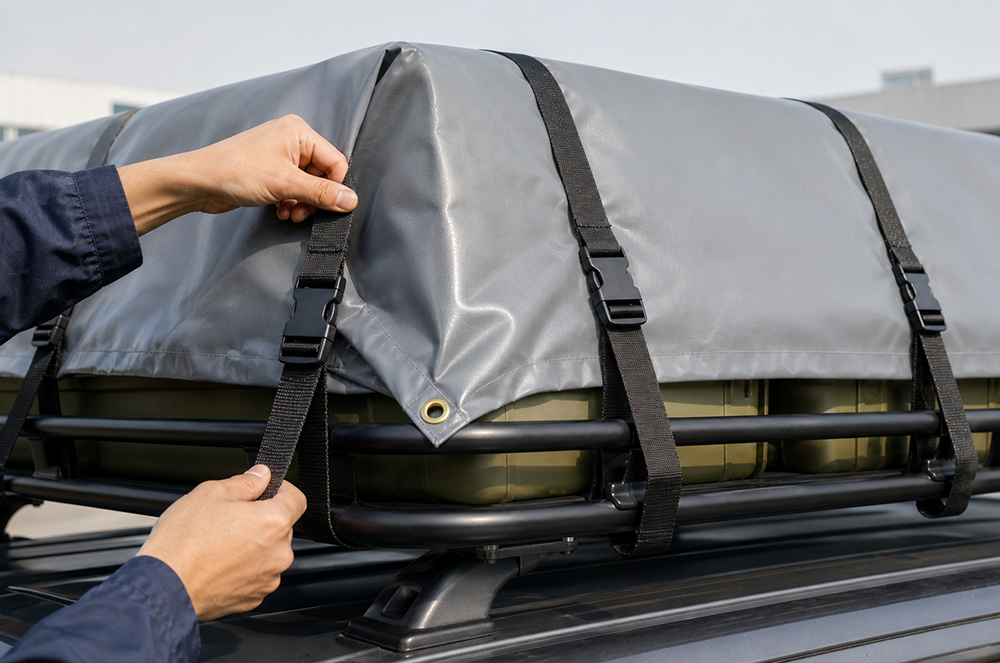
Step 1: Arrange Cargo Evenly
Place the cargo evenly on the roof rack to maintain vehicle balance. Avoid uneven stacking that may create unstable pressure points during transportation.
If the cargo has sharp edges, use protective padding to prevent friction damage to the PVC tarp.
Step 2: Choose the Correct PVC Tarp Size
The tarp should fully cover the cargo while allowing enough extra material for fastening.
However, avoid excessively oversized tarps because loose sections can catch strong wind during driving.
Step 3: Cover the Cargo Smoothly
Spread the PVC tarp evenly over the cargo surface.
Ensure:
- No trapped air pockets
- No excessive folds
- No hanging loose edges
A smooth tarp surface helps reduce wind resistance and minimizes flapping noise.
Step 4: Secure All Anchor Points
Use:
- Ratchet straps
- Elastic cords
- Nylon ropes
- Cargo securing belts
Fasten the tarp tightly to the roof rack or vehicle anchor points.
PVC tarps are heavier than standard PE tarps, so strong fastening systems are recommended for stability.
Step 5: Tighten the Tarp Properly
Tighten the tarp gradually from multiple directions to create even tension.
A properly tensioned PVC tarp:
- Prevents water pooling
- Reduces wind vibration
- Improves aerodynamic performance
- Minimizes wear around eyelets
Step 6: Perform a Final Safety Inspection
Before driving:
- Check all straps and fasteners
- Confirm the tarp is stable
- Ensure visibility is not obstructed
- Verify cargo movement is minimized
For long-distance transport, regular inspections during the trip are highly recommended.
III.Common Problems Caused by Loose or Improper PVC Tarp Coverage
Incorrect tarp installation may create serious transportation and safety issues.
Water Penetration
If the tarp is not fully tensioned, rainwater may collect in low areas and eventually leak into the cargo.
This is particularly dangerous for:
- Electronics
- Paper packaging
- Metal equipment
- Sensitive industrial products
Wind Flapping and Tarp Damage
Loose PVC tarps experience constant wind pressure during highway driving, which may cause:
- Fabric fatigue
- Torn eyelets
- Seam stress
- Premature tarp failure
Cargo Instability
Improperly secured cargo may shift during:
- Sudden braking
- Sharp turns
- High-speed driving
Cargo movement increases accident risk and may damage both the vehicle and transported goods.
Accelerated Wear and Abrasion
Continuous friction between the tarp and cargo corners can shorten the service life of the PVC fabric.
Using corner protectors helps reduce abrasion damage.
Increased Fuel Consumption
Loose tarps create additional aerodynamic drag, reducing transportation efficiency and increasing fuel costs.
IV.Tips for Protecting Roof Cargo During Long-Distance Transport
Long-distance transportation exposes tarps to constant wind pressure, UV radiation, and weather changes. Proper preparation improves cargo safety and tarp durability.
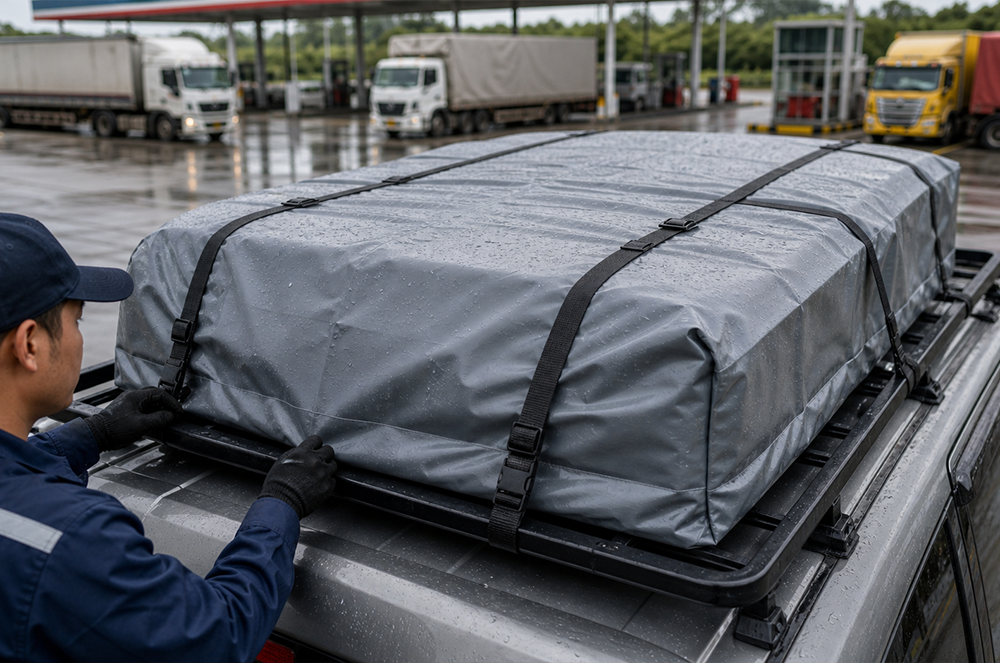
Use Heavy-Duty PVC Tarpaulins
For commercial or industrial transportation, high-strength PVC-coated polyester tarps provide:
- Better tear resistance
- Improved waterproof performance
- Superior UV protection
- Longer service life
Reinforce High-Stress Areas
The areas around eyelets and corners experience the highest tension.
Reinforced hems and welded seams improve overall tarp durability during highway transport.
Avoid Excessive Tension
Over-tightening may damage eyelets or deform the tarp fabric.
Maintain balanced tension across all securing points.
Inspect the Tarp Regularly During Transport
During long trips, periodically check:
- Strap tightness
- Fabric condition
- Water accumulation
- Signs of wear or tearing
Road vibration may gradually loosen securing systems.
Clean and Store PVC Tarps Properly
After use:
- Remove dirt and moisture
- Dry the tarp completely
- Fold carefully
- Store away from direct sunlight
Proper maintenance helps extend tarp lifespan and preserve waterproof performance.
V.Conclusion
Using a high-quality PVC tarp is one of the most effective ways to protect roof cargo during transportation. PVC-coated tarpaulins provide excellent waterproof performance, tear resistance, UV protection, and long-term durability, making them ideal for both personal and commercial transport applications.
By selecting the appropriate PVC tarp specification, securing it correctly, and performing regular inspections during transport, you can significantly reduce the risk of cargo damage, tarp failure, and transportation safety issues.
For demanding transportation environments and long-distance cargo protection, durable PVC tarpaulin materials remain one of the most reliable and cost-effective solutions available.