A water trampoline anchor decision should start with the site, not with a single anchor weight. For resorts, camps, rental operators, and commercial lake projects, anchoring depends on water depth, lakebed type, wind, wave exposure, product size, user load, swim-zone layout, seasonal removal, and local safety responsibility. A small private lake setup and a busy rental operation do not need the same planning process.
LonaTarp can support custom inflatable water trampoline and water recreation projects for B2B buyers. We do not sell single retail units from stock. Bulk production is made to order after the fabric, inflatable structure, welding, accessory interface, sample requirement, and project quantity are confirmed.
I. Why Anchoring Is a Project Risk, Not Only an Accessory
For a commercial water trampoline, the anchor system controls position, movement, and operating risk. If the product drifts, rotates too much, hits a dock, enters a boat lane, or pulls against the inflatable body incorrectly, the problem is no longer only an accessory issue. It becomes an operation, safety, and liability issue.
This is why bulk buyers should discuss anchoring before confirming the finished product. The inflatable tube, D-ring or webbing position, connection rope, anchor line angle, bottom condition, and removal plan all need to work together. If anchoring is treated as an afterthought, the final product may be difficult for the operator to install or manage during peak season.
II. Site Conditions Decide the Anchor Direction
Before choosing a water trampoline anchor, collect the site conditions. A supplier cannot responsibly recommend an anchor direction without knowing how the product will be used and where it will sit.
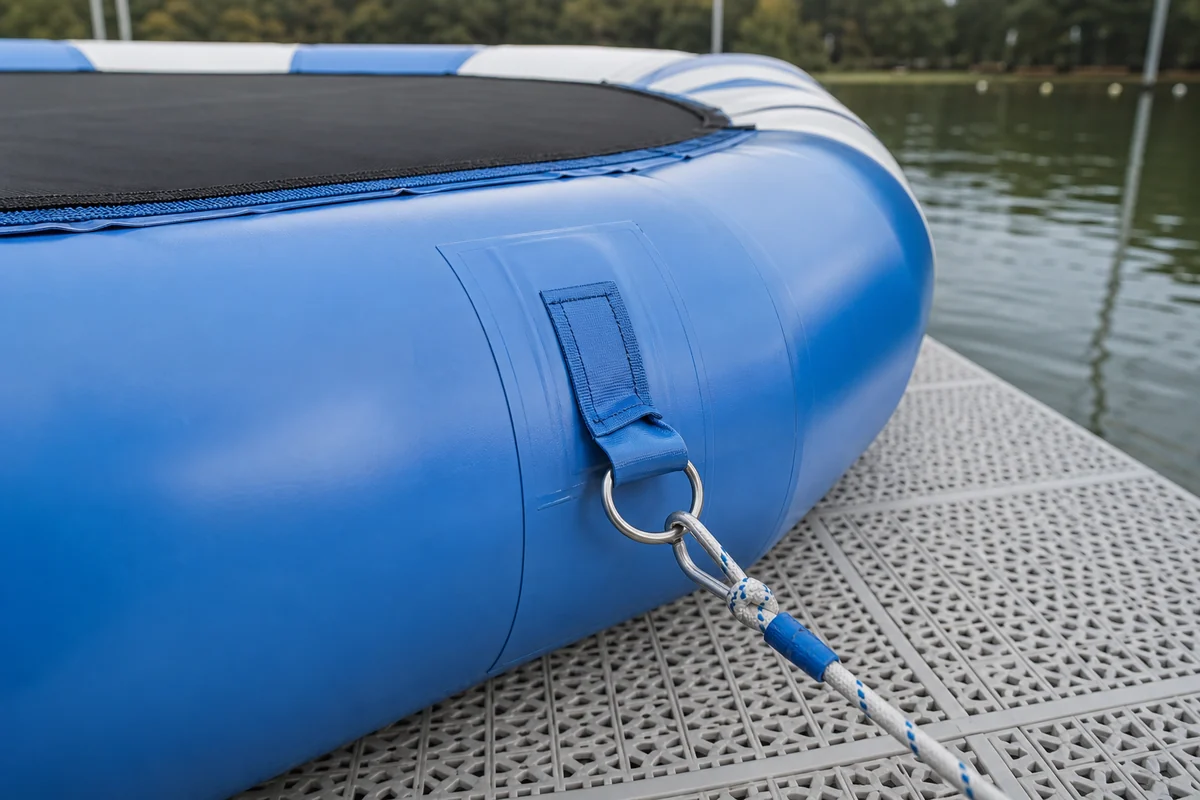
For large projects, anchoring should be reviewed with the local installer, park operator, or marine contractor. LonaTarp can help confirm the inflatable body, material, welding, and attachment interface, but the final anchoring method must match the site and local operating rules.
III. How to Anchor Water Trampoline Projects Step by Step
How to anchor water trampoline projects for commercial use? Start with a site drawing or marked layout. Define the trampoline position, swimming boundary, distance from docks, watercraft routes, and the expected user flow. Then confirm water depth and lakebed condition at each anchor point, not only at the center of the play area.
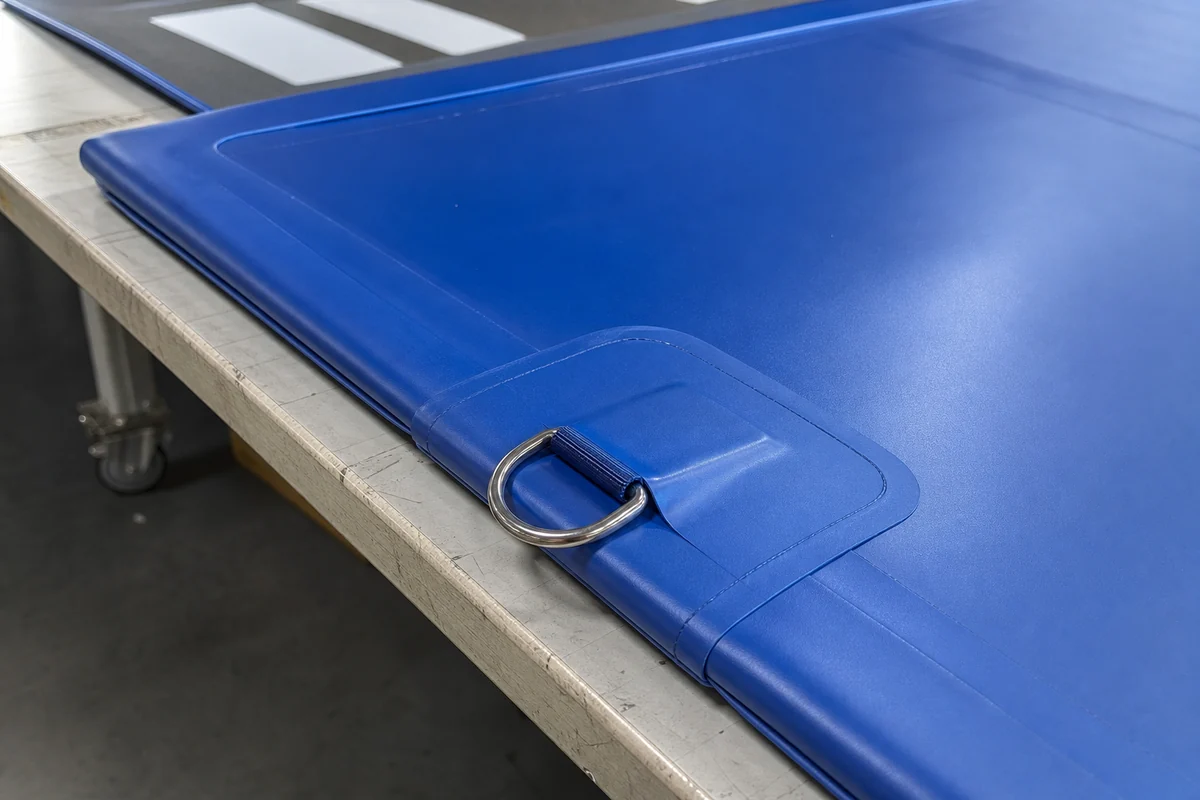
Next, review the product attachment points. The anchor line should connect to reinforced positions designed for that load direction. If the buyer needs extra D-rings, webbing, handles, or reinforced patches, those details should be confirmed before production. Adding attachment points after the product is finished may damage the material or create weak points.
Finally, define the inspection routine. Commercial operators should check line wear, knots or shackles, attachment points, air pressure, surface abrasion, and movement after wind or heavy use. The best anchoring plan is not only strong on the first day; it is also easy for staff to inspect during the season.
IV. Why Anchor Weight Cannot Be Chosen by One Simple Rule
Water trampoline anchor weight is a common question, but a single number can be misleading. The required holding capacity depends on bottom grip, water movement, line angle, product size, wind exposure, and how many users are on the product. A heavy object on a hard or sloped bottom may hold less securely than a better-matched anchor on mud or sand.
For bulk buyers, the better RFQ question is not “how many pounds should the anchor be?” It is “what site inputs do you need so the anchor system can be reviewed?” Send water depth, bottom type, product size, expected user load, wind exposure, distance from shore, installation method, and whether the operator will remove the product seasonally.
If your market references inflatable amusement device standards such as ASTM F2374-24, or if a local authority requires specific operating documentation, tell the supplier before sample approval. Standards and local rules may affect labeling, instructions, inspection records, and the responsibilities between product supplier, installer, and operator.
V. Product Details to Confirm Before Bulk Production
Anchoring is partly a site issue, but the inflatable product still needs the correct fabrication details. Before bulk production, confirm the PVC-coated fabric grade, welding method, reinforcement patches, D-ring or webbing positions, valve layout, color, printed markings, packing, and sample test plan.
For water recreation products, we usually pay close attention to welded seams, air retention, abrasion zones, and reinforcement around connection points. These details affect how the product behaves when it moves on water. A low-cost product that ignores attachment stress can create more replacement and warranty problems for rental operators.
Buyers can also use the pending custom inflatable water trampoline application page as the commercial product reference. This application page is prepared for B2B sourcing and may be activated manually after final website upload. Until the application page is live, this link should be treated as pending.
VI. RFQ Checklist for Resorts, Camps, and Rental Operators
For a serious quotation, prepare:
- Product size, shape, user group, and expected operating season.
- Water depth, bottom type, wind and wave exposure, and distance from shore.
- Anchor-point layout, connection preference, and whether local installers will provide anchors.
- Required reinforced attachment points, D-rings, handles, ropes, or webbing interfaces.
- Material requirement, color, logo or warning-marking plan, and sample approval process.
- Quantity, packing method, destination country, and project deadline.
- Any local safety, inspection, labeling, or rental-operation documentation required by the buyer.
LonaTarp can help with the inflatable body, PVC-coated fabric selection, welding, reinforced attachment areas, sample confirmation, and bulk production control. For inspection planning, see our quality control process. MOQ normally starts from 5,000 sqm of fabric equivalent, and production is made to order for B2B projects.
VII. FAQ
Can LonaTarp tell me the exact anchor weight for my lake?
Not from product size alone. Anchor weight and anchor style depend on water depth, bottom type, wind, wave exposure, line angle, local rules, and operator responsibility.
Does LonaTarp supply retail water trampoline anchors?
No. LonaTarp focuses on B2B custom inflatable products and related fabrication. We do not sell one-piece retail anchor kits.
Should the anchor points be designed before production?
Yes. Attachment points, reinforced patches, D-rings, and webbing positions should be confirmed before production because they affect welding, reinforcement, and long-term stress.
Who should approve the final anchoring method?
The final method should be reviewed by the buyer, local installer, operator, or qualified marine contractor according to site conditions and local requirements.