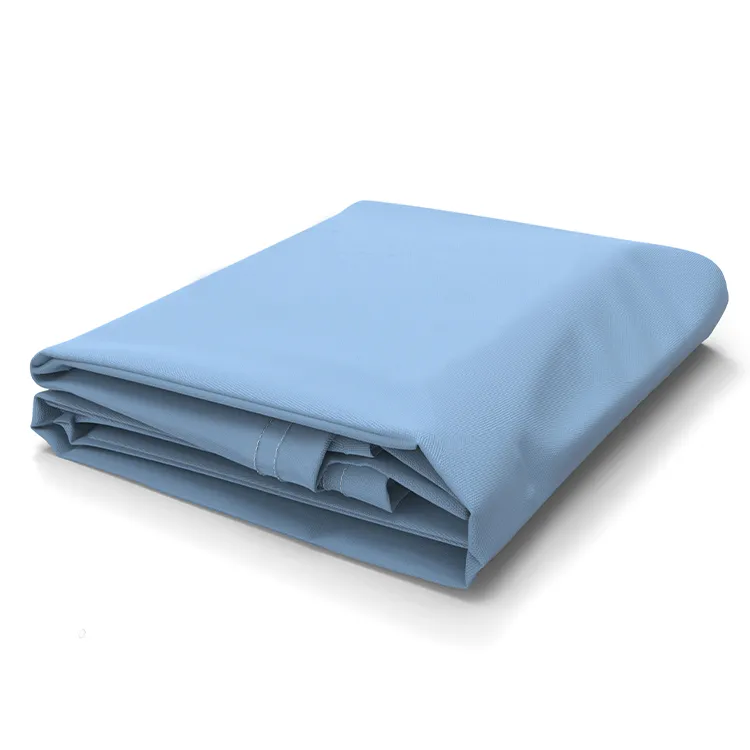
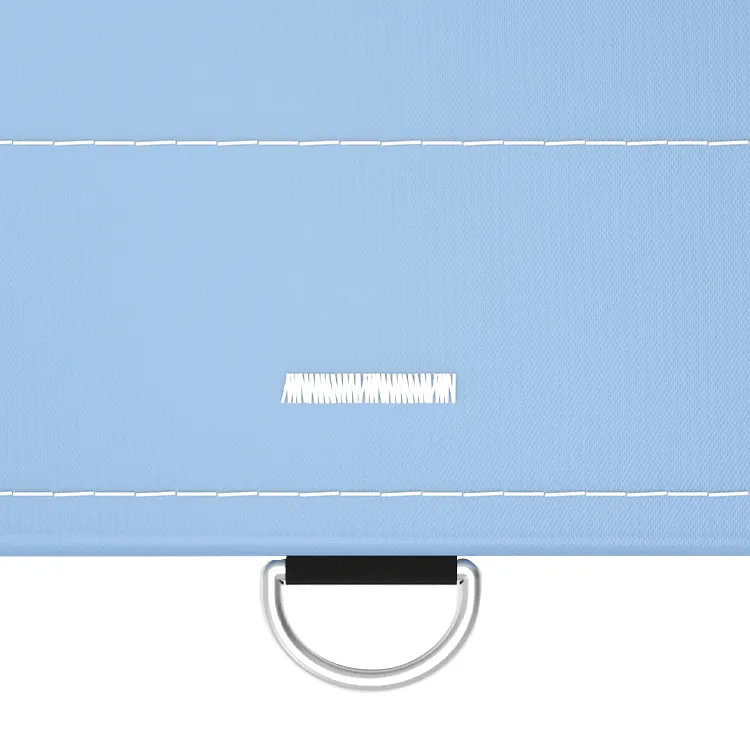
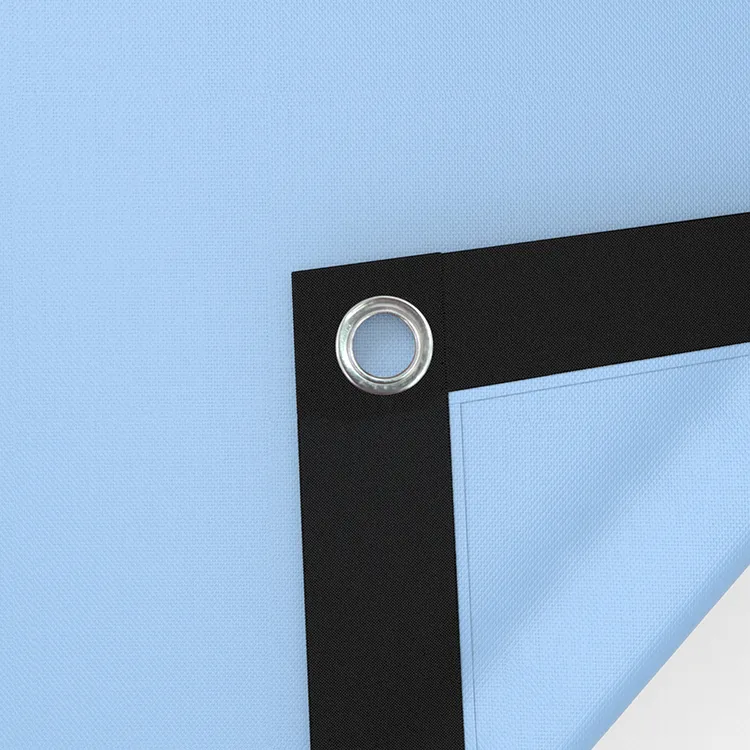

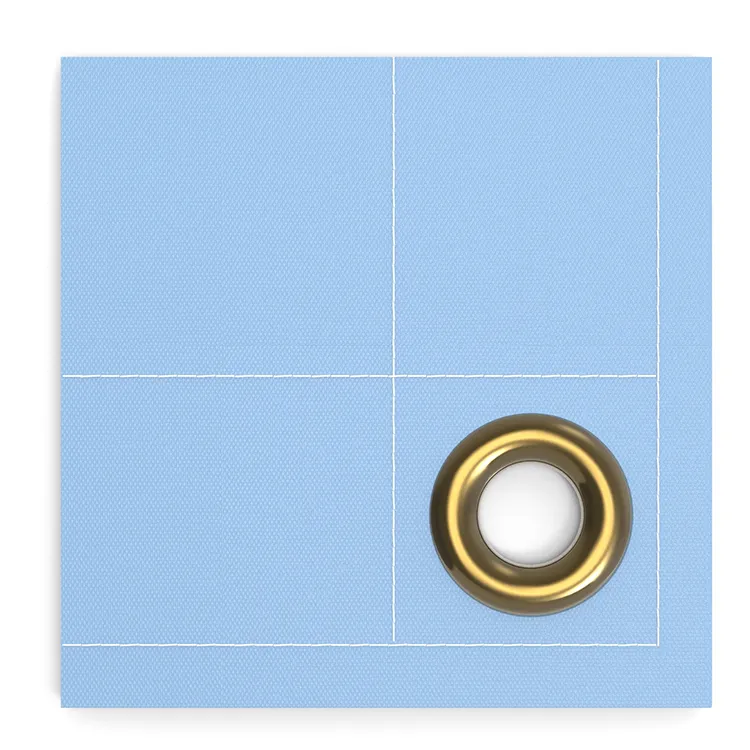


When a cover fails around the grommet row, the center panel is rarely the only issue. Edge layout, reinforcement size, eyelet spacing, folding direction and the joining method all decide whether a TPU tarpaulin works as a finished industrial cover.
LonaTarp produces made-to-order TPU tarpaulin covers for B2B buyers who need fixed sizes, color options, grommets or eyelets, reinforced edges and project-reviewed sewing or welding. The typical material route is a TPU film surface on both sides of a polyester reinforcing layer, then cut and finished according to the drawing, sample or use environment.
Start From the Fixing Method, Not Only the TPU Material
A custom tpu tarpaulin should be specified from the fixing method outward. A cover tied through eyelets needs a different edge design from a cover laid over equipment, pulled around a frame, hung as a side panel or folded repeatedly for transport. If the pulling direction is not considered, the first failure often appears at a punched hole or corner patch.
For each order, we recommend confirming the finished length and width, edge allowance, corner reinforcement, eyelet material, eyelet spacing, pull direction, color and packing method before the cover is quoted. This keeps the finished TPU cover repeatable across batches instead of relying only on a material name.
| Finished-cover detail | What to confirm before production | Why it affects the order |
|---|---|---|
| Finished size | Length, width, shape, tolerance and folding plan | Controls fit, packing and installation work. |
| Edge construction | Sewn hem, welded hem, binding, webbing or local patch | Spreads stress before it reaches the hole line. |
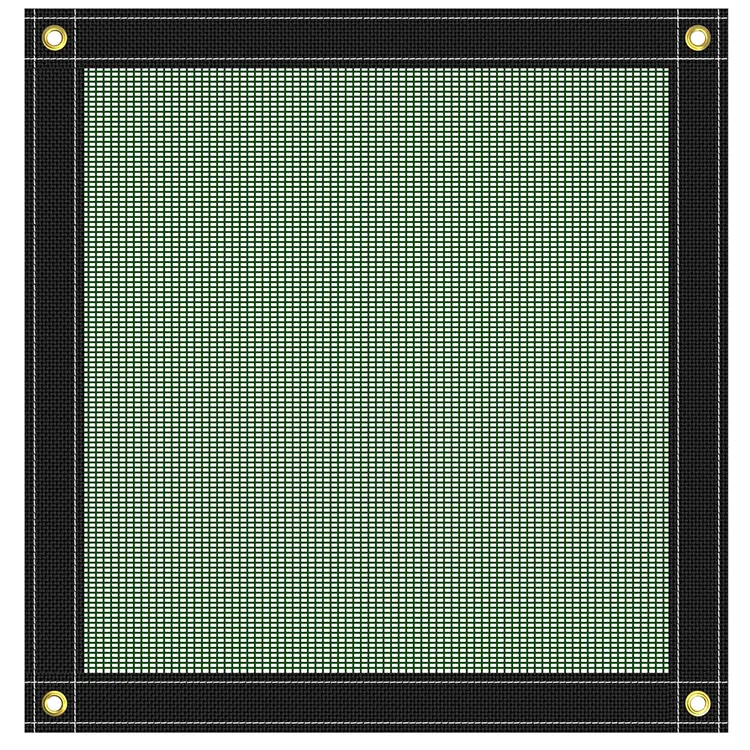
| Eyelets or grommets | Material, spacing, edge distance and corner layout | Reduces tear-out and uneven loading. |
| Joining route | Sewing, hot-air welding, HF welding or mixed construction | Must match the material surface, size and water-control need. |
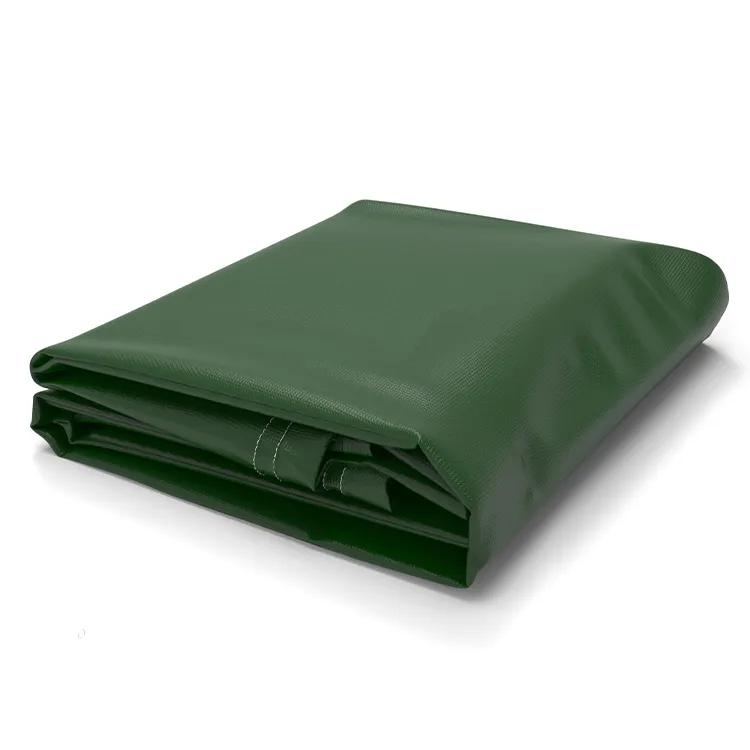
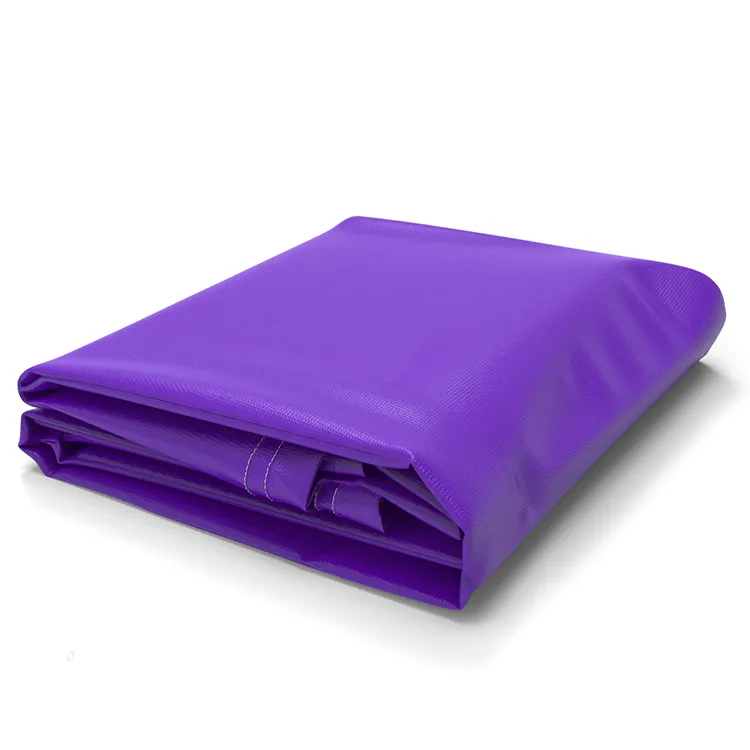
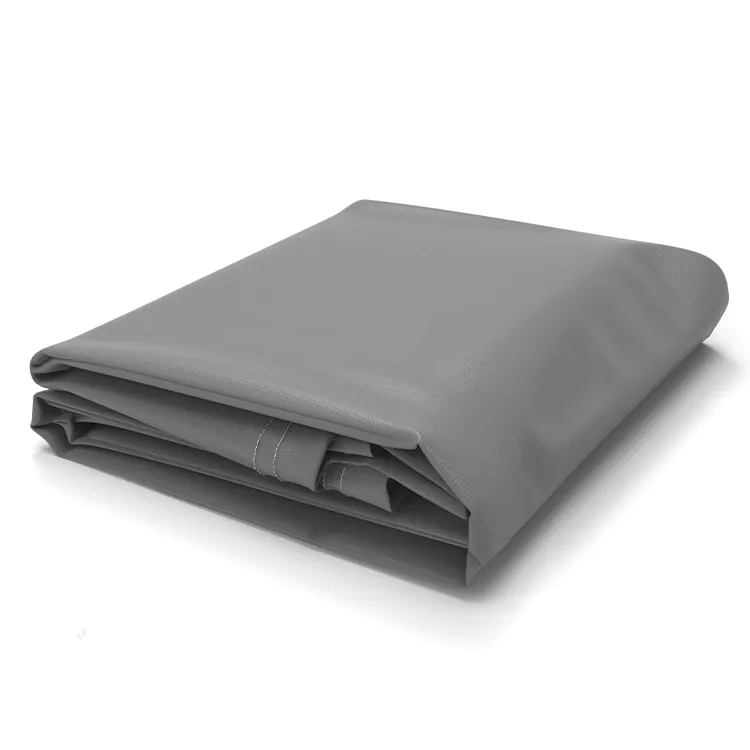
| Color and SKU | Blue, light blue, olive green, orange, dark green, purple or custom | Helps distributors manage SKU groups and project identification. |
TPU Composite Structure for Finished Covers
This TPU tarpaulin cover is intended for buyers who need a flexible composite cover rather than a loose sheet for retail use. A practical structure can use TPU film on both sides with a polyester reinforcing fabric in the middle. The TPU surfaces provide a smooth protective layer, while the polyester reinforcement helps the cover keep shape and resist tearing when the edge is pulled.
The final performance of tpu tarps still depends on the full finished-cover design. Material structure, fabric density, edge distance, seam route, hardware position, folding frequency and outdoor exposure all need to be reviewed together. For repeat orders, an approved sample and a short production record are more useful than a broad claim about one material being strong or waterproof.
If your purchasing team also needs roll material before fabrication, review TPU fabrics separately; this page stays focused on finished covers with edges, eyelets and project-confirmed fabrication.
Eyelets, Corners and Edges Decide How the Cover Performs
For tpu tarpaulin with eyelets, the perimeter should be checked before the center panel. A narrow edge distance, a sharp corner, an oversized punched hole or missing reinforcement can shorten the cover life even when the main panel looks strong. The drawing should show where the cover is tied, which direction the load pulls and whether the corner needs an extra patch or webbing.
LonaTarp can make TPU covers with metal or plastic eyelets, reinforced corners, sewn or bound edges, cut-to-size panels and accessory positions confirmed by the project. If a buyer already has a torn cover sample, photos of the hole line, corner and fixing point are useful for reviewing the next production design.
Waterproof and Welded Options Need the Finished-Cover Context
A tpu waterproof tarpaulin can be built with a water-resistant composite surface, but water control is not decided by the panel alone. Stitching, punched eyelets, overlaps, edge design, installation slope and water pooling all affect the finished result. If the cover protects equipment or stored goods, define where water may collect and whether fixing holes sit outside the protected area.
If the project requires a welded tpu tarpaulin, the seam route should be reviewed before bulk production. Hot-air welding, high-frequency welding, sewing or mixed construction can each make sense depending on the material surface, cover size, edge thickness, accessory layout and inspection requirement. Welding should be confirmed by sample or drawing; a sewn sample should not be described as welded unless that is the actual production route.
Quote Details for Made-to-Order TPU Tarpaulin Covers
To quote the cover accurately, send the application, finished size, drawing or reference photo, quantity by size, color, edge construction, eyelet material and spacing, corner reinforcement, joining method, printing or label request, packing method and any sample test requirement. If the cover must fit existing equipment or a frame, include the installation clearance and the planned fixing method.
LonaTarp is not positioning this page for single-piece retail tarp orders. The page is for made-to-order B2B production where the buyer needs repeatable TPU tarpaulin covers, sample confirmation and stable finishing details. The production order normally needs to meet a 5,000 square meter material MOQ, with the final order plan reviewed by size mix, fabrication route and project requirements.
TPU Tarpaulin Cover FAQs
Is a TPU tarpaulin the same as TPU roll material?
No. Roll material is supplied before fabrication. A finished cover includes size cutting, edge finishing, eyelets or grommets, corner reinforcement and the selected joining route.
Can one page show several TPU cover colors?
Yes. If the structure and use are the same, blue, light blue, olive green, orange, dark green and purple should be treated as color or SKU variants on one product page instead of separate SEO pages.
Can LonaTarp make welded edges on TPU covers?
Welding can be reviewed when the material surface, edge design and equipment route fit the project. The confirmed sample should match the bulk production method.