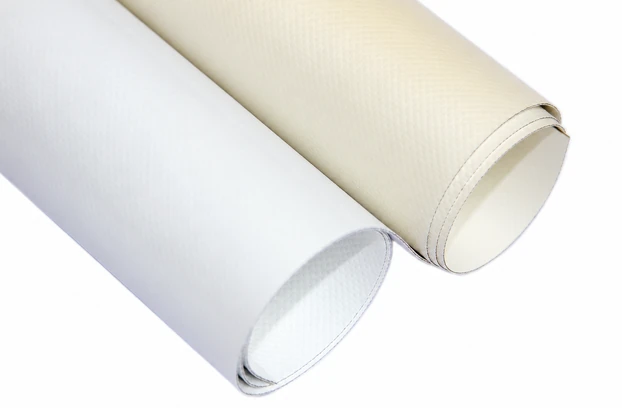
There is no single HS code that applies to every PVC tarpaulin product.
The first thing to check is simple: are you importing PVC tarpaulin rolls or finished tarps?
Roll material and finished tarps may use the same PVC-coated fabric, but they are not always classified in the same way. The material construction, level of processing and destination country can all affect the final code.
The table below gives a simple starting point.
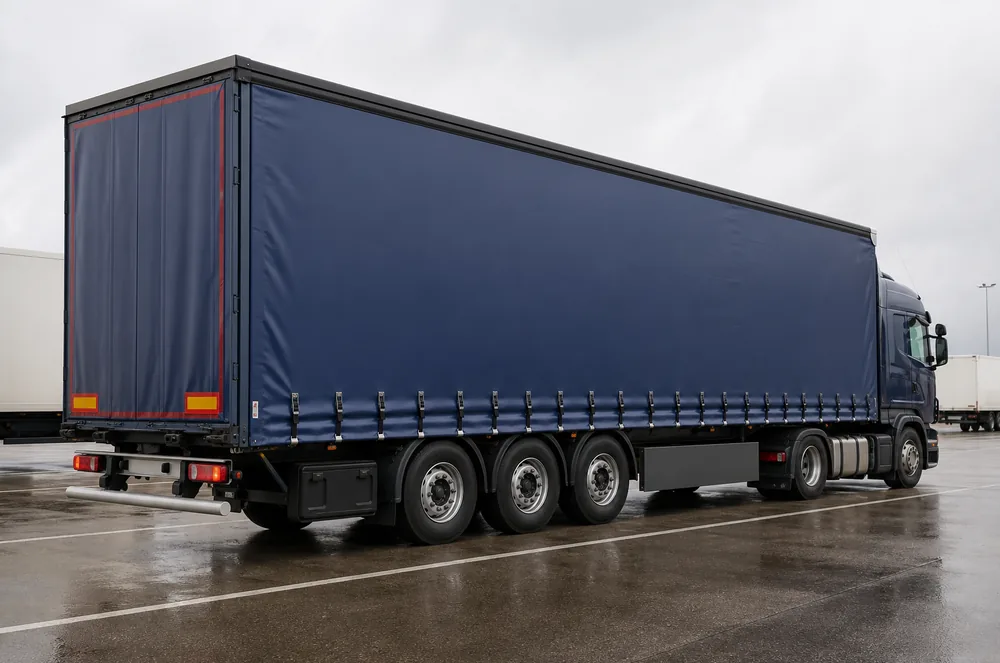
Which HS Code Should You Check First?
There is no single HS code for every PVC tarpaulin product, but most buyers can start by checking whether they are importing roll material or a finished tarp.
A simple starting point:
- Buying roll material? Check whether 5903.10 fits the construction.
- Buying a finished tarp? Check whether 6306.12 fits the finished product.
- If the product does not legally remain in the textile path, ask your broker to review the relevant Chapter 39 classification instead.
These codes are starting points only. The final HS code depends on the actual product construction and the tariff rules of the destination country.
I. What Is the PVC Tarpaulin HS Code?
The keyword “PVC Tarpaulin HS Code” sounds simple, but the product category is not always simple., but PVC tarpaulin can describe several different imported products.
It may refer to PVC-coated fabric supplied in rolls for further fabrication. It may also refer to a finished tarp with cut size, welded seams, reinforced hems, grommets, D-rings, webbing or straps.
That difference matters.
A roll of PVC-coated polyester fabric may need review under coated-textile headings such as 5903.10. But some PVC tarpaulin rolls, especially constructions visibly coated or covered with PVC on both sides, may require a Chapter 39 review.
A finished tarp may need review under headings for made-up tarpaulins, such as 6306.12, but only when the product legally fits the textile article path. If the material is treated as a plastic material or article, a Chapter 39 heading may still apply.
The product itself must be described correctly before a code is selected.
II. PVC Tarpaulin Roll Material vs Finished PVC Tarps
The most important distinction is product form.
and finished PVC tarps may both be called “PVC tarpaulin” in purchasing conversations. However, the PVC tarpaulin HS code may differ because customs classifies the goods according to their actual construction and condition at import.
PVC Tarpaulin Roll Material
PVC tarpaulin roll material is usually supplied as continuous rolls for further fabrication.
A typical PVC tarpaulin roll may use polyester base fabric with PVC coating or lamination. Commercial rolls may differ in:
- Base fabric
- PVC coating or lamination
- GSM
- Thickness
- Width
- Surface finish
- One-side or two-side coating
- Roll length
- Flame-retardant, UV or other treatments
For PVC tarpaulin rolls, “one-side or two-side PVC” is especially important. In some tariff systems, textile fabric entirely coated or covered on both sides with visible plastics may be excluded from coated-textile headings and reviewed under a plastics chapter instead.
GSM, thickness and PVC percentage are supporting product facts. They help describe the product, but they do not work as standalone classification tests.
A buyer should not assume:
- 650 gsm means 5903.
- 900 gsm means Chapter 39.
The actual construction and legal notes matter more than a single material number.
Finished PVC / Vinyl Tarps
A finished PVC tarp is no longer only roll material.
It may be made from the same PVC-coated fabric, but it has been further processed into a product with a specific size and function.
A finished vinyl tarp may include:
- Cut-to-finished dimensions
- Welded or sewn panels
- Reinforced hems
- Grommets
- D-rings
- Webbing
- Straps
- Printing
- Custom shape or openings
- Finished packaging
These details can change how the product is described for customs purposes. The imported product is no longer just coated fabric on a roll. It is a made-up cover or tarp designed for use.
That still does not mean every finished tarp automatically falls under 6306.12. If the underlying material is treated as plastics, or if the finished product has a more specific product identity, another heading may need review.
III. Same PVC Fabric, Different Imported Product
A simple product comparison makes the issue clearer.
From a purchasing perspective, both products may use the same PVC fabric.
From a customs perspective, they may be different imported goods.
The roll is material for further fabrication. The finished tarp is a completed product with a specific size, edge structure and attachment design.
This is why buyers should not assume that the same fabric automatically means the same HS code.
IV. HS Code for PVC Tarpaulin Roll Material
PVC tarpaulin roll material is often reviewed through either a coated-textile path or a plastics chapter path.
When 5903.10 May Be Relevant
Heading 5903 covers textile fabrics impregnated, coated, covered or laminated with plastics. Subheading 5903.10 refers to goods with poly(vinyl chloride).
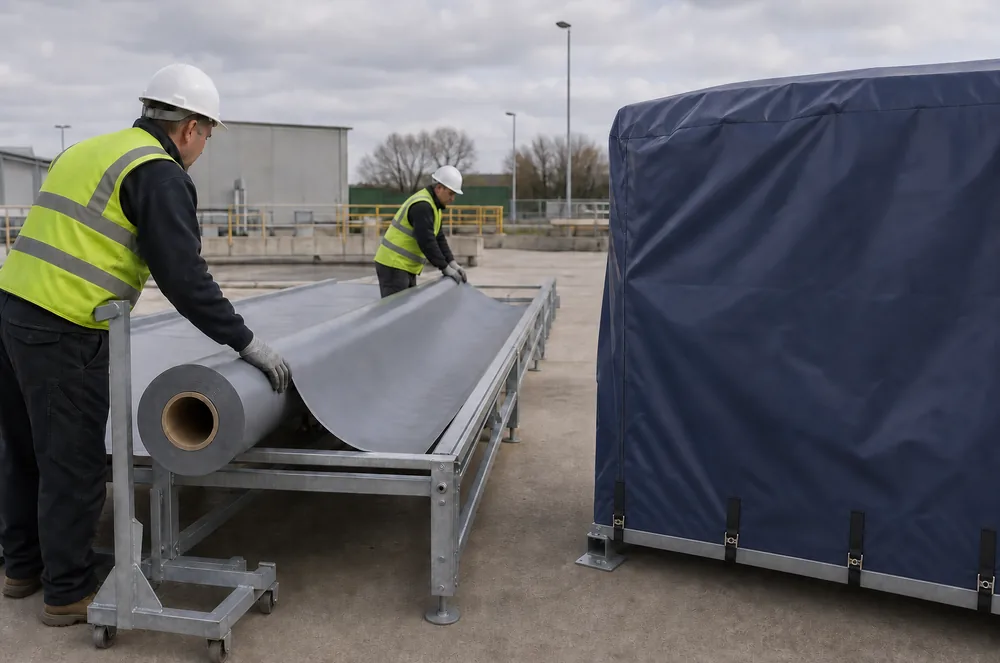
This may be relevant when the product is:
- Supplied in roll form
- Built on a textile base fabric
- Coated, covered or laminated with PVC
- Still legally treated as coated textile fabric
- Intended for further fabrication
- Not yet cut and finished as a tarp
Some PVC-coated polyester roll materials used to make truck covers, warehouse curtains or tarpaulin products may fall into this review path.
But 5903.10 should be treated as a possible path, not as the default answer for every PVC tarpaulin roll.
Why Some PVC Tarpaulin Rolls May Require Chapter 39 Review
Some PVC tarpaulin materials may need review under Chapter 39.
This can happen when the product is treated mainly as a plastic material rather than a coated textile fabric. One important issue is whether the textile is completely embedded in plastics or entirely coated or covered on both sides with visible plastics.
In U.S. rulings, bulk PVC-coated tarpaulin-type materials have been classified under heading 3921 rather than 5903, depending on construction and imported form.
For buyers, the practical point is simple:
A roll is not automatically 5903.10 just because it contains polyester fabric and PVC.
The supplier should provide enough construction details for the broker to review the correct path.
V. HS Code for Finished PVC Tarps
Finished PVC tarps also need careful review because “finished” does not automatically mean one specific code.
When 6306.12 May Be Relevant
Heading 6306 includes tarpaulins, awnings, sunblinds, tents, sails and similar made-up goods. Subheading 6306.12 refers to tarpaulins, awnings and sunblinds of synthetic fibers.
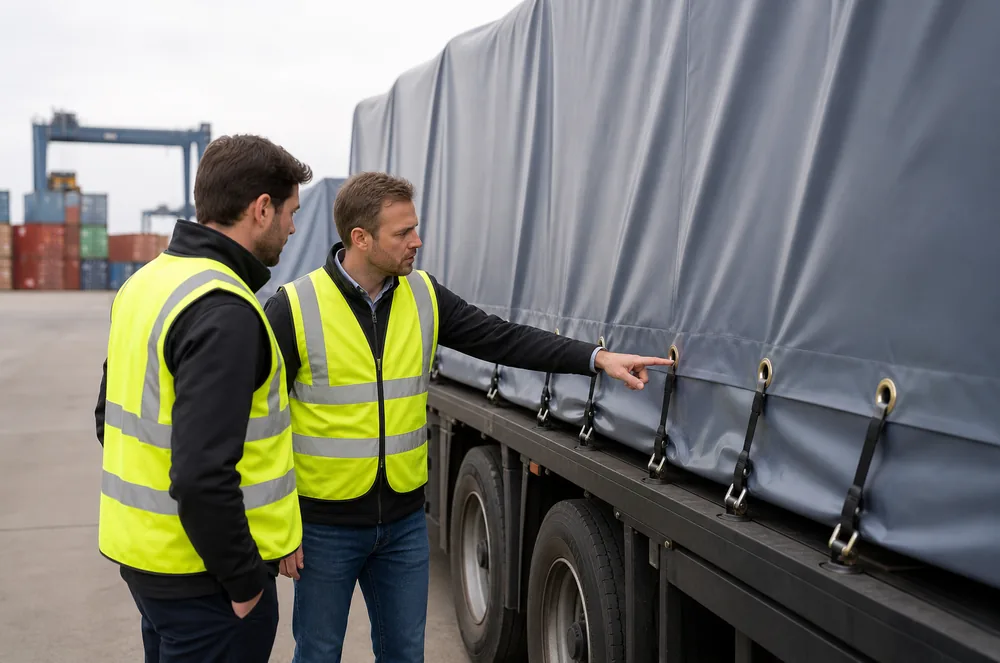
This may be relevant when the product is:
- A made-up textile tarp
- Cut to finished dimensions
- Welded or sewn
- Made with reinforced hems
- Fitted with grommets, D-rings, straps or other hardware
- Imported as a ready-to-use tarp or cover
The key condition is that the product must fit the textile article path.
A finished tarp’s accessories and fabrication help show that it is made up, but they do not by themselves prove that the product belongs under 6306.12.
Why a Finished PVC Tarp May Still Follow Chapter 39 or Another Heading
A finished PVC tarp may still require Chapter 39 review if the material is treated as plastics rather than textile fabric.
In U.S. rulings, certain finished PVC tarps made from polyester fabric visibly coated on both sides with PVC have been classified as articles of plastics under heading 3926 instead of 6306.12.
That example is important because it shows the main risk:
Finished tarp does not automatically mean 6306.12.
The material construction still matters.
A fitted machinery cover, lifting tarp, industrial curtain or other application-specific cover may also need a different review if its objective design gives it a more specific identity than a general rectangular tarp.
VI. Which Product Details Can Change the HS Code?
The following details can affect how a PVC tarpaulin product is described and reviewed for classification.
VII. What Product Information Can LonaTarp Provide for HS Code Review?
As the manufacturer, LonaTarp can provide manufacturing facts that help your broker review the correct classification path.
We do not replace the importer, broker or customs authority in making the final tariff declaration. But we can prepare the product information needed for review.
For PVC Tarpaulin Rolls
For roll material, LonaTarp can provide:
- Base fabric
- PVC coating or lamination information
- One-side or two-side coating details
- GSM and thickness
- Roll width and length
- Surface finish
- Product photos
- Technical data sheet when available
The purpose is to show what the material is before it is fabricated.
This information helps the buyer compare products and helps the customs broker understand whether the shipment should be reviewed as coated textile material, plastic material or another product category.
For Finished PVC / Vinyl Tarps
For finished tarps, LonaTarp can provide all roll-material information plus finished-product details.
Important details include:
- Finished size
- Seams or welded joints
- Hem structure
- Grommets or D-rings
- Webbing, straps or accessories
- Printing or logo requirements
- Drawing or production specification
- Photos of the finished product or sample
These records help show what is actually being imported.
A finished tarp should not be described only as “PVC tarpaulin fabric” if it is already cut, reinforced and fitted with hardware.
VIII. How to Confirm the Final HS Code
The confirmation process should start from the actual product, not from a copied code.
1. Confirm the Actual Product Form
Start by confirming whether the goods are roll material, cut pieces, finished tarps or a more specific fabricated product.
This is the first and most important step.
2. Check the Destination Tariff Schedule
The HS is harmonized internationally through six digits. Countries and customs unions then add their own tariff subdivisions beyond that level.
This means an 8-digit or 10-digit code used in one country may not apply in another market.
3. Compare Official Rulings or Tariff Notes
When available, compare similar official rulings, tariff notes or customs guidance.
The most useful references are those that match the actual product form, material construction and imported condition.
4. Confirm With a Broker or Customs Authority
For high-value shipments, unfamiliar products or strict destination markets, confirm the final classification with a customs broker or the relevant customs authority.
This is especially important when the product could reasonably fall between coated textile, plastics material and finished article categories.
IX. PVC Tarpaulin Rolls or Finished Tarps? Choose the Right Supply Route
The HS code question often reveals a more basic purchasing question:
Are you buying roll material or finished tarps?
PVC Tarpaulin Rolls
PVC tarpaulin rolls are suitable when the buyer needs material for local fabrication, cutting, welding, sewing or distribution.
LonaTarp supplies PVC-coated tarpaulin materials in roll form for commercial production and wholesale use.
PVC tarpaulin roll orders require a minimum total area of 5,000 m².
Finished PVC / Vinyl Tarps
Finished PVC or vinyl tarps are suitable when the buyer needs ready-to-use covers with fixed dimensions, hems, seams, grommets, D-rings, straps, printing or custom fabrication.
Finished tarp orders have a 30-piece MOQ.
If you are not sure which supply route fits your shipment, share the product form, material construction, finished size and destination market. LonaTarp can prepare product details for your broker’s HS code review.
X. Frequently Asked Questions
Is 5903.10 Always the HS Code for PVC Tarpaulin?
No. 5903.10 may be relevant for qualifying PVC-coated textile fabrics, but it is not a universal answer.
Some PVC tarpaulin rolls, especially constructions visibly coated or covered with PVC on both sides, may require review under Chapter 39.
Is 6306.12 Always the HS Code for Finished PVC Tarps?
No. 6306.12 may be relevant for certain made-up synthetic textile tarpaulins, but final classification depends on the material and imported product form.
A finished PVC tarp made from a material treated as plastics may still require review under Chapter 39.
Can I Use the Same HS Code for PVC Tarpaulin Rolls and Finished Tarps?
Not automatically.
A roll and a finished tarp may use the same PVC-coated fabric, but they are not the same imported product. Finished processing such as cutting, welding, hemming and hardware installation can affect classification review.
What Should I Send to My Broker for Confirmation?
Send the product description, material construction, GSM, thickness, coating information, photos, destination country and whether the goods are rolls or finished tarps.
For finished tarps, also include the finished size, seams, hems, grommets, accessories and drawings if available.
Reference basis: USITC HTS materials list heading 5903 for textile fabrics coated or laminated with plastics and heading 6306 for tarpaulins, awnings and sunblinds. CBP ruling examples also show that PVC-coated tarpaulin materials or finished tarps can fall under Chapter 39 depending on construction, including headings such as 3921 and 3926. Sources: USITC HTS, CBP CROSS information, CBP ruling NY N329549, CBP ruling HQ 963747.