Polyester TPU is a thermoplastic polyurethane family made with polyester-based soft segments. It is commonly considered when wear, mechanical performance and resistance to certain oils or greases matter. Polyether-based TPU is generally the stronger starting direction for prolonged moisture, hot-humid exposure or hydrolysis risk. Neither family is universally better. Buyers must also clarify whether “polyester TPU” means the polymer chemistry, a TPU film, or TPU applied to a polyester textile, because those are different purchase objects with different specifications.
The useful decision is therefore not “Which TPU is best?” It is “Which grade and construction will survive our actual exposure, conversion process and acceptance test?”
I. What “Polyester TPU” Actually Means
The phrase can describe two different layers of a material system. Confusing them is one of the fastest ways to receive an irrelevant quotation.
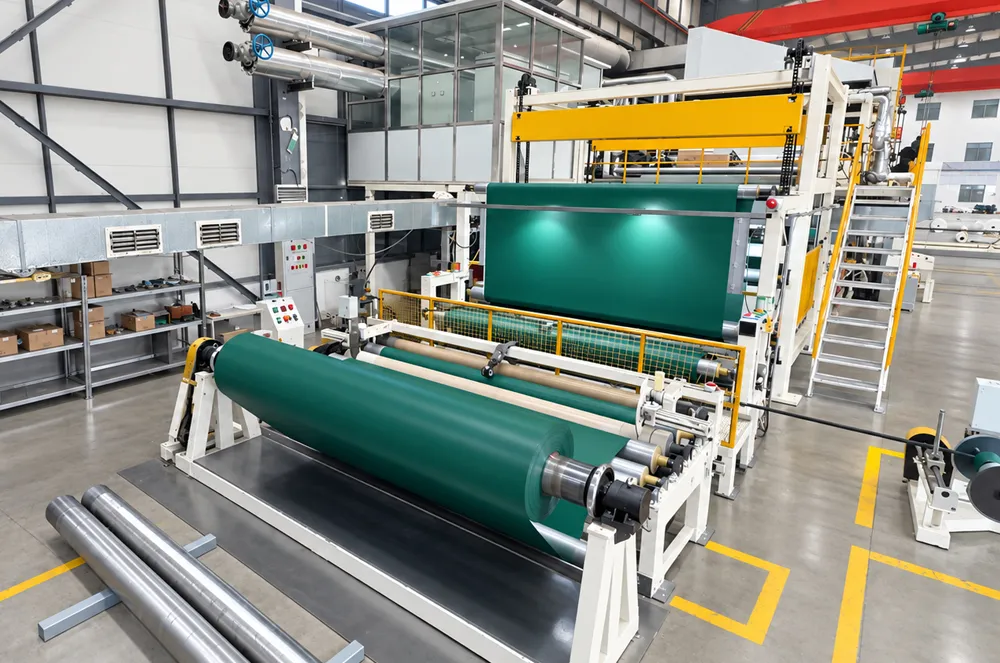
Polyester-based TPU chemistry
Here, “polyester” describes the polyol chemistry used in the TPU. It does not identify a textile substrate. Material suppliers sell many polyester-based grades with different hardness, stabilizers, processing windows and approval status. A property associated with one grade should not be applied to the entire family.
TPU on a polyester textile
In a coated or laminated fabric, polyester may instead describe the woven, knitted or mesh reinforcement. A TPU film or coating forms the functional layer over that textile. The TPU layer itself may be polyester-based, polyether-based or another qualified chemistry. “Polyester fabric with TPU” therefore does not prove that the TPU polymer is polyester-based.
Before discussing price, identify the required purchase form:
| Purchase form | What the buyer receives | Questions that control the specification |
|---|---|---|
| TPU resin or pellets | Polymer feedstock for extrusion, molding, film or coating | Chemistry, hardness, melt behavior, drying, processing route and regulatory status |
| TPU film or sheet | A standalone functional layer | Chemistry, thickness, surface, activation/bonding method, barrier and aging requirements |
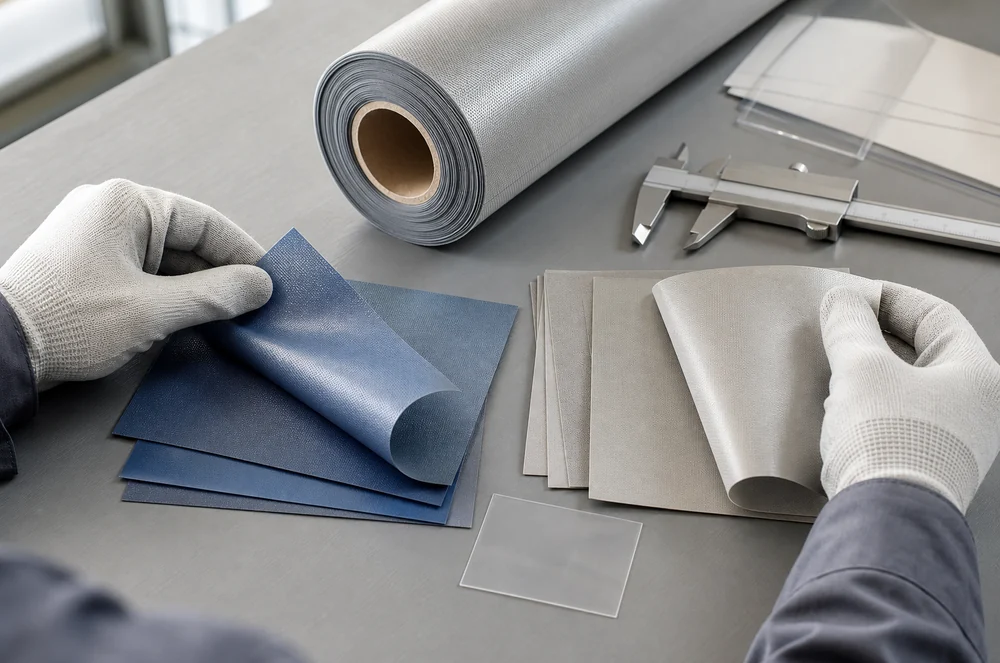
| TPU-coated or laminated fabric | A complete textile composite supplied in rolls | Base textile, TPU layer, bond, total weight/thickness, width, surface, joining method and finished-product test |
LonaTarp’s commercial material route concerns roll fabrics, not TPU resin pellets. Buyers seeking a complete textile construction can review TPU fabric material options or the more specific TPU-coated polyester fabric page.
II. Polyester TPU and Polyether TPU: The Practical Trade-Offs
Polyester- and polyether-based TPU are broad families, not fixed specifications. BASF’s Elastollan material guide and Covestro’s TPU chemical-properties overview both show that TPU behavior changes with chemistry, hardness, stabilization, processing and environmental conditions. The table below should be used as a screening guide, then checked against the exact grade and complete construction.
| Decision factor | Polyester-based TPU: typical selection direction | Polyether-based TPU: typical selection direction | What still needs verification |
|---|---|---|---|
| Prolonged water or hot-humid exposure | Flexible grades can be more vulnerable to hydrolytic degradation, especially under elevated heat and humidity | Commonly selected where hydrolysis resistance is a priority | Exact temperature, humidity, immersion time, stabilizer package and aged-property target |
| Wear and mechanical loading | Many grades are selected for wear resistance and strong mechanical performance | Suitable grades are also available, but performance varies | Abrasion method, tensile/tear target, hardness, flexing and part geometry |
| Oils, greases and other media | Some polyester grades offer useful oil, grease or chemical resistance | Behavior differs by grade and medium | Exact chemical, concentration, temperature, contact time, stress and swelling/property-retention limits |
| Low-temperature behavior | Available in suitable grades; family name alone does not set the limit | Often considered where low-temperature flexibility is important | Test temperature, bend/flex method, conditioning time and pass/fail criterion |
| Microbial exposure | Flexible polyester systems may need closer review in hot, humid or soil-contact conditions | Polyether bonds generally provide stronger resistance to microbial attack | Actual environment, formulation, hardness, duration and required test |
| UV and outdoor weathering | Requires a grade and stabilization package suited to exposure | Also requires exposure-specific stabilization | Aromatic/aliphatic chemistry, color, UV package, weathering method and appearance/mechanical acceptance |
| Processing | Can be extruded, molded or formulated for film/coating routes depending on grade | Similar range of possible routes, grade-dependent | Drying, melt window, line speed, bonding, thickness control and downstream joining |
This comparison deliberately avoids a single “winner.” For example, a polyester TPU may be entirely practical in a controlled indoor application and may also be stabilized for demanding service. Conversely, choosing polyether chemistry does not remove the need to verify abrasion, bond strength, chemical contact or processing stability.
III. Product Form Changes the Specification
A resin data sheet cannot approve a fabric, and a fabric swatch cannot prove the performance of a finished welded product.
For resin or film conversion, the processor needs grade-specific drying and processing guidance, thickness control, surface or bonding behavior and a definition of the intended service environment. The result can change with residence time, moisture during processing, orientation and post-processing conditions.
For a TPU textile composite, additional variables enter the decision:
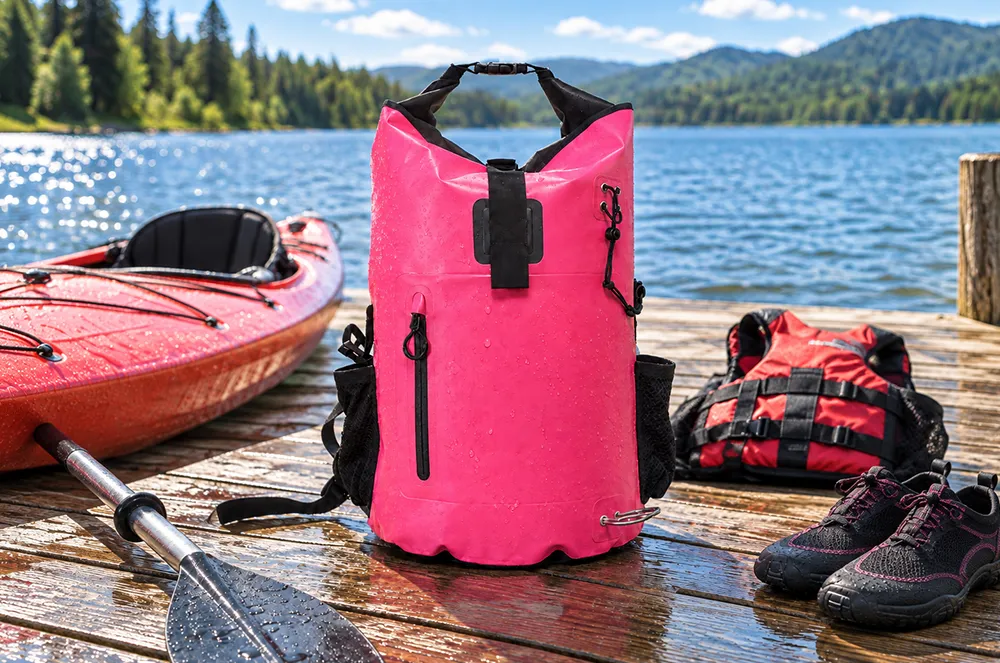
- the fiber and architecture of the base textile;
- whether TPU is coated directly or introduced as a bonded film;
- layer thickness, coverage and continuity;
- adhesion between TPU and the textile;
- total fabric weight, thickness, width and roll format;
- surface treatment, printing or bonding requirements;
- the buyer’s heat, RF, adhesive, sewing or combined joining process;
- seam, valve, edge and attachment design in the finished product.
This is why “polyester TPU fabric” should never be quoted from the phrase alone. A supplier needs to know whether polyester refers to the polymer chemistry, the reinforcement, or both—and which layer is expected to solve each performance problem.
IV. Choose by the Failure You Cannot Accept
Material selection becomes clearer when the team starts with the failure mode instead of a generic advantages list.
For a product stored wet or used repeatedly in hot-humid conditions, the critical question may be whether mechanical properties and layer adhesion remain acceptable after conditioned aging. That pushes the review toward hydrolysis resistance, the TPU chemistry and the interface between layers.
For a part exposed to repeated scraping or rolling, the main risk may be surface wear, crack initiation or loss of strength. The team should define the abrasion method, load and number of cycles, then inspect both appearance and retained properties.
For oil, fuel, cleaning agent or another chemical, do not approve a material from a broad “chemical resistant” claim. Record the exact medium, concentration, temperature, contact time and mechanical stress. Test swelling, mass or dimension change, surface condition and retained mechanical performance as appropriate. Fuel contact in particular requires application-specific compatibility evidence; TPU family names are not approvals.
For welded or laminated products, the polymer may remain intact while the joint or interface fails. Trial the actual material on the buyer’s equipment and inspect peel, seam strength, leakage or pressure retention after the relevant aging and flexing sequence.

V. Build a Validation Plan Before Bulk Approval
A practical B2B validation plan links documents, samples and production controls to the same material identity.
- Confirm the exact construction. Record TPU chemistry direction, grade reference where available, substrate, layer arrangement, thickness or weight, width, surface and intended processing route.
- Review the technical and safety documents. Use the current technical data sheet, safety data sheet and processing guidance for the exact grade or formulated material. Check whether test specimens and conditions resemble the intended product.
- Make a representative conversion sample. Extrude the intended film, laminate the selected layers or join the actual fabric on production-equivalent equipment.
- Condition the sample against real risks. Use relevant water, humidity, heat, chemical, flexing, abrasion or microbial exposure instead of an unrelated test package.
- Test the critical failure point. Include interfaces, seams, edges, valves or attachments when they carry the real product risk.
- Lock acceptance criteria. Define the method, specimen condition, unit, tolerance and pass/fail rule before the production order.
- Connect bulk inspection to the approved sample. Product name and color are not enough; verify the construction and agreed performance controls.
These steps also make quotations more comparable. A lower price may reflect a different TPU layer, substrate, width, test package or quality-control commitment rather than an equivalent material.
VI. What to Include in a TPU Material Inquiry
Send enough information for the supplier to recommend a material route instead of guessing:
- whether you need resin, film or coated/laminated fabric rolls;
- the finished product and what the TPU layer must do;
- continuous and peak temperature, including wet and dry conditions;
- water, humidity, soil, oil, fuel, cleaning agent or other media exposure;
- abrasion, flexing, pressure, load and expected service cycle;
- substrate, layer structure, thickness/GSM, width, color and roll requirements;
- extrusion, coating, lamination, heat welding, RF welding, sewing or bonding process;
- target regulation, restricted-substance list or product standard;
- required test method and acceptance value;
- estimated quantity, destination market and project timing.
If the answers are incomplete, a reference sample and a description of the current failure can be more useful than a generic request for “the best polyester TPU.”
VII. Frequently Asked Questions
Is polyester TPU the same as polyester fabric?
No. Polyester TPU normally describes a TPU polymer made with polyester-based soft segments. Polyester fabric describes a textile reinforcement. A TPU-coated polyester fabric can contain both, but the two terms identify different parts of the construction.
Which is more resistant to hydrolysis: polyester TPU or polyether TPU?
Polyether-based TPU is generally the stronger starting direction for long-term hot-water, moisture-vapor or hot-humid exposure. The final decision still depends on the exact grade, hardness, stabilization, temperature, duration and required retained properties.
Can polyester TPU be heat welded or RF welded?
Many TPU materials can be joined thermally, but weldability is grade-, layer-, surface- and equipment-specific. A trial using the intended construction, process settings and seam design is required before bulk approval.
Is polyester TPU suitable for fuel contact?
The polymer family alone cannot establish suitability. Fuel composition, temperature, contact time, stress, swelling and retained properties must be evaluated for the exact material and finished construction. Any regulated application may require additional approvals or tests.
Is polyether TPU always more expensive?
Not necessarily. Price depends on the grade, formulation, thickness, substrate, processing route, quantity, testing and market conditions. Compare complete specifications rather than polymer family names.
VIII. Move From a Material Name to a Testable Requirement
The right choice between polyester and polyether TPU is made at the intersection of chemistry, product form, exposure and verification. Start by confirming what you are buying. Then identify the failure the material must prevent and the test that will prove it.