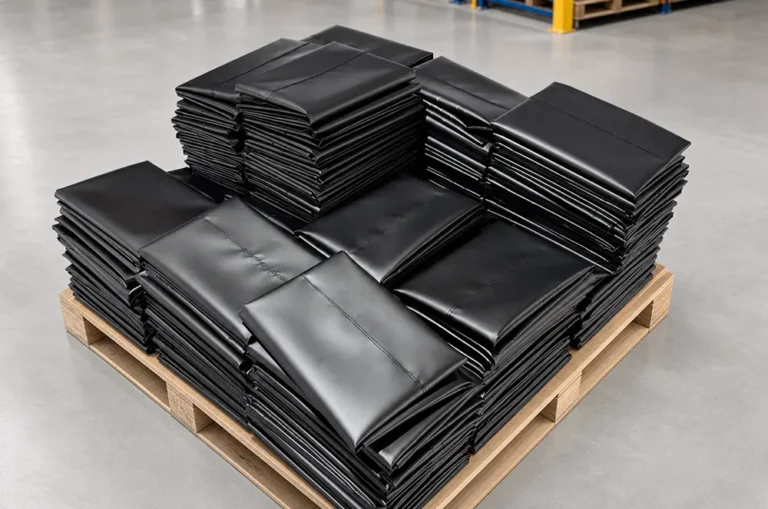
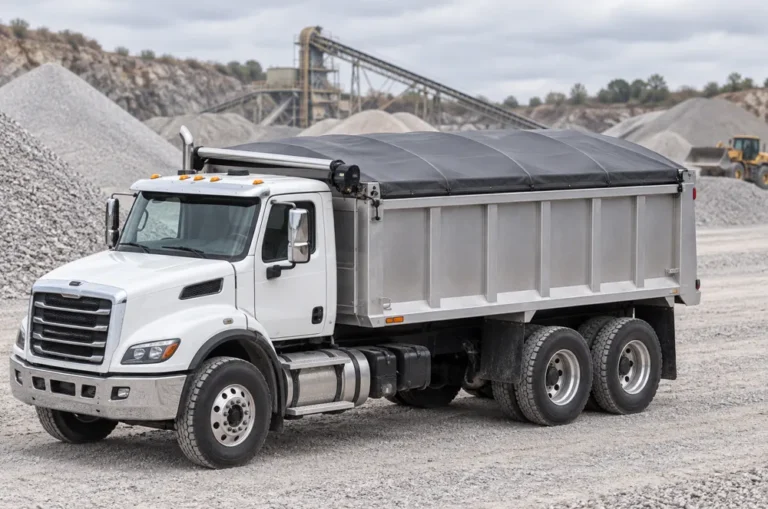
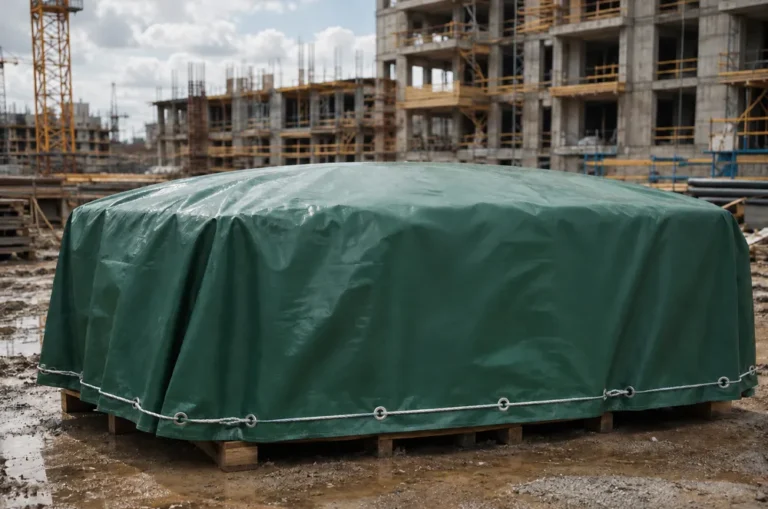
I’ve worked with hundreds of B2B clients sourcing printed PVC tarpaulin for their businesses. The biggest complaint I hear? Overpaying for printing without understanding the tradeoffs. Roller printing isn’t the flashiest option, but for bulk orders, it’s often the smartest choice. This guide covers everything you need to know before you place your next order.
I. What Is Roller Printing Technology for PVC Tarpaulin Production?
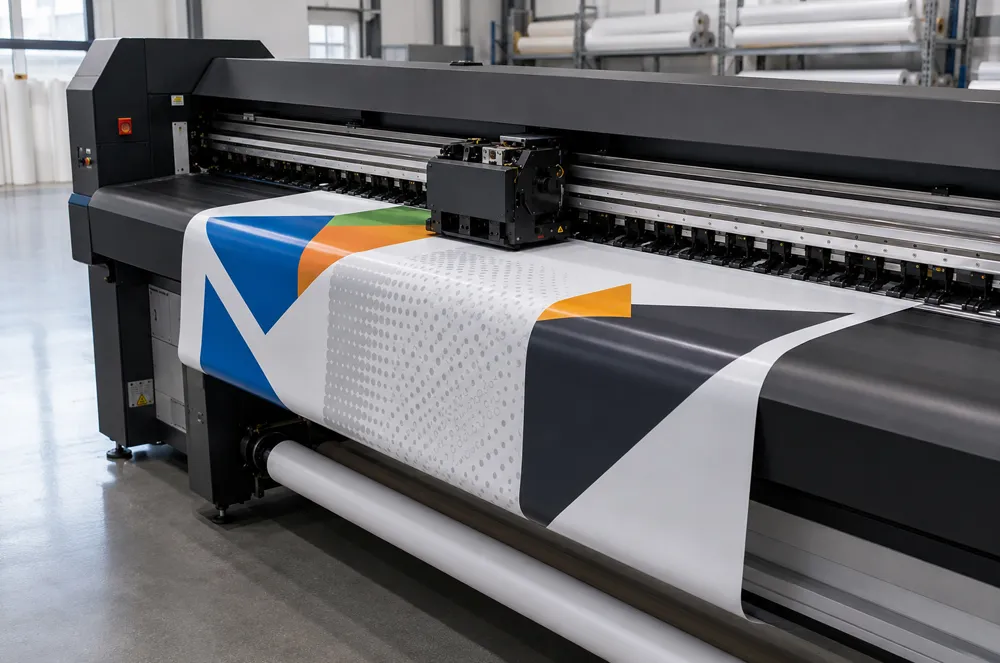
Roller printing (also called rotary printing or rotogravure printing) is a high-speed production method where engraved cylinders ( rollers ) transfer ink directly onto PVC coated fabric. The process works like this:
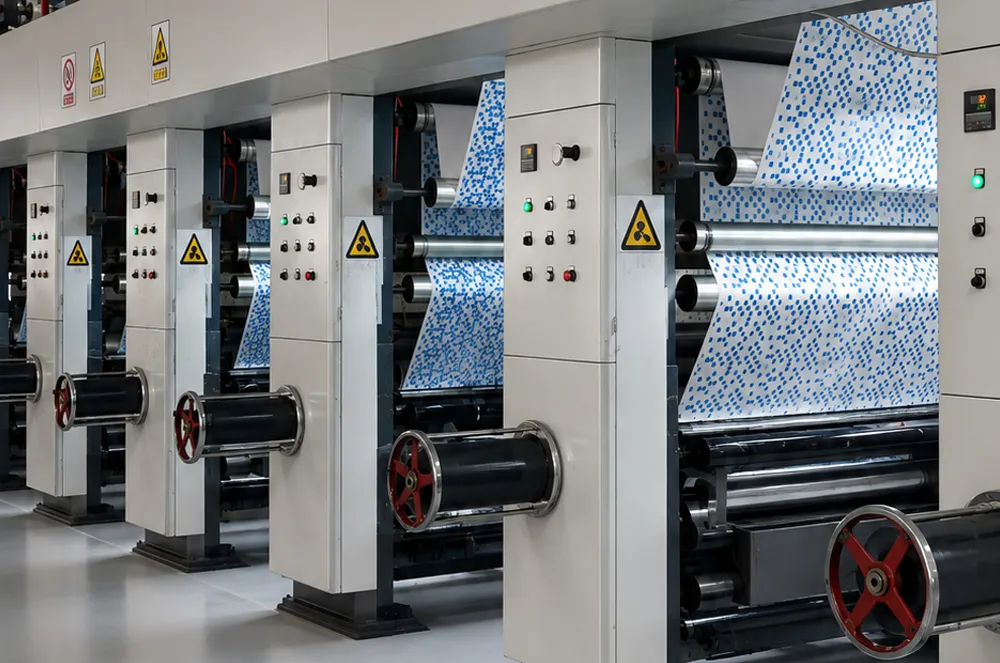
- Custom design gets etched onto printing cylinders—one cylinder per color
- Each cylinder rotates at high speed, picking up ink from a bath
- A doctor blade scrapes excess ink, leaving ink only in the engraved cells
- The cylinder presses against the PVC tarpaulin, transferring the design
- Material passes through drying and becomes final product
The key advantage: once cylinders are made, you can print thousands of meters with minimal per-unit cost. That’s why roller printing dominates industrial fabric printing worldwide.
How to Print Custom Designs on PVC Tarpaulin Using Roller Printing
Here’s what the actual process looks like from order to delivery:
Step 1: Design Submission You provide your artwork (AI, PDF, or high-res EPS). Our team converts it to CMYK printing format. Each color in your design requires a separate cylinder.
Step 2: Cylinder Production We engrave cylinders based on your design. This is where setup costs come from.
Step 3: Test Print Small sample run to confirm color accuracy and registration before full production.
Step 4: Bulk Production Material runs through the press continuously. Speed depends on color count and complexity.
Step 5: Finishing Cutting, hemming, grommets, welding—whatever your specifications require.
Timeline typically runs 2-3 weeks from artwork approval to shipment, depending on order size.
Commercial Grade Printed PVC Tarpaulin Wholesale Price Per Square Meter
Pricing varies based on several factors:
Base price drivers:
- Width: Standard widths are 1.6m (63″) and 1.83m (72″). Our machines go up to 2.1m (83″)—useful for wider applications
- Color count: More colors = more cylinders = higher setup cost
- Order quantity: Larger orders spread cylinder costs across more units
Roller printing advantage: The per-unit cost drops significantly once you cross certain volume thresholds. For orders over 5,000 square meters, roller printing typically beats digital printing by 30-50%.
What affects your final price:
- PVC coated fabric grade (550gsm vs 680gsm)
- Finishing requirements (grommets, reinforcement)
- Shipping destination
- Payment terms
I recommend requesting a formal quote with your exact specifications. We typically respond within 24 hours with factory price options.
UV Testing & Warranty: Color Durability You Can Count On
I’ve watched buyers get burned before. They order printed tarpaulin, it looks great for six months, then the colors start fading. Here’s what actually determines color lifespan—and how to protect yourself.
Color retention depends on two things: your local UV intensity and the PVC compound quality. A product that lasts 3 years in Northern Europe might last 1 year in Arizona or Queensland.
That’s why we provide ISO-standard UV testing reports:
- 500-hour test: Roughly equals 1 year of outdoor exposure in most climates
- 1,500-hour test: Covers approximately 3 years in most regions
We back this with actual test data, not marketing claims. You get the specific report for the material grade you’re ordering—not generic specifications.
On warranty: we offer terms competitive with industry leaders—typically 5 years on material integrity. The difference is our pricing. You get the same quality benchmarks at factory-direct cost. The math favors buyers who compare quotes carefully.
What affects durability:
- PVC coating weight (heavier = more protection)
- Base fabric weave density
- Lamination quality (for laminated constructions)
- Print ink chemistry (some inks fade faster than others)
For industrial use, I’d recommend at minimum 580gsm material with appropriate UV treatment. The initial cost is slightly higher but replacement cycles stretch out significantly.
II. PVC Tarpaulin Roller Printing vs Digital Printing: Which Is Better?
This is the question I get every week. Here’s the honest comparison:
| Factor | Roller Printing | Digital Printing |
|---|---|---|
| Setup cost | Higher (cylinders required) | Lower (no plates needed) |
| Per-unit cost at scale | Much lower | Higher |
| Color consistency | Excellent for bulk runs | Good, but slight variation possible |
| Design flexibility | Best for repeat patterns | Better for one-off designs |
| Turnaround time | 2-4 weeks | 1-2 weeks |
| Minimum order | Higher | Lower |
When to choose roller printing:
- Orders over 5,000 square meters
- Repeated designs (same logo, pattern across multiple orders)
- Cost per unit is the primary driver
- Colors are limited (1-6 colors typical)
When digital makes more sense:
- Small quantity custom prints
- Photorealistic imagery with many colors
- Tight deadline, smaller volume
For most B2B applications—swimming pool liner, striped sunshade, truck covers, warehouse covers, advertising banners—roller printing wins on economics. I’ve seen clients save 40% on printing costs by switching from digital to roller for their bulk orders.
III. Cylinder Buyback Policy: Protecting Your Roller Investment
I’ve seen buyers hesitate when they hear about the upfront roller cost. Here’s the thing though—our buyback policy changes the math entirely. When your single pattern reaches 20,000 meters (about 65,620 feet), we buy back the rollers. Before reaching this printing volume, you will need to bear the cost of manufacturing the roller; but once that volume is achieved, the investment in the roller will effectively be borne by the factory.
Some buyers prefer to own their rollers outright from day one. We offer that option too. Buy the rollers, and we guarantee no other customer uses your design. Your proprietary pattern stays yours.
The buyback threshold—20,000 meters per pattern—represents meaningful volume. But for buyers running regular orders, it’s achievable within a typical contract year. The key point: roller printing isn’t a sunk cost with no exit. There’s a clear path where the tooling investment pays back.
Compare that to most suppliers, who charge setup fees with no volume incentives or buyback options. Our approach aligns with your growth—if you succeed with a pattern, we succeed with you.
Color roller production cost: Small cylinder (1–3 colors): $350. Large cylinder (4+ colors): $930. Buyback triggered at 20,000 meters (65,620 feet) per design pattern.
Our 3D embossed PVC tarpaulin products also come with a buy-back policy. If you are interested, please refer to the Guide to 3D Embossed PVC Tarpaulin.
IV. Custom Logo Printed PVC Tarpaulin for Truck Cover Manufacturers
Truck covers represent one of the most common applications for printed PVC tarpaulin. Here’s what you need to know:
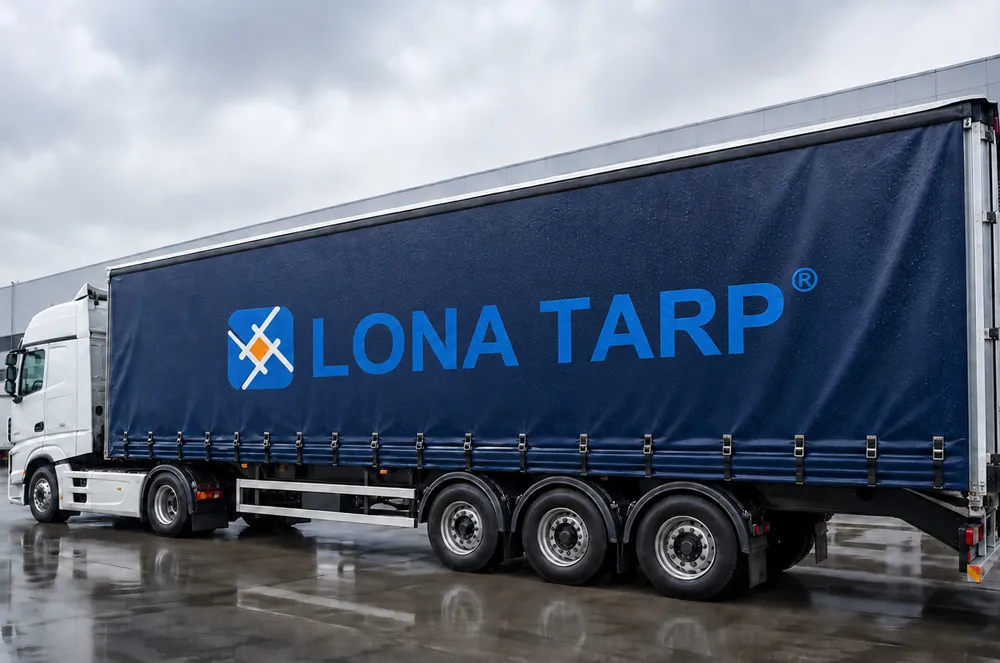
Why roller printing works well for truck covers:
- Large surface area means high print volume per truck
- Repeated branding across fleet vehicles spreads cylinder costs
- Durable PVC tarpaulin handles road conditions and weather
Typical specs:
- Material: 550-680gsm PVC coated fabric
- Width: 1.6m to 2.1m (your requirement determines what’s optimal)
- Finishing: Heat welding for seams, reinforcement at corners, grommets or straps
The cylinder cost question: This is where B2B buyers get surprised. Custom cylinders cost money—but here’s the deal: if you’re ordering 20,000+ meters of the same design, we offer a cylinder buyback program. For fleet operators managing 50+ vehicles with consistent branding, roller printing becomes dramatically cheaper per truck than digital alternatives.
For complete details on how our roller buyback policy works and how it protects your investment, please refer to [Part III].
V. Durable Printed PVC Tarpaulin for Industrial Warehouse Applications
Industrial environments are brutal on materials. Your PVC tarpaulin needs to handle:
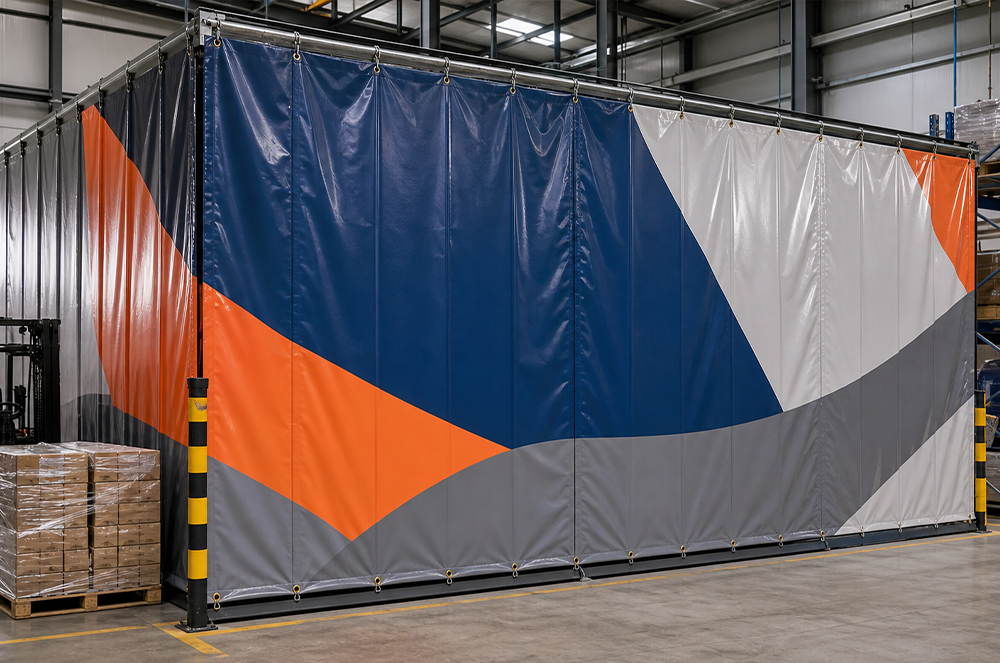
- Chemical exposure (some warehouses store reactive materials)
- Abrasion from machinery and fork traffic
- UV exposure through skylights or open doors
- Temperature fluctuations
Roller printed PVC tarpaulin holds up well in these conditions when you specify the right grade. We can provide UV testing reports—500 hours typically equals about 1 year of outdoor exposure, while 1500 hours covers most regions for 3 years.
What affects durability:
- PVC coating weight (heavier = more protection)
- Base fabric weave density
- Lamination quality (for laminated constructions)
- Print ink chemistry (some inks fade faster than others)
For industrial use, I’d recommend at minimum 580gsm material with appropriate UV treatment. The initial cost is slightly higher but replacement cycles stretch out significantly.
VI. How to Choose the Right Printed PVC Tarpaulin for Outdoor Advertising
Outdoor advertising puts different demands on materials:
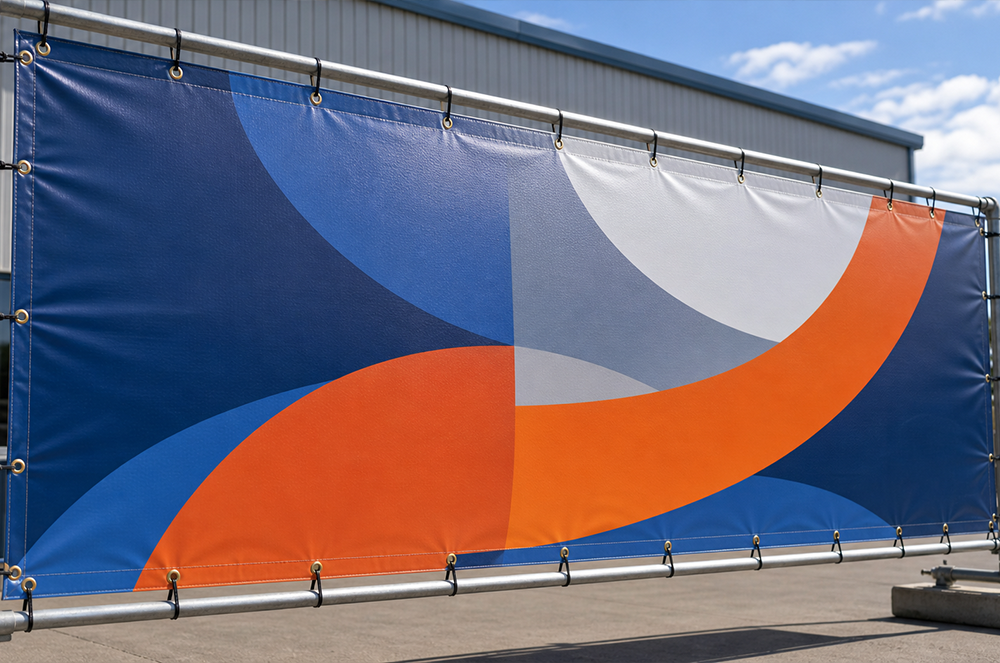
Key selection criteria:
- UV resistance — Colors fade. How fast depends on your local sun intensity. We offer ISO-certified UV testing data so you know what to expect.
- Wind load tolerance — Mesh vs solid PVC makes a big difference. Mesh allows wind through, reducing tear risk.
- Print resolution — Roller printing produces crisp results, but design complexity matters. Simple logos and bold graphics work best.
- Installation method — Consider how the banner will be mounted. Grommet placement matters.
Width considerations:
- 1.6m (63″) — Common market standard, easy to find compatible hardware
- 1.83m (72″) — Wider coverage, fewer seams
- 2.1m (83″) — Maximum width we offer, best for large-format displays
For billboard wraps and large format advertising, wider rolls mean fewer seams and cleaner appearance. If you’re printing for highway billboards or building wraps, ask about our 2.1m width option.
VII. Frequently Asked Questions
What file formats do you accept for printing? AI, EPS, PDF, or high-resolution TIFF. We accept CMYK or Pantone color specifications. Our prepress team handles color matching.
How long do cylinders last? Properly maintained cylinders last through 50,000+ linear meters of printing. Storage conditions matter—extreme humidity shortens lifespan.
What’s your typical lead time? 2-3 weeks from artwork approval to shipment. Rush orders may be possible with surcharge.
Do you offer samples? Yes. We print small samples (typically 1-3 meters) before bulk production. Sample cost applies but credits against bulk order.
What’s the difference between PVC laminated and PVC coated fabric? Laminated uses heat-bonded layers; coated has liquid PVC applied to fabric base. Both work for roller printing. Your application environment determines which is better.
Can you match colors from previous orders? Yes, if you provide the original order number or color specifications (Pantone or CMYK values). Color consistency across runs depends on having accurate reference points.
What warranty do you offer? 3-year warranty on material integrity—competitive with industry leaders. The advantage we offer: comparable quality at better factory price.