I. What Is 3D Embossed PVC Tarpaulin & How Does the Embossing Process Work?
If you’re sourcing PVC tarpaulin for industrial or commercial use, you’ve probably noticed plain smooth sheets everywhere. They work. But they don’t stand out.
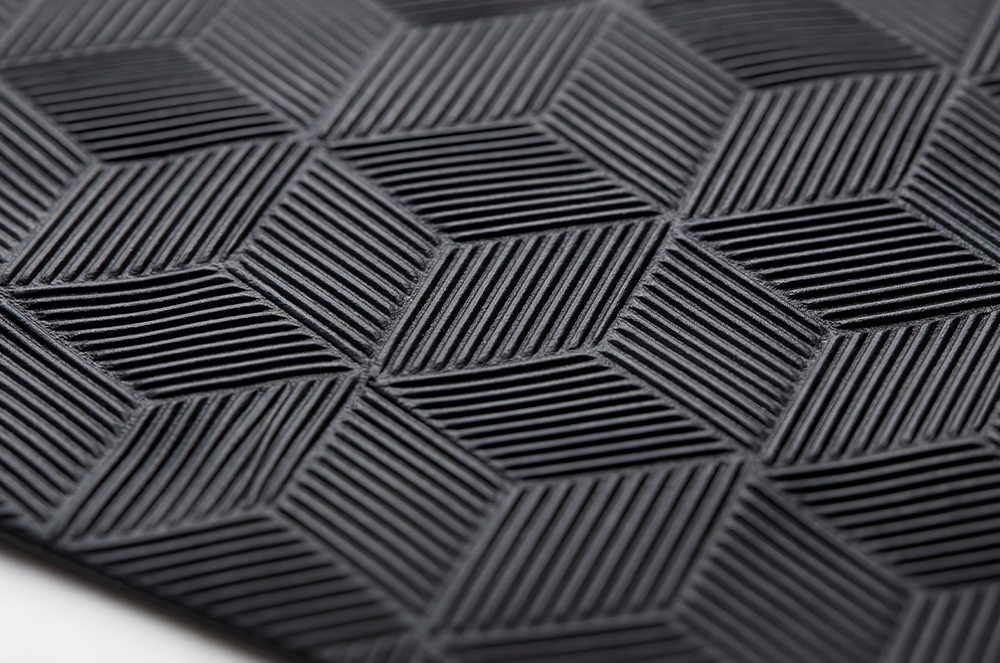
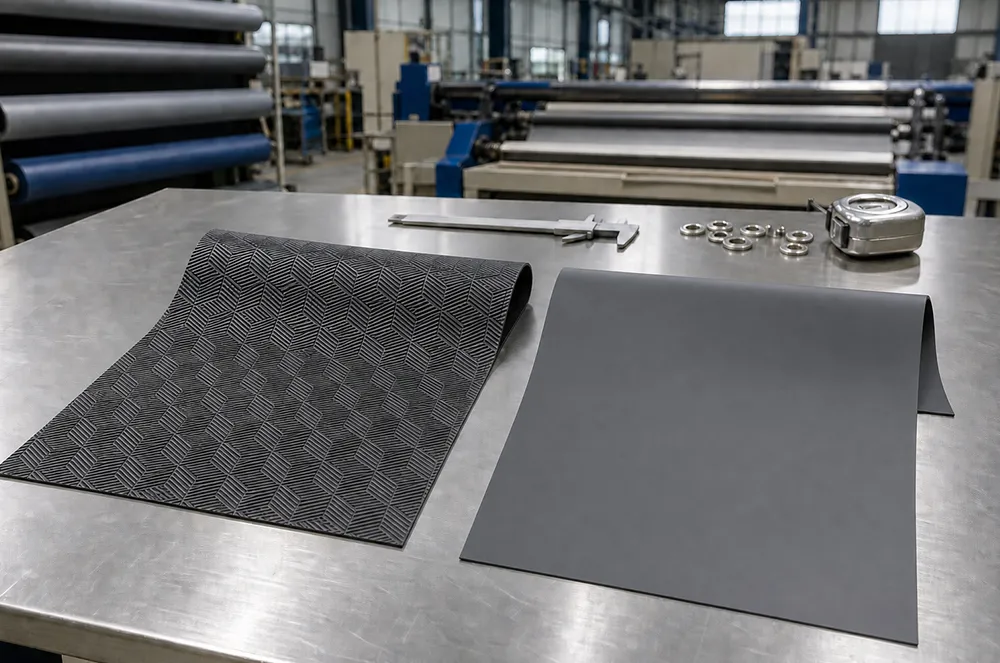
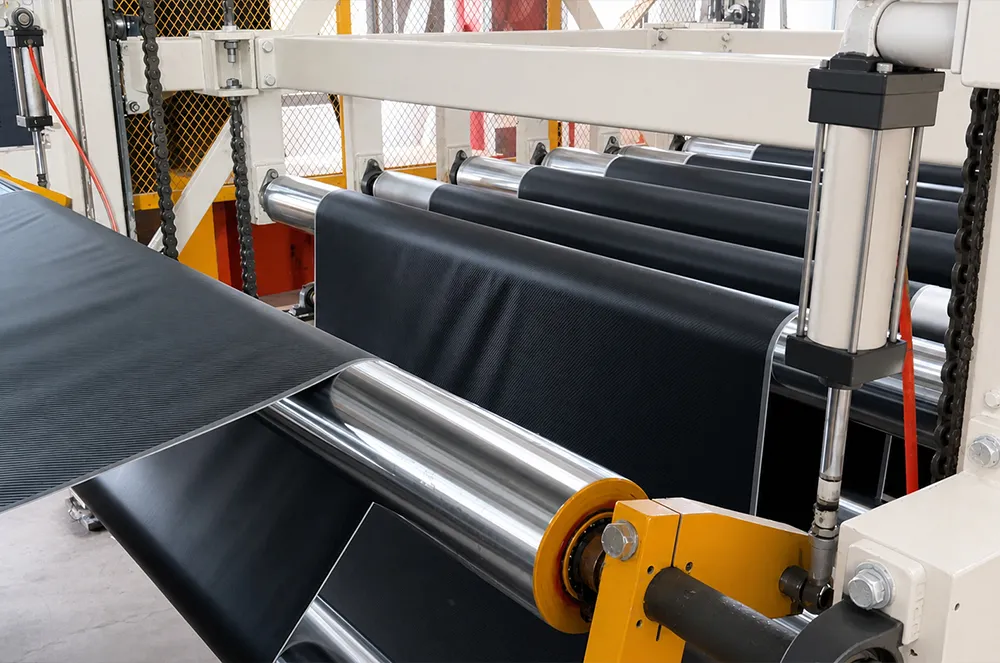
3D embossed PVC tarpaulin changes that. It takes a standard PVC-coated fabric and runs it through a heated laminating machine fitted with a precision-machined 3D embossing roller. Under high temperature and controlled pressure, the roller stamps a raised pattern directly into the PVC surface. The result is a textured, dimensional finish that looks better, feels premium, and performs differently than flat material.
I’ve seen buyers pick this product over smooth alternatives because the texture solves real problems — it hides minor surface scratches, reduces glare, and adds grip where flat PVC would be slippery. For truck covers, warehouse partitions, and architectural membranes, that texture matters.
The embossing doesn’t peel, crack, or wear down quickly. Once the pattern is set into the PVC during manufacturing, it becomes a structural part of the surface. That’s the core difference between embossed and printed or coated finishes.

II. Why 3D PVC Embossed Fabric Outperforms Standard Smooth PVC
Commercial buyers ask me this question often. Here’s the practical answer.
Visual distinction. Embossed tarpaulin patterns create immediate visual hierarchy. On a truck cover or building facade, textured PVC catches light differently at different angles. Smooth PVC looks flat and utilitarian by comparison. For brand-facing applications — fleet covers, event structures, retail installations — the difference in perceived quality is significant.
Surface durability. The embossing process compresses and hardens the PVC surface slightly. This means embossed fabric tends to resist scuffs, abrasions, and surface marks better than equivalent-gauge smooth material. In high-traffic or high-contact environments, that translates to fewer callbacks and replacements.
Functional texture. Embossed patterns provide subtle non-slip properties. This matters for walkway covers, agricultural structures, and any application where workers or equipment move across the surface. Smooth PVC becomes dangerously slick when wet. Embossed PVC doesn’t solve that completely, but it helps.
Better ink adhesion for overprinting. If you need to print logos or graphics onto the material after embossing, the textured surface holds ink more evenly than ultra-smooth PVC, reducing smearing and improving print clarity.
The PVC tarpaulin texture isn’t cosmetic. It’s functional. For buyers evaluating materials for demanding applications, embossed PVC consistently delivers measurable advantages over standard options.
III. Common Heavy Duty Embossed Tarpaulin Applications Across Industries
Not every application needs 3D embossing. But for the ones that do, the results speak for themselves.
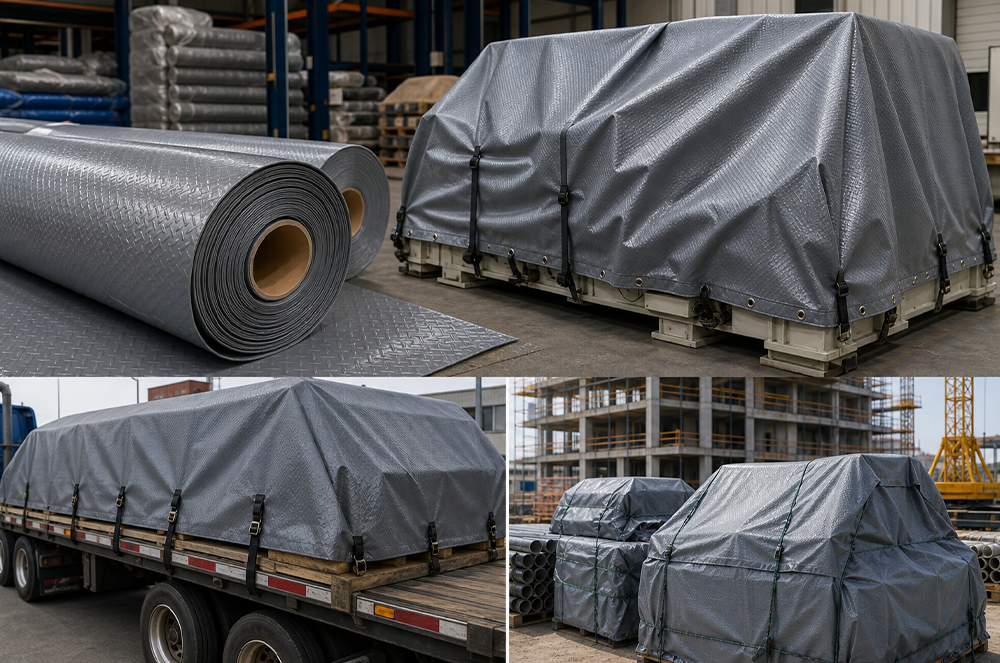
Truck and trailer covers. Fleets running exposed loads need covers that look professional and hold up to highway wind, debris, and UV exposure. Embossed PVC stands up better to continuous flexing than smooth material. The texture also makes it easier for drivers to grip when securing loads manually.
Warehouse and factory partitions. Industrial facilities use PVC tarpaulins to divide space, contain dust, or create temperature zones. Heavy duty embossed tarpaulin handles the abuse — fork traffic, chemical exposure, repeated roll-up and roll-down — without showing every scratch and mark.
Agricultural buildings and greenhouses. Farm structures demand materials that withstand humidity, temperature swings, and direct sunlight. The embossed surface resists condensation buildup better than smooth PVC, which matters in livestock facilities and growing environments.
Event tents and marquees. Premium event companies use embossed PVC because it photographs better and feels more substantial to clients. The texture also improves wind resistance slightly by disrupting airflow across the surface.
Architectural membrane structures. Where designers want a textured aesthetic without the cost of woven architectural fabrics, embossed PVC delivers. It’s significantly cheaper than PTFE or ETFE membrane materials while offering a distinctive surface appearance.
Protective industrial covers. Machinery covers, equipment wraps, and outdoor storage solutions benefit from the scratch-resistance and visual quality of embossed PVC. For products that sit in view — whether in a factory floor or an outdoor depot — embossing elevates the finished look.
The common thread: any application where surface quality, durability, and visual appeal all matter simultaneously points toward embossed over smooth.
IV. Choosing Between Stock Embossed Roller Patterns and Custom Embossed Roller Designs
This is where most buyers make the wrong call — not because they choose the wrong option, but because they never knew they had a choice.
Stock embossed roller patterns — 12 options available now.
We keep 12 commonly requested embossing roller pattern tarpaulins in production. These are designs that have proven themselves across hundreds of projects: geometric grids, diamond patterns, linen textures, crosshatch variations, wave patterns, and several specialized commercial designs.
If one of these works for your application, you can place an order and start production without waiting for tooling. That’s the stock advantage. For buyers with volume targets and production timelines to meet, in-stock patterns eliminate the 4-8 week lead time that custom roller tooling adds.
Custom embossed PVC designs — full pattern control.
If you need something specific — a proprietary texture, a brand-identifier pattern, or a functional design that doesn’t exist in our stock library — we machine custom embossing rollers to your specifications.
Custom roller pricing runs $7,500 to $8,200 per roller (approximately 55,000 to 60,000 RMB). That sounds significant upfront. But for buyers processing 50,000+ square meters annually, the per-unit cost dilution makes custom embossing economically viable. One custom roller can last through hundreds of thousands of square meters of production if maintained properly.
The roller width for custom orders goes up to 3.2 meters (about 126 inches or 10.5 feet). That covers the vast majority of commercial tarpaulin widths without seams. For large-format applications — truck beds, building wraps, wide-span structures — a single-width embossed sheet eliminates seam failures, reduces installation time, and produces a cleaner finished appearance.
Making the call. If your application fits a stock pattern, use it. Save the custom roller investment for situations where the pattern genuinely differentiates your product or solves a specific functional requirement.
V. Custom Embossed PVC Roller Cost Breakdown and Buyback Policy for High-Volume Buyers
Money talk. Here’s what commercial buyers actually need to know about investing in custom embossed PVC patterns.
Custom roller investment: $7,500 – $8,200 (≈ ¥55,000 – ¥60,000)
This covers the design work, precision machining, and testing of a new roller. One roller, your pattern, production-ready. The cost is fixed per roller regardless of order volume after that.
What you get for that investment:
- Exclusive use of your pattern (we don’t sell your design to other buyers)
- Consistent embossed roller patterns across every production run
- Roller width up to 3.2 meters without seams
- Full quality control documentation for each roller production batch
Our buyback policy — real numbers.
Here’s the part buyers tell me they appreciate most about working with us on custom embossing: when your cumulative order volume reaches 60,000 square meters (that’s approximately 196,850 square feet), we buy back the roller.
That buyback isn’t a discount. It’s cash back. It means your custom roller investment has a defined return horizon. At high-volume throughput, custom embossing becomes essentially free after the buyback threshold — you’ve paid for the tooling once, hit the volume target, and received the value back while continuing to produce at standard material pricing.
For buyers planning annual volumes above 60,000 sqm, the math works clearly in your favor. Even at modest volumes, the buyback policy significantly de-risks the custom roller decision.
Similarly, our printed PVC tarpaulin products also come with a buy-back policy. If you are interested, please refer to the Guide to Printed PVC Tarpaulin.
VI. PVC Tarpaulin Texture and Width: Why 3.2 Meter Roller Capacity Sets Commercial Suppliers Apart
Not all embossed PVC suppliers can offer wide-format patterns. Most operate on standard 1.5–2 meter width equipment. That matters more than most buyers realize until they’re standing in front of a 10-meter-wide truck cover with a seam running down the middle.
The seam problem. Every seam is a potential failure point. Seams can delaminate under stress, allow water penetration, and compromise the visual integrity of the finished cover. For commercial buyers running 24/7 operations, a seam failure means downtime, repair costs, and potentially damaged cargo.
3.2 meter roller width eliminates most seams for standard commercial applications. That’s 126 inches — wide enough to cover most single-panel applications without a single horizontal seam. The result is a structurally stronger, visually cleaner, and faster-to-install finished product.
When evaluating suppliers for heavy duty embossed tarpaulin, ask about maximum roller width before anything else. It’s the single specification that most directly affects the long-term performance and maintenance profile of the finished material.
Texture consistency across full width is equally important. Some manufacturers produce wide sheets but experience pattern fade or inconsistency at the edges. Our production process maintains uniform embossing pressure and temperature from edge to edge on the full 3.2 meter width. Pattern depth stays consistent, which matters for both aesthetics and functional performance.
VII. UV Resistance and Durability: What Commercial Buyers Need to Know Before Placing Orders
Buyers in sunny climates ask about UV resistance. Let me be direct.
Embossed PVC is not automatically UV-resistant. The base PVC compound we use carries baseline UV stabilizers suitable for general outdoor use. For prolonged, intense sun exposure — desert installations, tropical climates, year-round outdoor applications — you need to specify enhanced UV additive packages when ordering.
When requested, we formulate the PVC compound with additional UV inhibitors that extend service life under high-UV conditions. The cost increase is modest; the lifespan improvement is significant.
Embossing does not weaken UV resistance. One concern I hear: does the embossing process create micro-fractures in the PVC that accelerate UV degradation? The answer is no. The heated embossing process actually sinters the PVC surface slightly, closing micro-voids rather than creating them. Embossed and smooth PVC of the same base formulation show equivalent UV performance when properly compounded.
Temperature performance. Embossed PVC maintains its structural integrity across a wide temperature range. In cold climates, the material remains flexible without cracking. In hot environments, the embossed texture helps dissipate surface heat slightly compared to smooth black PVC, which can reach significantly higher surface temperatures under direct sun.
For buyers specifying materials for commercial applications — truck covers in Arizona, warehouse partitions in Scandinavian winters, event structures in Southeast Asian humidity — talk to us about your specific environmental conditions. We adjust compound formulations based on your end-use conditions.
VIII. Frequently Asked Questions About 3D Embossed PVC Tarpaulin for Commercial Buyers
What is the minimum order quantity for 3D embossed PVC tarpaulin? MOQ depends on whether you’re using a stock roller pattern or custom design. Stock pattern orders typically start at 1,000 square meters. Custom roller orders carry higher minimums due to the tooling investment — generally 5,000+ square meters per production run to justify setup costs.
How long does it take to produce embossed PVC with a custom roller pattern? From roller completion to first production batch: typically 2-4 weeks. Roller machining takes 4-8 weeks for new custom designs. Stock pattern production runs 1-2 weeks from order confirmation. Factor these lead times into your project planning, especially for first-time orders.
Can the embossing pattern be applied to both sides of the PVC tarpaulin? Single-sided embossing is standard. Double-sided embossing is technically possible but requires a secondary pass through the production line and affects pricing. Discuss your requirements with our technical team — for most applications, single-sided embossing achieves the desired functional and visual result.
What widths are available for embossed PVC tarpaulin? Standard production widths: up to 3.2 meters (126 inches / 10.5 feet) for single-piece panels. Cut-to-size and custom width options available. For widths exceeding 3.2 meters, seam construction is required. We provide full seam specifications and reinforcement options for wide-format applications.
Does the embossed texture affect the weight of the PVC tarpaulin? Minimal impact. The embossing process compresses surface material rather than adding mass. Embossed PVC weighs approximately the same as equivalent-gauge smooth PVC — typically 550gsm to 900gsm depending on your specification, with standard roll widths available.
What is the typical service life of embossed PVC tarpaulin in outdoor commercial use? With standard UV package: 3-5 years in moderate climates. With enhanced UV formulation: 5-8 years depending on exposure intensity. The embossed texture itself does not degrade at a different rate than smooth PVC — both age through UV and mechanical wear at similar paces.
How does the buyback policy work for custom embossing rollers? When your cumulative orders using your custom roller pattern reach 60,000 square meters, we buy back the roller at the original tooling price. This happens automatically — you don’t need to request it. The buyback applies to the roller cost only, not to material pricing. Contact us to track your cumulative volume toward the buyback threshold.
Ready to discuss your embossed PVC requirements? Our team works directly with commercial buyers on specifications, sampling, and production planning. For orders involving custom roller patterns, we recommend starting the conversation 8-12 weeks before your intended production start date to account for tooling lead time.